
TL;DR
Apollo offers 270M+ built-in contacts at $49/user monthly while HubSpot provides free CRM.
– Apollo includes contact database with email sequences and built-in dialer included
– HubSpot delivers full CRM with marketing automation, AI assistant, and service tools
– Apollo starts with free limited plan and 14-day paid trial available
– HubSpot provides free forever CRM with 3,000-12,000 calling minutes in paid plans
– Apollo excels at prospecting while HubSpot covers complete customer lifecycle management
The right sales platform can make your team more productive. The wrong one wastes time and budget. Apollo and HubSpot are two popular B2B sales tools, but they solve different problems.
Apollo vs. HubSpot: Side-by-side comparison table
Here’s a quick reference comparing the key aspects of both platforms:
| Feature | Apollo | HubSpot | La Growth Machine |
|---|---|---|---|
| Starting Price | Free (limited) | Free (generous) | €50/user/month (annual) |
| Paid Plans Start At | $49/month per user | $20/month per user | €50/user/month (annual) |
| Free Trial | 14 days | Yes (free forever CRM) | 14 days (no credit card required) |
| Key Features | Contact database, email sequences, sales intelligence | Full CRM, automation, marketing tools, AI assistant | LinkedIn + Email sequences, enrichment, warmup, AI voice |
| Contact Database | 270M+ built-in | No database (enrichment available) | Native enrichment (27M+ companies) |
| Email Sequences | Yes | Yes (Professional+) | Yes, native |
| Calling | Built-in dialer | Built-in calling (3,000-12,000 mins) | No (LinkedIn + Email focus) |
| CRM Functionality | Basic | Advanced | Native CRM integrations |
| Integration Options | 50+ | 1,500+ | Native: HubSpot, Salesforce, Pipedrive + API |
| Support Options | Email, chat | Email, chat, phone, extensive academy | Email, chat, knowledge base, dedicated strategist (4+ seats) |
| Best For | Outbound prospecting teams | Full sales & marketing teams | Scaling teams needing multichannel automation |
Apollo focuses on sales intelligence and prospecting. It helps teams find leads and automate outbound campaigns. HubSpot is a full CRM ecosystem that connects sales, marketing, and customer service in one platform.
This comparison shows what each platform does best, where they fall short, and how to decide which belongs in your sales stack. We’ll also cover when La Growth Machine makes sense if you need multichannel sales automation that goes beyond what either platform offers.
Apollo vs. HubSpot: Quick overview
Apollo
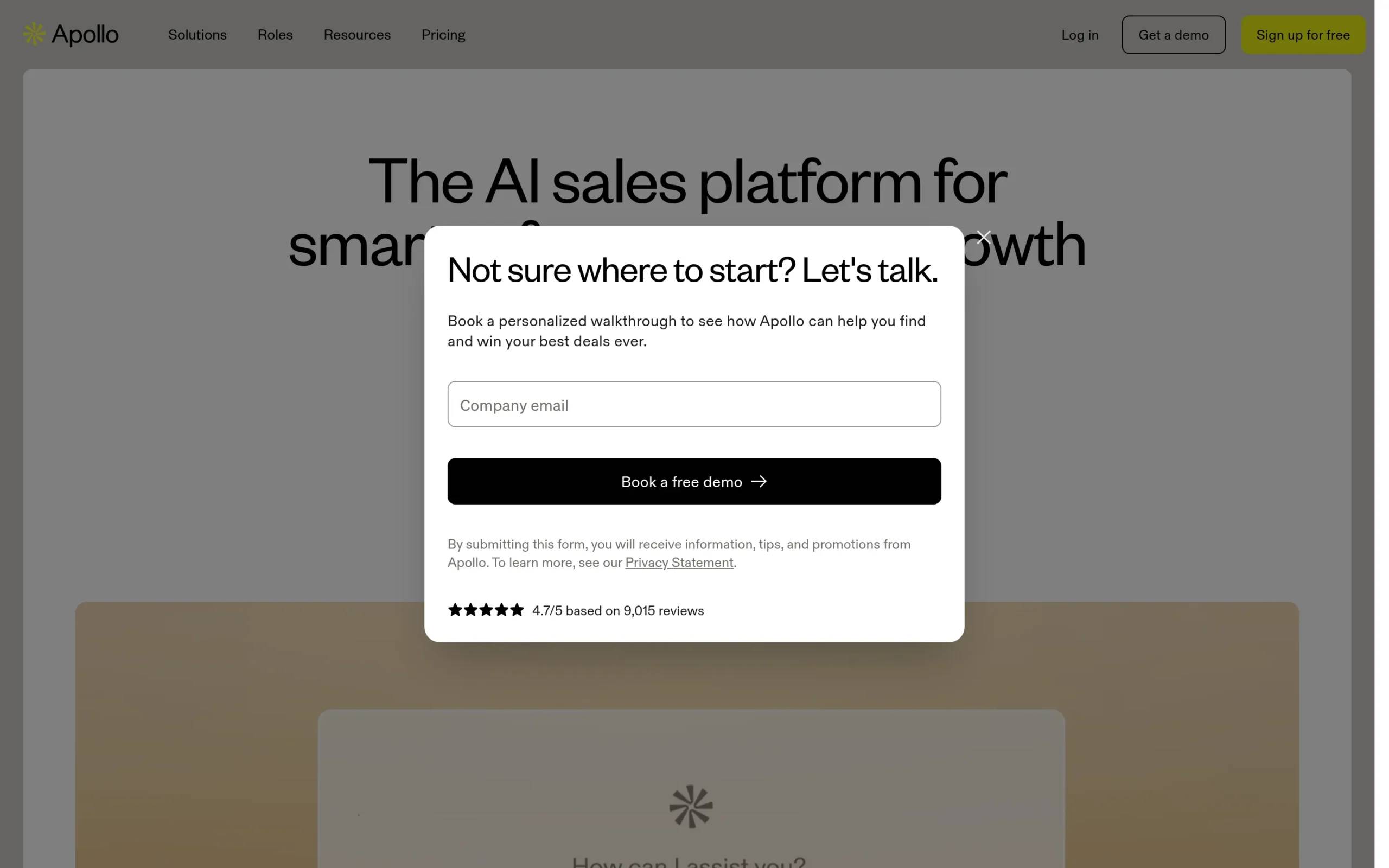
Apollo is a sales intelligence and engagement platform for lead discovery and outbound prospecting. It has a database of over 270 million contacts and helps sales teams find prospects, enrich contact data, and run email sequences.
Main selling point: Large B2B contact database combined with sales engagement tools
Starting price: Free plan available, paid plans from $49/month per user
HubSpot
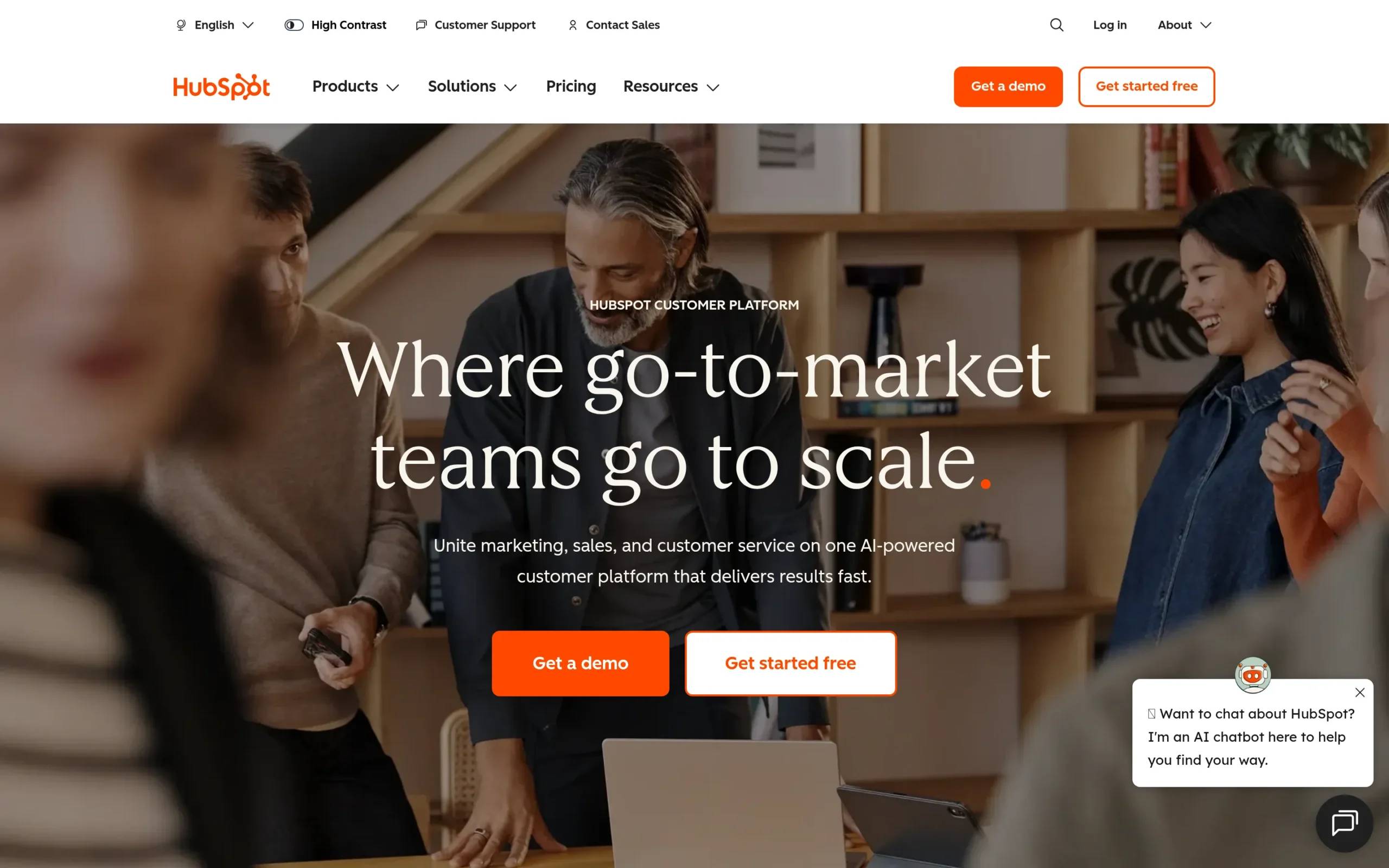
HubSpot is a full-featured CRM that manages the entire customer lifecycle. It includes contact management, marketing automation, sales pipeline tools, customer service features, and AI-powered insights through its Breeze assistant.
Main selling point: All-in-one CRM with integration across sales, marketing, and service
Starting price: Free CRM available, Sales Hub paid plans from $20/month per user
Apollo vs. HubSpot: Head-to-head comparison
Here’s how these platforms compare across the most important categories.
Features & capabilities
Apollo:
- Sales intelligence database with 270+ million contacts
- Email and phone number enrichment
- Multi-step email sequence automation
- Built-in dialer with local caller ID matching
- Basic CRM functionality and pipeline tracking
- Chrome extension for LinkedIn and web prospecting
Apollo works well when you need to build lead lists quickly and run high-volume outbound campaigns. Its massive contact database and enrichment capabilities make it easy to find decision-makers and their contact information.
HubSpot:
- Complete CRM with unlimited users on free plan
- Visual pipeline builder with customizable deal stages
- Marketing automation and email workflows
- AI-powered Breeze assistant for content generation and insights
- Meeting scheduler and document tracking
- Conversation intelligence and call recording (Professional+)
- Revenue forecasting and sales analytics
HubSpot manages the full customer journey from first touch to closed deal. It goes deep on features across sales, marketing, and service, all in one platform.
Winner: Tie. Apollo wins for prospecting and data enrichment. HubSpot wins for comprehensive CRM and full-funnel management.
Ease of use
Apollo has a straightforward interface focused on prospecting workflows. Finding contacts, building lists, and launching sequences is intuitive. The learning curve is gentle because the platform does fewer things. Most users can start running campaigns within a day or two.
HubSpot has a cleaner, more polished interface but more complexity because of its broader feature set. The free CRM is simple, but as you move into paid tiers with automation, reporting, and advanced features, there’s more to learn. HubSpot Academy courses help new users get up to speed.
Both platforms offer Chrome extensions, mobile apps, and helpful tooltips throughout the interface.
Winner: Apollo for simplicity, HubSpot for guided onboarding and support resources.
Pricing & value
Apollo Pricing:
- Free: 1,200 credits per year (about 100/month), basic features, 2 sequences
- Basic: $49/month per user – 30,000 credits/year, unlimited sequences, advanced filters
- Professional: $79/month per user – 48,000 credits/year, A/B testing, call recordings, parallel dialer
- Organization: $119/month per user (min 3 users) – 72,000 credits/year, custom forecasting, SSO
Apollo uses a credit system where accessing an email costs 1 credit and a phone number costs 8 credits. The pricing is competitive for outbound-focused teams, especially at the Basic tier.
HubSpot Pricing:
- Free: Core CRM, contact management, deal tracking, basic reporting
- Starter: $20/month per seat – Email marketing, simple automation, forms
- Professional: $100/month per seat – Sequences, forecasting, sales analytics, AI meeting assistant
- Enterprise: $150/month per seat – Conversation intelligence, custom objects, advanced permissions
HubSpot’s free tier is generous for basic CRM needs, but costs increase quickly when you need automation and advanced features. The Professional tier offers the most value for growing sales teams.
Winner: Apollo for budget-conscious outbound teams. HubSpot for teams wanting an all-in-one platform despite higher costs.
Integrations
Apollo integrates with major CRMs including Salesforce, HubSpot, and Pipedrive. It also connects with email providers (Gmail, Outlook), marketing automation tools (Marketo, Pardot), and can push data through Zapier. The integration library is solid but focused on sales-specific tools.
HubSpot has 1,500+ integrations through its App Marketplace, covering everything from sales and marketing to accounting and project management. Popular connections include LinkedIn Sales Navigator, Zoom, Slack, Microsoft Teams, and Google Workspace. The platform’s API is well-documented for custom integrations.
Winner: HubSpot for breadth and depth of integrations.
Sales intelligence & data quality
Apollo maintains its own proprietary database of 270+ million contacts. Data quality varies, which is common across contact databases. Some users report outdated information, though Apollo continuously updates its database. The waterfall enrichment feature tries multiple data sources to find accurate information.
HubSpot doesn’t provide its own contact database. Instead, it offers AI-powered data enrichment that pulls from various sources to automatically fill in missing contact information. For prospecting, you’d typically use HubSpot in combination with a tool like Apollo or another data provider.
Winner: Apollo for built-in prospecting database and sales intelligence.
Apollo vs. HubSpot: Pros and cons
Apollo strengths & weaknesses
Pros
- B2B contact database with 270+ million profiles makes list building fast
- Affordable pricing compared to competitors, especially for small teams
- Strong email sequencing with A/B testing
- Built-in dialer with call recording and local caller ID matching
- Chrome extension makes prospecting from LinkedIn easy
Cons
- Data accuracy can be inconsistent and requires verification
- Limited CRM functionality compared to dedicated CRM platforms
- Email deliverability can suffer without proper warm-up and management
- Interface feels dated compared to newer sales tools
- Reporting and analytics are basic compared to enterprise solutions
User Rating:
- G2: 4.8/5 (based on 7,000+ reviews)
- Capterra: 4.6/5 (based on 346 reviews)
HubSpot strengths & weaknesses
Pros
- Generous free CRM with unlimited users and core features
- Sales, marketing, and service hubs work together
- Clean, intuitive interface that’s easy to navigate
- Strong automation capabilities reduce manual work
- AI-powered Breeze assistant adds intelligence across the platform
- Excellent reporting and forecasting tools for sales leaders
Cons
- Pricing increases significantly as you need advanced features
- Can feel overwhelming for teams that just need basic sales tools
- No built-in prospecting database—requires third-party integrations
- Some features are locked behind higher-tier plans
- Advanced customization requires technical knowledge or consultants
User Rating:
- G2: 4.4/5 (based on 23,000+ reviews)
- Capterra: 4.5/5 (based on 18,000+ reviews)
Which should you choose?
The right platform depends on your specific sales motion and team needs. Here are clear decision criteria:
Choose Apollo if:
- Your primary focus is outbound prospecting and lead generation
- You need access to a large B2B contact database
- Your budget is limited and you want affordable prospecting tools
- You run high-volume cold email campaigns
- Your team is small and doesn’t need complex CRM features
Choose HubSpot if:
- You want a complete CRM that grows with your company
- You need to align sales and marketing teams in one platform
- You value automation and want to reduce manual tasks
- You need strong reporting and forecasting capabilities
- You’re building an inbound sales motion
- You want a platform that handles the full customer lifecycle
Choose both if:
- You want Apollo’s prospecting power feeding into HubSpot’s CRM
- Your team handles both outbound and inbound leads
- You need contact data plus robust pipeline management
- Budget allows for multiple specialized tools in your stack
Need something different? Check out La Growth Machine
Apollo and HubSpot are solid choices for their specific use cases. But if you need multichannel sales automation, La Growth Machine takes a different approach.
What we do:
La Growth Machine is a multichannel sales engagement platform that automates outreach across LinkedIn, email, Twitter/X, and phone in unified sequences. Unlike Apollo’s focus on email or HubSpot’s broad CRM approach, our platform specializes in coordinated multichannel prospecting that reaches leads on their preferred channels.
Our platform handles:
- Multichannel sequence automation combining LinkedIn actions, emails, calls, and social touches
- Lead Enrichment with waterfall verification across 9 providers
- LinkedIn voice messages that double response rates
- Social Warming to build familiarity before outreach
- Inbox Rotation across multiple email accounts for better deliverability
- Unified inbox managing all conversations in one thread
How it fits into your stack:
If you’re using Apollo or HubSpot for prospecting and CRM, La Growth Machine handles the actual multichannel outreach execution. We integrate with both platforms, so leads can flow from Apollo’s database into La Growth Machine sequences, then sync back to HubSpot CRM once conversations start.
Many teams use Apollo to find leads, La Growth Machine to engage them across multiple channels, and HubSpot to manage the resulting opportunities through the sales pipeline.
Pricing: Starting at €50/month per identity 14-day free trial
Worth considering if:
- You want multichannel engagement beyond just email
- LinkedIn is an important channel for your prospecting
- You need better email deliverability through inbox rotation
- You want conversations from multiple channels in one place
Apollo vs. HubSpot: FAQs
Can you use Apollo and HubSpot together?
Yes, many sales teams use both platforms together. Apollo finds contact information, while HubSpot provides robust CRM and pipeline management. The Apollo-HubSpot integration lets you push enriched contacts and engagement data from Apollo directly into your HubSpot CRM.
Which platform has better email deliverability?
Both platforms face deliverability challenges with cold email. Apollo focuses primarily on prospecting, so users need to be careful with volume and domain reputation. HubSpot has built-in sending limits and best practices, but lacks advanced deliverability features like inbox rotation. For serious cold email volume, consider adding a tool like La Growth Machine that offers inbox rotation and domain management.
Is Apollo or HubSpot better for small businesses?
For small businesses just starting with sales automation, HubSpot’s free CRM offers more value upfront. However, if your primary need is outbound prospecting on a budget, Apollo’s Basic plan at $49/month provides better prospecting tools than HubSpot’s Starter tier. The choice depends on whether you need CRM features (HubSpot) or prospecting database access (Apollo).
Conclusion
Apollo and HubSpot serve different but complementary roles in sales stacks. Apollo dominates in prospecting and sales intelligence, giving you the data and tools to find and reach potential customers. HubSpot is a comprehensive CRM platform that manages relationships throughout the customer lifecycle.
For teams focused on outbound prospecting with budget constraints, Apollo delivers strong value. For companies building a full-featured sales and marketing engine, HubSpot provides the infrastructure to scale.
If you need multichannel outreach capabilities that go beyond email sequences, La Growth Machine offers a specialized solution. We focus on coordinated engagement across LinkedIn, email, and social channels with advanced features like voice messages and inbox rotation that neither Apollo nor HubSpot provide.
The best approach for many teams is using these tools together: Apollo for prospecting, HubSpot for CRM, and La Growth Machine for multichannel engagement execution.
Get 3.5X more leads!
Do you want to improve the efficiency of your sales department? With La Growth Machine you can generate on average 3.5x more leads while saving an incredible amount of time on all your processes.
By signing up today, you’ll get a free 14-day trial to test our tool!