
TL;DR
Six sales engagement platforms compete with Outreach offering better pricing transparency and simplicity.
– La Growth Machine starts at €50/month versus Outreach’s undisclosed enterprise pricing
– Apollo combines prospecting data with engagement tools including free plan option
– HubSpot Sales Hub integrates CRM with sales automation starting free to $15/month
– Enterprise pricing complexity and steep learning curve drive teams from Outreach
– Reply offers high-volume multichannel outreach with AI automation at $59/user/month
Finding the right sales engagement platform can feel like trying to hit a moving target. You need something that drives results, fits your budget, and doesn’t require a PhD to operate. If you’re exploring Outreach alternatives, you’re probably dealing with at least one pain point: maybe the pricing doesn’t match your budget, certain features are missing, or the platform feels too complex for your team’s needs.
Outreach alternatives compared
Quick comparison of top Outreach alternatives:
| Tool | Starting Price | Free Trial | Best For |
|---|---|---|---|
| Outreach | Contact for pricing | Not specified | Enterprise sales teams with complex processes |
| La Growth Machine | €50/month (annual) | 14 days (no credit card) | Scaling teams needing LinkedIn + Email automation, native enrichment (27M+ companies), and email warmup in one platform |
| Salesloft | Contact for pricing | Not specified | Mid-market to enterprise with revenue orchestration needs |
| Apollo | Free plan available | Yes (duration varies) | Teams needing prospecting data + engagement tools |
| HubSpot Sales Hub | Free (paid from $15/month) | Free tools available | Businesses wanting integrated CRM + sales platform |
| Reply | $59/month per user | 14 days (no credit card) | High-volume multichannel outreach with AI automation |
The good news? You have options. The sales engagement landscape offers powerful alternatives that might be a better fit for your specific situation. Whether you’re a startup founder managing your first outbound campaign or a sales leader scaling a growing team, there’s likely a tool better suited to your goals.
This guide walks through the top Outreach alternatives, breaking down their features, pricing, strengths, and ideal use cases. We cover everything from multichannel outreach specialists like La Growth Machine to comprehensive CRM platforms like HubSpot, giving you the insights you need to make an informed decision. By the end, you’ll know which platform aligns with your sales strategy and budget.
Why consider Outreach alternatives?
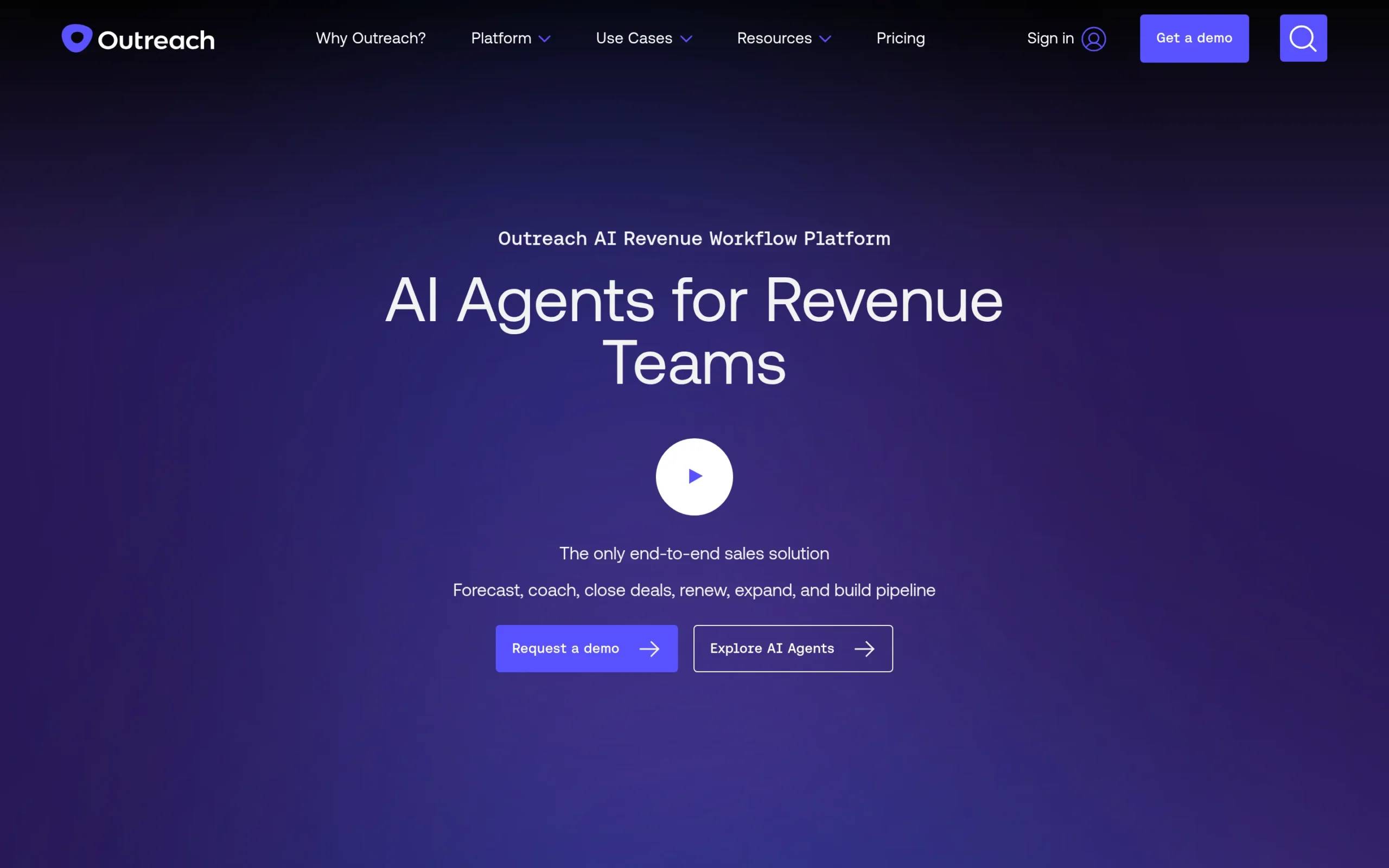
Outreach is a powerful platform, but it’s not the perfect fit for everyone. Here are five common reasons teams look for alternatives:
- Pricing concerns: Outreach doesn’t list specific prices publicly, requiring contact with sales for quotes. This lack of transparency can be frustrating, and once you get pricing, it often exceeds budget expectations, especially for smaller teams or startups.
- Feature complexity: The platform offers extensive capabilities, but this comes with a steep learning curve. Teams often find they’re only using a fraction of the features while paying for the full suite.
- Limited multichannel capabilities: While Outreach handles email and calls well, teams looking for integrated LinkedIn automation, voice messages, or Twitter outreach may find the multichannel options lacking compared to dedicated alternatives.
- Enterprise focus: Outreach is built primarily for larger sales organizations. Smaller teams and startups may find the platform over-engineered for their needs, with workflows designed for complex enterprise sales processes.
- Personalization at scale challenges: Some users report that while Outreach excels at automation, maintaining genuine personalization across large campaigns can be difficult without significant manual work.
Different tools excel at different things. What works for a 500-person enterprise sales team may not be the right choice for a 10-person startup. Understanding your specific needs helps you find a platform that delivers results without unnecessary complexity or cost.
What to look for in an Outreach alternative
Before diving into specific alternatives, here are five key criteria to consider:
- Multichannel outreach capabilities: Look for platforms that let you reach prospects where they actually engage, whether that’s email, LinkedIn, calls, voice messages, or other channels. The ability to orchestrate sequences across multiple touchpoints dramatically increases response rates.
- Ease of use and learning curve: Consider how quickly your team can get up and running. The best tool is the one your team will actually use. Look for intuitive interfaces, clear workflows, and helpful onboarding resources.
- Pricing transparency and value: Evaluate whether the pricing structure aligns with your budget and scales with your growth. Hidden costs and vague pricing models can derail your ROI calculations.
- Data quality and enrichment: Strong lead data and email verification capabilities save time and improve deliverability. Platforms with built-in enrichment tools eliminate the need for separate data providers.
- Integration ecosystem: Your sales engagement platform should work seamlessly with your existing tech stack, including your CRM, calendar, and other sales tools. Native integrations reduce manual work and ensure data flows smoothly.
These criteria form the foundation for evaluating any Outreach alternative. Keep them in mind as we explore specific platforms.
Top Outreach Alternatives
1. La Growth Machine
Overview
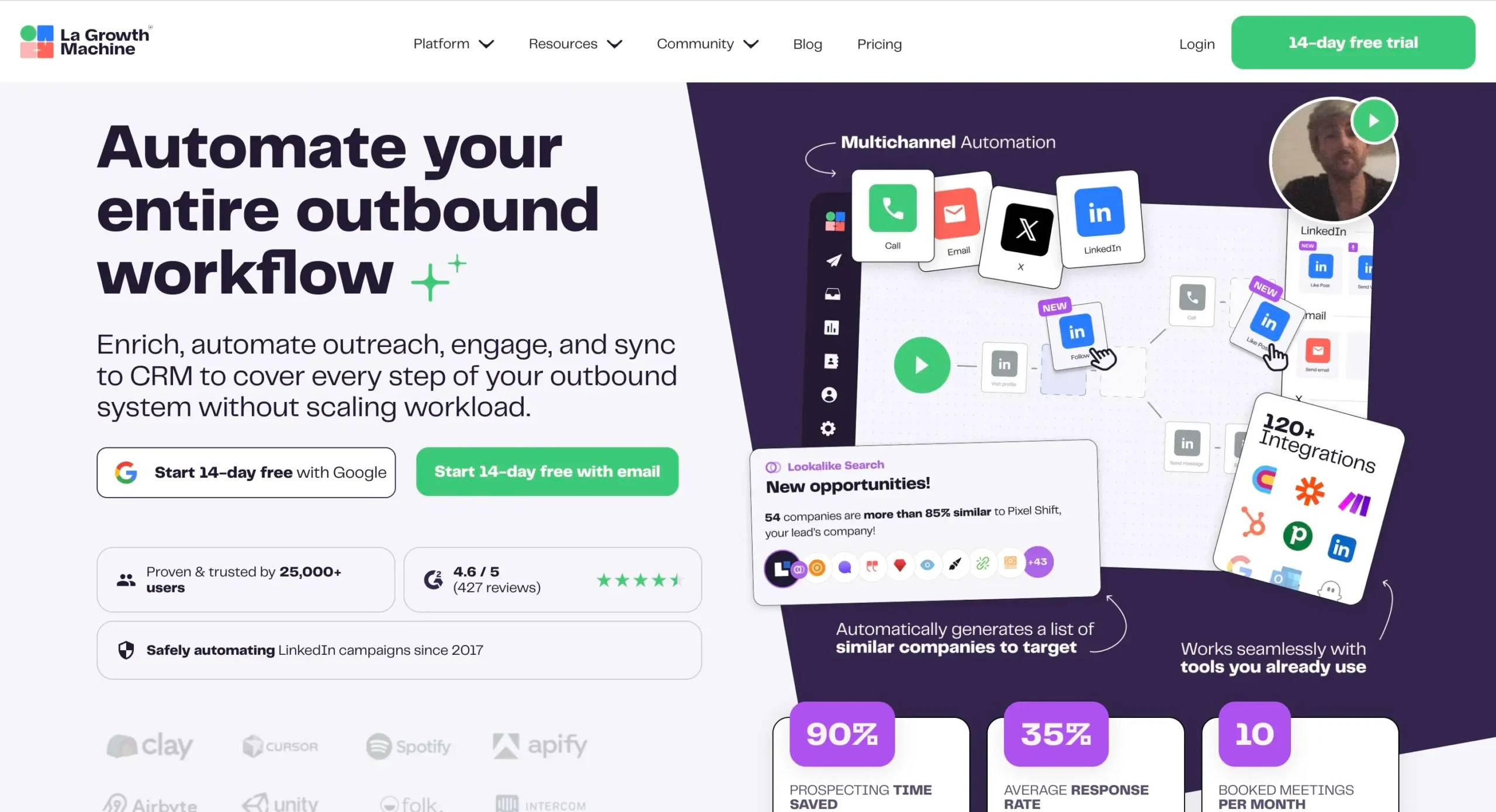
La Growth Machine is an all-in-one multichannel sales engagement platform designed to simplify outbound prospecting while driving significantly higher response rates. We built LGM for sales and growth teams who want to automate time-consuming tasks like lead enrichment, multichannel outreach, and reply management without sacrificing personalization.
What sets us apart is our true multichannel approach. While most sales engagement platforms tack on LinkedIn as an afterthought, we pioneered multichannel sequences that combine LinkedIn, email, calls, voice messages, and Twitter in seamless workflows. This approach delivers up to 3.5x more replies than email-only outreach.
LGM is ideal for startups, scale-ups, and agencies looking to automate their prospecting while maintaining the human touch that drives conversations. We’re built for both beginners taking their first steps in outbound and experienced sales pros who want advanced capabilities without unnecessary complexity.
Key Features
LinkedIn Intent Data & Lookalike Search: One of our most powerful features is the ability to import prospects based on intent signals. You can target people who liked or commented on LinkedIn posts (yours or competitors’), signed up for events, or follow your company page. Plus, our Lookalike Search uses AI to find companies similar to your best customers, automatically generating qualified prospect lists.
Multichannel Sequences: Create campaigns that combine LinkedIn messages, connection requests, email, calls, LinkedIn voice messages, and Twitter in a single workflow. Prospects receive touchpoints on the channels where they’re most likely to engage, dramatically increasing response rates.
Waterfall Email Enrichment: We integrate with 9 email providers and use 2 verification tools to find and validate prospect emails automatically. This waterfall approach gets you the most accurate contact data without paying for multiple enrichment tools.
LinkedIn Voice Messages: Send automated LinkedIn voice messages to prospects, or use our voice cloning feature to personalize messages at scale. This feature alone can double reply rates by adding a human element to your outreach.
Unified Multichannel Inbox: Manage all conversations across LinkedIn and email in a single thread. No more jumping between platforms. Our inbox includes one-click lead qualification, shared team collaboration features, and automatic lookalike suggestions when prospects reply positively.
Social Warming: Automatically like posts and follow prospects before reaching out to warm up interactions. This subtle touch increases familiarity and improves response rates when you send your first message.
Pricing
La Growth Machine offers transparent, all-inclusive pricing with no hidden fees:
- Basic Plan: €50/month per identity. Includes LinkedIn and email automation, 250 enriched leads monthly, AI voice messages, and up to 3 identities.
- Pro Plan: €100/month per identity. Adds multichannel inbox, LinkedIn intent data import, inbox rotation with 5 sending emails, automated social warming, lookalike opportunities, A/B testing, and up to 6 active campaigns. Includes 400 enriched leads monthly.
- Ultimate Plan: €150/month per identity. Everything in Pro plus HubSpot/Pipedrive CRM sync, Twitter outreach, unlimited campaigns, 10 sending emails, and 1,000 enriched leads monthly.
All plans include a 14-day free trial with no credit card required. We also offer agency discounts starting at 20% for teams with 6+ identities.
2. Salesloft
Overview
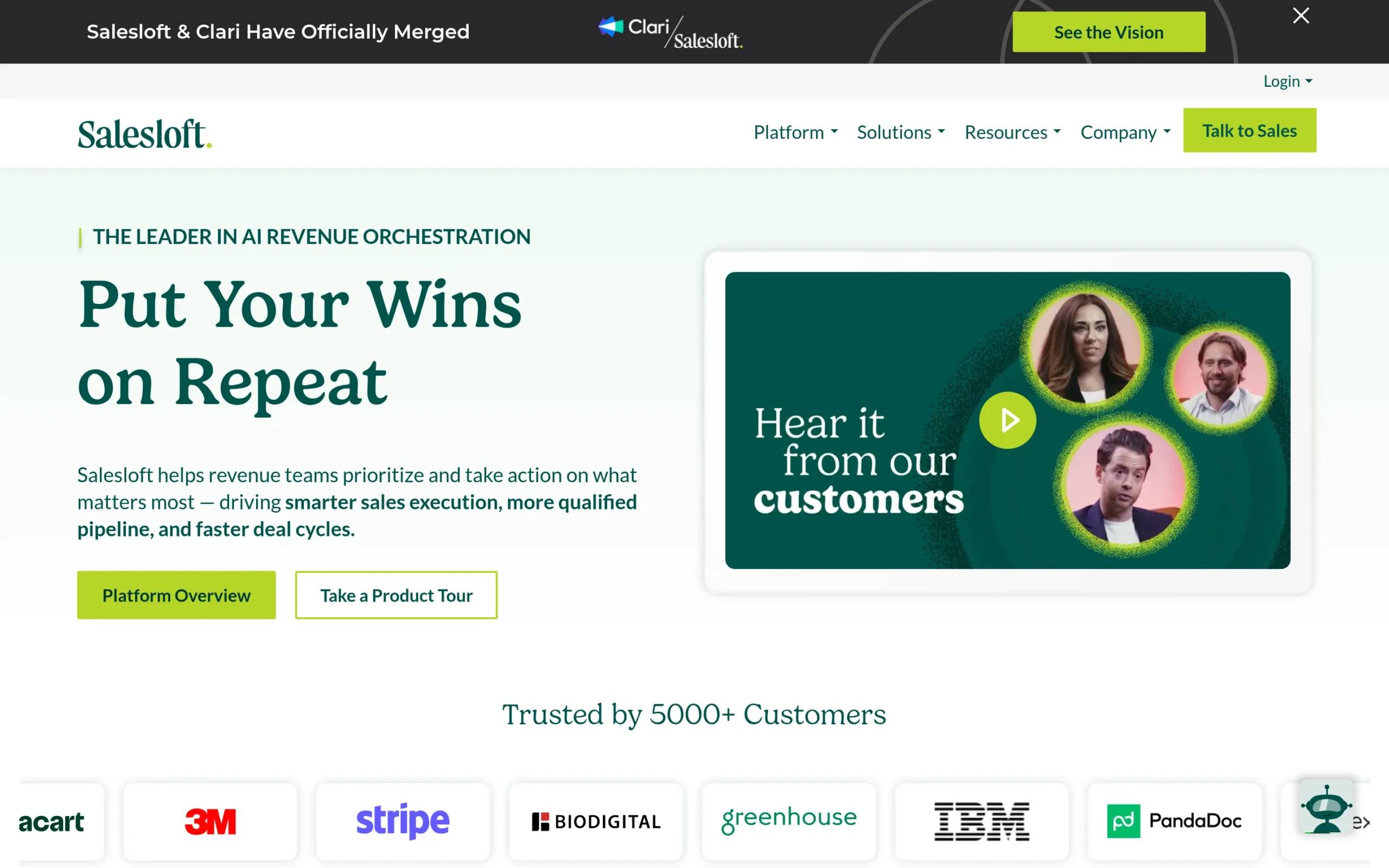
Salesloft is a comprehensive Revenue Orchestration Platform designed for mid-market to enterprise sales teams. It unifies sales engagement, conversation intelligence, deal management, and forecasting into a single platform, all powered by AI workflows. Salesloft focuses on helping revenue teams prioritize high-value actions and accelerate deal cycles through data-driven insights.
The platform is built for organizations with complex sales processes and multiple teams that need to coordinate around deals. Salesloft excels at providing visibility into buyer-seller interactions and using AI to surface the next best actions for sales reps.
Key Features
Cadence Automation: Build and automate sales pipeline workflows that help prioritize buyers and improve interactions across email, phone, and LinkedIn touchpoints.
Rhythm (AI Prioritization): Uses AI to analyze buyer signals and prioritize high-value actions for sellers, turning signals into actionable next steps that improve win rates.
Conversations (Intelligence): Records and analyzes buyer-seller interactions to provide coaching insights, helping managers scale best practices across the team.
Pros & Cons
Pros:
- Effective cadence automation makes it easy to organize and reach prospects at scale
- Strong email tracking and analytics capabilities
- High open and response rates reported by users
Cons:
- Steep learning curve, especially for new users
- Can be slow when working with large datasets
- Missing some features like inbound call handling
- Domain rotation can cause deliverability issues
Pricing
Pricing information is not publicly available. Salesloft offers packages for Engage, Call, Meet, Deal, Forecast, and Amplify with various add-ons, but specific costs require contacting their sales team. Pricing is per user with no platform fees, and support is included. No free trial is explicitly mentioned on their website.
Best For
Mid-market to enterprise sales organizations with complex sales cycles who need comprehensive revenue orchestration, conversation intelligence, and forecasting capabilities. Best suited for teams with 25+ sales reps who can justify the investment and navigate the learning curve.
3. Apollo
Overview
Apollo is a sales intelligence and engagement platform built around one of the largest business contact databases, with over 210 million contacts and 30 million companies. Apollo combines prospecting, outreach, and deal execution in a single platform, making it popular with B2B teams that prioritize data access alongside engagement capabilities.
The platform offers solutions for outbound sales, inbound lead conversion, data enrichment, and deal execution, all powered by workflow automation and AI. Apollo appeals to teams that want a unified solution without stitching together multiple tools.
Key Features
Massive Database Access: Access verified emails and phone numbers for over 210 million contacts and 30 million companies, with advanced search filters to find decision-makers by industry, geography, and other criteria.
Multichannel Campaigns: Run AI-powered email, phone, and LinkedIn outreach campaigns with built-in deliverability guardrails, prioritized task lists, and workflow automations.
Inbound Lead Conversion: Qualify and act on inbound leads with anonymous visitor identification, real-time form enrichment, instant routing with built-in scheduling, and automated nurture sequences.
Pros & Cons
Pros:
- User-friendly interface with powerful lead generation features
- Extensive database with 250+ million data points
- Advanced search filters for precise targeting
Cons:
- Data accuracy can be inconsistent
- Limited third-party integrations compared to competitors
- Occasional slowdowns during high usage periods
Pricing
Apollo offers several tiers:
- Free Plan: Limited credits and basic features
- Basic Plan: Expanded credits and features (specific pricing not publicly detailed)
- Professional Plan: Advanced features with higher credit limits
- Enterprise Plan: Custom pricing for large organizations
A free trial is available, though specific duration and credit card requirements aren’t specified. For detailed pricing, visit their pricing page directly.
Best For
Sales development teams and account executives in B2B environments who need both prospecting data and engagement tools in one platform. Particularly valuable for teams doing high-volume outbound who want to reduce tool sprawl.
4. HubSpot Sales Hub
Overview
HubSpot Sales Hub is part of HubSpot’s comprehensive customer platform, offering sales engagement tools tightly integrated with marketing, service, and CRM capabilities. HubSpot is known for its user-friendly interface and free CRM that grows with businesses, making it popular with companies that want a unified platform for all customer-facing teams.
Sales Hub automates prospecting, manages pipelines, and generates quality leads while providing the reporting and analytics needed to optimize sales processes. The platform is designed to scale from startups to enterprises, with different tiers offering increasing sophistication.
Key Features
Integrated CRM: All sales activities sit on top of HubSpot’s free, powerful CRM so contact data, deal information, and interactions are centralized and accessible to sales, marketing, and service teams.
Sales Automation: Automate repetitive tasks like follow-up emails, task creation, and data entry, freeing sales reps to focus on selling rather than administrative work.
Meeting Scheduling: Built-in calendar integration lets prospects book meetings directly, eliminating the back-and-forth of scheduling emails.
Pros & Cons
Pros:
- User-friendly interface with minimal learning curve
- Seamless integration across marketing, sales, and service functions
- Strong automation features that scale with business growth
Cons:
- Can become expensive quickly as you add seats and features
- Some advanced features locked behind higher-tier plans
- LinkedIn automation is limited compared to dedicated sales engagement tools
Pricing
HubSpot offers multiple pricing tiers for Sales Hub:
- Free Tools: $0/month with basic features for up to 2 seats
- Sales Hub Starter: Starting at $15/month per seat (monthly billing) or $9/month per seat (annual billing)
- Sales Hub Professional: $100/month per seat with advanced automation, deal stage management, and sales analytics
- Sales Hub Enterprise: $150/month per seat with custom reporting, predictive lead scoring, and advanced permissions
Free tools are available without a credit card. Professional and Enterprise plans require annual commitments.
Best For
Growing businesses that want an integrated platform connecting marketing, sales, and service teams. Ideal for companies already using HubSpot’s marketing or CRM tools, or those who prioritize ease of use and long-term scalability over specialized sales engagement features.
5. Reply
Overview
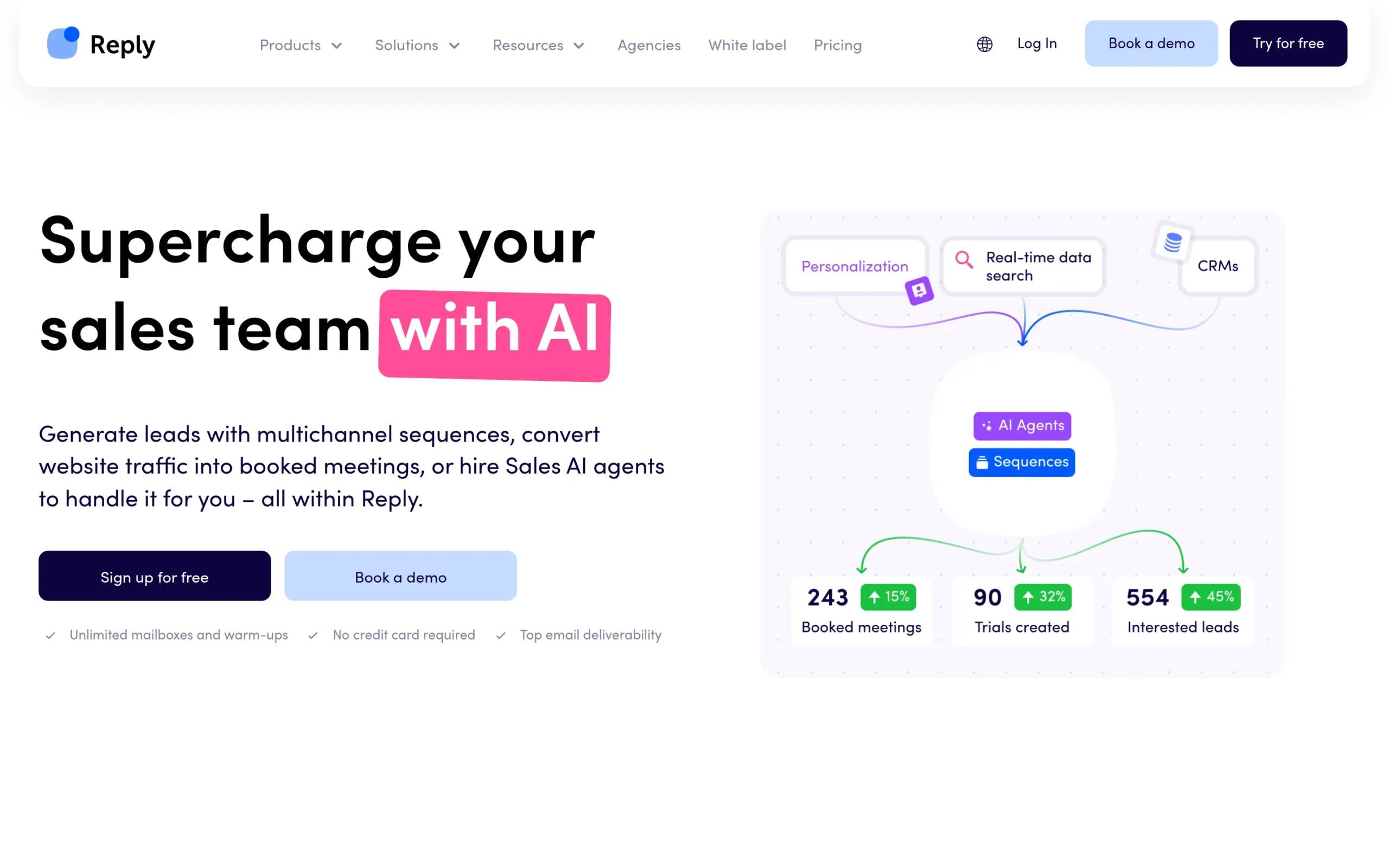
Reply is an AI-powered sales engagement platform focused on multichannel outreach automation. The platform helps sales teams identify audiences, generate personalized sequences, and handle follow-ups across email, LinkedIn, WhatsApp, SMS, and calls. Reply’s recent focus has been on AI-driven personalization and automation, including their AI SDR agent that operates autonomously.
Reply is designed for sales teams, business development professionals, and agencies that want to automate and scale their outreach efforts while maintaining personalization through AI.
Key Features
AI SDR Agent: Automates the entire sales process by identifying the right audience, generating personalized sequences, and managing follow-ups autonomously, increasing efficiency and sales opportunities.
Multichannel Conditional Sequences: Engage prospects through email, LinkedIn, WhatsApp, SMS, and calls in integrated dynamic sequences that adapt based on prospect behavior.
Email Deliverability Toolkit: Includes email health checker, Google Postmaster integration, unlimited email warm-up, and anti-spam measures to help emails land in inboxes rather than spam folders.
Pros & Cons
Pros:
- Strong automation features with AI-driven personalization
- Effective multichannel outreach capabilities
- User-friendly interface with good customer support
Cons:
- Occasional technical glitches reported by users
- Learning curve for new users despite the interface
- Pricing can be high for smaller teams
Pricing
Reply offers multiple plans:
- Email Volume Plan: $59/user/month (annual billing) with unlimited email warm-up, unlimited emails, and 50 live data credits monthly
- Multichannel Plan: $99/user/month (annual billing) including email, LinkedIn, calls, SMS, WhatsApp automation, and unlimited active contacts
- AI SDR Plan: $500/month with 24/7 operations, real-time contact search, and AI personalization
- Agency Plans: Starting at $210/month (Agency Core) and $500/month per client (Agency AI SDR) with multi-workspace features
Add-ons available: LinkedIn automation ($69/month per account) and calls & SMS ($29/month per account). Reply offers a 14-day free trial with no credit card required.
Best For
Sales teams and agencies focused on high-volume, multichannel outreach who want AI-driven automation and personalization. Particularly suited for teams running account-based sales strategies or managing outreach for multiple clients.
Which Outreach alternative is right for you?
Choosing the right platform depends on your specific situation, team size, and sales strategy. Here’s a framework to guide your decision:
If you prioritize multichannel outreach with strong LinkedIn capabilities, look for platforms that treat LinkedIn as a first-class channel rather than an add-on. The ability to combine connection requests, messages, voice messages, and email in coordinated sequences dramatically improves response rates. Consider whether you need intent data and social warming features.
If your team is small or just starting with outbound, prioritize ease of use, transparent pricing, and quick time-to-value. Complex enterprise platforms can overwhelm small teams. Look for tools with strong onboarding resources, intuitive interfaces, and pricing that scales with growth.
If you need comprehensive sales intelligence and data, evaluate database size, data accuracy, and enrichment capabilities. Some platforms excel at providing contact information while others focus more on engagement. Determine whether you need a built-in database or prefer integrating with separate data providers.
If CRM integration is critical, consider whether you need native, two-way sync with your existing CRM or whether Zapier integrations are sufficient. Teams heavily invested in HubSpot or Salesforce ecosystems may benefit from platforms with deep native integrations.
If budget is your primary constraint, compare total cost of ownership, not just base pricing. Factor in costs for additional seats, email sending addresses, enrichment credits, and any required add-ons. Some platforms appear cheaper until you add the features you actually need.
Frequently asked questions
What’s the main difference between sales engagement and CRM platforms?
Sales engagement platforms focus on automating outreach and communication with prospects, while CRMs organize and manage customer relationships and data. Many platforms today blur these lines, offering both engagement and CRM capabilities. The key is determining whether you need a specialized tool for outreach or a comprehensive platform that handles the full customer lifecycle.
How important is multichannel outreach vs. email-only campaigns?
Research consistently shows that multichannel sequences (combining email, LinkedIn, calls, etc.) generate 2-3x higher response rates than email alone. Different prospects prefer different channels, and reaching them where they’re most active significantly improves your chances of starting conversations. That said, multichannel outreach requires more setup and coordination, so evaluate whether your team can manage the added complexity.
Can I switch platforms mid-campaign, or should I wait?
While it’s possible to switch mid-campaign, it typically causes disruption. Most platforms don’t easily export campaign sequences and performance data in a format that imports cleanly elsewhere. If you’re considering a switch, plan for a transition period where you wind down campaigns on the old platform while ramping up on the new one. The best time to switch is at the end of a quarter or campaign cycle.
How do I evaluate deliverability capabilities when comparing platforms?
Look for features like email warm-up, domain health monitoring, spam testing, bounce management, and sending volume limits. Platforms that rotate between multiple sending addresses and provide detailed deliverability analytics help protect your sender reputation. Ask vendors about their average inbox placement rates and what deliverability support they offer.
Should startups use the same tools as enterprise teams?
Not necessarily. Enterprise platforms often include complexity, features, and pricing structures designed for large teams with sophisticated workflows. Startups typically benefit more from tools that are easy to implement, have transparent pricing, and offer strong support for small teams. As you scale, you can evaluate whether to upgrade to more robust platforms or stick with what works.
Conclusion
The sales engagement landscape offers strong alternatives to Outreach, each with distinct strengths. La Growth Machine stands out for teams serious about multichannel prospecting, particularly when LinkedIn plays a central role in your strategy. Our platform delivers higher response rates through true multichannel sequences, intent data targeting, and features like LinkedIn voice messages that add genuine personalization at scale.
We built La Growth Machine specifically to address common frustrations with traditional sales engagement platforms: opaque pricing, missing LinkedIn capabilities, and complexity that slows teams down. With transparent pricing starting at €50/month, a 14-day free trial, and onboarding designed to get you running campaigns within hours, we remove the friction that keeps teams from executing their outbound strategy.
Whether you’re a founder running your first outbound campaign, a sales manager scaling your team, or an agency managing multiple clients, La Growth Machine adapts to your needs without overwhelming you with unnecessary complexity.
Get 3.5X more leads!
Do you want to improve the efficiency of your sales department? With La Growth Machine you can generate on average 3.5x more leads while saving an incredible amount of time on all your processes.
By signing up today, you’ll get a free 14-day trial to test our tool!