

Introduction
Your sales team sends hundreds of emails, connection requests, and follow-ups every week. But without the right software campaign management system, those efforts scatter across inboxes, slip through the cracks, and disappear.
SaaS campaign management tools centralize your outreach across multiple channels. The best campaign management apps automate these touchpoints while keeping messages relevant and timely.
This comprehensive guide covers both strategic foundations and practical tools. You’ll learn how to build effective SaaS campaigns, track the metrics that matter, and choose the right platform for your team. We’ll compare the top 10 campaign management tools with detailed features, pricing, and use cases.
What is SaaS campaign management?
SaaS campaign management refers to cloud-based platforms that automate and coordinate sales outreach across multiple channels. These tools handle everything from sequence building and lead enrichment to conversation tracking and performance analytics.
Unlike basic email tools, campaign management software orchestrates complex workflows. You can trigger a LinkedIn connection request, follow up via email if they don’t respond, and add a manual call reminder—all from one automated sequence.
Key use cases:
- Multichannel outreach: Coordinate LinkedIn, email, calls, and social media from one platform
- Lead enrichment: Find verified emails and company data automatically
- Sequence automation: Build if/then workflows that adapt to prospect behavior
- Performance tracking: Monitor reply rates, conversions, and channel effectiveness
- Team collaboration: Share templates, manage conversations, and sync with your CRM
Who needs a campaign management app?
B2B sales teams, SDRs, growth marketers, and agencies running systematic outbound campaigns. If you’re sending more than 50 personalized messages per week, you need automation. If you’re using 2+ channels, you need a unified system.
Small teams (1-5 people) benefit from affordable tools with strong automation. Mid-size teams (6-20) need multichannel capabilities and team features. Agencies require white-labeling and client management tools.
Why SaaS Campaign Management is Different
SaaS campaign management operates in a fundamentally different paradigm than traditional B2B marketing. While conventional sales focus on closing one-time deals, SaaS businesses optimize for recurring revenue and customer lifetime value. This shift transforms every aspect of how campaigns are designed, executed, and measured.
Traditional B2B sales cycles typically culminate in a single transaction. Once the deal closes, the relationship shifts to account management or support. SaaS flips this model entirely: the initial sale is just the beginning. Free trials, freemium tiers, and product-led growth motions mean prospects can evaluate your product before committing financially. The “sale” happens continuously as customers decide each month or year whether to renew.
This subscription model introduces complexity that traditional campaign approaches simply cannot address. A manufacturing company selling industrial equipment optimizes for deal size and margins. A SaaS company must simultaneously optimize for acquisition cost, activation rate, feature adoption, expansion revenue, and churn prevention. Each of these touchpoints requires coordinated campaigns across months or years of the customer relationship.
The multi-stakeholder nature of SaaS purchases adds another layer of complexity. In traditional B2B, you might engage with 2-3 decision makers before closing. Modern SaaS deals—particularly enterprise contracts—involve 6-10 stakeholders across engineering, security, legal, procurement, and end-user teams. Campaign management must orchestrate personalized touchpoints for each persona simultaneously while maintaining message consistency.
Product-led growth has further transformed SaaS go-to-market strategies. When users can sign up and experience value within minutes, your campaign infrastructure must support self-service journeys while identifying opportunities for sales intervention. This requires behavioral triggers, usage-based segmentation, and real-time automation that traditional marketing platforms were never designed to handle.
Multi-touch attribution becomes critical in this environment. SaaS customers rarely convert from a single touchpoint. They might discover you through organic search, engage with educational content, test your product during a trial, attend a webinar, and finally convert after a sales call. Campaign management tools must track these complex journeys and attribute revenue appropriately across channels.
The shift from one-time sales to lifetime value optimization fundamentally changes success metrics. Traditional B2B measures deal close rate and initial contract value. SaaS businesses track customer acquisition cost relative to lifetime value, net revenue retention, expansion MRR, and payback periods. Your campaign infrastructure must support this metric complexity while delivering actionable insights that drive revenue growth.
This is why dedicated SaaS campaign management platforms have emerged as essential infrastructure. Generic marketing automation tools lack the multi-channel coordination, behavioral triggers, and revenue attribution capabilities that subscription businesses require. The platforms covered later in this guide address these specific challenges with purpose-built features for the SaaS sales model.
The Complete SaaS Marketing Funnel
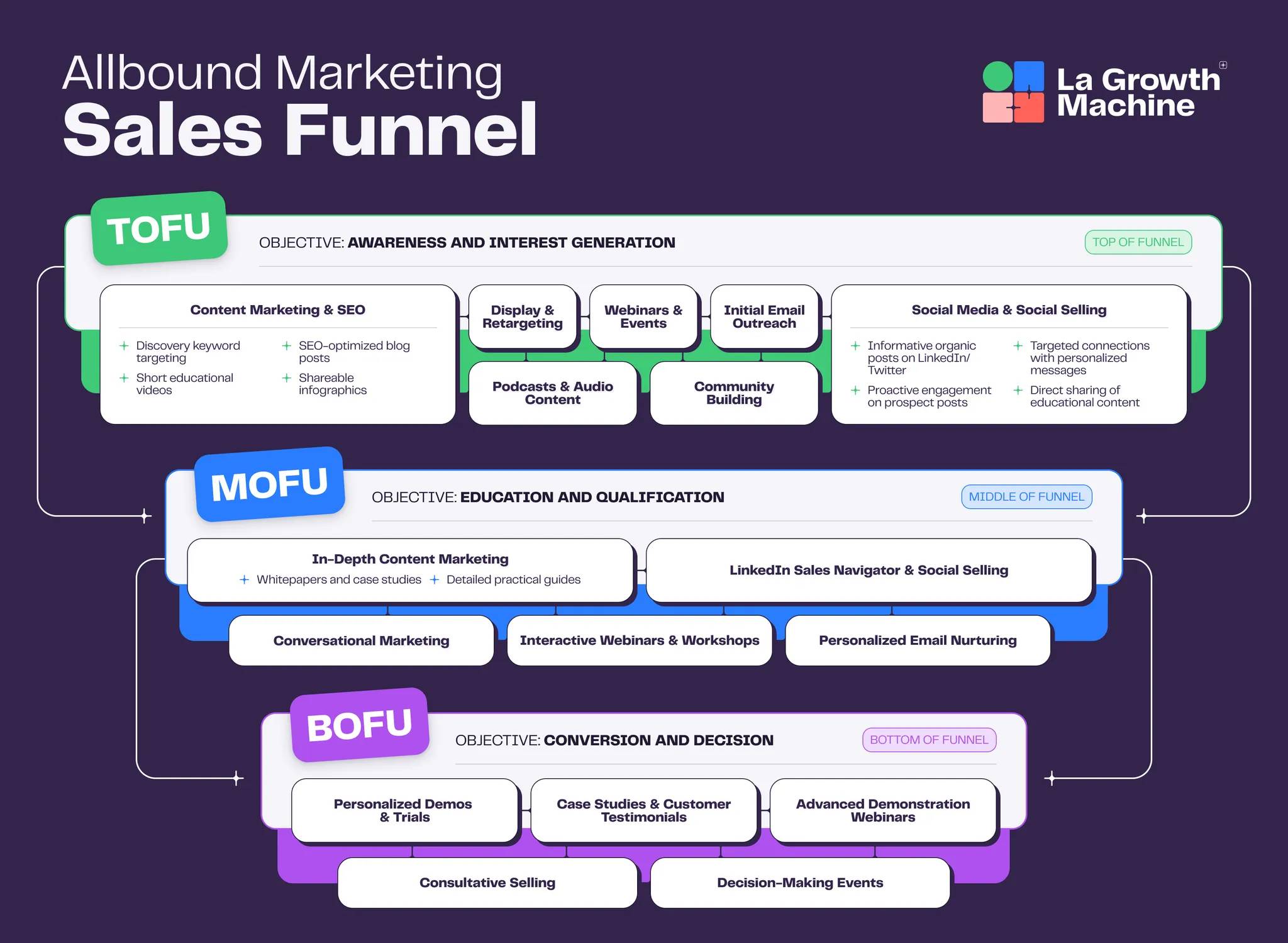
Understanding the SaaS marketing funnel is essential for effective campaign management because each stage requires different tactics, messaging, and success metrics. Unlike traditional linear funnels that end at purchase, SaaS funnels extend through retention and expansion phases where the real revenue is generated.
The modern SaaS funnel recognizes that customer relationships evolve through distinct phases, each with specific objectives. At awareness, you’re building market presence and attracting your ideal customer profile. Consideration focuses on demonstrating unique value and differentiating from alternatives. Conversion optimizes trial experiences and removes friction from buying decisions. But the funnel doesn’t end there—retention ensures customers achieve their goals and stay subscribed, while expansion maximizes revenue through upsells, cross-sells, and advocacy.
Awareness Stage
The awareness stage focuses on reaching your target audience and establishing your brand in their consideration set. For SaaS companies, this primarily happens through content marketing, SEO, social media, paid advertising, and thought leadership that educates prospects about their problems before pitching solutions.
Tactics include:
- Educational blog content targeting top-of-funnel keywords
- SEO-optimized guides and resources that rank for problem-focused searches
- Social media presence on platforms where your ICP engages (LinkedIn for B2B, Twitter for technical audiences)
- Paid ads on Google, LinkedIn, and retargeting networks
- Thought leadership through podcasts, speaking engagements, and industry publications
- Free tools and calculators that provide immediate value
Key metrics at this stage:
- Website traffic and traffic sources
- Keyword rankings for target terms
- Brand search volume
- Social media followers and engagement rates
- Content shares and backlinks
- Paid ad impressions and click-through rates
Campaign management role: At awareness, campaign management tools distribute top-of-funnel content to targeted audiences, amplify high-performing posts across social channels, and capture contact information from content downloads and free tools. Automated sequences nurture these cold leads with educational content without pushing for immediate sales conversations. Tools like La Growth Machine enable multichannel awareness campaigns that combine LinkedIn outreach with email follow-ups to build initial relationships at scale.
Consideration Stage
Once prospects are aware of their problem and potential solutions, they enter consideration where they evaluate specific platforms and approaches. This stage focuses on demonstrating unique value, building trust through social proof, and positioning your solution against alternatives.
Tactics include:
- Product comparison pages (your tool vs competitors)
- Detailed case studies showing quantified results
- Webinars demonstrating product capabilities and use cases
- Free tools that showcase your expertise
- Demo videos and product tours
- Customer testimonials and reviews
- ROI calculators and business case templates
Key metrics at this stage:
- Marketing Qualified Leads (MQLs) generated
- Content engagement rate (time on page, scroll depth)
- Content downloads and webinar registrations
- Demo request conversion rate
- Comparison page traffic and engagement
- Case study views and shares
Campaign management role: Campaign platforms nurture consideration-stage leads through automated sequences that deliver relevant content based on behavior and firmographic data. If a prospect views your pricing page but doesn’t convert, trigger a sequence with case studies from similar companies. If they attend a webinar, follow up with related resources and offer a personalized demo. La Growth Machine’s LinkedIn Intents feature detects when prospects engage with your content and triggers timely follow-ups that feel personal rather than automated.
Conversion Stage
Conversion focuses on moving qualified prospects into trial or paid subscriptions. For product-led SaaS, this means optimizing trial signup flows and early product experiences. For sales-led models, it means booking demos and moving opportunities through the pipeline efficiently.
Tactics include:
- Frictionless trial signup flows
- Personalized product demos tailored to use case
- Sales conversations focused on specific business problems
- Objection handling content (security, integration concerns, pricing)
- Social proof at point of decision (reviews, testimonials, customer logos)
- Risk reduction through free trials, money-back guarantees, or flexible contracts
- Proposal automation and contract management
Key metrics at this stage:
- Trial signup conversion rate
- Demo request to demo completed rate
- Sales Qualified Leads (SQLs) generated
- Trial-to-paid conversion rate
- Sales cycle length
- Win rate by lead source and segment
- Average contract value
Campaign management role: Conversion campaigns reduce friction and maintain momentum through the buying process. Automated demo follow-ups ensure prospects receive proposals within 24 hours. Trial onboarding sequences guide users to their “aha moment” quickly. For sales-led motions, campaign tools like La Growth Machine coordinate multichannel sequences that combine email, LinkedIn messages, and call reminders to book and confirm meetings efficiently.
Retention Stage
Retention determines long-term SaaS success because acquiring new customers costs 5-7x more than retaining existing ones. This stage focuses on ensuring customers achieve their goals, adopt key features, and remain engaged with your product.
Tactics include:
- Onboarding programs that guide users to initial value
- Customer success check-ins at key milestones (30, 60, 90 days)
- Feature adoption campaigns promoting underutilized capabilities
- Educational content (knowledge base, video tutorials, certification programs)
- Health score monitoring and at-risk customer interventions
- Community building through user groups and forums
- Proactive support based on usage patterns
Key metrics at this stage:
- Activation rate (percentage reaching key product milestones)
- Feature adoption across product capabilities
- Product usage frequency and depth
- Net Promoter Score (NPS) and customer satisfaction
- Customer churn rate (both logo and revenue)
- Time to value realization
- Support ticket volume and resolution time
Campaign management role: Retention campaigns use behavioral triggers to keep customers engaged and address problems before they lead to churn. If usage drops below thresholds, trigger re-engagement sequences with tips and support resources. When customers reach milestones, celebrate their progress and introduce advanced features. Campaign platforms track engagement signals and alert customer success teams when accounts need human intervention.
Expansion Stage
Expansion revenue—through upsells, cross-sells, and increased usage—drives net revenue retention above 100% and separates high-growth SaaS companies from stagnant ones. This stage focuses on deepening customer relationships and expanding account value over time.
Tactics include:
- Usage-based upgrade prompts when customers approach plan limits
- Cross-sell campaigns for complementary products
- Feature upsells to premium capabilities
- Seat expansion campaigns to grow team adoption
- Referral programs that turn customers into advocates
- Annual contract upgrades for monthly subscribers
- Partner co-selling opportunities
Key metrics at this stage:
- Expansion MRR (monthly recurring revenue from existing customers)
- Upsell and cross-sell conversion rates
- Net Revenue Retention (NRR)
- Average revenue per account (ARPA) growth
- Referral conversions and customer-sourced pipeline
- Customer Lifetime Value (LTV) trends
- Advocacy metrics (reviews, case study participation, referrals)
Campaign management role: Expansion campaigns identify opportunities based on usage patterns and trigger personalized upgrade offers at optimal moments. When customers consistently hit usage limits, automated sequences present upgrade options with clear ROI justification. Referral campaigns systematically ask satisfied customers to recommend your product to peers. La Growth Machine’s multichannel capabilities enable expansion teams to coordinate outreach across email and LinkedIn for both upsell conversations and referral generation.
Key SaaS Metrics to Track
SaaS campaign success cannot be measured by traditional metrics like click-through rates or lead volume alone. The subscription business model requires tracking unit economics and customer lifecycle metrics that directly connect marketing activities to revenue outcomes. Campaign management platforms must integrate with your data infrastructure to surface these metrics in real-time, enabling rapid optimization based on what actually drives business growth.
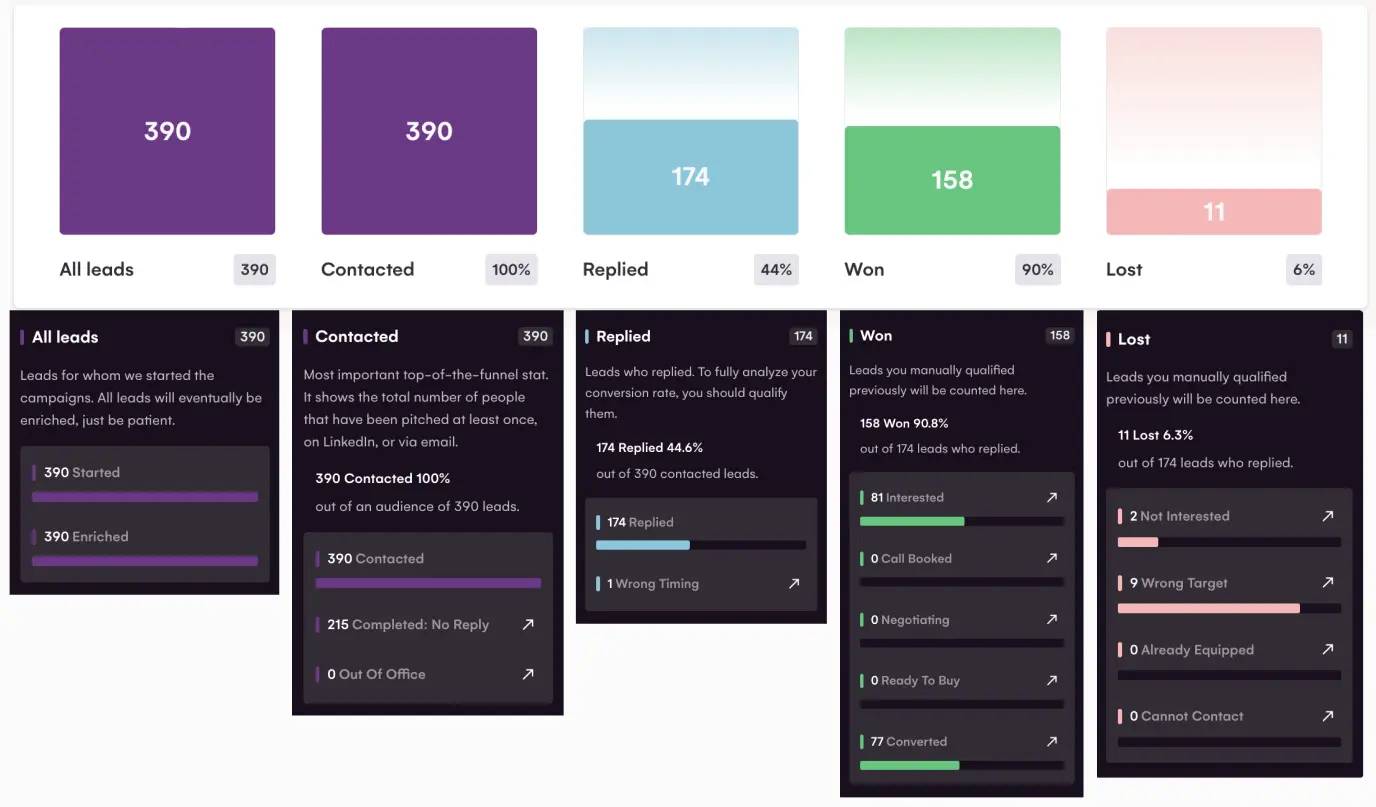
Customer Acquisition Cost (CAC)
Customer Acquisition Cost represents the total sales and marketing spend required to acquire a single new customer. It’s calculated by dividing all sales and marketing expenses (salaries, software, advertising, overhead) by the number of new customers acquired in that period.
Formula: CAC = (Sales & Marketing Expenses) / (New Customers Acquired)
Benchmark: CAC varies significantly by market segment. Self-serve SMB SaaS typically targets CAC under $500, while enterprise SaaS might accept CAC of $10,000-50,000+ for contracts worth hundreds of thousands annually. The critical metric is CAC relative to Lifetime Value (LTV:CAC ratio, covered below).
How campaign management affects CAC: Efficient campaign automation reduces CAC by scaling personalized outreach without proportional headcount increases. Instead of SDRs manually prospecting and following up, campaign platforms like La Growth Machine automate sequences across email and LinkedIn, allowing teams to reach 3.5x more prospects with the same resources. Better targeting and personalization also improve conversion rates at each funnel stage, acquiring more customers from the same marketing spend.
Lifetime Value (LTV)
Lifetime Value estimates the total revenue a customer will generate throughout their relationship with your company. It factors in monthly recurring revenue, gross margin, and expected customer lifespan (inverse of churn rate).
Formula: LTV = (ARPA × Gross Margin) / Churn Rate
Where ARPA is Average Revenue Per Account monthly, and Churn Rate is monthly percentage.
LTV:CAC Ratio: The gold standard metric comparing customer value to acquisition cost. Healthy SaaS companies target 3:1 or higher—meaning each customer generates at least 3x their acquisition cost in lifetime profit. Ratios below 3:1 suggest unsustainable unit economics, while ratios above 5:1 might indicate underinvestment in growth.
Campaign’s role in maximizing LTV: Campaign management directly impacts both sides of the LTV equation. Onboarding campaigns improve activation rates, driving lower churn and longer customer lifespans. Expansion campaigns drive upsells and increased ARPA. Retention campaigns reduce churn through proactive engagement. A customer acquired through multichannel campaigns that include educational nurturing often has 20-30% higher LTV than customers acquired through single-touch paid ads because they start with deeper product understanding and stronger brand relationship.
Monthly Recurring Revenue (MRR) & Annual Recurring Revenue (ARR)
MRR and ARR represent the normalized recurring revenue your business generates monthly or annually. Unlike traditional revenue metrics that fluctuate with one-time purchases, MRR and ARR provide predictable baselines for SaaS financial planning.
Why it matters: MRR is the heartbeat metric of SaaS businesses. It encompasses new MRR (from new customers), expansion MRR (upsells and cross-sells), churned MRR (lost customers), and contraction MRR (downgrades). ARR (MRR × 12) is typically used for companies with primarily annual contracts.
Net Revenue Retention (NRR): This critical metric measures revenue retention from existing cohorts, including expansion and churn. NRR above 100% means existing customers generate more revenue over time through upsells than you lose to churn. Top-quartile SaaS companies achieve 120%+ NRR, meaning they could grow 20% annually without acquiring a single new customer.
Campaign impact on expansion MRR: Strategic expansion campaigns systematically drive NRR above 100%. Usage-based upgrade prompts, cross-sell sequences, and seat expansion campaigns generate expansion MRR that compounds over time. Campaign platforms with CRM integration can trigger expansion sequences automatically when customers hit usage thresholds or demonstrate high engagement, capturing revenue opportunities that would otherwise be missed.
Churn Rate
Churn rate measures the percentage of customers who cancel subscriptions within a given period. SaaS companies track both customer churn (logo churn) and revenue churn (MRR churn), which differ when larger customers churn at different rates than smaller ones.
Formula: Monthly Churn Rate = (Customers Lost in Month) / (Customers at Start of Month)
Benchmark by segment: SMB SaaS typically sees 3-7% monthly churn (36-58% annually), mid-market 1-2% monthly (12-22% annually), and enterprise below 1% monthly (under 10% annually). Product quality, market fit, and customer success efforts all influence these rates significantly.
How campaigns reduce churn: Proactive retention campaigns identify at-risk customers before they cancel. If product usage drops below thresholds, automated sequences can trigger with support resources, tips for getting more value, or offers to speak with customer success. Re-engagement campaigns remind dormant users of features they haven’t explored. Exit prevention campaigns can intercept cancellation attempts with retention offers. Campaign platforms with behavioral tracking enable these interventions at scale, reducing churn by 10-25% compared to reactive approaches.
Payback Period
Payback period measures how many months it takes for a customer to generate enough gross profit to recover their acquisition cost. It’s calculated by dividing CAC by monthly gross profit per customer.
Formula: Payback Period = CAC / (MRR × Gross Margin)
Target: Under 12 months. Best-in-class SaaS companies achieve payback in 6-12 months, meaning they can profitably reinvest revenue to fuel growth without requiring constant capital infusions. Payback periods above 18 months strain cash flow and limit scaling velocity.
Campaign efficiency’s impact: Efficient campaign management shortens payback periods by reducing CAC and accelerating time-to-value. Automated onboarding sequences help customers activate faster, reducing early churn that extends payback. Multichannel campaigns with higher conversion rates acquire customers at lower CAC. Expansion campaigns that drive rapid upsells can cut payback periods in half by increasing the denominator (monthly gross profit per customer).
Activation Rate
Activation rate measures the percentage of new users who reach their “aha moment”—the point where they experience core product value and are far more likely to convert and retain. This metric bridges acquisition and retention, focusing on the critical early product experience.
Definition: Percentage of trial users or new signups who complete key actions that predict long-term retention. For an email automation platform, activation might mean sending their first campaign. For a CRM, it might mean logging 20+ contacts and creating their first deal.
Importance for retention: Activated users churn at 40-70% lower rates than non-activated users. A customer who reaches their aha moment within 7 days has fundamentally different retention curves than one who takes 30 days or never activates at all. Improving activation is often the highest-leverage intervention in SaaS growth.
Campaign’s role in driving activation: Onboarding campaigns guide users through critical setup steps with triggered emails, in-app messages, and personalized outreach from customer success. Behavioral triggers detect when users get stuck and offer help automatically. Campaign platforms like La Growth Machine can combine email onboarding with LinkedIn messages from founders or customer success managers for high-touch accounts, dramatically improving activation rates through multichannel coordination that feels personal and timely.
Core SaaS Campaign Strategies
Effective SaaS campaign management requires a portfolio approach—combining multiple strategies across channels to address different segments, buying stages, and customer lifecycle phases. No single channel or tactic drives sustainable growth; instead, high-performing SaaS companies orchestrate campaigns that work synergistically to generate pipeline, convert trials, and expand accounts.
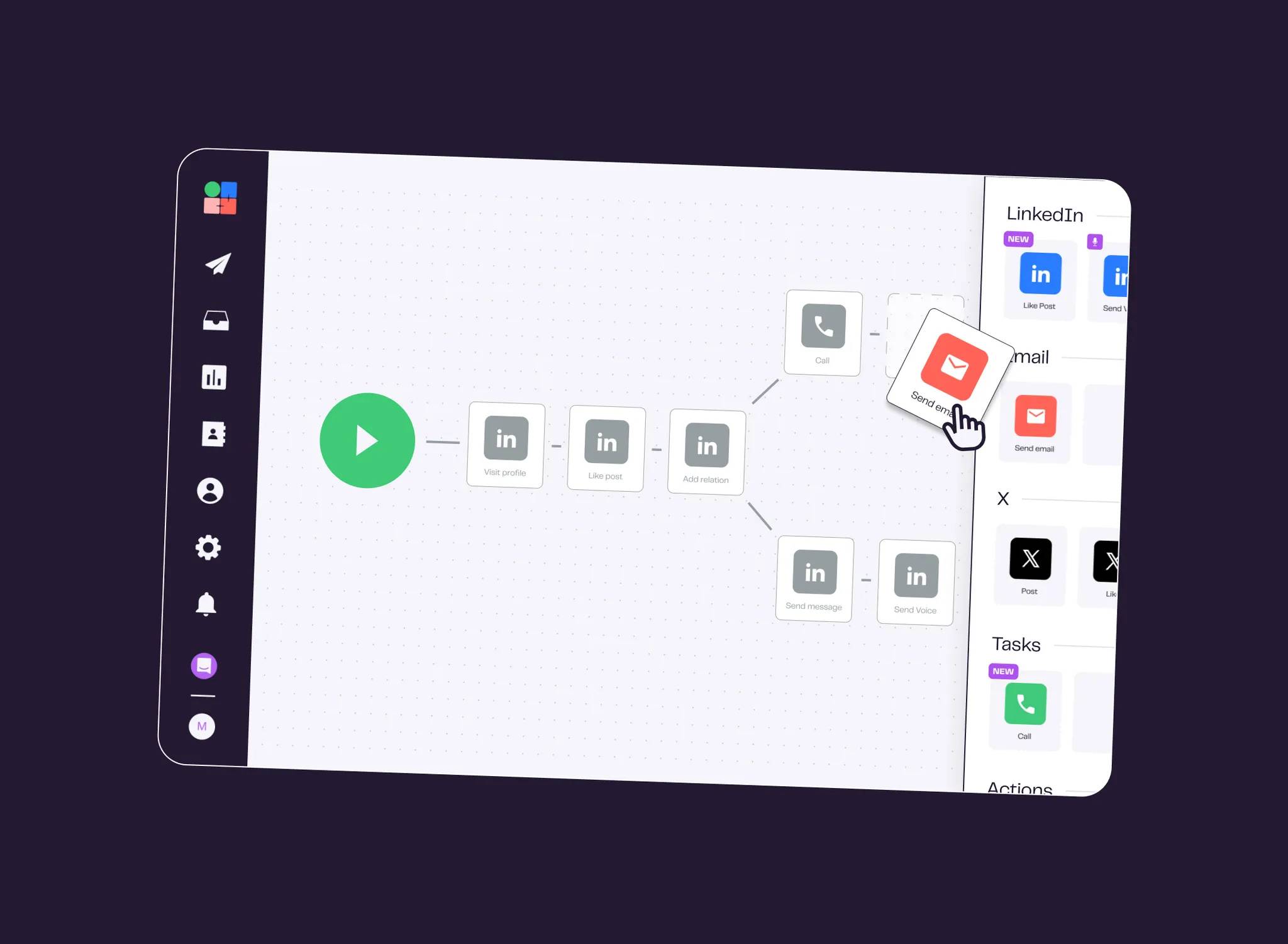
The balance between inbound and outbound varies by ideal customer profile and deal size. PLG companies with low-touch sales models lean heavily on inbound content and product-led acquisition. Enterprise SaaS with six-figure contracts requires coordinated outbound sequences targeting named accounts. Most B2B SaaS companies operate somewhere between these extremes, requiring integrated campaigns across both motions.
Channel selection depends on where your ICP consumes information and makes buying decisions. B2B buyers are active on LinkedIn, so cold outreach through that channel often outperforms traditional cold calling. Technical buyers engage with detailed content, making SEO and technical blogs high-ROI channels. Marketing leaders respond well to paid social advertising. Understanding these channel affinities allows you to allocate campaign resources where they’ll generate the highest return.
Multi-touch attribution becomes essential when campaigns span multiple channels and touchpoints. A customer might discover you through organic search, engage with LinkedIn content, sign up for a webinar, start a trial, and convert after a sales call. Simplistic last-touch attribution credits only the sales call, while first-touch credits only the blog post. Multi-touch models recognize that each interaction contributed to the outcome. Campaign management platforms with robust attribution help you understand true channel ROI and optimize budget allocation accordingly.
Content Marketing & SEO
Content marketing remains the foundation of inbound SaaS growth because it generates compounding returns over time. Unlike paid ads that stop delivering when you stop spending, high-quality content continues attracting organic traffic and generating leads for years after publication.
Educational content for awareness targets top-of-funnel keywords where prospects are researching problems rather than solutions. A project management SaaS might create content about “how to manage remote teams” or “agile vs waterfall methodology” rather than only targeting branded comparison terms. This content builds domain authority, generates backlinks, and establishes thought leadership that pays dividends throughout the buying journey.
Bottom-funnel content accelerates conversions through comparison pages, case studies, and implementation guides. Prospects researching “Asana vs Monday vs Clickup” are in active evaluation mode. Creating comprehensive comparisons that objectively present your strengths positions you as a trusted resource while capturing high-intent traffic. Case studies with quantified results provide social proof at the moment of decision.
SEO generates long-term compounding returns when approached strategically. Rather than chasing high-volume generic terms, focus on bottom-funnel keywords with clear commercial intent and reasonable competition. Target keywords that indicate specific use cases, comparisons with competitors, or problem-focused searches that your product solves. Rank for 50 bottom-funnel keywords that generate 5 qualified leads each monthly (250 total), and you’ve built a sustainable pipeline engine.
Campaign management tools distribute this content strategically. When prospects engage with specific topics, trigger automated sequences delivering related resources. If someone downloads your “Guide to Sales Automation,” follow up with case studies about sales teams achieving similar goals. Tools like La Growth Machine can amplify high-performing content through LinkedIn by automatically sharing with targeted prospects and following up with those who engage—turning passive content into active outbound campaigns.
Account-Based Marketing (ABM)
Account-Based Marketing treats individual high-value accounts as markets of one, orchestrating personalized campaigns across multiple stakeholders within target organizations. ABM makes economic sense when customer lifetime values justify the investment in personalized campaigns.
When to use ABM: Companies with average contract values above $50,000 and sales cycles involving multiple stakeholders benefit most from ABM. If you’re targeting 500 enterprise accounts rather than 50,000 SMBs, personalizing campaigns for each account generates dramatically better results than generic outreach. ABM also works for strategic accounts in expansion phases where landing additional teams or divisions justifies focused investment.
Personalized campaigns address each account’s specific situation, competitive landscape, and stakeholder concerns. Instead of generic emails about “increasing productivity,” ABM campaigns reference the account’s recent earnings call, expansion into new markets, or published challenges. This relevance dramatically improves response rates—personalized ABM campaigns often generate 3-5x higher engagement than generic outreach.
Multichannel sequences coordinate touchpoints across email, LinkedIn, direct mail, and phone calls. A typical enterprise ABM sequence might include LinkedIn connection requests from sales reps, personalized emails from marketing, relevant content shares from executives, and eventual phone outreach. Each channel reinforces the others, building familiarity and trust before requesting a meeting.
Tools like La Growth Machine enable ABM at scale by automating personalized multichannel sequences while maintaining the human touch. You can create account-specific campaigns that reference each company’s situation, coordinate outreach across your team to different stakeholders, and track engagement across all touchpoints. The platform’s cloud-based infrastructure ensures LinkedIn automation remains safe and compliant while scaling ABM programs beyond what manual outreach could achieve.
Email Nurturing Sequences
Email remains the workhorse channel for SaaS campaigns because it scales infinitely, supports rich content, and integrates seamlessly with CRMs and analytics platforms. Effective email nurturing moves prospects through buying stages with relevant content delivered at optimal timing.
Welcome series for new signups set the foundation for customer relationships. When someone joins your email list or signs up for a trial, automated welcome sequences introduce your brand story, highlight key features, and guide users toward activation. These sequences typically span 7-14 days with 5-8 messages, balancing education with clear calls-to-action.
Trial nurturing campaigns maximize conversion by removing friction and demonstrating value during evaluation periods. Day 1 confirms successful signup and outlines next steps. Days 2-4 guide users through core features with video tutorials and use case examples. Day 7 addresses common objections with customer testimonials and ROI data. Days 10-13 create urgency as trial expiration approaches while offering support for users who haven’t activated.
Re-engagement campaigns target churned leads or inactive users who showed initial interest but didn’t convert. These sequences acknowledge the time gap, offer new value (updated features, new case studies, limited offers), and ask what prevented initial purchase. Re-engagement often converts at 10-15% of initial campaigns but requires near-zero incremental effort once automated.
Behavioral triggers elevate email campaigns beyond time-based sequences by responding to specific user actions. If a trial user explores pricing pages but doesn’t upgrade, trigger an email addressing pricing questions with comparison calculators. If they haven’t logged in for 5 days, send tips for quick wins. Campaign platforms with robust behavioral tracking make these sophisticated automations accessible without requiring engineering resources.
LinkedIn Prospecting
LinkedIn has become the primary channel for B2B prospecting because decision-makers actively use the platform professionally, profile data enables precise targeting, and multi-channel engagement (connections, messages, content interaction) builds relationships before pitching meetings.
Building targeted prospect lists starts with LinkedIn’s filtering capabilities (title, company size, industry, location) combined with intent signals (recent job changes, company growth, engagement with specific content). Export these lists or use campaign platforms with LinkedIn integration to launch coordinated outreach campaigns.
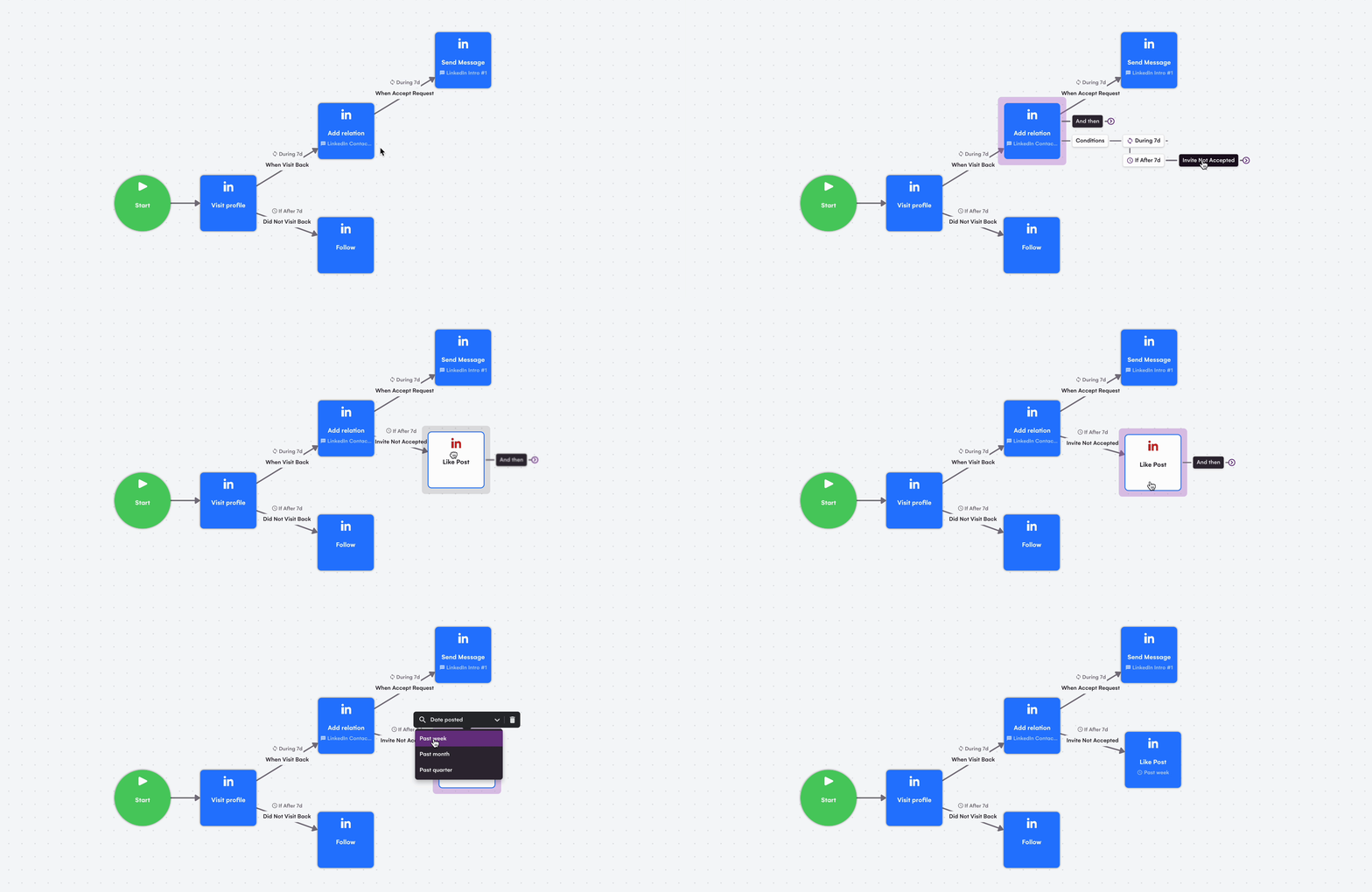
Connection + messaging sequences follow a relationship-building approach rather than immediate hard selling. Step 1 sends a personalized connection request referencing a genuine commonality or reason to connect. Once connected, wait 2-3 days before sending an initial message focused on providing value (sharing a relevant resource, offering insights) rather than booking meetings. Subsequent messages can include case studies, invite to webinars, or eventually propose a conversation if engagement indicates interest.
Voice messages dramatically improve engagement on LinkedIn because they stand out in crowded inboxes and add human personality to outbound campaigns. A 20-second video introducing yourself and mentioning something specific about their company can generate 3-4x higher response rates than text-only messages. Campaign platforms increasingly support video message integration in automated sequences while maintaining personalization at scale.
Safety considerations matter critically for LinkedIn automation. LinkedIn actively detects and bans accounts using browser extensions or tools that violate their Terms of Service. Cloud-based platforms like La Growth Machine avoid these risks by operating through dedicated IP infrastructure rather than your personal browser, dramatically reducing ban rates. Their Social Warming feature gradually increases activity to mimic human behavior patterns, maintaining account safety while scaling LinkedIn campaigns to hundreds of prospects weekly.
Free Trial Optimization
Free trials remain the dominant conversion mechanism for B2B SaaS because they reduce buying friction and align incentives—customers pay only after experiencing value. Trial optimization focuses on maximizing the percentage of trials that activate and convert to paid subscriptions.
Trial onboarding sequences guide users from signup to activation through automated education and engagement campaigns. These sequences typically include welcome emails with setup checklists, feature highlight messages with tutorial videos, use case examples relevant to the user’s industry, and proactive support offers if users appear stuck.
Feature adoption campaigns introduce users to capabilities they haven’t explored, expanding their perception of product value. If a trial user only uses basic features, trigger sequences showcasing advanced automation or integrations that solve their pain points more completely. Campaign platforms with product analytics integration can trigger these campaigns based on actual usage patterns rather than generic timelines.
Usage-based triggers create personalized experiences that respond to individual trial behavior. If a user completes key activation steps, celebrate their progress and introduce next-level features. If they haven’t logged in for 3 days, send re-engagement messages with quick-start tips or offer a live onboarding call. If they approach trial expiration without activating, trigger urgent assistance campaigns offering dedicated support.
Trial-to-paid conversion tactics intensify as expiration approaches, creating urgency while removing final objections. Send comparison content positioning your solution against alternatives they’re likely evaluating. Share customer success stories from similar companies. Offer limited-time discounts or extended trials for users who need more evaluation time. Make upgrading frictionless with one-click checkout flows pre-populated with their information.
Customer Referral Programs
Referral programs turn satisfied customers into systematic lead generation channels, generating high-quality prospects at low acquisition cost. Referred customers typically convert 30-50% better than cold leads because they arrive with trust pre-established through peer recommendation.
Incentivizing referrals through campaigns makes asking systematic rather than occasional. Automated campaigns triggered by positive NPS responses, renewal events, or expansion purchases ask satisfied customers to recommend your product to colleagues. Offer dual incentives (value for both referrer and referee) to maximize participation—account credits, extended features, or even cash rewards depending on customer LTV.
Automated referral request workflows identify optimal moments to ask for referrals based on customer health scores and engagement signals. Request referrals after customers achieve milestones, receive recognition for results, or express satisfaction in support interactions. Campaign platforms can trigger these requests automatically while making the referral process frictionless with personalized referral links and pre-written social sharing content.
Tracking referral attribution requires integrating campaign platforms with CRMs to monitor which referrals convert and calculating referral program ROI. Assign unique referral codes or links to each customer, track referred lead progression through your funnel, and attribute revenue back to referral sources. This data justifies program investment and identifies your most effective advocates.
Amplification through existing customers extends beyond direct referrals to reviews, case studies, and social proof. Campaign sequences can request G2 or Capterra reviews from satisfied users, invite customers to participate in case studies, or ask permission to use their testimonials in marketing. This social proof compounds the value of referral programs by building trust with prospects throughout the buying journey.
Retention & Expansion Campaigns
Retention and expansion campaigns maximize customer lifetime value by preventing churn and systematically growing account revenue over time. Since acquiring new customers costs 5-7x more than retaining existing ones, these campaigns often generate the highest ROI in your entire marketing portfolio.
Usage monitoring and engagement campaigns track product adoption and trigger interventions when customers show disengagement signals. If login frequency drops, sessions become shorter, or key features go unused, automated campaigns offer assistance, share success tips, or flag accounts for customer success outreach. These proactive interventions reduce churn by addressing problems before they lead to cancellation.
Upsell triggers based on usage patterns identify natural expansion opportunities when customers outgrow current plans. If customers consistently approach usage limits, trigger upgrade campaigns explaining how the next tier solves their constraints. If they adopt features only available in higher plans, campaigns can educate them about other premium capabilities they’re missing. Campaign platforms with product usage integration make these triggers seamless and timely.
Cross-sell opportunities emerge when customers succeed with your core product and face adjacent problems your portfolio addresses. If a customer heavily uses email automation, campaigns can introduce LinkedIn automation capabilities that drive 3.5x higher response rates through multichannel coordination. If they export data frequently, introduce native integrations that eliminate manual work. Each cross-sell deepens product stickiness while increasing account value.
Churn prevention campaigns intercept at-risk customers before cancellation by addressing concerns and demonstrating renewed value. Monitor payment failures, support ticket sentiment, declining usage, and low NPS scores as churn signals. Trigger campaigns offering dedicated success resources, showcasing underutilized features, or presenting customer success stories from similar companies who overcame comparable challenges. Even reducing churn by 10% can increase customer lifetime value by 20-30% given the compounding effect of retention.
How to Choose the Right Campaign Management Tool
Selecting the right campaign management platform fundamentally shapes your go-to-market execution, team productivity, and ultimate revenue outcomes. The wrong choice forces workarounds, limits scaling, and requires painful migrations after teams have invested in learning specific workflows. The right choice becomes growth infrastructure that compounds in value as your team’s sophistication increases.
The comparison table below shows which tool fits your profile based on three critical dimensions: team size, go-to-market motion, and channel strategy. Understanding where your company sits across these dimensions narrows the field to platforms designed for your specific needs rather than generic marketing automation.
By Team Size
1-5 people (SMB): Small teams prioritize affordability, ease of use, and core features without complexity that requires dedicated administrators. You need tools that deliver results from day one without lengthy onboarding. Mailshake and Smartlead excel here with straightforward email automation, solid deliverability, and pricing under $100/month. These tools won’t offer multichannel sophistication or advanced personalization, but they solve the immediate need: scaling outbound email without hiring SDRs.
6-20 people (Mid-market): Growing teams need multichannel capabilities, collaboration features, and enrichment to support specialized roles (SDRs, AEs, customer success). You’re scaling processes that worked at small size, requiring automation sophistication without enterprise complexity. La Growth Machine, Lemlist, and Klenty serve this segment well with multichannel automation (email + LinkedIn), built-in enrichment, team inboxes, and collaboration features. Pricing typically ranges $120-300/user/month depending on features and sending volumes.
21-50 people (Growth): Scaling teams require advanced automation, deep CRM integration, robust analytics, and workflow flexibility to support multiple campaigns across segments. You need revenue attribution, A/B testing, and API access to build custom workflows. La Growth Machine’s Pro and Ultimate plans provide the multichannel sophistication, CRM sync, and analytics required at this stage. Outreach and Salesloft enter consideration here but at significantly higher price points ($100-150+/user/month) focused on sales execution rather than marketing automation.
51+ (Enterprise): Large organizations need revenue orchestration platforms that unify sales and marketing execution, provide deal management capabilities, and support sophisticated forecasting. You require enterprise security, advanced admin controls, and dedicated customer success support. Salesloft and Outreach dominate this segment with comprehensive platforms purpose-built for enterprise sales organizations, though La Growth Machine’s Ultimate plan serves growth-stage companies requiring multichannel capabilities without full revenue orchestration overhead.
By GTM Motion
Product-Led Growth: PLG companies need campaign tools that optimize trial activation, support in-app messaging integration, and trigger campaigns based on product usage signals. You’re focused on self-serve conversion funnels with minimal sales involvement. ActiveCampaign offers strong marketing automation with behavioral triggers but lacks LinkedIn prospecting. La Growth Machine serves PLG companies needing multichannel engagement during trials—coordinating product emails with LinkedIn outreach from founders or customer success to drive activation for high-value accounts.
Sales-Led: Traditional sales-led companies require robust outbound sequences, LinkedIn automation for social selling, and call integration for SDR-to-AE handoffs. You optimize for meetings booked and pipeline generated through dedicated sales teams. La Growth Machine excels here with multichannel sequences (email + LinkedIn + calls) that generate 3.5x higher response rates than email-only approaches. Salesloft and Outreach provide comprehensive sales execution platforms but focus primarily on sales team workflow rather than marketing campaign automation.
Hybrid: Companies combining PLG and sales-led motions (common in modern B2B SaaS) need flexibility across both inbound nurturing and outbound prospecting. You require tools that support self-serve trial optimization while enabling sales teams to pursue enterprise accounts simultaneously. La Growth Machine and Lemlist provide this multichannel flexibility, supporting both automated trial nurturing and coordinated sales outbound campaigns from a single platform.
By Channel Strategy
Email-only: If your strategy focuses exclusively on email outbound and you don’t require LinkedIn automation or call integration, affordable email-focused platforms deliver strong ROI. Mailshake, Instantly, and Smartlead offer robust deliverability, A/B testing, and inbox rotation at price points ($30-100/month) far below multichannel platforms. These tools won’t support broader channel strategies but excel at what they do.
Email + LinkedIn: Basic multichannel coordination across email and LinkedIn dramatically improves response rates by reaching prospects where they’re active professionally. Lemlist and Klenty provide this combination with reasonable ease of use, though LinkedIn automation safety varies—verify whether platforms use risky browser extensions or safer cloud-based infrastructure.
Full multichannel (Email + LinkedIn + Calls + Twitter): Comprehensive multichannel campaigns coordinate touchpoints across all major channels, maximizing reach and engagement. La Growth Machine stands alone in providing true all-channel automation with cloud-based safety, built-in enrichment, and unified analytics across email, LinkedIn, phone calls, and Twitter/X. This sophistication commands premium pricing (starting €60/month for Basic plan) but generates 3.5x higher response rates by meeting prospects on their preferred channels with coordinated messaging.
The comparison table below shows which tool fits your specific profile based on these dimensions. Consider your current state and near-term growth trajectory—the platform that fits your 6-month future state typically provides the best value since migrations are costly and disruptive.
| Tool | Best For | Starting Price | Key Strength | Free Trial? |
|---|---|---|---|---|
| La Growth Machine | Multichannel SaaS campaign management | €50/month per identity | True multichannel automation with built-in enrichment and strongest LinkedIn safety | ✓ Yes (14 days) |
| Lemlist | AI-powered email personalization | $69/user/month | 600M+ lead database with advanced AI personalization across text, images, and landing pages | ✓ Yes (14 days) |
| Salesloft | Enterprise revenue orchestration | Custom pricing | Comprehensive platform with Rhythm AI for prioritizing high-value actions | ✗ No |
| Outreach | AI-driven sales workflow automation | Custom pricing | 60% productivity boost through AI-driven workflows and forecasting | ✗ No |
| Mailshake | Affordable email-focused outreach | $29/month | Most affordable entry point with solid deliverability tools | ✓ Yes (30 days) |
| Instantly | Scaling cold email volume | Free trial available | Unlimited email account rotation for massive volume scaling | ✓ Yes |
| Smartlead | Lead generation agencies | $39/month | Customized white-labeling perfect for agencies managing multiple clients | ✓ Yes (14 days) |
| Klenty | Fast-growing sales teams | $50/user/month | Agentic Cadences using AI to create custom sequences for each account | ✓ Yes (14 days) |
| Prospect.io | AI-powered prospecting automation | Not publicly available | AI analyzes prospect websites and social profiles for contextual messaging | ✗ No (30-day money-back guarantee) |
| ActiveCampaign | Marketing automation with CRM | Custom pricing (contact-based) | Autonomous Marketing with 1,000+ app integrations for cross-channel campaigns | ✓ Yes (14 days) |
1. La Growth Machine: Best for multichannel SaaS campaign management
Overview
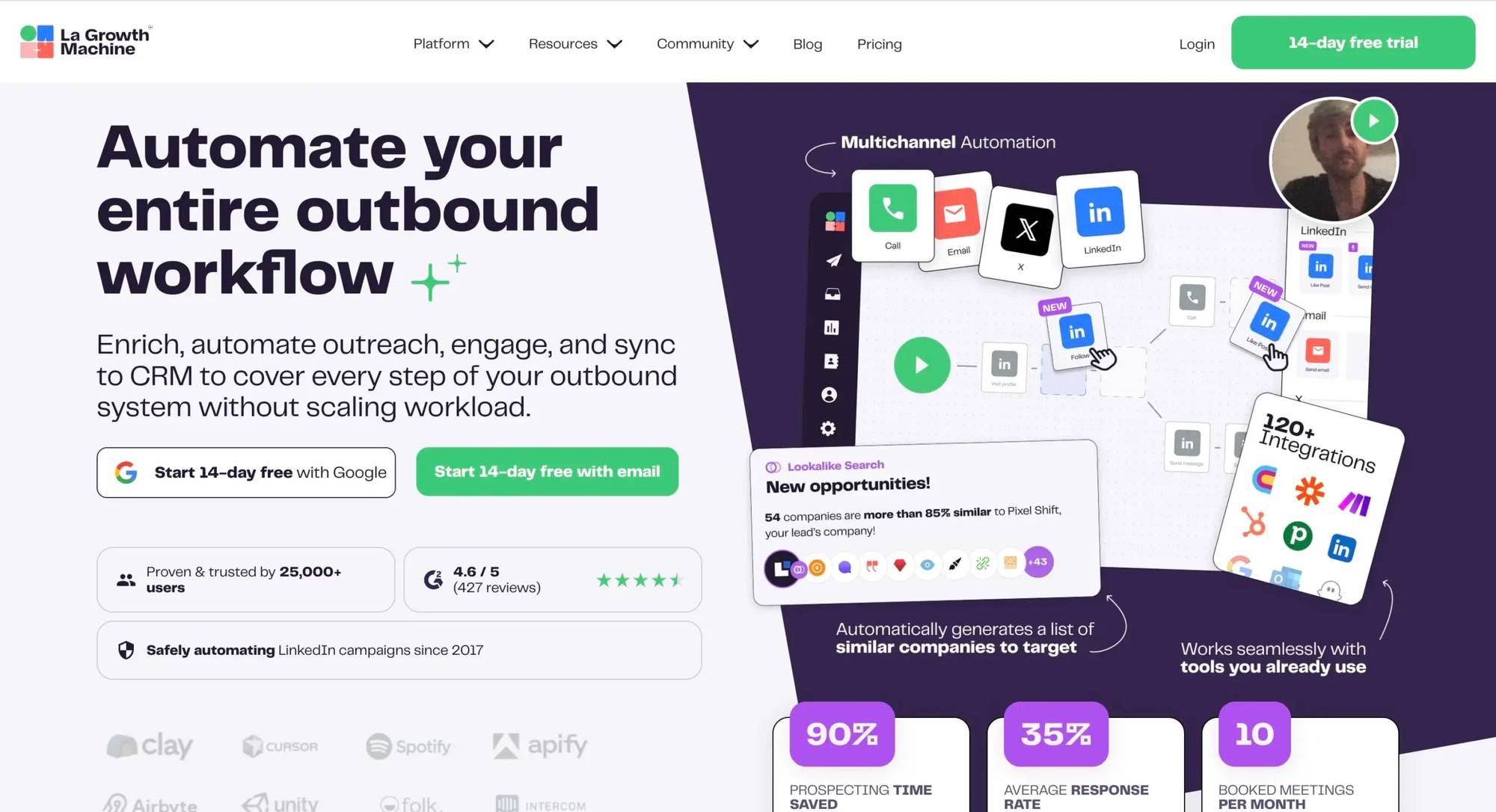
La Growth Machine is an all-in-one sales automation platform that runs personalized campaigns across LinkedIn, email, calls, and Twitter/X from one system. It’s built for B2B teams who want to scale outbound without losing personalization or account safety. The multichannel approach combines lead enrichment, AI-powered messaging, and LinkedIn voice messages that double reply rates.
Key features
- Multichannel Prospecting: Run campaigns across LinkedIn, email, calls, and Twitter/X with automatic channel-switching based on how prospects respond.
- Waterfall Enrichment: Get verified emails and complete lead data using 9 email providers and 2 verification tools.
- LGM Database: Search a 27M+ company database for ABM targeting directly in the platform.
- LinkedIn Intent Data: Import prospects who’ve liked posts, commented, or attended events.
- AI Voice Messages: Clone your voice to send personalized LinkedIn voice messages at scale (2x more replies).
Pros & cons
Pros
- True multichannel automation with LinkedIn, email, calls, and Twitter/X in one platform
- Strongest safety protocols: 100% cloud-based with dedicated 5G mobile proxies
- Built-in lead enrichment—no separate data tools needed
- Intuitive sequence builder with templates and custom workflows
- AI voice cloning and social warming features
- In-house customer support by product experts
Cons
- Learning curve for teams new to multichannel prospecting
- Per-identity pricing requires planning for team scaling
- CRM sync only on Ultimate plan
Pricing
La Growth Machine has three tiers. Basic starts at €50/month per identity (€60 monthly) with LinkedIn and email, 250 enriched leads/month, and 1 sending email. Pro costs €100/month per identity (€120 monthly) with all channels including calls, 400 enriched leads/month, 5 sending emails, and multichannel inbox. Ultimate is €150/month per identity (€180 monthly) with 1,000 enriched leads/month, 10 sending emails, unlimited campaigns, and full CRM integration. All plans include a 14-day free trial, no credit card required.
Best for
B2B sales teams, growth agencies, and founders running outbound campaigns. Works well for teams using 3+ identities who need multichannel automation, anyone prioritizing LinkedIn safety while scaling, and companies wanting an all-in-one solution that cuts out separate enrichment and outreach tools.
2. Salesloft: Best for enterprise revenue orchestration
Overview
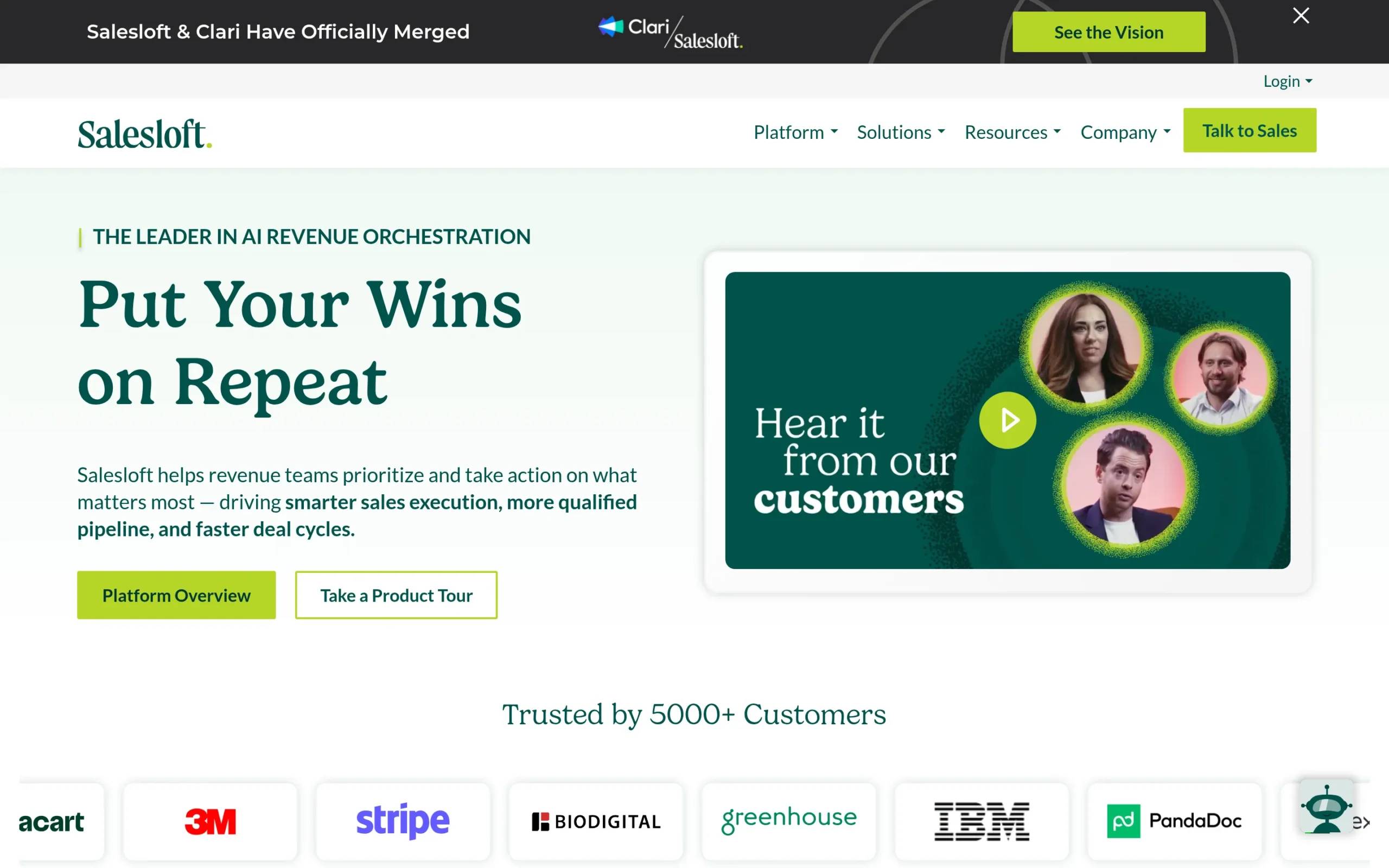
Salesloft is a comprehensive revenue orchestration platform for enterprise sales organizations that need end-to-end sales execution tools. It unifies AI chat agents, sales engagement, conversation intelligence, deal management, and forecasting. The Rhythm feature uses AI to prioritize high-value actions by turning buyer signals into seller actions, helping large teams coordinate around deals.
Key features
- Rhythm AI: AI-powered prioritization that turns buyer signals into actionable seller tasks.
- Cadence Automation: Automate pipeline building and nurturing while prioritizing buyers.
- Conversation Intelligence: Analyze buyer-seller interactions to spot coaching opportunities and scale best practices.
- Deal Management: See deal status, risks, and required actions to accelerate deal cycles.
- Centralized Analytics: Unified reporting for sales performance insights.
Pros & cons
Pros
- Comprehensive platform covering full sales cycle from prospecting to forecasting
- Powerful cadence automation with high open and response rates
- Strong conversation intelligence for coaching
- Flexible integrations with existing tech stacks
- Enterprise-grade features for large, complex sales organizations
Cons
- Steep learning curve
- Can be slow with large datasets
- Missing features like inbound call handling
- Domain rotation issues
Pricing
Pricing information is not publicly available.
Best for
Medium to large enterprise sales teams, revenue operations professionals, and marketing teams in complex B2B organizations. Good for companies needing sophisticated deal management, teams prioritizing AI-driven forecasting, and organizations wanting to coordinate across multiple sales functions from one platform.
3. Lemlist: Best for AI-powered email personalization
Overview
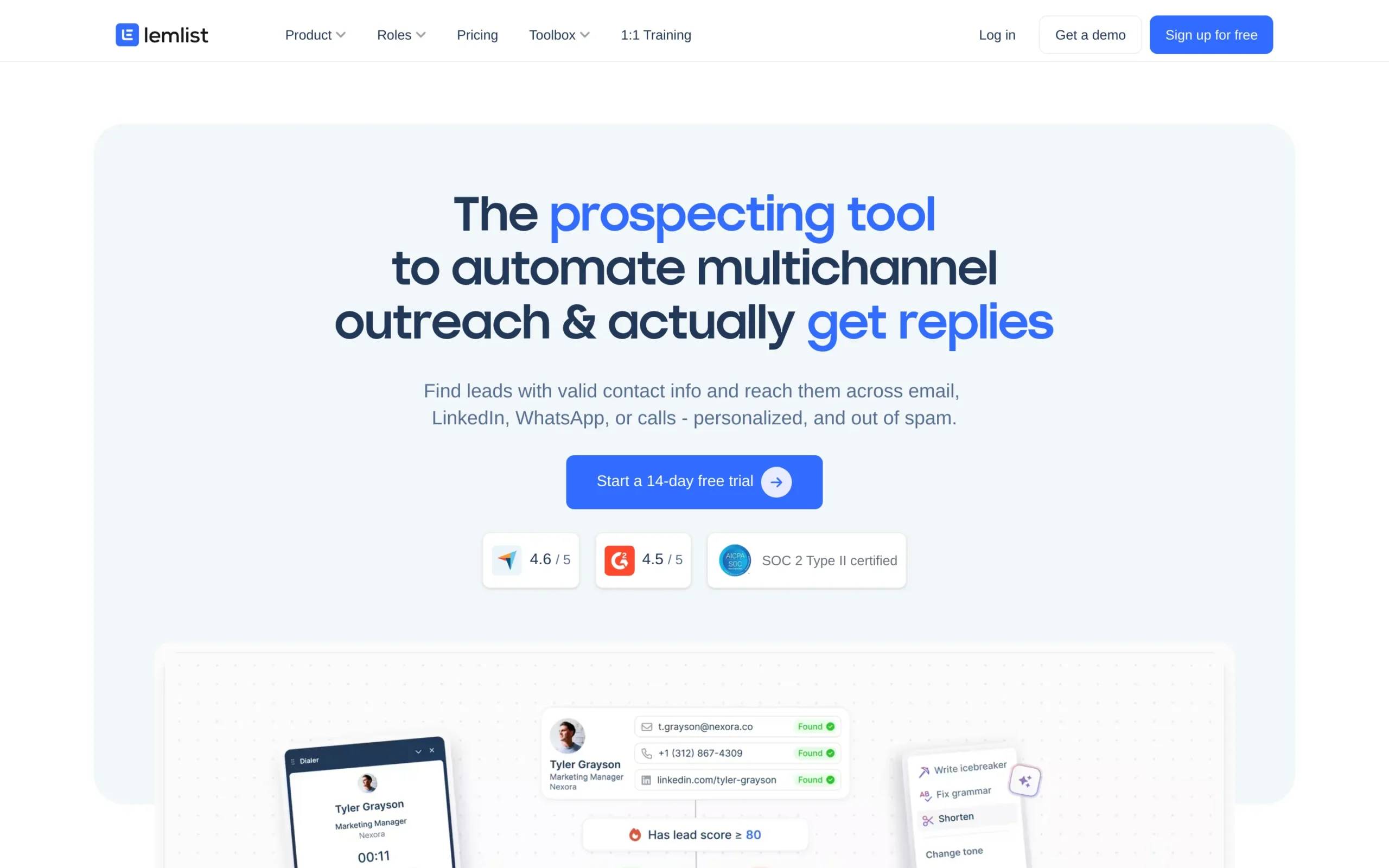
Lemlist is a sales engagement platform specializing in automated multichannel outreach across email, LinkedIn, WhatsApp, and calls with heavy emphasis on personalization. It’s built for B2B sales teams who want to stand out in crowded inboxes. The platform combines a 600M+ lead database with personalization tools that adapt text, images, and landing pages for each prospect.
Key features
- AI-Powered Personalization: Use AI to personalize messages at scale—text, images, and landing pages adapt dynamically for each lead.
- Lemwarm Deliverability: Automated email warm-up and deliverability monitoring keeps emails out of spam with inbox rotation.
- 600M+ Lead Database: Built-in lead database with email and phone verification—no external tools needed.
- Multichannel Sequences: Run automated outreach across email, LinkedIn, and WhatsApp from one campaign.
- Unified Inbox: Track interactions across all channels in one thread.
Pros & cons
Pros
- Strong AI personalization creates customized messages at scale
- Large lead database with verification
- Lemwarm feature improves email deliverability
- Extensive support library for campaign optimization
- Good automation for multi-channel outreach
Cons
- Higher price point than email-only tools
- Frequent bugs and technical issues reported by users
- Campaign management feels limiting for complex workflows
- Unintuitive interface according to some users
- Email management challenges
Pricing
Lemlist has three tiers. Email Pro costs $69 per user/month with automated outreach, unlimited email follow-ups, and AI-powered personalization. Multichannel Expert is $99 per user/month with LinkedIn and WhatsApp integration plus all Email Pro features. Enterprise pricing is custom and includes advanced API access and an account manager. Lemlist offers a 14-day free trial.
Best for
Sales development reps, account executives, and sales leaders in B2B who need to automate outreach while keeping it personal. Also good for RevOps teams streamlining processes, founders running outbound campaigns, and agencies managing multiple clients.
4. Outreach: Best for AI-driven sales workflow automation
Overview
Outreach is an AI-powered revenue workflow platform focused on maximizing sales productivity through intelligent automation. The platform handles forecasting, deal management, and customer engagement, all powered by AI. Outreach claims to boost seller productivity by 60% through AI-driven workflows that organize prospect interactions and automate communications.
Key features
- AI-Driven Workflows: Boost productivity by 60% through AI automation that organizes prospect interactions and sends timely messages.
- AI Account Insights: Identify and engage stakeholders with insights that align teams around buyer priorities.
- Deal Management: Rapidly inspect deals to uncover risks and prioritize actions.
- Conversation Intelligence: Spot coaching opportunities in real-time with AI-driven insights.
- AI-Assisted Forecasting: Reduce forecast prep time and improve accuracy.
Pros & cons
Pros
- User-friendly interface for calls and emails
- Strong AI capabilities for workflow automation and productivity gains
- Scales well for sales engagement
- Good for aligning sales and marketing teams around revenue goals
- Automates repetitive sales processes
Cons
- Lacks personalization options for one-off follow-ups
- Limited features for non-standard use cases
- High subscription fee
Pricing
Pricing information is not publicly available.
Best for
Enterprise and growth-focused companies with dedicated sales, marketing, revenue operations, and customer success teams. Good for organizations prioritizing AI-driven productivity, teams needing strong forecasting capabilities, and companies wanting to optimize sales processes with automation.
5. Mailshake: Best for affordable email-focused outreach
Overview
Mailshake is a sales engagement platform designed to help small to medium-sized businesses automate email and social media outreach affordably. The platform combines cold email campaigns, LinkedIn automation, and AI-driven email writing. Mailshake’s main selling point is its accessible pricing structure with robust email deliverability tools—a budget-friendly entry point for teams starting with outbound.
Key features
- Email Deliverability Tools: Domain setup assistance, free email warm-up, list cleaning, and in-app copy analyzer.
- SHAKEspeare AI Writer: AI tool that creates engaging email content quickly with auto-generated copy, randomization, and A/B testing.
- LinkedIn Automation: Automate LinkedIn activities like messages, profile views, and connection requests.
- Lead Catcher: Focus on the most engaged leads automatically.
- Multi-Channel Dashboard: Manage personalized campaigns across email, phone, and social media from one interface.
Pros & cons
Pros
- Affordable pricing starting at $29/month
- Simple, user-friendly interface
- Good personalization options for email campaigns
- Responsive customer support
- 30-day free trial
Cons
- Poor contact data quality reported by users
- Cannot pause campaigns once started
- Deliverability issues despite built-in tools
- Confusing pricing structure
- Limited reporting metrics
- Difficulty creating templates for some users
Pricing
Mailshake has four tiers. Starter is $29/month ($25/month annual) with 1 email address and 1,500 monthly sends. Email Outreach costs $49/month ($45/month annual) with 2 email addresses and unlimited sends. Sales Engagement is $99/month ($85/month annual) including LinkedIn automation, 10 email addresses, and phone dialer. Agency pricing is custom. All plans include a 30-day free trial but require a credit card.
Best for
Small to medium-sized sales teams, sales reps, agency owners, and marketers who need affordable software for scaling email outreach. Good for businesses starting with outbound, teams focused primarily on email with basic LinkedIn needs, and those seeking simple automation without complex workflows.
6. Instantly: Best for scaling cold email volume
Overview
Instantly is a platform built for businesses that need to scale email outreach aggressively by connecting unlimited email accounts. It focuses on email deliverability, lead database access, and CRM integration. What makes Instantly stand out is the unlimited email account feature with automatic rotation—you can send massive volumes while maintaining deliverability through enterprise-grade tools.
Key features
- Unlimited Email Accounts: Connect unlimited email addresses with automatic rotation to scale outreach.
- Email Deliverability Network: Enterprise-grade deliverability tools boost sender reputation with automated interactions, email verification, and spam checkers.
- Lead Database with Buying Signals: Lead database with filters for targeting based on technologies, headcount, and revenue.
- AI Personalization & Optimization: AI crafts personalized email sequences, automates follow-ups, and offers A/B testing.
- Campaign Pipeline Analytics: Track opportunities, pipeline, conversions, and revenue.
Pros & cons
Pros
- Unlimited email account rotation is unique for scaling volume
- Intuitive interface
- Works well for cold email campaigns at scale
- Supportive customer service
- Strong focus on deliverability optimization
Cons
- High pricing for the features offered
- Limited lead management capabilities
- Lacks multichannel outreach beyond email
- Software bugs reported by users
- Missing advanced features found in comprehensive platforms
Pricing
Instantly offers a free trial with no credit card required.
Best for
Sales teams, marketing agencies, freelancers, and startups focused on high-volume email campaigns. Good for users who need to scale email outreach aggressively, teams prioritizing deliverability over multichannel options, and organizations where email is the primary outreach channel.
7. Smartlead: Best for lead generation agencies
Overview
Smartlead is a cold email outreach platform designed for lead generation agencies and high-volume senders who need premium deliverability at scale. The platform focuses on unlimited mailbox management, automated email warmups, and white-labeling capabilities. Smartlead’s key differentiator is its agency-focused features—specifically, customized white-labeling that lets agencies present the platform under their own brand while managing multiple client campaigns.
Key features
- Premium Deliverability at Scale: Advanced deliverability features ensure emails land in primary inbox.
- Unified Master Inbox: Manage entire deal flow in one place to streamline communication across campaigns.
- Unlimited Email Warmups: Automated warmup process improves email deliverability by continuously building sender reputation.
- Customized White-Labeling: Present the platform under your agency’s brand.
- Powerful APIs and Automation: Robust APIs and automation tools for custom integrations.
Pros & cons
Pros
- Excellent deliverability focused on cold email
- Unlimited inbox rotation for scaling campaigns
- Built-in warm-up—no separate tools needed
- Simple campaign management interface
- White-labeling ideal for agencies
Cons
- Complex user interface with steep learning curve
- Limited outreach customization options
- Poor lead management capabilities
- Slow customer support response times
- Frequent bugs reported
- Features considered overpriced by some users
Pricing
Smartlead has three tiers. Basic costs $39/month ($32.50/month annual) with 2,000 active leads and 6,000 emails per month. Pro is $94/month ($78.30/month annual) including 30,000 active leads, 150,000 emails per month, and API access. Custom starts at $174/month for agencies or scale-up businesses with up to 12M active leads and 60M email credits per month. Smartlead offers a 14-day free trial with no credit card required.
Best for
Lead generation agencies, marketing agencies managing multiple clients, sales leaders running high-volume campaigns, and recruiters. Particularly suited for agencies needing white-label solutions, teams sending massive email volumes, and B2B companies prioritizing deliverability above all else.
Get 3.5X more leads!
Are you looking to improve your sales department’s efficiency? LaGrowthMachine allows you to generate an average of 3.5x more leads, while saving an incredible amount of time on all your processes. By signing up today, you get a 14-day trial period at no cost to test our tool!
8. Klenty: Best for fast-growing sales teams
Overview
Klenty is a sales engagement platform that uses AI to help fast-growing sales teams automate outreach processes. The platform offers AI-driven sales cadences, personalized email outreach, and multi-channel engagement with strong CRM integration. Klenty’s standout feature is its Agentic Cadences, which use AI to automatically create custom sales cadences for each account—truly personalized and efficient outreach at scale.
Key features
- Agentic Cadences: AI automatically creates custom sales cadences for each account.
- AI List Builder: Build precise Ideal Customer Profile lists by interacting with AI to target the right prospects.
- AI Account Research: Research accounts across multiple data sources for hyper-personalized outreach.
- Email Deliverability Solution: End-to-end deliverability ensures emails land in primary inbox while protecting sender reputation.
- Click-to-Call Dialer: Eliminate manual dialing and CRM data entry.
Pros & cons
Pros
- User-friendly interface
- Effective email automation with strong AI capabilities
- Excellent customer support
- Good personalization abilities for emails
- Detailed analytics for campaign optimization
- Strong CRM integrations
Cons
- Occasional bugs
- Limited integration options compared to enterprise tools
- Steep learning curve initially for new users
Pricing
Klenty has three tiers. Starter costs $50 per user/month (annual billing) with 15,000 contacts and 75,000 monthly emails—ideal for scaling personalized email outreach. Growth is $70 per user/month (annual) adding CRM integrations and multichannel outreach. Plus costs $99 per user/month (annual) including AI credits, AI list-building, and 1,000 calling minutes. Klenty offers a 14-day free trial with no credit card required and unrestricted access to all features.
Best for
Fast-growing sales teams in startups and small to medium-sized enterprises looking to automate sales engagement. Good for teams executing strategic, goal-driven outreach, SDR teams needing AI-driven account research, and organizations wanting to improve productivity through multichannel automation.
9. Prospect.io: Best for AI-powered prospecting automation
Overview
Prospect.io (now known as Overloop) is an AI-powered sales prospecting platform designed to automate and enhance outbound sales efforts with a focus on intelligent prospecting. The platform provides tools for identifying and storing data on over 450 million professionals while automating email and LinkedIn outreach with personalized messaging. What sets it apart is the AI’s ability to analyze prospects’ websites and social profiles to craft contextually relevant messages that align with your brand voice automatically.
Key features
- AI-Powered Prospecting: Automate finding and engaging prospects using AI that identifies and stores data on 450M+ professionals.
- Personalized Messaging: AI analyzes prospects’ websites and social profiles to craft personalized emails consistent with your brand voice.
- LinkedIn Automation: LinkedIn automation grows networks by thousands annually with natural, personalized follow-ups.
- Multi-Channel Campaigns: Integrate email and LinkedIn outreach with 10 years of outbound expertise for optimized campaigns.
- Performance Tracking: Detailed analytics track opens, clicks, replies, and more to refine outreach strategies.
Pros & cons
Pros
- Efficient data extraction with seamless integrations
- User-friendly interface
- Accurate contact information saves time
- Responsive and helpful customer support
- 30-day money-back guarantee reduces risk
Cons
- Limited online reviews make it harder to evaluate
- Not the most affordable option available
- Some users report questionable quality
- Hidden extra charges can increase costs
- Initial learning curve for newcomers
Pricing
Pricing information is not publicly available.
Best for
Sales and marketing teams, startups, and agencies automating outbound sales processes. Particularly suited for managing large-scale prospecting campaigns, teams needing AI-powered lead generation, and organizations wanting personalized email outreach combined with LinkedIn automation for scalable solutions.
10. ActiveCampaign: Best for marketing automation with CRM
Overview
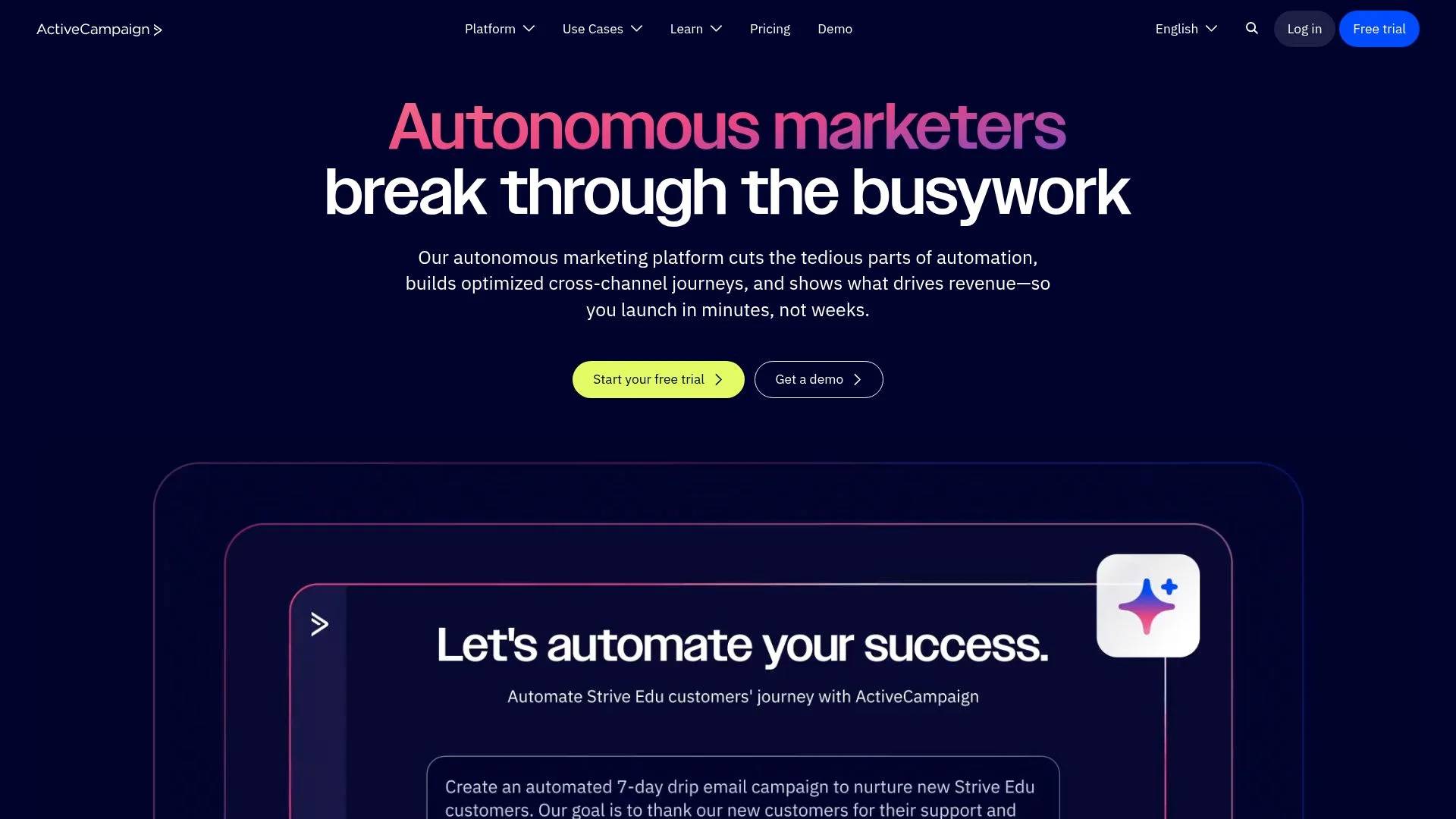
ActiveCampaign is a comprehensive marketing automation platform that combines email marketing, CRM tools, and cross-channel campaign management to optimize customer journeys. While it excels at marketing automation, it also serves sales teams needing customer engagement tools. What distinguishes ActiveCampaign is its Autonomous Marketing feature, which uses AI to automate marketing tasks, optimize cross-channel journeys, and provide insights—ideal for teams wanting marketing and light sales automation in one platform.
Key features
- Autonomous Marketing: AI automates marketing tasks, optimizes cross-channel journeys, and provides insights to drive revenue.
- Marketing Automation: Create complex customer journeys with AI-guided strategy, sophisticated triggers, and precise targeting.
- Cross-Channel Marketing: Engage customers across email, SMS, WhatsApp, and social media with personalized messaging.
- Active Intelligence: AI handles content creation, marketing execution, and performance analysis.
- 1,000+ App Integrations: Connect with over 1,000 apps for seamless workflow integration.
Pros & cons
Pros
- Powerful marketing automation features with complex journey builders
- High email deliverability rates
- Flexible integrations with 1,000+ apps
- Easy to use for non-technical users
- Great A/B testing features for optimization
Cons
- Basic CRM functionality insufficient for larger sales teams
- Complex pricing structure can be confusing
- Short 14-day free trial period
- More marketing-focused than sales-focused
Pricing
ActiveCampaign has four tiers with custom rates based on contact count. Starter includes personalized email marketing with 1 user and 10x contact limit for sends. Plus adds advanced automation with unlimited actions. Pro (most popular) offers enhanced orchestration with 3 users and 12x contact limit. Enterprise provides large-scale marketing with 5 users and 15x contact limit. All plans can be customized, with WhatsApp and SMS available as add-ons. ActiveCampaign offers a 14-day free trial with no credit card required.
Best for
Small to mid-sized businesses, marketing teams, and agencies focusing on customer relationship management and marketing automation. Good for SaaS, eCommerce, healthcare, and education industries, as well as creators and influencers who need cross-channel communication with light sales features rather than dedicated SaaS campaign management tools.
Frequently asked questions
What’s the difference between SaaS campaign management and marketing automation?
SaaS campaign management focuses on sales outreach—prospecting sequences, LinkedIn automation, lead enrichment, and direct 1-to-1 engagement. Marketing automation handles broader initiatives like email newsletters, lead nurturing, web tracking, and customer lifecycle campaigns. Campaign management tools like La Growth Machine help sales teams start conversations. Marketing automation platforms like ActiveCampaign nurture those relationships at scale.
How much does SaaS campaign management software cost?
Pricing varies widely based on features and team size. Entry-level tools start at $29-50 per user per month (Mailshake, Smartlead Basic). Mid-tier platforms with multichannel capabilities run $70-120 per user per month (La Growth Machine Pro, Lemlist, Klenty). Enterprise solutions often require custom pricing (Salesloft, Outreach). Factor in hidden costs like separate enrichment tools—all-in-one platforms cut out these extras.
Can I use campaign management tools for LinkedIn outreach safely?
Yes, but tool choice matters. Look for platforms with dedicated LinkedIn safety features: cloud-based operation (no browser extensions), realistic activity limits, human-like delays, and dedicated IP addresses. La Growth Machine uses 100% cloud automation with dedicated 5G mobile proxies designed to protect account health. Avoid tools that rely on Chrome extensions or lack proper rate limiting.
Do I need separate tools for lead enrichment and outreach?
Not necessarily. Campaign management platforms like La Growth Machine include built-in waterfall enrichment that finds verified emails, fills missing data, and scores lead quality automatically. This cuts out separate enrichment subscriptions and keeps your workflow in one place. However, email-focused tools like Instantly and Smartlead typically require external enrichment solutions.
How long does it take to see results from campaign management software?
Most teams see initial replies within 3-7 days of launching their first campaign. Meaningful pipeline impact typically appears within 30-60 days as you optimize messaging and targeting. The timeline depends on your market, offer strength, and list quality. Start with a small, targeted segment to test and refine before scaling. Tools with strong templates and onboarding (La Growth Machine, Klenty, Mailshake) speed up time-to-value.
What key metrics should I track for SaaS campaigns?
Focus on metrics that connect to revenue outcomes: Customer Acquisition Cost (CAC), Lifetime Value (LTV), LTV:CAC ratio, Monthly Recurring Revenue (MRR), churn rate, and activation rate. For campaign-specific metrics, track reply rates, conversion rates by channel, pipeline generated, and payback period. Campaign platforms with robust analytics surface these metrics automatically, connecting top-of-funnel activity to bottom-line revenue.
How do I choose between email-only and multichannel tools?
Email-only tools (Mailshake, Instantly, Smartlead) work when your ICP primarily responds to email and you want to minimize costs. Multichannel platforms (La Growth Machine, Lemlist, Klenty) generate 2-3x higher response rates by reaching prospects across email, LinkedIn, and calls. If your average contract value exceeds $5,000 or your sales cycle involves multiple touchpoints, multichannel coordination typically justifies the premium pricing through higher conversion rates.
Conclusion
Effective SaaS campaign management combines strategic thinking with the right tools. Understanding your marketing funnel, tracking the metrics that matter, and implementing proven strategies gives you the foundation for sustainable growth.
The right campaign management platform depends on your specific needs, team size, and go-to-market strategy. Entry-level tools work for email-focused teams with limited budgets. Mid-market platforms serve growing teams needing multichannel coordination. Enterprise solutions provide comprehensive revenue orchestration for large sales organizations.
But if you want true multichannel automation that protects your accounts while scaling—La Growth Machine stands out. It’s the only platform that combines LinkedIn, email, calls, and Twitter/X with built-in enrichment, AI voice messages, and the strongest safety protocols in the industry. No separate tools needed. Just conversations that convert.
Get 3.5X more leads!
Do you want to improve the efficiency of your sales department? With La Growth Machine you can generate on average 3.5x more leads while saving an incredible amount of time on all your processes.
By signing up today, you’ll get a free 14-day trial to test our tool!