
TL;DR
Allbound alternatives range from comprehensive PRM platforms to specialized marketing and sales automation tools.
– La Growth Machine provides LinkedIn and email automation at €50/month annually
– HubSpot offers free CRM tools scaling to custom enterprise pricing
– Custom pricing without transparency forces lengthy demos before budget discussions
– Salesforce starts at $250/user/month offering extensive CRM customization and integrations
– Platform complexity overwhelms smaller partner programs needing simpler management solutions
If you’re managing a partner ecosystem, you’ve probably come across Allbound (now Channelscaler). It’s a solid partner relationship management (PRM) platform, but it’s not your only option, and it might not fit what you need.
Allbound alternatives compared
Quick comparison of top Allbound alternatives:
| Tool | Starting Price | Free Trial | Best For |
|---|---|---|---|
| Allbound (Channelscaler) | Custom pricing | Demo required | Mid to large enterprises with established partner programs needing comprehensive PRM |
| La Growth Machine | €50/month (annual) | 14 days (no credit card) | Scaling teams needing LinkedIn + Email automation, native enrichment (27M+ companies), and email warmup in one platform |
| Terminus | Custom pricing | Not specified | Enterprise B2B marketing teams focused on account-based marketing strategies |
| Demandbase | Custom pricing | No trial mentioned | Enterprise B2B teams needing unified data and go-to-market alignment |
| HubSpot | Free to Custom | Free tools available | Small to medium businesses needing integrated marketing, sales, and service |
| Salesforce | $250/user/month | 30-day free trial | Enterprise organizations needing customizable CRM with extensive integration options |
| Keap | $299/month | 14-day free trial | Small businesses looking for straightforward marketing and sales automation |
Maybe Allbound’s pricing doesn’t work for your budget. Maybe you need features that better match how you manage channels. You might be a smaller company looking for something simpler, or an enterprise wanting deeper integrations with the tools you already use.
This guide breaks down the top Allbound alternatives in 2026, comparing features, pricing, and who each platform works best for. We’ll show you what each one brings to the table so you can make the right call for your partner management strategy and business goals. Whether you need another PRM solution or you’re exploring other tools to boost partner engagement, we’ve got you covered.
Why consider Allbound alternatives?
Allbound (Channelscaler) offers comprehensive PRM capabilities, but several factors might push you to look elsewhere:
- Pricing transparency concerns: Allbound doesn’t publish pricing publicly. You need to sit through a demo to understand costs, which makes budgeting difficult if you prefer clear, upfront pricing.
- Complexity for smaller programs: The platform packs in extensive features that can overwhelm companies just starting their partner programs or managing smaller ecosystems.
- Learning curve challenges: User reviews point to a steep learning curve for new users, which slows down adoption and delays time-to-value.
- Technical glitches: Some users report occasional technical issues that disrupt partner management workflows and hurt the user experience.
- Feature gaps for specific needs: Organizations with unique channel management requirements may find that Allbound’s features don’t align with their specific partner program structure or industry needs.
The right PRM solution depends heavily on your program size, complexity, and specific partner engagement goals.
What to look for in an Allbound alternative
When evaluating partner relationship management platforms, keep these criteria in mind:
- Partner portal functionality: Look for a centralized hub where partners can access resources, register deals, track progress, and engage with your brand. The portal should be intuitive and give partners everything they need in one place.
- Training and enablement tools: Effective partner programs need robust learning management capabilities to onboard, train, and continuously upskill partners on your products and sales methodologies.
- Deal registration and management: The platform should make it easy for partners to register opportunities, track deal progress, and manage their pipeline with your company.
- Content management capabilities: Partners need easy access to current marketing materials, sales collateral, and product documentation. Strong CMS features keep partners equipped with the right resources.
- Integration with existing systems: Your PRM should connect seamlessly with your CRM, marketing automation, and other business systems to maintain data consistency and avoid workflow headaches.
Top Allbound Alternatives
1. Terminus
Overview
Terminus specializes in account-based marketing (ABM) solutions, helping businesses target and engage key accounts through personalized marketing campaigns across multiple channels. The platform focuses on aligning marketing and sales efforts around high-value accounts, using intent data and advertising to drive revenue growth. Terminus is built for enterprise clients and marketing teams that prioritize strategic account engagement over broad-based partner relationship management.
Key Features
Account-Based Marketing (ABM): Terminus centers on targeting the accounts that matter most to your business, aligning marketing efforts directly with sales priorities and partner engagement strategies.
Intent-Driven Campaigns: The platform uses buyer intent data to engage potential customers and partners when they’re showing active interest, which increases conversion chances.
High-Quality Lead Generation: Delivers sales-ready leads that are more likely to convert, helping drive revenue and improve overall sales efficiency across your organization.
Pros & Cons
Pros:
- Simple, intuitive interface that reduces onboarding time
- Excellent customer service and support team
- Effective targeting tools with strong measurement protocols
Cons:
- High license cost that may be prohibitive for smaller organizations
- Sometimes slow and clunky interface during peak usage
- Integration issues reported with platforms like HubSpot
Pricing
Pricing information is not publicly available.
Best For
Terminus works best for enterprise B2B marketing teams focused on account-based strategies rather than traditional partner relationship management. It’s suited for companies targeting high-value accounts with complex buying committees.
2. Demandbase
Overview
Demandbase is a comprehensive B2B marketing and sales platform that uses AI to unify data and align go-to-market teams. The platform helps businesses accelerate growth by turning market signals into revenue opportunities through account identification, web personalization, sales intelligence, and intent-based advertising. Demandbase integrates seamlessly with existing tech stacks, providing actionable insights and automating processes to increase pipeline velocity.
Key Features
Account-Based Experience: Offers sophisticated account identification, web personalization, orchestration, and analytics to improve marketing effectiveness and partner engagement.
Sales Intelligence: Provides powerful tools using reliable account, contact, and buying group identification to improve sales processes and partner relationship quality.
Advertising Capabilities: Features intent-based, hyper-targeted B2B ads through their native DSP, optimizing advertising strategies for maximum ROI.
Pros & Cons
Pros:
- User-friendly interface with intuitive navigation
- Excellent results in lead generation and account targeting
- Robust intent data tracking for timely engagement
Cons:
- Steep learning curve for new users
- Complex platform with many features to master
- High cost that may be prohibitive for smaller organizations
Pricing
Pricing information is not publicly available.
Best For
Demandbase works best for enterprise B2B teams in sales, marketing, and revenue operations looking to unify data and align go-to-market teams. It’s particularly beneficial for technology, financial services, and manufacturing industries where targeting the right accounts matters most.
3. HubSpot
Overview
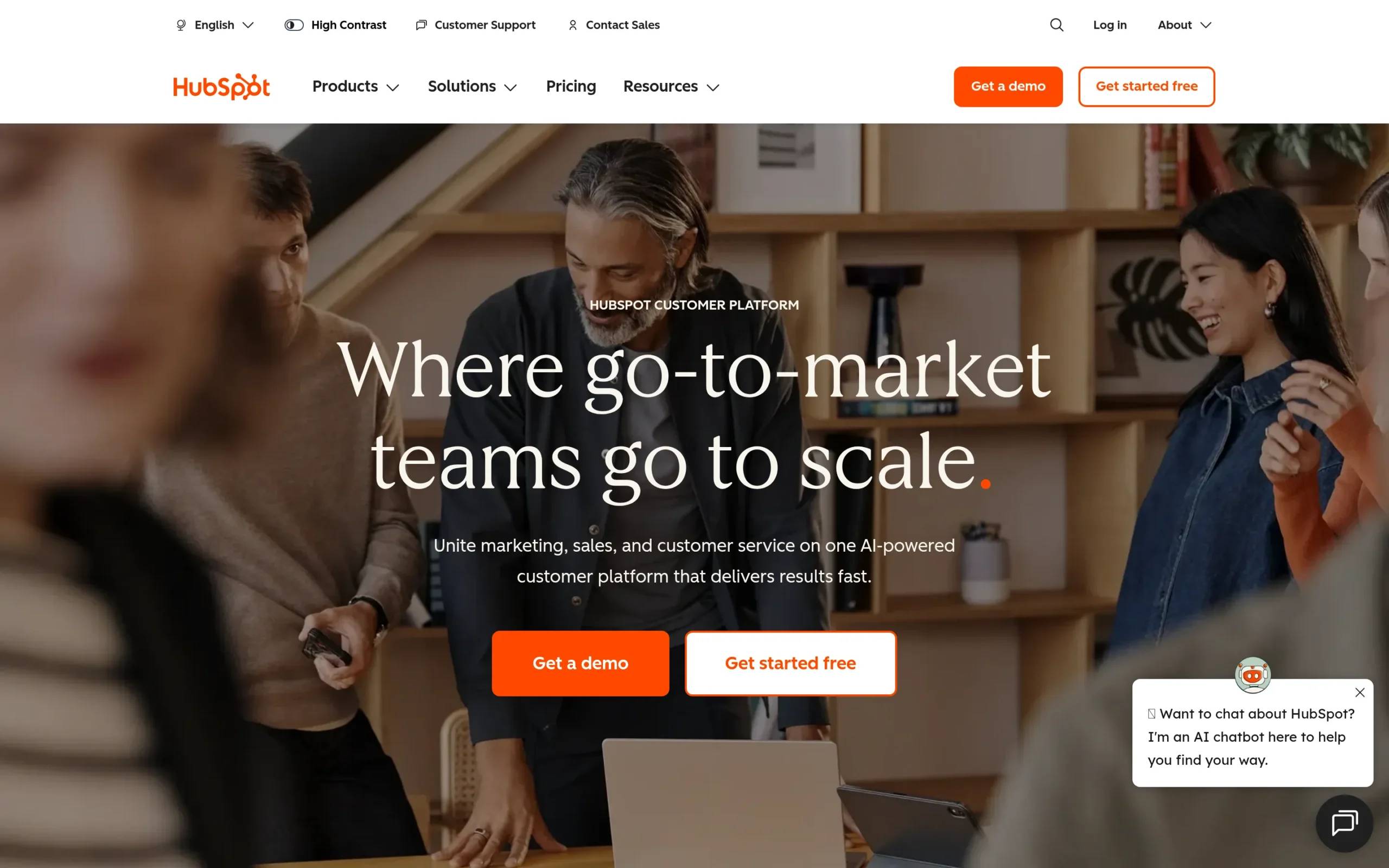
HubSpot provides an AI-powered customer platform that integrates marketing, sales, and customer service tools to help businesses grow efficiently. Used by over 278,000 customers in more than 135 countries, HubSpot offers a comprehensive suite including CRM, marketing automation, sales tools, and customer service capabilities. While not a dedicated PRM platform, HubSpot’s versatility makes it a popular choice for companies managing various business relationships.
Key Features
Marketing Hub: Lets businesses attract and convert leads by running campaigns, personalizing content, and tracking performance with integrated marketing automation tools.
Sales Hub: Built to generate quality leads and close deals faster through automated prospecting, pipeline management, and revenue acceleration features.
Service Hub: Focuses on scaling customer support, improving satisfaction, and driving retention through help desk and customer feedback functionalities.
Pros & Cons
Pros:
- All-in-one solution for marketing, sales, service, and CMS
- Powerful marketing automation capabilities
- Scalable platform suitable for growing businesses
Cons:
- High costs, especially beyond initial free offerings
- Rigid annual contracts with limited flexibility
- Additional limited flexibility
- Additional costs for technical support and advanced features
Pricing
HubSpot offers various pricing plans across different hubs (Marketing Hub, Sales Hub, Service Hub, CMS Hub, and Operations Hub). Plans range from free tools to Starter, Professional, and Enterprise tiers with prices varying based on features and scale. Free tools are available without a credit card, making it easy to get started.
Best For
HubSpot works well for small to medium-sized businesses, startups, and enterprises looking to integrate their marketing, sales, and customer service operations on a single platform. It’s particularly beneficial for growth teams aiming to streamline processes and improve customer engagement, though it’s not a replacement for dedicated PRM functionality.
4. Salesforce
Overview
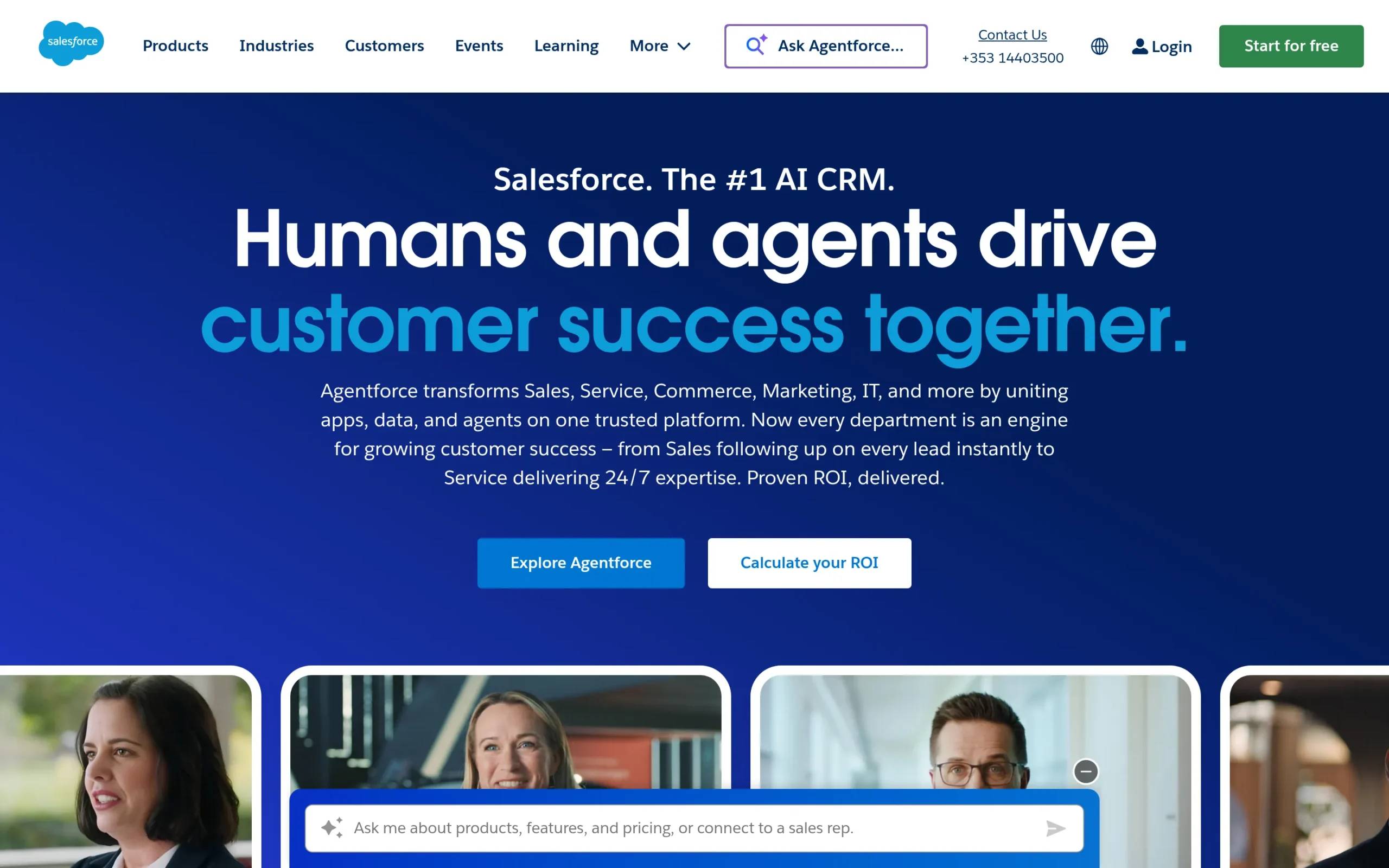
Salesforce is the leading customer relationship management (CRM) platform that integrates apps, data, and AI to boost sales, service, commerce, marketing, and IT operations. The platform offers solutions like Sales Cloud, Service Cloud, and Marketing Cloud, along with industry-specific solutions to help businesses modernize operations. Salesforce’s ecosystem includes extensive customization options and a vast marketplace of integrated applications.
Key Features
Sales Cloud: A comprehensive CRM platform for managing customer relationships, tracking sales, and automating processes, including lead management, opportunity management, and sales forecasting.
Service Cloud: Improves customer service operations with tools for case management, customer support automation, and knowledge base features to boost service efficiency.
Marketing Cloud: A digital marketing platform that enables personalized customer interactions across email, social media, and mobile, with campaign management and customer journey mapping.
Pros & Cons
Pros:
- Global accessibility with reliable performance
- Extensive integration capabilities and robust ecosystem
- Wide range of customization options
Cons:
- High cost with significant upfront investment
- Complexity in setup and customization
- Customer support can be slow to respond
Pricing
Salesforce offers a Starter Suite for small businesses at $250 per user per month, with additional plans available at higher price points. A free 30-day trial is available with no credit card required.
Best For
Salesforce works best for enterprise clients, sales teams, marketing teams, and customer service departments across industries including financial services, retail, healthcare, and technology. While not a dedicated PRM platform, its versatility makes it adaptable for various business relationship management needs.
5. Keap
Overview
Keap provides marketing and sales automation software built specifically for small businesses looking to grow by automating repetitive tasks and managing customer relationships. The platform includes CRM, email marketing, lead capture, and sales automation features to streamline business operations and boost efficiency through comprehensive customer lifecycle management.
Key Features
Small Business Automation: Automates repetitive tasks to save time and scale business operations efficiently, freeing up teams to focus on relationship building.
CRM Capabilities: Manages customer and partner lists and interactions, providing a centralized platform for all relationship data and communication history.
Marketing Automation: Automates follow-ups with leads and partners, enhancing nurturing processes and improving conversion rates through timely, relevant communication.
Pros & Cons
Pros:
- Intuitive CRM with robust automation capabilities
- Comprehensive tools with customizable templates
- Easy contact management and campaign tracking
Cons:
- High pricing starting at $299 per month
- Editor can be clunky and difficult to use
- Occasional deliverability problems and automation bugs
Pricing
Keap offers a single pricing plan starting at $299 per month (billed annually at $2,988). Additional users can be added for $39 per month each. Text marketing tiers start from $24 per month for 1,000 messages. A 14-day free trial is available with no credit card required.
Best For
Keap works best for small businesses looking to automate their sales and marketing processes. It’s suited for small business owners who want to streamline operations, improve customer follow-up, and increase sales efficiency without the complexity of enterprise-level PRM systems.
Which Allbound alternative is right for you?
Choosing the right PRM or partner management solution depends on several factors unique to your organization.
If you’re running an established partner program with complex needs, platforms like Terminus or Demandbase offer sophisticated ABM capabilities that can boost your partner targeting and engagement strategies. These work best for enterprises with significant marketing budgets and dedicated partner marketing teams.
For businesses looking for a more general business management platform that handles multiple functions beyond partner management, HubSpot or Salesforce offer versatile solutions. These platforms provide the flexibility to manage various business relationships, though they’re not purpose-built for channel partner management like dedicated PRM systems.
Small businesses with straightforward automation needs might find Keap’s focused approach more manageable and cost-effective, particularly if your primary concern is automating basic sales and marketing tasks rather than managing a complex partner ecosystem.
Consider your current program maturity, budget constraints, technical resources, and specific feature requirements when making your decision. Most vendors offer demos or trials, so take advantage of these to make sure the platform aligns with your partner management workflow before committing.
Why not consider multichannel outreach?
The tools above focus on partner relationship management, account-based marketing, or general CRM. But there’s another category worth considering if you’re looking to improve how you engage with partners, prospects, and customers: multichannel outreach automation.
La Growth Machine: A Different Approach to B2B Engagement
La Growth Machine isn’t a PRM platform, but it excels at something many partner-focused organizations struggle with: actually reaching and engaging the right people across multiple channels. Allbound helps you manage partner relationships once they’re established. La Growth Machine helps you identify, reach, and start conversations with potential partners, customers, and key decision-makers.
Key Features
Multichannel Prospecting: Combine LinkedIn, email, calls, voice messages, and X (Twitter) in automated sequences to reach prospects and partners where they’re most active. This increases response rates by up to 3.5x compared to email-only outreach.
Lead Enrichment & Data Quality: Automatically enrich leads with verified emails (using 9 providers with double validation), job titles, company details, and more. Clean, accurate data means better targeting and higher engagement.
LinkedIn Intent Data: Import people who liked or commented on LinkedIn posts, signed up for events, or follow your company page. These intent signals let you target prospects at exactly the right moment with highly relevant messages.
How La Growth Machine complements Allbound
Think of it this way: Allbound manages your existing partner ecosystem with portals, training, and content management. La Growth Machine helps you build that ecosystem by identifying potential partners, enriching their data, and engaging them through personalized, multichannel outreach.
Many organizations use a PRM like Allbound to manage established partner relationships while using La Growth Machine to:
- Identify and recruit new channel partners
- Re-engage inactive partners with targeted campaigns
- Reach key decision-makers at partner organizations
- Generate leads that can be passed to partners
- Build awareness and engagement before partners enter your formal program
The tools serve different functions in your go-to-market strategy. Allbound structures and scales your partner program. La Growth Machine helps you fill that program with engaged, qualified partners and generate the leads they need to succeed.
Pricing
La Growth Machine offers three transparent pricing tiers:
- Basic Plan: €50/month per identity (LinkedIn + Email)
- Pro Plan: €100/month per identity (adds multichannel inbox, social warming, intent data, and more)
- Ultimate Plan: €150/month per identity (adds CRM integrations with HubSpot/Pipedrive, unlimited campaigns)
All plans include a 14-day free trial with no credit card required, making it easy to test the platform and see results before committing.
Frequently asked questions
What is the main difference between a PRM and a multichannel outreach tool?
A PRM (Partner Relationship Management) platform like Allbound is built to manage, train, and enable existing channel partners through portals, content management, and deal registration. A multichannel outreach tool like La Growth Machine focuses on identifying prospects, enriching data, and engaging people across multiple channels to start conversations. PRMs manage established relationships. Outreach tools help you build new ones.
Can I use multiple tools together?
Absolutely. Many organizations use a PRM to manage their partner ecosystem while using outreach tools to recruit new partners, engage prospects, or support partner-led lead generation initiatives. The tools serve complementary functions and can integrate with the same CRM systems.
How do I know if I need a PRM or another solution?
If you have an established channel partner program with multiple partners who need training, resources, and ongoing management, a dedicated PRM makes sense. If your primary challenge is reaching new partners, engaging prospects, or generating conversations, an outreach and engagement tool might be more immediately valuable. Consider your current program maturity and biggest pain points.
What should I prioritize when choosing an alternative?
Focus on your specific use case first. Are you managing partners, targeting accounts, automating general sales and marketing, or trying to start more conversations? Your primary business challenge should drive your tool selection. Also consider your budget, technical capabilities, and integration requirements with existing systems.
Do these alternatives integrate with each other?
Many of these platforms offer integration capabilities, particularly with CRM systems like Salesforce and HubSpot. La Growth Machine, for example, integrates with HubSpot, Pipedrive, and other platforms through native connections, Zapier, and Make. Check each vendor’s integration directory to confirm compatibility with your existing tech stack.
Conclusion
The partner relationship management and sales engagement landscape offers diverse solutions, each built for specific business needs and use cases. Terminus and Demandbase excel at account-based marketing for enterprise teams. HubSpot and Salesforce provide comprehensive platforms for managing multiple business functions. Keap serves small businesses with straightforward automation needs.
When evaluating Allbound alternatives, focus on your specific requirements: Do you need a dedicated PRM for partner management, an ABM platform for targeted account engagement, or a versatile CRM that handles multiple functions? Your program maturity, budget, and team capabilities should guide your decision.
If you’re looking beyond traditional PRM functionality to improve how you identify, engage, and convert prospects and partners through multichannel outreach, consider exploring tools like La Growth Machine. Combining a structured partner management approach with effective multichannel engagement can create a powerful go-to-market engine that both manages existing relationships and continuously builds new ones.