
TL;DR
HubSpot provides free CRM with $20/month paid plans while Outreach costs ~$100/user monthly.
– HubSpot includes 1,000+ integrations with marketing automation and content management built-in
– Outreach delivers AI workflows with forecasting and conversation intelligence for enterprise
– HubSpot offers free CRM forever with sales sequences in Professional tier
– Outreach integrates primarily with Salesforce and major enterprise tools only
– Choose HubSpot for full platform or Outreach for dedicated sales engagement
If you’re weighing HubSpot against Outreach, you’re probably trying to figure out which platform will actually help your team close more deals without adding complexity. Both are powerful tools, but they serve different purposes in your sales and marketing stack.
HubSpot vs. Outreach: side-by-side comparison table
Here’s a quick snapshot of how HubSpot and Outreach compare:
| Feature | HubSpot | Outreach | La Growth Machine |
|---|---|---|---|
| Starting price | Free CRM; $20/month for paid plans | Not publicly listed; ~$100/user/month | €50/user/month (annual) |
| Free trial | Yes (free CRM available) | Demo available; no public free trial | 14 days (no credit card required) |
| Key features | CRM, marketing automation, sales sequences, service tools, content management | Sales engagement, AI workflows, conversation intelligence, forecasting | LinkedIn + Email sequences, enrichment, warmup, AI voice |
| Integration options | 1,000+ integrations (Salesforce, Slack, Zapier, etc.) | CRM integrations (Salesforce, HubSpot), sales tools (LinkedIn, Gong, Zoom) | Native: HubSpot, Salesforce, Pipedrive + API |
| Support options | Email, chat (all plans); phone support (Professional+) | Included with all plans | Email, chat, knowledge base, dedicated strategist (4+ seats) |
| Best for | Teams needing an all-in-one platform for marketing, sales, and service | Sales teams focused on outreach automation and conversation intelligence | Scaling teams needing multichannel automation |
HubSpot is an all-in-one customer platform that combines CRM, marketing automation, sales tools, and customer service into a unified system. Outreach is a specialized sales engagement platform built to help sales teams automate outreach, track conversations, and close deals faster.
This article breaks down how HubSpot and Outreach compare across features, pricing, ease of use, and integrations. We’ll help you figure out which one makes sense for your team, and introduce La Growth Machine as an alternative if you’re looking for something different.
HubSpot vs. Outreach: quick overview
Before we get into the details, here’s what each platform brings to the table.
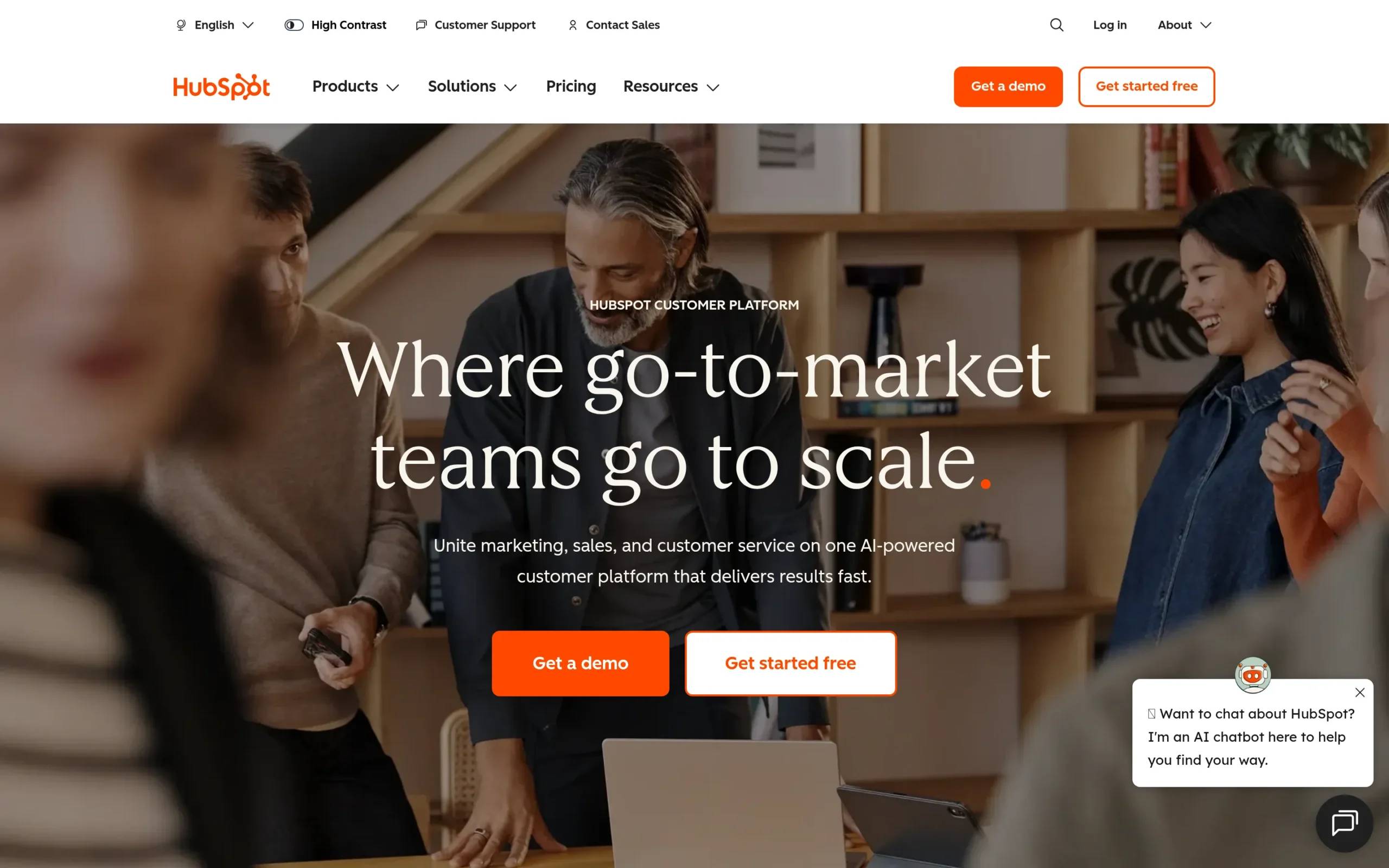
HubSpot
HubSpot is an AI-powered customer platform designed to unify marketing, sales, and service teams. It offers a comprehensive suite that includes a free CRM, Marketing Hub, Sales Hub, Service Hub, Content Hub, and Operations Hub. Over 278,000 customers in more than 135 countries use HubSpot to manage everything from lead generation and email campaigns to deal tracking and customer support.
Main selling point: All-in-one platform that connects marketing, sales, and service in one place.
Starting price: Free CRM with paid plans starting at $20/month per user for Sales Hub Starter or Marketing Hub Starter.
Outreach
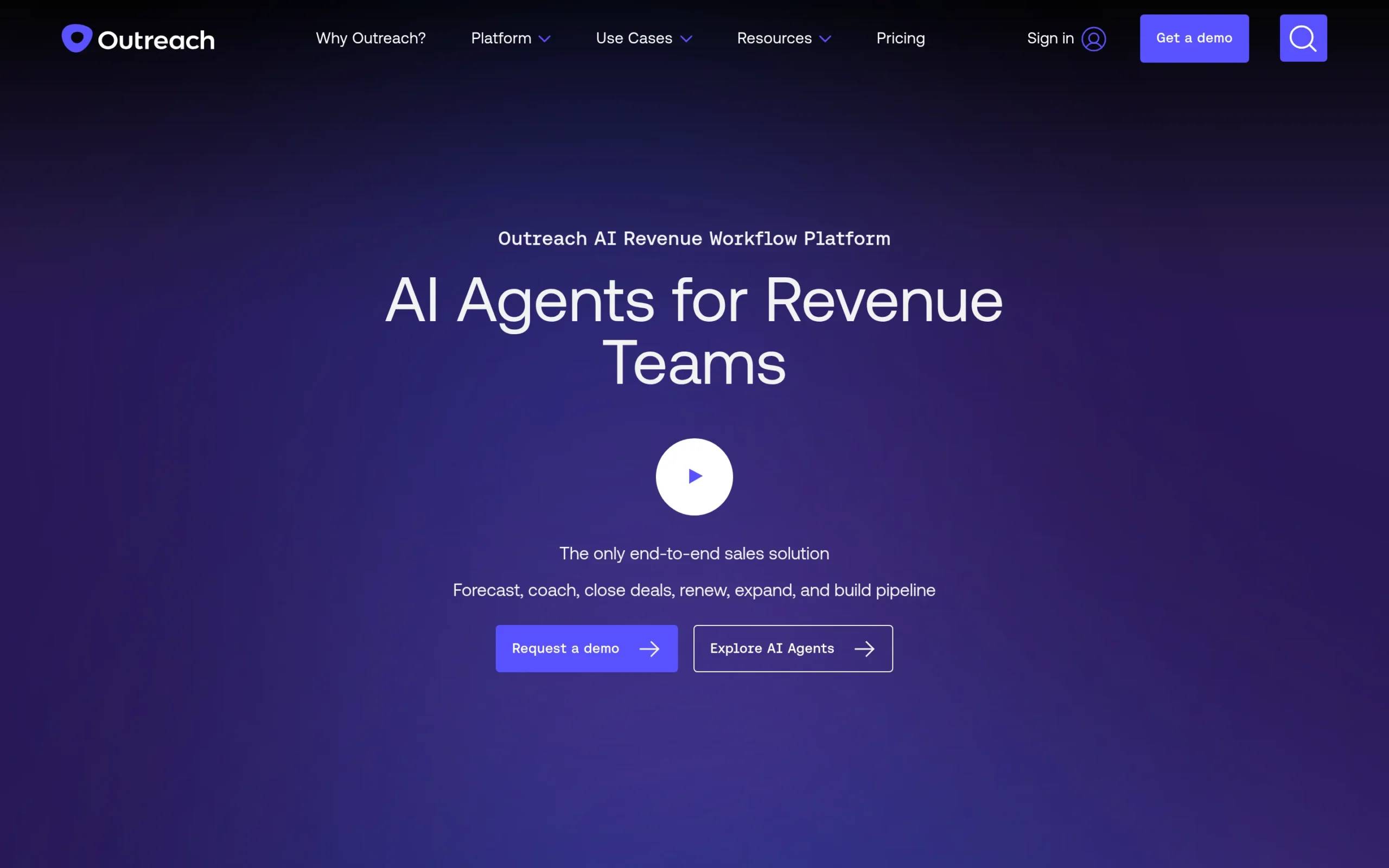
Outreach is an AI-driven revenue workflow platform focused on sales productivity and efficiency. It provides tools for sales engagement, forecasting, deal management, and conversation intelligence, all designed to help sales teams work smarter and close deals faster. Outreach is built for sales, marketing, revenue operations, and customer success teams at growth-focused and enterprise companies.
Main selling point: Deep sales engagement automation with AI-powered workflows and conversation intelligence.
Starting price: Pricing is not publicly listed. Plans include Engage, Call, Meet, Deal, Forecast, and Amplify, with pricing available upon request.
HubSpot vs. Outreach: head-to-head comparison
Let’s break down how these two platforms stack up across the most important factors.
Features & capabilities
HubSpot
HubSpot’s strength is its breadth. The platform covers the entire customer journey, from attracting leads to closing deals and servicing customers post-sale. Key features include:
- Marketing Hub: Campaign management, email marketing, landing pages, SEO tools, social media scheduling, and marketing automation
- Sales Hub: Deal pipeline management, email sequences, meeting scheduling, sales automation, playbooks, and forecasting
- Service Hub: Help desk, ticketing, live chat, customer feedback surveys, and knowledge base
- Smart CRM: AI-powered CRM that unifies customer data across all teams and provides actionable insights
- Reporting and analytics: Customizable dashboards, attribution reporting, and revenue tracking
HubSpot is designed for teams that want everything in one place. If you need to coordinate marketing campaigns, track sales activity, and manage customer service from a single platform, HubSpot delivers.
Outreach
Outreach is laser-focused on sales execution. It’s built to help sales reps and managers run efficient outreach campaigns and close deals faster. Key features include:
- AI-driven workflows: Automates prospecting tasks and sends timely, relevant messages based on buyer signals
- Sales engagement: Multi-channel sequences that combine email, phone, and LinkedIn outreach
- Conversation intelligence: Records and analyzes sales calls to provide coaching insights and improve team performance
- Deal management: Tracks deal progress, identifies risks, and recommends next steps
- Forecasting: AI-assisted forecasting to improve pipeline accuracy and revenue predictability
Outreach excels at helping sales teams scale their outreach efforts, stay organized, and improve win rates through data-driven insights.
Winner: Tie. HubSpot wins if you need a full-funnel platform that connects marketing, sales, and service. Outreach wins if your priority is deep sales engagement and conversation intelligence.
Ease of use
HubSpot
HubSpot is known for its clean, intuitive interface. The platform is designed to be accessible even for users without a technical background. Onboarding is well-supported with free training through HubSpot Academy, in-app guidance, and a robust knowledge base.
That said, because HubSpot offers so many features across multiple Hubs, it can feel overwhelming at first. Teams often need time to configure workflows, set up automation, and customize the CRM to fit their processes. The learning curve grows if you’re using Professional or Enterprise plans with advanced features like custom reporting, workflows, and integrations.
Outreach
Outreach has a functional interface, but it’s not as intuitive as HubSpot. New users often find the platform complex, especially when setting up sequences, managing workflows, or navigating reporting features. The platform requires training and ongoing enablement to get the most value.
Once teams get past the initial learning curve, Outreach becomes powerful. But getting there takes time, and some users report frustration with the number of clicks required to complete tasks.
Winner: HubSpot. It’s easier to get started and more user-friendly, especially for teams new to CRM software or sales engagement platforms.
Pricing & value
HubSpot
HubSpot has a free CRM that’s genuinely useful, with unlimited users and core features. Paid plans start at $20/month per user for Starter plans (Sales or Marketing Hub). As you move up to Professional and Enterprise plans, prices increase significantly based on the number of marketing contacts, users, and features you need.
Here’s a breakdown:
- Sales Hub Starter: $20/month for 2 users
- Sales Hub Professional: $500/month for 5 users (+ $750 onboarding fee)
- Sales Hub Enterprise: $1,200/month for 10 users (+ $3,000 onboarding fee)
- Marketing Hub Starter: $20/month for 1,000 marketing contacts
- Marketing Hub Professional: $890/month for 2,000 contacts (+ $3,000 onboarding fee)
- CRM Suite Professional: $1,781/month for all Hubs with 2,000 marketing contacts and 5 users (+ $4,500 onboarding fee)
Costs can add up quickly as your contact list grows or you add more users. HubSpot also charges for add-ons like API access, dedicated IPs, and transactional emails.
Outreach
Outreach does not publicly list its pricing. The platform offers per-user pricing with no platform fees, and pricing varies based on the plan and features you need. Industry reports suggest Outreach costs around $100/user/month, but exact pricing requires contacting their sales team.
Outreach is generally considered expensive compared to other sales engagement tools, and it’s typically out of reach for smaller teams or startups. The lack of transparent pricing can also be frustrating for teams trying to compare options.
Winner: HubSpot. The free CRM and lower-priced Starter plans make it more accessible for smaller teams. Outreach’s lack of pricing transparency and higher cost per user make it harder to evaluate ROI upfront.
Integrations
HubSpot
HubSpot integrates with over 1,000 third-party apps, including Salesforce, Google Workspace, Slack, Zoom, Zapier, and Stripe. The HubSpot App Marketplace makes it easy to find and install integrations, and many are native, meaning they work seamlessly without needing middleware.
HubSpot also offers API access for custom integrations, though this is more limited on Starter plans and requires technical expertise.
Outreach
Outreach integrates with major CRMs like Salesforce and HubSpot, as well as tools like LinkedIn Sales Navigator, Gong, Vidyard, and Zoom. The platform is designed to plug into your existing sales stack and works well with conversation intelligence, email, and calendar tools.
However, Outreach has a narrower integration ecosystem compared to HubSpot. It’s built primarily for sales teams, so integrations outside of sales and revenue operations are more limited.
Winner: HubSpot. It offers broader integration options across marketing, sales, service, and operations, making it a better fit for teams using a diverse tech stack.
Sales engagement capabilities
HubSpot
HubSpot’s Sales Hub includes sequences, email templates, meeting scheduling, and basic sales automation. Sequences allow you to automate follow-up emails and tasks, and you can track opens, clicks, and replies.
While functional, HubSpot’s sales engagement features are more basic compared to specialized platforms. You won’t find advanced conversation intelligence, AI-driven workflows, or deep call analytics in HubSpot unless you integrate with third-party tools.
Outreach
This is where Outreach shines. The platform is purpose-built for sales engagement, offering:
- Multi-channel sequences (email, phone, LinkedIn, SMS)
- AI-powered conversation intelligence with call recording and transcription
- Real-time coaching insights based on call analysis
- Advanced reporting on engagement metrics, rep activity, and pipeline velocity
Outreach is the better choice if your primary goal is to run sophisticated, data-driven sales outreach at scale.
Winner: Outreach. It’s built specifically for sales engagement and offers far more advanced capabilities than HubSpot in this area.
HubSpot vs. Outreach: pros and cons
HubSpot strengths & weaknesses
Pros
- All-in-one platform covering marketing, sales, service, and CMS
- Free CRM with robust features and unlimited users
- User-friendly interface with strong onboarding and support
- Extensive integration ecosystem with 1,000+ apps
- Scalable from small businesses to enterprises
Cons
- Pricing increases quickly as contacts and users grow
- Advanced features locked behind expensive Professional and Enterprise plans
- Can feel overwhelming due to the number of features and Hubs
- Sales engagement features are more basic compared to specialized tools
User rating:
- G2: 4.4/5 (based on thousands of reviews)
- Capterra: 4.5/5 (based on 4,414 reviews)
Outreach strengths & weaknesses
Pros
- Purpose-built for sales engagement with advanced automation
- AI-powered conversation intelligence and call coaching
- Strong deal management and forecasting tools
- Multi-channel sequences (email, phone, LinkedIn)
- Seamless integration with major CRMs like Salesforce and HubSpot
Cons
- Pricing is not transparent and generally expensive
- Steep learning curve and complex interface
- Requires significant training and enablement
- Limited functionality outside of sales engagement
User rating:
- G2: 4.3/5 (based on 3,512 reviews)
- Capterra: 4.4/5 (based on 303 reviews)
Which should you choose?
Here are some decision-making criteria to help you figure out which platform is the better fit:
Choose HubSpot if:
- You need a full-funnel platform that connects marketing, sales, and service
- You want a free CRM to get started without upfront costs
- Your team values ease of use and strong support resources
- You’re a small to mid-sized business with a growing contact list
- You need broad integration options across your tech stack
Choose Outreach if:
- Your primary focus is sales outreach and engagement at scale
- You need advanced conversation intelligence and call coaching
- Your team is already using a CRM and needs a specialized sales engagement layer
- You have the budget for enterprise-level sales tools
- You’re a mid to large sales organization looking to improve rep productivity
Need something different? Check out La Growth Machine
HubSpot and Outreach are both solid tools, but if neither quite fits your needs, La Growth Machine takes a different approach. While HubSpot is an all-in-one platform and Outreach focuses on sales engagement, La Growth Machine is built for multichannel prospecting and lead enrichment.
What La Growth Machine does:
La Growth Machine automates multichannel prospecting across LinkedIn, email, calls, voice messages, and X (Twitter). The platform is designed to help sales and growth teams reach leads on their preferred channels and get up to 3.5x more replies than email-only outreach.
Key features include:
- Multichannel prospecting: Combine LinkedIn, email, calls, voice messages, and X in one automated sequence
- Lead Enrichment: Automatically enrich lead data with verified emails using nine providers and double validation
- LinkedIn Intents: Import people who liked or commented on LinkedIn posts, signed up for events, or follow your company page
- Lookalike Search: Provide the name of your best client, and La Growth Machine finds similar companies using its built-in ABM solution
- Social Warming: Automatically like posts and follow prospects to warm up interactions before outreach begins
- Multichannel Inbox: Centralize all conversations (LinkedIn, email, calls) in a single thread with shared team inbox and response templates
How it fits into your stack:
La Growth Machine works alongside your existing CRM (HubSpot, Pipedrive, Breakcold) and integrates with tools like Clay, Zapier, Make, and Phantombuster. It’s built for teams that want to automate multichannel outreach without the complexity of enterprise platforms.
Pricing:
- Basic Plan: €50/month per identity
- Pro Plan: €100/month (includes Lookalike Search, LinkedIn Intent Data, Social Warming, Inbox Rotation)
- Ultimate Plan: €150/month (adds advanced CRM integrations, webhooks, custom sequences)
- Agency Plan: 20% discount for agencies
Free trial: 14 days (no credit card required)
Worth considering if:
- You want to run multichannel outreach campaigns across LinkedIn, email, and calls
- You need lead enrichment and LinkedIn intent data to target prospects at the right moment
- You’re looking for a more affordable alternative to enterprise sales engagement platforms
HubSpot vs. Outreach: FAQs
Can HubSpot and Outreach work together?
Yes. Outreach integrates with HubSpot, so you can use HubSpot as your CRM and Outreach as your sales engagement platform. This setup allows you to store customer data in HubSpot while running sequences and tracking conversations in Outreach.
Which platform is better for small businesses?
HubSpot is generally better for small businesses due to its free CRM and lower-priced Starter plans. Outreach is typically more expensive and designed for mid-sized to large sales teams.
Does Outreach have a free plan?
No. Outreach does not offer a free plan or publicly available free trial. Pricing is provided upon request, and demos are available for interested teams.
Conclusion
HubSpot and Outreach are both powerful platforms, but they serve different needs. HubSpot is the better choice if you want an all-in-one solution that connects marketing, sales, and service in one place. It’s easier to use, more affordable for smaller teams, and offers a generous free CRM to get started.
Outreach is the better fit if your primary focus is sales engagement and you need advanced features like conversation intelligence, AI-driven workflows, and multi-channel sequences. It’s built for sales teams that want to scale outreach and improve deal velocity, but it comes with a higher price tag and steeper learning curve.
If you’re looking for something different, La Growth Machine offers a unique approach to multichannel prospecting and lead enrichment. It’s worth exploring if you want to automate outreach across LinkedIn, email, and other channels without the complexity or cost of enterprise platforms.
Get 3.5X more leads!
Do you want to improve the efficiency of your sales department? With La Growth Machine you can generate on average 3.5x more leads while saving an incredible amount of time on all your processes.
By signing up today, you’ll get a free 14-day trial to test our tool!