

LinkedIn has evolved from a digital resume platform into the most powerful B2B marketing channel in 2026. With 950 million members and 67 million companies, it generates 80% of B2B leads from social media. Yet most LinkedIn strategies fail within three months.
The problem? Marketers treat LinkedIn like other social platforms, posting sporadically, chasing vanity metrics, and ignoring the fundamental shift happening right now. The 2026 algorithm update prioritizes authentic engagement over reach, video content over static posts, and personal connections over corporate broadcasting.
This comprehensive guide will show you how to build a LinkedIn marketing strategy that actually converts. You’ll learn how to optimize your presence, create content that resonates with your target audience, leverage advanced tools like Sales Navigator, and measure real ROI beyond likes and comments. Whether you’re a solopreneur building personal brand or a B2B company scaling outbound, you’ll find actionable tactics proven to work in 2026.
By the end of this guide, you’ll have a complete framework to generate qualified leads, establish thought leadership, and build a sustainable LinkedIn presence that compounds over time.
Understanding LinkedIn Marketing in 2026
What is LinkedIn Marketing
LinkedIn marketing is the strategic use of LinkedIn’s platform to achieve business objectives: lead generation, brand awareness, thought leadership, recruitment, and revenue growth. Unlike consumer-focused platforms, LinkedIn’s professional context makes it uniquely effective for B2B marketing where decision-makers actively seek solutions and expertise.
The platform combines organic content strategy, paid advertising, networking automation, and sales prospecting into one ecosystem. Effective LinkedIn marketing in 2026 requires understanding how these elements work together rather than treating them as separate tactics.
Why LinkedIn for B2B Marketing
The numbers tell the story. LinkedIn delivers a 277% higher effectiveness for lead generation compared to Facebook and Twitter combined. Here’s why it dominates B2B:
Audience Quality: 4 out of 5 LinkedIn members drive business decisions. Your content reaches VPs, directors, and C-suite executives who control budgets and purchasing authority.
Purchase Intent: 82% of B2B marketers report their greatest success on LinkedIn because users are in a professional mindset, actively researching solutions and vendors.
Content Lifespan: LinkedIn posts have a 24-hour half-life compared to Twitter’s 18 minutes or Facebook’s 5 hours. Your content works harder and longer.
Lead Quality: LinkedIn-sourced leads convert at 3x the rate of leads from other platforms. The professional verification and detailed profiles enable precise targeting impossible elsewhere.
2026 Algorithm Updates and Changes
LinkedIn’s 2026 algorithm introduced significant changes that directly impact your marketing strategy:
Authenticity Score: The algorithm now analyzes engagement patterns to detect artificial engagement pods, automated comments, and inauthentic activity. Profiles showing these patterns suffer dramatic reach penalties. Genuine conversations receive priority distribution.
Video Prioritization: Native video content receives 5x more engagement than static posts on average. The algorithm specifically boosts educational and how-to video content over promotional material.
Dwell Time Weighting: The algorithm now measures how long users spend reading your post. Content that stops the scroll and holds attention receives exponential reach increases. This rewards depth over clickbait.
Connection Strength Signals: Posts are prioritized for users who’ve engaged with your content recently. This creates a compounding effect where consistent quality builds an increasingly engaged audience.
External Link Penalties: Posts with external links now receive 40% less initial reach. The algorithm wants to keep users on platform. Strategy: post native content first, add links in comments after engagement begins.
Personal Profile vs Company Page Strategy
This debate dominated LinkedIn discussions throughout 2025, and the 2026 data settles it definitively: personal profiles generate 8x more engagement than company pages.
Why Personal Profiles Win:
The algorithm treats personal content as more authentic and relevant. When Jane Doe from Acme Corp posts, it shows in more feeds than when Acme Corp’s official page posts the same content. People connect with people, not logos.
LinkedIn users are 3x more likely to trust content from an individual than from a brand. Personal profiles enable relationship building impossible for corporate accounts. You can’t send connection requests from a company page or participate in meaningful conversations at scale.
The Right Strategy: Build personal brands for key employees rather than relying solely on your company page. Your CEO, sales leaders, and subject matter experts should be your primary content engines. Use the company page as a content hub and recruitment tool, but drive engagement through personal profiles.
Employee Advocacy Programs: The most sophisticated B2B companies in 2026 run structured employee advocacy programs. They empower 10-50 employees to share company content through personal profiles, amplifying reach 10-20x compared to company page alone. The key is providing content frameworks while encouraging authentic personal perspectives.
Building Your LinkedIn Foundation
Profile Optimization for Maximum Impact
Your LinkedIn profile is your most valuable marketing asset. Here’s how to optimize every element:
Professional Headline (220 characters): This appears everywhere you engage. Don’t waste it with just your job title. Use this formula: What you do + Who you help + Unique outcome.
Bad: “Marketing Manager at Acme Corp”
Good: “B2B Marketing Strategist | Helping SaaS companies generate 3x more qualified leads through LinkedIn | 500+ campaigns launched”
Profile Photo: Professional headshot with clear face, genuine smile, and appropriate background. Photos with direct eye contact receive 14x more profile views. Avoid logos, group shots, or casual photos.
Banner Image: This 1584x396px real estate should communicate your value proposition visually. Include your key services, notable metrics, or a clear brand message. Update quarterly to keep profile fresh.
About Section (2600 characters): This is where you tell your story and make your pitch. Structure it:
- Opening hook (problem you solve)
- Your background and credibility
- How you help clients (specific outcomes)
- Call-to-action with contact method
Write conversationally using “you” and “your” to speak directly to your target audience. Include your primary keyword 3-4 times naturally.
Featured Section: Pin your best content here: case studies, presentations, articles, and lead magnets. This section receives high engagement from profile visitors actively evaluating you.
Experience Section: Write benefit-driven descriptions, not just responsibilities. Use bullet points highlighting achievements with quantified results. Include relevant keywords for search optimization.
Skills Section: LinkedIn allows 50 skills. Prioritize your top 10-15 that align with target audience searches. Regularly rotate and update based on market demand.
Personal Branding Essentials
Personal brand determines whether people remember you after scrolling past your content. Here’s what makes a strong LinkedIn brand in 2026:
Consistency: Post on the same topics repeatedly. Don’t be random. If you’re a demand generation expert, stay in that lane. Consistency builds recognition and authority.
Unique Point of View: Everyone shares best practices. What contrarian perspective do you bring? What does your experience teach you that contradicts conventional wisdom? Controversy (when backed by data) drives engagement.
Signature Style: Develop recognizable patterns in your content. Maybe you always open with a question. Maybe you use specific frameworks. Maybe your posts are always exactly 150 words. Patterns create brand recognition.
Visual Identity: Use consistent colors, fonts, and design elements across graphics. Your content should be recognizable before someone reads a word.
Value-First Approach: The ratio that works: 80% educational/entertaining content, 20% promotional. People follow you for value, not sales pitches.
Target Audience Definition
Vague targeting creates vague results. Define your ideal customer profile with precision:
Demographics: Job titles, seniority levels, company size, industry, location. Be specific. “Marketing Directors at Series B-D SaaS companies with 50-500 employees” beats “marketing professionals.”
Psychographics: What challenges keep them awake at night? What goals are they measured on? What transformation are they seeking? Understanding psychology drives content relevance.
LinkedIn Behavior: Are they active posters or passive consumers? Do they engage in groups? What content do they share? Study their activity to understand what resonates.
Buying Stage: Are you targeting awareness stage (educational content), consideration stage (comparison content), or decision stage (case studies and demos)?
Use Sales Navigator’s advanced search to identify 500-1000 target prospects. Study their profiles, activity, and engagement patterns. This research informs your entire content strategy.
Content Pillars Setup
Content pillars are the 3-5 themes you’ll post about consistently. They provide structure while maintaining variety. Here’s how to choose yours:
Pillar 1: Core Expertise – Your primary skill or service. This positions you as the go-to expert. For a LinkedIn strategist, this might be “LinkedIn content strategy.”
Pillar 2: Industry Insights – Trends, news, and analysis relevant to your audience. This demonstrates you’re plugged into the ecosystem.
Pillar 3: Personal Lessons – Stories from your experience, failures, and wins. This builds authentic connection.
Pillar 4: Practical Tactics – Actionable how-to content your audience can implement immediately. High engagement and saves.
Pillar 5: Thought Leadership – Contrarian takes, predictions, and frameworks. This differentiates you from competitors sharing the same best practices.
Create a content pillar document listing 20-30 specific topics under each pillar. When you’re stuck for content ideas, pull from this list. This system ensures consistent, varied content without creative burnout.
Content Strategy That Converts
Content Types That Work in 2026
Not all content performs equally. Here are the formats generating the highest engagement and conversion rates:
1. Personal Stories with Business Lessons
Story-driven posts consistently outperform generic advice. Share a specific situation you faced, the mistake you made or insight you gained, and the lesson for your audience. These posts get 5x more comments because they’re relatable and authentic.
Example: “I lost a $50K client last month because I ignored a red flag during discovery. Here’s what I missed…” This hooks readers emotionally before delivering tactical value.
2. Data-Driven Insights
Posts that lead with surprising statistics or original research generate high engagement and establish credibility. The formula: Counterintuitive stat + Why it matters + Actionable takeaway.
Example: “We analyzed 10,000 LinkedIn posts and found that posts with external links receive 40% less reach. But there’s a workaround…”
3. Contrarian Takes
Challenge conventional wisdom with evidence-based alternative perspectives. These posts spark debate and get algorithmic boost from comment activity.
Example: “Hot take: Posting daily on LinkedIn is killing your engagement. Here’s why less frequent, higher-quality posts drive better results…”
4. How-To Frameworks
Actionable step-by-step guides solve immediate problems. Use numbered lists, clear structure, and specific instructions. These get saved frequently, which signals quality to the algorithm.
5. Video Content
Native video is the highest priority format in 2026. Focus on these video types:
- Quick tips (30-60 seconds): Single actionable tactic explained clearly
- Behind-the-scenes: Show your process, tools, or workspace
- Expert interviews: Conversations with industry leaders
- Case study walkthroughs: Screen recordings showing results
Video tips: Use captions (80% watch without sound), hook viewers in first 3 seconds, deliver value in first 30 seconds before deeper dive.
6. Carousel Posts
Multi-slide PDFs generate 3x more engagement than single images. They work because each slide swipe counts as engagement, triggering algorithmic distribution. Use for listicles, frameworks, and step-by-step guides.
7. Polls and Questions
Polls are engagement gold because voting takes one click. But add commentary context above the poll explaining why the question matters. Polls without context look lazy.
Posting Frequency and Timing
The quality versus quantity debate is settled: consistency beats volume.
Optimal Frequency: 3-5 posts per week outperforms daily posting for most accounts. The algorithm rewards accounts whose posts consistently generate engagement. Posting daily with mediocre content dilutes your engagement rate and hurts algorithm perception.
Timing Strategy: LinkedIn reports highest engagement 7-9 AM and 12-1 PM on Tuesday through Thursday. But your audience may differ. Test posting times for 30 days and analyze which get the most engagement in the first hour (the critical window for algorithmic distribution).
Consistency Matters More: Posting Tuesday/Thursday at 8 AM consistently beats sporadic posting at “optimal” times. The algorithm recognizes patterns and learns when to distribute your content.
Content Calendar Planning: Plan 2-4 weeks ahead using your content pillars. This prevents last-minute stress and maintains quality. Use a simple spreadsheet: Date, Topic, Pillar, Format, Key Message, Call-to-Action.
Hook Formulas and Engagement Triggers
The first 1-2 lines determine whether someone stops scrolling. Here are proven hook formulas:
The Surprising Statistic: “87% of LinkedIn users are doing [common thing] wrong. Here’s what works instead…”
The Contrarian Statement: “Unpopular opinion: [widely accepted belief] is terrible advice. Here’s why…”
The Personal Story: “I made a $50K mistake last month. The lesson cost me, but it might save you…”
The Question Hook: “Do you know the #1 reason LinkedIn content fails? It’s not what you think…”
The Bold Claim: “This 5-minute change to our LinkedIn strategy generated 300 leads in 30 days. Here’s exactly what we did…”
The Pattern Interrupt: “Stop posting on LinkedIn. Seriously. Read this first…”
After the hook, deliver on your promise immediately. No fluff, no long windup. Get to the value in the next 2-3 sentences or you’ll lose readers.
Engagement Triggers:
- Ask questions: End posts with “What’s your experience with this?” or specific questions
- Tag strategically: Mention 1-2 relevant people (not spam-tagging dozens)
- Create open loops: “The third strategy is counterintuitive (see comments)” to drive comment engagement
- Use line breaks: White space makes posts readable and stops the scroll
- Lead with value: Never bury the insight; give your best stuff upfront
Video Content Strategy for 2026
Video is no longer optional. Here’s how to build a sustainable video strategy:
Equipment: You don’t need expensive gear. iPhone 13 or newer produces professional quality. Invest in good lighting (ring light, $50) and audio (lapel mic, $30). Quality audio matters more than video quality.
Video Types Priority:
- Talking head educational content (highest ROI): You explaining a concept directly to camera. Feels personal and authentic.
- Screen recordings with voiceover: Perfect for tactical how-to content showing tools or processes.
- Interview format: Conversations with industry experts or customers.
- Behind-the-scenes: Low-production glimpses into your work process.
Video Length: Optimal length is 90 seconds to 3 minutes. The algorithm favors videos watched to completion. Shorter videos have higher completion rates.
Production Process:
- Write a 3-point outline (not a script—be conversational)
- Record 3-5 takes, pick the best
- Edit minimally: trim dead space, add captions
- Create thumbnail with clear text overlay
- Upload natively to LinkedIn (never YouTube links)
Batch Production: Record 4-6 videos in one session. This creates a month’s content in 2 hours. Consistency is easier when you batch.
Repurpose Everything: One 3-minute video becomes: Original video post, 3-4 short clips for follow-up posts, written post expanding on the topic, carousel summarizing key points. Maximize every piece of content.
Advanced Engagement Tactics
Algorithm-Friendly Engagement Methods
The 2026 algorithm detects and penalizes artificial engagement tactics that were common in previous years. Here’s what works now:
Genuine Conversation Strategy: Comment meaningfully on 10-20 posts from your target audience daily before you post your own content. The algorithm notices this and prioritizes showing your posts to people whose content you engage with. Your comments should add value, not just say “Great post!”
Golden Hour Engagement: The first 60 minutes after posting are critical. The algorithm tests your content with a small audience segment. If engagement rate is strong, it expands distribution. Be online to respond to comments immediately. Every response boosts engagement signals.
Comment Threading: When someone comments, ask a follow-up question in your reply. This often generates a second comment from them, doubling engagement signals. Transform one-time commenters into conversations.
Strategic Tagging: Mention 1-2 relevant people in your post when genuinely appropriate. Don’t spam-tag. When tagged people engage, their networks see the post, expanding reach. But overuse triggers algorithm penalties.
Engagement Groups Done Right: The old engagement pods are dead, but strategic small groups of 5-8 aligned professionals who genuinely engage with each other’s best content still work. The key: real engagement, not robotic “Great insights!” comments.
DM Follow-Up: When someone leaves a thoughtful comment, send them a DM thanking them and starting a conversation. This builds real relationships and increases the chance they’ll engage with future posts.
Building Relationships Beyond Broadcasting
LinkedIn marketing fails when treated as one-way broadcasting. Relationship building is the actual strategy:
The 80/20 Engagement Rule: Spend 80% of your LinkedIn time engaging with others’ content and only 20% creating your own. This feels counterintuitive but builds the network effect that amplifies your content.
Connection Request Strategy: Send 10-15 personalized connection requests daily to target audience members. The formula that works: “Hi [Name], I saw your post about [specific topic] and your perspective on [specific point] resonated with me. I’d love to connect and follow your content.” Generic requests get ignored.
Value-First Messaging: Never pitch in the first message. Build relationship equity first. Comment on their posts, share their content, send useful resources. Pitch only after you’ve provided value.
Coffee Chat Campaigns: Message new connections offering a 15-minute virtual coffee to learn about their challenges. No pitch, pure learning. These conversations inform your content strategy and often convert naturally to sales discussions.
Collaborative Content: Feature others in your posts through interviews, quote their insights, or create content together. This expands reach and builds goodwill. They’ll often share collaborative content with their network.
LinkedIn Groups Strategy
LinkedIn Groups lost relevance in recent years, but strategic use still delivers value:
Join Selectively: Find 5-10 active groups where your target audience congregates. Quality over quantity. Look for groups with daily posts and active discussions, not dead groups with spam.
Provide Value First: Spend 2-3 weeks engaging with others’ posts before promoting your content. Answer questions thoroughly, share resources, and build reputation as a helpful expert.
Conversation Starters: Post thought-provoking questions that generate discussion. “What’s your biggest challenge with [relevant topic]?” These discussions surface pain points that inform your content and services.
Subtle Promotion: Share your content sparingly (once per week maximum) and only when genuinely relevant to ongoing discussions. Frame it as “I wrote about this exact topic” rather than “Check out my post.”
Group DMs: When you provide valuable answers in group discussions, people often check your profile. Follow up with thoughtful connection requests to active group members.
Employee Advocacy Programs
Companies that activate employee networks generate 5x more leads than company page alone. Here’s how to build an advocacy program:
Get Leadership Buy-In: Show executives the math: If 20 employees with 500 connections each share company content, that’s potential reach of 10,000 people versus the company page’s 5,000 followers.
Make Participation Easy: Provide content in shareable formats with suggested commentary. Don’t force robotic identical posts, but give frameworks employees can personalize.
Incentivize Appropriately: Gamification works. Monthly recognition for most engaged employee, or tie LinkedIn activity to performance goals for customer-facing roles.
Train Your Team: Host monthly training on personal branding, content creation, and engagement tactics. Empower employees to become individual thought leaders.
Content Variety: Provide different content types: company news, industry insights, thought leadership, culture posts. Let employees choose what aligns with their personal brand.
Measure and Optimize: Track which employees drive most engagement, what content types perform best, and resulting leads. Double down on what works.
Multi-Channel Integration for Maximum Impact
LinkedIn marketing delivers 3.5x better results when integrated with email outreach rather than used in isolation. Here’s the multi-channel strategy winning in 2026:
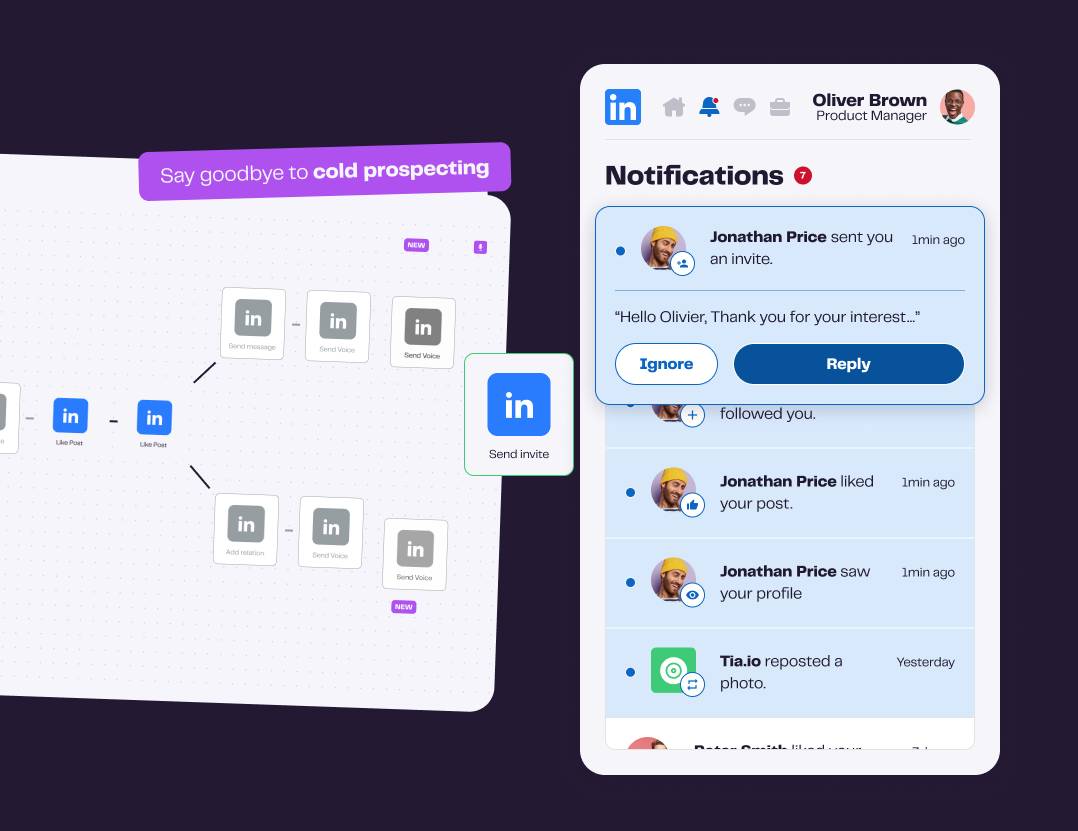
The Sequence That Converts: Connect on LinkedIn → Engage with their content 2-3 times → Send personalized connection request → After acceptance, view their profile twice (triggers notification) → Send email with LinkedIn context → Follow up with LinkedIn DM referencing email → Engage with more content → Send second email.
This multi-touch approach across channels generates 3.5x more responses than email alone because it builds familiarity and social proof before the pitch.
LinkedIn + Email Synchronization: Tools like La Growth Machine enable true multi-channel sequences where LinkedIn actions and email sends are coordinated automatically. Unlike email-only tools, this approach leverages LinkedIn’s relationship-building power alongside email’s directness.
Social Proof Amplification: When prospects see your LinkedIn activity (valuable content, engaged audience, professional presence) before receiving your email, response rates double. LinkedIn validates your credibility in ways email alone cannot.
Content-to-Conversation Path: Use LinkedIn content to attract attention, DMs to start conversations, and email to share detailed information and resources. Each channel plays a specific role in the buyer journey.
Retargeting Engaged Users: People who engage with your LinkedIn content are warm prospects. Export that engagement data and add them to email sequences with context about the specific post they engaged with.
LinkedIn Advertising and Paid Strategies
Ad Types Overview
LinkedIn’s advertising platform offers the highest ROI for B2B when used strategically:
Sponsored Content: Native ads in the feed. Best for awareness, engagement, and website traffic. Three formats: Single image, video, or carousel. Video ads generate 50% more engagement but cost 20% more.
Sponsored Messaging: Direct messages to targeted users’ inboxes. Two types: Message ads (single message) and Conversation ads (choose-your-own-path). Conversion rates are 2-3x higher than sponsored content but cost per send is higher ($0.80-$1.50).
Text Ads: Small ads in sidebar. Lowest cost but also lowest engagement. Best for budget-conscious awareness campaigns or retargeting.
Dynamic Ads: Personalized ads using user’s profile data. Good for recruitment and event promotion.
Lead Gen Forms: Pre-filled forms within LinkedIn that capture leads without leaving platform. These convert 3x better than landing page forms because of reduced friction.
Sponsored Content Best Practices
Creative Requirements: High-quality images (1200x627px minimum), clear value proposition visible in 3 seconds, minimal text on image (under 20%), and mobile-optimized design (60% of views are mobile).
Copy Formula: Hook with pain point or benefit → Expand with specifics → Clear call-to-action. Keep it under 150 characters for maximum impact. Longer copy gets truncated.
Targeting Strategy: Start narrow (10,000-50,000 audience size) with highly specific criteria: specific job titles, specific companies, specific skills. Broad targeting wastes budget on irrelevant clicks.
Bidding Strategy: Start with automated bidding to gather data. After 500 clicks, switch to manual bidding and optimize based on CPL (cost per lead). LinkedIn’s suggested bid is often inflated by 20-30%.
A/B Testing: Test one variable at a time: image vs video, different headlines, different CTAs, different audiences. Run tests for minimum 7 days and 1,000 impressions before declaring a winner.
Budget Allocation: Minimum daily budget of $50 for meaningful results. Start with $100/day for 30 days to gather optimization data. Expect CPCs of $8-$12 for competitive B2B audiences.
InMail Campaigns That Convert
Sponsored InMail (now Message Ads) can deliver 10-15% open rates and 3-5% conversion rates when done right:
Personalization is Mandatory: Use dynamic fields for name, company, and job title. Generic mass messages get deleted instantly.
Subject Line Formula: Keep it under 60 characters. Questions outperform statements. “Quick question about [specific challenge]?” beats “Introducing [Your Product].”
Message Structure:
- Line 1: Personal observation about their profile or company
- Line 2-3: Relevant challenge or opportunity
- Line 4-5: Your solution’s specific benefit
- Line 6: Soft CTA (not “Buy now,” but “Would you be open to a brief call?”)
- Keep total message under 500 characters
Sending Strategy: LinkedIn delivers Message Ads only when recipients are active on platform, so delivery times vary. This actually helps because messages arrive when they’re engaged.
CTA Best Practices: Use custom CTAs (“Download Guide,” “See Case Study”) rather than generic “Learn More.” Link to highly relevant landing pages, not generic homepage.
Follow-Up Sequence: Message ads can’t do automated follow-ups, but you can create separate campaigns targeting people who opened but didn’t click. Segment and refine messaging.
ROI Measurement
LinkedIn advertising requires different metrics than other platforms:
Avoid Vanity Metrics: Impressions and clicks matter less than qualified leads and pipeline. A campaign with 5,000 impressions and 10 qualified leads beats one with 50,000 impressions and 50 unqualified leads.
Track True Cost Per Lead: Divide total ad spend by qualified leads (not just form fills). If your campaign cost $5,000 and generated 50 leads but only 15 were qualified, your CPL is $333, not $100.
Attribution Windows: B2B sales cycles are long. Track assisted conversions—leads who engaged with LinkedIn ads but converted through other channels later. LinkedIn’s native attribution is limited, so use UTM parameters religiously.
Pipeline Contribution: Work with sales to track how many LinkedIn-sourced leads enter pipeline, reach proposal stage, and close. This determines true ROI and justifies budget.
Engagement Quality: Comments and shares on sponsored content indicate resonance with target audience. High engagement often correlates with better lead quality downstream.
Testing ROI Calculation: Total revenue from LinkedIn-sourced deals minus total LinkedIn ad spend equals profit. Divide profit by ad spend to get ROI percentage. Anything above 200% ROI is strong for B2B.
Analytics and Performance Optimization
Key Metrics to Track
Connection Growth Rate: Track weekly net new connections. Aim for 50-100 new quality connections per week. Sudden spikes indicate viral content or effective outreach campaigns.
Engagement Rate: (Reactions + Comments + Shares + Clicks) ÷ Impressions. Industry benchmark is 2-3%. Under 1% indicates content isn’t resonating. Over 5% is exceptional.
Profile Views: Weekly trend matters more than absolute numbers. Spikes indicate content reach or search visibility. Correlate with content posting to identify what drives visibility.
Search Appearances: How often you appear in LinkedIn searches. Indicates keyword optimization effectiveness. Track weekly changes.
Post Performance Metrics:
- Impressions: Reach (unique views) matters more than total impressions
- Engagement rate: Benchmark each post against your average
- Click-through rate: For posts with CTAs, track clicks to external links
- Follower/connection rate: How many people follow or connect after seeing your post
Video Performance:
- Completion rate: Percentage who watch to end. Aim for 50%+
- Average watch time: Identifies exactly where viewers drop off
- Engagement rate: Comments matter more on video because they require more effort
Lead Generation Metrics:
- Connection-to-conversation rate: What percentage of new connections respond to your messaging
- Content-to-lead rate: How many content engagements convert to sales conversations
- LinkedIn-sourced pipeline: Total dollar value of opportunities from LinkedIn
Don’t Track These Alone: Likes and reactions feel good but don’t predict business results. Track them alongside conversion metrics, not instead of them.
Native LinkedIn Analytics Deep Dive
LinkedIn provides free analytics for personal profiles and company pages. Here’s how to use them:
Personal Profile Analytics: Access via “My Network” → “Manage my network” → “See all analytics”
- Who Viewed Your Profile: Identify companies and titles viewing you. If target customers view repeatedly, they’re researching you. Reach out.
- Search Appearances: Shows what keywords bring you visibility. Optimize headline and about section for top search terms.
- Viewer Demographics: Company size, industry, location, and seniority of viewers. Validate you’re attracting the right audience.
Company Page Analytics: Dashboard → Analytics
- Visitors: Track weekly trend. Spikes indicate effective content or external traffic drivers (website, email signatures).
- Follower Demographics: Ensure follower characteristics match target audience. If misaligned, adjust content strategy.
- Content Performance: Sort posts by engagement rate and identify patterns in top performers. Double down on those formats and topics.
Post Analytics: Click analytics icon on individual posts
- Impressions breakdown: Organic vs paid, connections vs followers vs broader network. Shows how far content travels.
- Engagement demographics: See who’s engaging by title, company size, and location. Refine targeting based on most engaged segments.
Weekly Routine: Every Monday, review previous week’s analytics. Document what worked, what didn’t, and why. Test hypotheses the following week.
Third-Party Analytics Tools
Native LinkedIn analytics are limited. These tools provide deeper insights:
Taplio ($49/month): Best for personal brand analytics. Features: Post inspiration, best time to post analysis, engagement tracking, content performance comparison, and CRM-like tracking of connection interactions.
Shield Analytics ($15/month): Focuses on post performance analysis. Tracks engagement trends, identifies your most engaged audience members, and provides detailed performance reports.
Cognism (Enterprise pricing): B2B intelligence tool with LinkedIn integration. Reveals company tech stacks, identifies decision-makers, and provides contact information for prospects engaging with content.
Phantombuster ($30+/month): Automation tool for extracting LinkedIn data. Export post likers, profile viewers, group members, event attendees for retargeting in other channels.
LinkedIn Sales Navigator Analytics: If using Sales Navigator ($99+/month), leverage its analytics: saved lead activity alerts, account news, and relationship maps showing connections to target companies.
A/B Testing Strategies
Continuous testing improves performance exponentially:
Test One Variable at a Time: Changing multiple elements simultaneously makes it impossible to identify what drove results. Be disciplined.
What to Test:
- Posting time: Tuesday 8 AM vs Thursday 12 PM
- Post length: 100 words vs 200 words vs 300 words
- Hook style: Question vs statistic vs story
- Format: Text-only vs image vs video vs carousel
- CTA placement: Early in post vs at end vs in comments
- Hashtag strategy: 3 hashtags vs 5 vs none
Testing Framework:
- Form hypothesis: “Video content will generate 2x more engagement than text posts”
- Run test: Post video on Tuesday, similar topic as text on Thursday
- Collect data: Track engagement rate, impressions, and profile visits
- Analyze: Did video actually outperform? By how much?
- Implement: Adjust content calendar based on results
Statistical Significance: Run tests for minimum 4 weeks before drawing conclusions. Weekly variations happen due to algorithm fluctuations and external factors.
Document Everything: Maintain a testing log with hypotheses, results, and insights. This institutional knowledge compounds over time.
Continuous Improvement Process
Top LinkedIn marketers follow a systematic optimization process:
Monthly Content Audit: First Monday of each month, analyze previous 30 days:
- Top 5 performing posts: What patterns exist?
- Bottom 5 posts: What went wrong?
- Engagement trend: Increasing, stable, or declining?
- Follower/connection growth: On track for goals?
Quarterly Strategy Review: Every 90 days, step back and evaluate:
- Are current content pillars still relevant?
- Has target audience behavior changed?
- What competitors are doing differently?
- What algorithm changes have been announced?
- Are we hitting business objectives (leads, pipeline, revenue)?
Competitive Benchmarking: Identify 5-10 LinkedIn marketers or companies in your space performing exceptionally. Study what they do differently. Adapt (don’t copy) their successful tactics.
Audience Feedback Loops: Quarterly, survey your engaged audience:
- What content do they find most valuable?
- What topics do they want you to cover?
- How can you serve them better?
This research prevents echo chamber thinking.
Skill Development: LinkedIn marketing evolves constantly. Allocate time monthly to learn: take courses, attend webinars, read case studies, join communities. Continuous learning prevents stagnation.
LinkedIn Sales Navigator and Advanced Tools
Advanced Prospecting Strategies
Boolean Search Mastery: Use advanced operators for precise targeting:
- AND: “Marketing AND Director” (both keywords required)
- OR: “VP OR Director” (either keyword)
- NOT: “Sales NOT Intern” (exclude keyword)
- Quotes: “Growth Marketing” (exact phrase)
- Parentheses: (CMO OR “VP Marketing”) AND SaaS (complex logic)
Example: (CMO OR “VP Marketing” OR “Director Marketing”) AND (SaaS OR Software) AND “Series B” NOT Agency
Hiring Signal Prospecting: Companies actively hiring are prime prospects. They have budget, are growing, and need solutions now. Use filters: “Hiring on LinkedIn” or “Posted jobs in last 30 days.” Mention their growth in outreach.
Job Change Targeting: People who recently changed jobs are establishing new vendors and processes. Filter “Changed jobs in last 90 days.” Reach out congratulating them and offering to help with transition challenges.
Content Engagement Prospecting: Identify prospects who engaged with competitor content or relevant hashtag topics. These show active interest. Comment on their activity or reference it in outreach.
Account-Based Marketing (ABM): For enterprise deals, target multiple people at the same company:
- Identify champion (day-to-day user)
- Identify economic buyer (budget holder)
- Identify influencers (technical evaluators)
- Orchestrate coordinated outreach to all roles
Lead Scoring System: Not all prospects are equal. Score leads based on:
- Job title match (10 points)
- Company size match (10 points)
- Posted on LinkedIn in last 30 days (5 points)
- Connection level (1st degree = 10, 2nd = 5, 3rd = 0)
- Profile completeness (5 points)
Focus outreach on leads scoring 30+ points.
Integration with CRM and Marketing Stack
Disconnected tools create data silos and missed opportunities. Here’s how to integrate LinkedIn with your marketing stack:
LinkedIn-CRM Sync: Native integrations with Salesforce, HubSpot, Microsoft Dynamics sync:
- LinkedIn activities automatically create tasks in CRM
- CRM records show LinkedIn profile links and activity
- Sales Navigator leads sync to CRM as contacts
- InMail conversations appear in CRM activity history
Configure two-way sync so sales team sees LinkedIn context when calling prospects, and LinkedIn activity informs CRM lead scoring.
Marketing Automation Integration: Connect LinkedIn with Marketo, Pardot, or HubSpot:
- Add LinkedIn profile viewers to nurture campaigns
- Trigger email sequences when prospects engage with LinkedIn content
- Suppress LinkedIn ad targeting for existing customers in MAP
- Use MAP data to create matched audiences for LinkedIn ads
Analytics Integration: Push LinkedIn data to Google Analytics or Data Studio:
- Track website visitors who came from LinkedIn
- Measure content consumption by LinkedIn visitors
- Calculate assisted conversions from LinkedIn touchpoints
- Build unified dashboard showing all channel performance
Multi-Channel Orchestration: Tools like La Growth Machine synchronize LinkedIn and email outreach in unified sequences. Connect on LinkedIn → Engage with content → Send email → LinkedIn message → Email follow-up. This multi-channel approach eliminates the manual work of coordinating touchpoints across platforms.
Data Enrichment: Use tools like Clearbit, ZoomInfo, or Dropcontact to enrich LinkedIn profile data with email addresses, phone numbers, and company information. This enables outreach beyond LinkedIn’s platform.
Automation Tools and Ethical Use
LinkedIn automation is controversial. The platform prohibits certain automation, but strategic use of approved tools delivers results:
What LinkedIn Prohibits:
- Chrome extension bots that mimic human actions
- Mass connection requests without personalization
- Auto-commenting generic messages on posts
- Profile viewing automation to trigger notifications
- Scraping data beyond what’s permitted by ToS
Violation risks account restriction or permanent ban. Avoid tools like Linked Helper, Dux-Soup, or similar Chrome extensions.
What’s Allowed:
- Native integrations through LinkedIn’s official API
- Scheduled posting through approved partners (Buffer, Hootsuite)
- CRM sync through official integrations
- Sales Navigator automation within platform limits
- Legitimate data enrichment tools
Strategic Automation: Focus automation on low-value repetitive tasks, not relationship building:
- Scheduled posting: Maintain consistency without manual posting daily
- Connection request queuing: Draft personalized requests in batches, send strategically
- Lead list building: Use Sales Navigator to build prospect lists, but personalize outreach manually
- Engagement tracking: Automated alerts when key prospects engage with content
The Manual Touch: Automate research and admin tasks, but keep these manual:
- Connection request personalization (reference specific profile details)
- Message conversations (AI-generated messages feel robotic)
- Content creation (authentic voice can’t be automated)
- Thoughtful commenting (generic comments hurt more than help)
Ethical Automation Guidelines:
- Would you be okay if someone automated this toward you?
- Does this provide genuine value or just scale spam?
- Can recipients tell it’s automated? If yes, it’s bad automation.
- Does this respect people’s time and attention?
Bottom line: Use automation to work smarter, not to scale impersonal outreach. Quality always beats quantity on LinkedIn.
Common Mistakes to Avoid
Pitfalls That Kill Engagement
Mistake 1: Posting Without Engaging
Treating LinkedIn like a blog where you publish and leave kills algorithmic distribution. The platform rewards active community members. If you only post and never comment on others’ content, the algorithm deprioritizes your posts. Solution: Follow the 80/20 rule—spend 80% of time engaging, 20% creating.
Mistake 2: Generic Connection Requests
“I’d like to add you to my professional network” gets ignored 90% of the time. Everyone’s inbox is full of these. Solution: Reference something specific from their profile, a shared connection, or their content in every request.
Mistake 3: Immediate Pitching
Sending a sales pitch immediately after connection acceptance is the fastest way to get unfollowed. It signals you view LinkedIn as a transaction, not a relationship platform. Solution: Provide value for 2-3 interactions before any ask.
Mistake 4: Inconsistent Posting
Posting daily for two weeks then disappearing for a month confuses the algorithm and trains your audience not to expect content. Consistency builds momentum. Solution: Post 3x weekly minimum on a predictable schedule.
Mistake 5: Chasing Viral
Creating controversial or clickbait content hoping to go viral usually backfires. It attracts the wrong audience and damages professional reputation. One viral post with 100,000 views from irrelevant people beats posts with 5,000 views from your target audience. Solution: Focus on resonance with your specific audience, not mass appeal.
Mistake 6: Ignoring Comments
When people comment on your posts and you don’t respond, they’re unlikely to comment again. This kills engagement snowball effect. Solution: Respond to every comment within 1 hour of posting, and most comments within 24 hours.
Mistake 7: Overly Promotional Content
Constant product plugs turn LinkedIn into a spam feed. People follow you for value, not ads. Solution: 80% value, 20% promotion maximum. Earn the right to promote by consistently helping your audience.
Mistake 8: Poor Visual Quality
Blurry images, low-resolution screenshots, and amateur graphics make your content look unprofessional. Quality signals expertise. Solution: Use Canva templates, high-resolution images, and consistent visual branding.
Algorithm Penalties to Avoid
External Link Penalty: Posts with links to external websites receive 40% less initial reach because LinkedIn wants to keep users on platform. The workaround: Post content without links first. After engagement begins (30-60 minutes), add the link in the first comment. You get both engagement and the link destination.
Hashtag Overuse: Using 10+ hashtags looks spammy and triggers algorithm penalties. The optimal number is 3-5 relevant hashtags. Focus on niche hashtags (10K-100K followers) rather than massive ones (1M+ followers) where your content gets buried immediately.
Engagement Pod Detection: The algorithm identifies patterns of artificial engagement—same accounts always commenting within minutes on every post. This tanks organic reach. Natural engagement varies in timing and participants.
Copy-Paste Content: Posting identical content across multiple accounts or platforms triggers duplicate content penalties. LinkedIn wants original content. Repurpose ideas, but rewrite completely.
Excessive Tagging: Tagging 10+ people in a post to artificially boost reach is detected and penalized. Limit tags to 1-3 people genuinely relevant to the content.
Posting Too Frequently: Posting 5+ times daily overwhelms your audience and the algorithm interprets it as spam. Quality over quantity. Three exceptional posts weekly beat seven mediocre daily posts.
Video Downloaded and Re-uploaded: Downloading viral LinkedIn videos and re-uploading them is content theft and algorithm suicide. Create original content or share the original post with commentary.
Clickbait Headlines: “You won’t believe what happened next” style hooks generate clicks but terrible engagement time. The algorithm now weights dwell time heavily, so clickbait that disappoints readers kills your reach.
Authenticity vs Automation Balance
This is the central tension in LinkedIn marketing. Scale requires systems, but relationships require authenticity. Here’s how to balance:
Where to Stay Authentic:
- Personal stories and experiences (can’t be automated)
- One-on-one conversations (DMs, comments, responses)
- Content creation and unique perspectives
- Relationship nurturing with high-value prospects
- Video content showing your personality
Where to Use Systems:
- Research and list building (prospect identification)
- Content scheduling (timing optimization)
- Performance tracking and analytics
- CRM data entry and management
- Lead list organization
The Hybrid Approach: Use automation to identify opportunities and prepare information, but deliver the actual interaction authentically. Example: Use Sales Navigator to build a list of 100 ideal prospects (automated), then spend time researching each one and crafting personalized messages (authentic).
Testing the Balance: If your LinkedIn activity feels like work you dread, you’re probably over-automating. If you’re spending hours on low-value manual tasks, you’re under-utilizing systems. The right balance feels sustainable long-term.
Transparency: When you do use tools to enhance productivity, be transparent. “I use Sales Navigator to identify prospects” is honest. Pretending every interaction is manually discovered is inauthentic.
Real-World Examples and Case Studies
B2B Success Stories
Case Study 1: SaaS Company Generates 300 Qualified Leads Monthly
A B2B SaaS company selling project management software implemented a multi-channel LinkedIn strategy:
Strategy:
- Activated 12 employees to post weekly educational content about project management best practices
- Each employee grew connections by 50-100 monthly within target audience (operations directors at 50-500 person companies)
- Used La Growth Machine to coordinate LinkedIn engagement with email sequences for leads who engaged with content
- Posted consistent thought leadership on company page highlighting customer success stories
Results After 6 Months:
- Combined employee network reach: 85,000 professionals
- Monthly profile views: 12,000 (up from 800)
- Content engagement rate: 4.2% (above 3% industry benchmark)
- Qualified leads generated: 300 per month
- Sales-accepted leads: 90 per month
- Closed deals attributed to LinkedIn: 12 per month
- Customer acquisition cost: 40% lower than paid ads
Key Insight: The multi-channel approach combining LinkedIn engagement with email follow-up generated 3.5x more responses than their previous email-only strategy. Personal employee profiles drove 10x more engagement than company page alone.
Case Study 2: Consultant Builds $500K Pipeline in 12 Months
A B2B marketing consultant with no prior LinkedIn presence built substantial pipeline through consistent personal branding:
Strategy:
- Posted 3x weekly mixing personal stories with tactical marketing frameworks
- Spent 30 minutes daily commenting meaningfully on target audience posts
- Created weekly video content explaining marketing concepts
- Offered free 30-minute audits to engaged followers
Results:
- Connections grown from 200 to 3,800 in 12 months
- Average post engagement rate: 5.8%
- Weekly profile views: 800-1,200
- Consultation calls booked: 80 in 12 months
- Qualified opportunities: 35
- Closed deals: 12
- Revenue generated: $485,000
- Zero ad spend required
Key Insight: Consistency over perfection. The consultant admitted early content “wasn’t great” but committed to weekly posting regardless. By month six, engagement patterns became clear and content quality improved dramatically. The 80/20 engagement rule built relationships that converted naturally to business discussions.
Personal Branding Wins
Example 1: Mid-Level Manager Becomes Thought Leader
Sarah was a marketing director at a mid-size tech company with under 500 LinkedIn connections. She committed to building personal brand to create career opportunities.
Approach:
- Chose three content pillars: demand generation tactics, marketing team leadership, and work-life integration
- Posted every Tuesday and Thursday at 7 AM for 9 months straight
- Shared vulnerable stories about management failures and lessons learned
- Created carousel posts breaking down marketing frameworks
Outcomes:
- Grew to 15,000 followers in 9 months
- Featured in marketing podcast interviews
- Speaking invitation at industry conference
- Recruited to VP of Marketing role at Series C startup (50% salary increase)
- Built consulting side business generating $80K annually
Key Insight: Vulnerability and authenticity outperform expertise posturing. Sarah’s most engaging posts were candid stories about mistakes and lessons, not just tactical how-tos. The audience connected with her humanity first, then trusted her expertise.
Example 2: Career Transition Through Content
Marcus spent 15 years in corporate finance and wanted to transition to fractional CFO consulting. He used LinkedIn to establish credibility in his new direction.
Strategy:
- Published weekly posts explaining financial concepts for non-finance founders
- Created video series “Finance Fridays” breaking down cash flow, burn rate, and fundraising
- Commented on posts from startup founders in target market
- Shared lessons from corporate career applied to startup context
Results:
- Built audience of 8,500 followers (mostly startup founders and operators)
- Booked 5 fractional CFO clients in first 6 months
- Monthly recurring revenue: $35,000
- Successfully transitioned from corporate to entrepreneurship
Key Insight: Content demonstrates expertise more effectively than resume. Marcus had zero consulting track record but his content proved he could translate complex finance concepts for founder audiences. This opened doors traditional applications couldn’t.
What Worked and What Didn’t
What Consistently Works:
Personal Story + Business Lesson: Posts following this formula generate 3-4x more engagement than pure how-to content. People remember stories, not lists.
Contrarian Perspectives with Data: Challenging conventional wisdom attracts attention, but only when backed by evidence or experience. Baseless hot takes damage credibility.
Short-Form Video (60-90 seconds): Quick educational videos explaining one concept generate high completion rates and shares. These position you as an expert while accommodating short attention spans.
Ask Me Anything (AMA) Posts: Inviting your audience to ask questions in comments generates high engagement and provides endless content ideas from their actual questions.
Behind-the-Scenes Content: Showing your process, workspace, or tools humanizes your brand and builds connection. People want to see how success is actually achieved.
What Consistently Fails:
Generic Motivational Quotes: “Success is a journey” with stock photo sunrises gets ignored. Overused, adds no value, and signals you have nothing original to say.
Humble Bragging: “Just closed another $1M deal, so blessed and grateful” comes across as inauthentic. Share wins when there’s an instructive lesson, not just to flex.
Overly Long Posts: Posts exceeding 1,300 characters often get truncated with “see more” button. Most users don’t click. Longer isn’t better; clarity is better.
Mass-Produced AI Content: GPT-generated posts lacking personal perspective feel hollow. The audience can tell. Use AI for ideation and outlining, but add authentic voice and experience.
Constant Selling: Every post mentioning your product/service trains people to scroll past. Build trust with value, then occasional promotional posts are welcomed rather than resented.
Link Dump Posts: Sharing article links with no commentary provides no unique value. Add your perspective, key takeaway, or contrarian view to differentiate from everyone else sharing the same link.
Key Pattern: Authenticity, specificity, and value consistently win. Surface-level, self-promotional, or generic content consistently fails. The algorithm and the audience reward originality and usefulness.
Conclusion
LinkedIn marketing in 2026 demands a strategic, multi-channel approach that balances personal authenticity with systematic execution. The fundamentals haven’t changed—provide value, build relationships, and establish expertise—but the tactics have evolved significantly.
The 2026 algorithm rewards authentic engagement over manufactured reach, video content over static posts, and consistent quality over sporadic viral attempts. Personal profiles generate 8x more engagement than company pages, making employee advocacy and personal branding essential components of any B2B LinkedIn strategy.
Your action plan starts with foundation building: optimize your profile for your target audience, define clear content pillars, and commit to consistent posting schedule (3-5x weekly minimum). Spend more time engaging with others’ content than creating your own—the 80/20 rule compounds your reach through genuine relationship building.
Advanced strategies leverage multi-channel integration for maximum impact. Combining LinkedIn engagement with email outreach generates 3.5x more responses than either channel alone. Tools like La Growth Machine enable this synchronized approach, turning LinkedIn from an isolated platform into part of a coordinated revenue engine.
Measure what matters: qualified leads, pipeline contribution, and closed revenue, not just likes and comments. Use LinkedIn’s native analytics alongside third-party tools to understand what content resonates with your specific audience, then double down on those formats and topics.
The common thread across every successful LinkedIn marketing strategy is sustainability. This isn’t a sprint to viral fame; it’s a long-term investment in building authority, trust, and relationships that compound over time. The connections you make, content you create, and reputation you build today generate opportunities for years.
Start today with these immediate actions: optimize your headline and about section, identify 10 target audience members to engage with daily, and schedule your first three posts for the coming week. Small consistent actions compound into transformational results.
The opportunity on LinkedIn has never been greater. While most marketers post sporadically and chase trends, you now have a comprehensive framework to build sustainable competitive advantage. Execute consistently, measure rigorously, and optimize continuously. Your future self will thank you for starting today.