
83% of the buyer journey happens without sales involvement. Your champion just left. The deal stalled in procurement for 90 days.
The difference between reps hitting 60% quota and those crushing 140%+ is power mapping. Elite enterprise sellers don’t just talk to one contact—they map the entire buying committee, identify influencers, and orchestrate multi-threaded campaigns that account for every stakeholder’s agenda.
After analyzing 1,200+ enterprise deals, we’ve distilled the essential power mapping framework:
What you’ll master:
- The 6-element power mapping framework used by top enterprise reps
- Step-by-step process to map buying committees with 8-13+ stakeholders
- Common mistakes that kill 40% of complex deals
- Multi-channel tactics that deliver 3.5x more stakeholder responses
- Dynamic maintenance for buying committees that change mid-deal
Modern B2B buying committees average 10.2 people (Gartner 2025)—up from 6.8 in 2019. Single-threading is no longer viable.
What is Power Mapping in B2B Sales?
Power mapping is identifying, categorizing, and tracking every stakeholder involved in a purchase decision—then developing targeted engagement for each based on influence level, priorities, and relationship to your solution.
Unlike org charts, power maps reveal actual decision-making dynamics: who controls budget, who has veto power, who influences behind the scenes, who can champion your solution internally.
Key Stakeholder Types:
- Decision-makers : Economic buyers with budget authority and final signature power
- Influencers : SMEs whose opinions shape evaluation criteria
- Technical evaluators : IT, Security, Operations teams with veto power
- End users : Teams using your product daily—critical for adoption
- Champions : Internal advocates who actively sell for you
- Blockers : Stakeholders opposing your solution
Why Power Mapping is Critical for Modern B2B Sales
A 2024 SalesLoft study found deals with 3+ engaged stakeholders close 47% faster and at 28% higher ACV than single-threaded deals. Yet 64% of lost enterprise deals involved insufficient stakeholder engagement.
Without power mapping, you risk:
- Investing months building rapport with someone lacking real influence
- Missing the IT Security blocker who kills your deal in legal review
- Losing to competitors who identified and armed your champion
- Creating inconsistent messaging that confuses buying committees
- Getting blindsided when your champion leaves mid-deal
The buyer journey is invisible to sales : 83% happens through self-serve research, peer reviews, and internal discussions invisible to your CRM. By demo time, prospects have formed 60-70% of their vendor opinion.
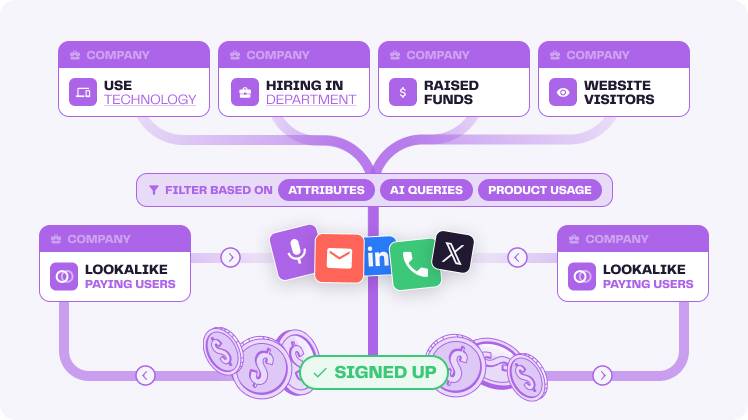
Power mapping compensates by identifying stakeholders early and tracking their digital footprints (LinkedIn profile visits, content downloads, email engagement).
Multi-channel tracking reveals which stakeholders actively research : Email-only tracking misses the IT Director who never opens emails but views your LinkedIn profile 4 times. LinkedIn-only misses the CFO who ignores social media but downloads your ROI calculator. Comprehensive power mapping requires cross-channel engagement signals.
How to Implement Power Mapping
1. Research the Company Hierarchy
- Start with LinkedIn and the company website
- Identify departments impacted by your solution
- Find likely stakeholders in each department
2. Map Each Stakeholder
- Title and function
- Influence level (high/medium/low)
- Budget control (yes/no)
- Primary communication channel (email/LinkedIn)
- Current sentiment (positive/neutral/blocked)
3. Develop Targeted Engagement
- Tailor messaging to each stakeholder’s priorities
- Use multi-channel outreach (LinkedIn + Email)
- Identify who needs what information
- Assign ownership (who follows up with whom)
4. Track Engagement Across Channels
- Monitor email opens, clicks, replies
- Track LinkedIn profile visits and message responses
- Note which stakeholders are actively engaging
- Update map as new stakeholders emerge
5. Maintain Dynamically
- Weekly map reviews with your team
- Adjust based on new information
- Replace disengaged contacts with alternatives
- Alert team to objections as they emerge
Scale Buying Committee Engagement with La Growth Machine
This is where multi-channel coordination becomes critical. Email-only or LinkedIn-only approaches fail because stakeholders engage differently.
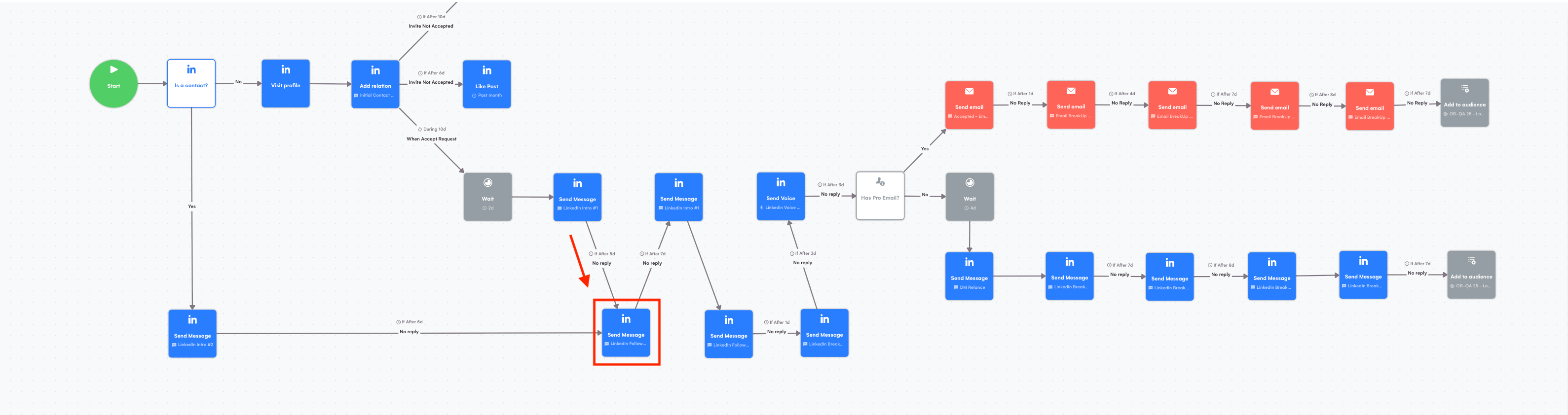
La Growth Machine enables coordinated LinkedIn + Email sequences across your entire buying committee with:
- Multichannel sequences (Email + LinkedIn + Twitter)
- Stakeholder-level tracking and engagement analytics
- Automated sequences with intelligent timing
- Real-time visibility into who’s engaging
Ready to map buying committees smarter? Start with La Growth Machine Pro €60/month, which includes full multichannel automation for coordinated outreach across email, LinkedIn, and calls.