
When talking about sales, two terms that often get confused are “upsell” and “cross-sell.” While they may sound similar, they have distinct meanings and can have dramatically different impacts on your revenue strategy.
Understanding the nuances between these two techniques is critical for any business looking to maximize customer lifetime value and increase average order value. In this comprehensive guide, we’ll explore the key differences between upselling and cross-selling, real-world examples across industries, proven strategies, and when to use each technique effectively.
What Is Cross-Selling?
Cross-selling is a sales technique that involves recommending complementary or related products to your customers. The aim is to encourage customers to make additional purchases that enhance their primary purchase or solve related problems.
By understanding the needs and preferences of your customers, you can offer them products or services that perfectly complement their initial purchase. This not only adds value to their overall experience but also increases the chances of repeat business.
In ecommerce, Amazon has mastered cross-selling with its “Frequently Bought Together” feature. When you view a product, you immediately see other items that customers typically purchase alongside it, often with a bundled discount that makes the additional purchase more attractive.
Example
Let’s revisit our previous example. In addition to upselling to the premium tier, cross-selling would involve suggesting additional software add-ons or integrations that would enhance the customer’s overall experience. For instance, you could recommend a project management tool that integrates seamlessly with your software, helping them streamline their workflow.
Furthermore, cross-selling can be a great way to introduce your customers to new products or features they may not have been aware of. By showcasing the benefits and advantages of these additional offerings, you can pique their interest and encourage them to explore more options.

It’s important to note that effective cross-selling requires a deep understanding of your customers’ needs and preferences. By analyzing their purchase history, browsing behavior, and demographic information, you can tailor your cross-selling efforts to match their specific interests.
Another key aspect of successful cross-selling is timing. Cross-selling can occur before, during, or after a purchase. By presenting cross-selling opportunities at the right moment — such as during product browsing, the checkout process, or in post-purchase follow-ups — you can increase the likelihood of customers accepting your recommendations.
What Is Upselling?
Upselling is a sales technique that involves persuading your customers to purchase a higher-priced or more advanced version of a product or service. The goal is to convince them that upgrading to a more expensive option will provide additional value or better meet their needs.
But what exactly makes upselling such an effective sales strategy? Well, it all comes down to understanding the psychology of consumer behavior. Research has shown that customers are often willing to spend more money if they believe they are getting a better deal or if they perceive the upgraded product or service as more valuable.
Example
For example, let’s say you work for a SaaS company that offers different pricing tiers for its software. Upselling would involve recommending the premium tier to customers who are currently on the basic tier. You would highlight the extra features and benefits they would gain by upgrading, such as advanced analytics or priority client support.
Netflix provides an excellent example of upselling in action. When users sign up or consider their subscription options, they’re presented with multiple tiers — Basic, Standard, and Premium. Each tier offers progressively more value: more screens, better video quality, and additional features. The company clearly communicates the benefits of upgrading, making the premium plan attractive to users who want the best streaming experience.
But it’s not just about highlighting the features.
Upselling also requires effective communication and building trust with customers. By understanding their specific needs and pain points, you can tailor your upselling approach to address those concerns and demonstrate how the upgraded product or service can provide a solution.
Moreover, upselling can also be seen as a way to enhance the overall customer experience. By offering them a more advanced version of a product or service, you are giving them the opportunity to unlock additional benefits and capabilities that can further enhance their satisfaction and success.
Another important aspect of upselling is timing. It’s crucial to identify the right moment to introduce the upsell. Pushing an upsell too early in the customer journey may come across as pushy or insincere, while waiting too long may result in missed opportunities. Finding the right balance requires a deep understanding of the customer’s buying journey and being able to identify key touchpoints where an upsell would be most relevant and beneficial.
Furthermore, upselling can also have a positive impact on the bottom line of a business. By convincing customers to upgrade to a higher-priced option, you not only increase the average order value but also potentially boost customer lifetime value. This can lead to increased revenue and profitability for the company.
Upsell vs Cross Sell: Key Differences
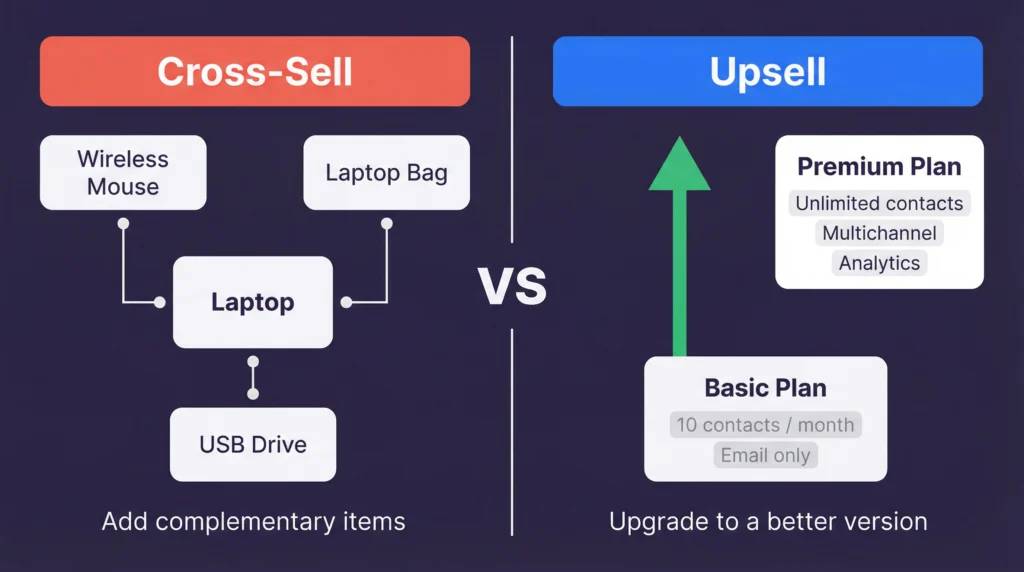
While both upselling and cross-selling involve increasing the value of a sale, there are some fundamental differences between the two techniques. Understanding these distinctions is essential for implementing the right strategy at the right time.
Here’s a comprehensive comparison table that highlights the key differences:
| Criteria | Cross-Selling | Upselling |
|---|---|---|
| Goal | Increase number of items purchased | Increase revenue from a single item |
| Focus | Complementary or related products | Higher-priced or premium version of the same product |
| Desired Buyer Action | Add more products to cart | Upgrade to a better version |
| Customer Benefit | Enhanced experience, convenience, complete solution | Better quality, more features, improved performance |
| Customer Research | Understanding complementary needs and usage patterns | Identifying readiness for premium features and budget capacity |
| Sales Approach | “Customers who bought this also bought…” | “For just $X more, you can get…” |
- Focus: Upselling emphasizes selling a higher-priced product while cross-selling focuses on selling complementary or related products.
- Timing: Both techniques can be applied at various stages of the customer journey. Cross-selling can occur before, during, or after purchase; upselling typically happens when the customer is actively evaluating a purchase.
- Objective: Upselling aims to increase the revenue from a single sale by convincing customers to spend more, whereas cross-selling aims to increase the number of items purchased.
Focus
Upselling involves encouraging customers to purchase a higher-priced product than the one they initially intended to buy. This technique aims to capitalize on the customer’s desire for quality or additional features.
Example
For example, a client interested in purchasing a basic smartphone may be upsold to a premium model with advanced specifications and enhanced functionalities.
On the other hand, cross-selling focuses on offering complementary or related products to enhance the customer’s overall experience. For instance, a customer buying a laptop may be cross-sold accessories like a laptop bag, wireless mouse, or external hard drive.
Timing
Cross-selling can occur before, during, or after a purchase. It can be implemented during the pre-purchase phase when the customer is still exploring options, during checkout as add-on suggestions, or even post-purchase through follow-up emails recommending complementary products.
Example
For example, after purchasing a camera, the customer may be presented with options to buy lenses, camera bags, or memory cards.
In contrast, upselling typically occurs when the customer is actively considering or has decided on a purchase. This is an opportune moment to present higher-grade products that complement the customer’s chosen item. Sales representatives or online platforms may suggest higher-priced alternatives that provide better value or additional benefits.
Objective
The primary objective of upselling is to maximize the revenue from a single sale. By convincing your clients to upgrade to a higher-priced product, businesses can increase their profit margins. This strategy relies on effectively communicating the added value and benefits of the more expensive option. On the other hand, cross-selling aims to increase the number of items purchased by the client. By offering complementary products, businesses can boost their overall sales volume. This strategy is based on the concept of enhancing the customer’s experience and providing convenience.
It is important to note that both upselling and cross-selling should be implemented ethically and with the customer’s best interest in mind. Pushing unnecessary or irrelevant products can harm the customer’s trust and negatively impact the business’s reputation. Therefore, businesses should focus on providing genuine value and personalized recommendations to enhance the customer’s shopping experience.
When to Use Cross-Selling vs Upselling
Knowing when to apply each technique is just as important as understanding what they are. The right approach at the right moment can dramatically impact your conversion rates and customer satisfaction.
You Should Cross-Sell When:
- The customer has already committed to a purchase: Once they’ve decided on a primary product, they’re more receptive to complementary items that enhance their purchase.
- You can genuinely improve their experience: The additional products solve related problems or complete a solution they’re seeking.
- Products naturally go together: There’s a logical connection between items (like a phone case with a phone, or hosting with a domain name).
- You want to increase basket size without changing the core purchase: The customer is satisfied with their main choice and you want to add value rather than replace it.
You Should Upsell When:
- The customer is considering a basic option but would benefit from premium features: They’re price-conscious but the upgraded version offers significantly more value for their use case.
- There’s a clear value proposition in upgrading: You can articulate specific benefits that justify the higher price point.
- The customer’s needs indicate they’ll outgrow the basic option: Based on their requirements, they’ll likely need to upgrade soon anyway.
- You’re in contract renewal or subscription upgrade scenarios: Existing customers who understand your product are prime candidates for upselling to higher tiers.
Real-World Examples Across Industries
To truly understand the power of upselling and cross-selling, let’s examine how different industries successfully implement these strategies:
E-commerce/Retail
Cross-selling: When purchasing running shoes on an e-commerce site, customers are shown recommendations for athletic socks, fitness trackers, and running shorts via a “Complete Your Look” section.
Upselling: A customer adding a mid-range laptop to their cart immediately sees a comparison showing that for $200 more, they can get double the RAM, a better graphics card, and a larger SSD.
SaaS/Software
Cross-selling: A company using email marketing software is offered integrations with CRM systems, landing page builders, and analytics platforms — creating a complete marketing stack.
Upselling: As a team grows beyond 10,000 contacts on a basic plan, they receive notifications about a Professional tier with automation, advanced segmentation, and priority support.
Hospitality
Cross-selling: When booking a hotel room, guests are offered airport transfers, spa treatments, or dinner reservations that complement their stay.
Upselling: At check-in, the front desk offers to upgrade from a standard room to an ocean-view suite for an additional $50/night, highlighting the enhanced experience.
Financial Services
Cross-selling: A customer opening a checking account is offered a savings account with a higher interest rate, plus a credit card with cashback rewards.
Upselling: A basic credit card holder with excellent payment history is invited to upgrade to a premium card with higher credit limits, travel insurance, and lounge access.
Streaming/Entertainment
Cross-selling: A music streaming service offers podcast subscriptions, concert ticket discounts, and exclusive merchandise from favorite artists.
Upselling: Spotify prompts free users to upgrade to Premium for ad-free listening, offline downloads, and better audio quality — a clear value proposition.
What Are the Benefits of Each Technique?
Both upselling and cross-selling can have significant benefits for your business:
- Increased Revenue: By upselling or cross-selling, you can boost your average order value and generate more revenue.
- Enhanced Customer Satisfaction: By recommending products or upgrades that align with your customers’ needs, you can improve their overall satisfaction and build stronger relationships.
- Opportunity for Repeat Business: By introducing customers to additional products or services, you increase the likelihood of repeat purchases and foster customer loyalty.
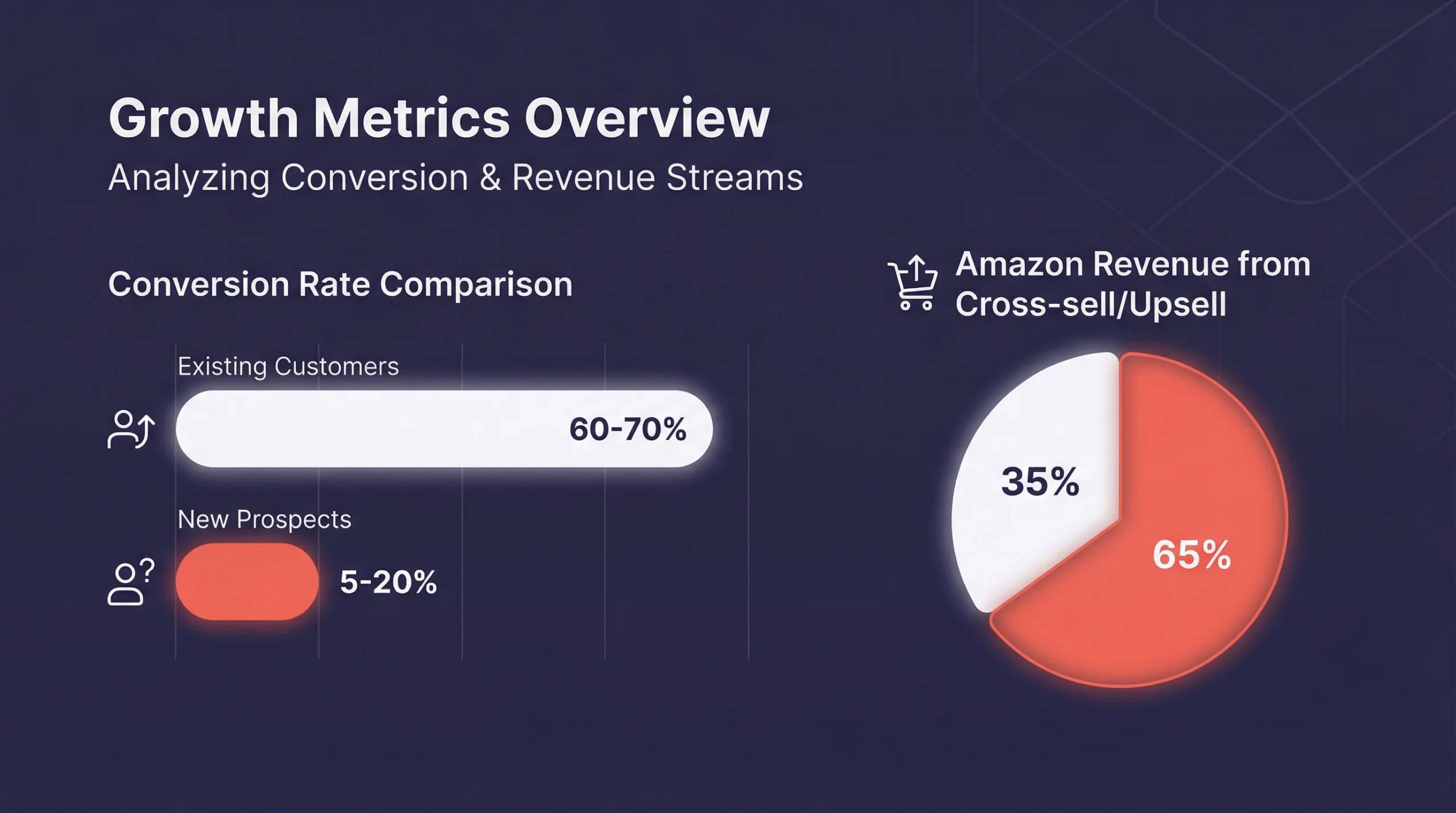
The statistics are compelling: companies are 60-70% more likely to sell to an existing customer compared to just 5-20% likelihood for a new prospect. This makes upselling and cross-selling not just beneficial, but essential strategies for sustainable growth.
Even more impressive, Amazon attributes approximately 35% of its revenue to cross-selling and recommendation engines. This demonstrates the massive revenue potential when these techniques are implemented effectively at scale.
But they also both provide specific benefits:
- Upselling allows you to showcase the full range of products or services your business offers. Customers may not be aware of all the options available to them, and by upselling, you can educate them about the benefits and features of different products. This not only enhances their shopping experience but also positions your business as a trusted advisor.
- Cross-selling, on the other hand, presents a unique set of benefits. By recommending complementary products or services to your customers, you can help them discover items they may not have considered before.
- Additionally, cross-selling allows you to tap into the concept of impulse buying. When customers see related products or services that align with their interests or needs, they are more likely to make additional purchases on the spot.
- Moreover, cross-selling provides an opportunity to showcase the breadth of your product range. By highlighting different options and variations, you can demonstrate the versatility and depth of your offerings.

Two Concrete B2B Sales Use-cases
In B2B, sales and marketing take on a slightly different, more intricate form. The stakes are often higher, and the deals are more complex. Yet, the principles of upselling and cross-selling remain just as pertinent. Let’s delve into two real-life scenarios that demonstrate the power and effectiveness of these strategies in the B2B ecosystem:
Upselling
Example
Imagine you’re a manager at a mid-sized company and you’ve just invested in a new CRM (Customer Relationship Management) software to streamline your sales and marketing processes. A few weeks post-purchase, a representative from the software company reaches out, offering a compelling pitch: An upgrade to the premium version, which boasts enhanced analytics, integration capabilities, and more. The rep meticulously points out that companies similar to yours have seen marked improvements in their marketing campaigns by leveraging these advanced features.
This scenario exemplifies upselling. It’s about recognizing the evolving needs of B2B clients and offering them an enhanced solution. In the realm of B2B, time is money. Therefore, if a product or service can promise efficiencies and more significant ROI, businesses are often willing to invest. Upselling, in this context, is not merely about selling a pricier product but about strengthening a business relationship and ensuring that the client gets the most value over time.
Cross-Selling
Example
Fast forward a few months, and your company is reaping the benefits of the premium CRM. During a routine check-in call, the software company’s rep inquires about your other business operations. After understanding your needs, they introduce their suite of productivity tools — project management, team collaboration software, and an advanced communication platform. They aren’t just throwing products your way. They’re identifying gaps in your business operations and presenting ways their solutions can plug those gaps.
This is the power of cross-selling. In the B2B space, it’s about seeing the bigger picture and understanding the interconnectedness of business functions. It’s not about pushing products but about offering comprehensive solutions. With cross-selling, the focus shifts from individual products to holistic business improvement.
Top 4 Strategies for Upselling
1. Leverage Tiered Pricing and Product Bundling
Tiered pricing and product bundling involve organizing products or services into different levels of value or combining complementary offerings into a single package. This strategy capitalizes on the customer’s desire for added value, making them feel they’re getting more for a marginally higher cost.
How to do it?
Step 1: Analyze and Group: Study your offerings and categorize them based on features, benefits, and value. Create basic, intermediate, and premium tiers.nnStep 2: Identify Complementary Products: Look at purchase histories or service usages to find products or services that are frequently bought or used together.nnStep 3: Package and Price: Bundle these complementary offerings together at a discounted rate compared to their individual prices.nnStep 4: Promote and Highlight Value: Ensure customers are aware of the bundles or tiers and continuously highlight the savings or added benefits they gain from choosing them.
2. Offer Exclusive Upgrades at Key Touchpoints
Offering exclusive upgrades at pivotal moments is about seizing the opportunity when a customer is already engaged. Whether during the checkout process in ecommerce or a contract renewal in B2B, these are moments when customers are primed for additional value propositions.
4. Provide Limited-Time Free Trials or Demos
Offering a sneak peek into a premium product or an advanced service tier can entice customers by letting them experience the added benefits firsthand. This “try before you buy” approach, common in software sales and service industries, can effectively demonstrate value.
How to do it?
Step 1 – Identify Premium Offerings: Select the products or services that have clear, tangible benefits over the standard options.nnStep 2 – Set Up Trial/Demo Systems: For products, this might mean creating a limited-time version. For services in B2B scenarios, it could be a one-off demo or a pilot project.nnStep 3 – Promote the Trial: Ensure customers are aware of the trial offer. This can be done via email marketing, website banners, or during sales pitches.nnStep 4 – Smooth Transition: After the trial period, provide an easy way for customers to upgrade to the full version or extended service, highlighting the benefits they’ve already experienced.
Top Strategies for Cross-Selling
1. Curated Product Recommendations
Curated product recommendations involve suggesting additional items based on what the customer is currently viewing or purchasing. This strategy builds upon the principle of relevancy and can significantly enhance the shopping experience.
How to do it?
Step 1 – Analyze Purchase Histories: Study past sales to understand which products are frequently bought together.nnStep 2 – Implement Recommendation Engines: For online stores, use algorithms or plugins that suggest relevant products based on browsing history and cart contents.nnStep 3 – Display Prominently: Ensure that recommendations are visibly placed, for instance, near the product description or close to the cart checkout.nnStep 4 – Regularly Update Recommendations: Keep the suggestions fresh and relevant by regularly updating based on inventory and sales trends.
2. Bundle and Discount
Bundling involves offering a set of complementary products at a discounted rate when bought together. This tactic not only increases the store’s average transaction value but also provides customers with a sense of getting a good deal.
How to do it?
Step 1 – Identify Complementary Products: Using sales data, find out products that pair well together. For example, a camera and a tripod.nnStep 2 – Price the Bundle: Offer the bundle at a price slightly less than the combined individual prices of the products.nnStep 3 – Promote the Bundle: Highlight the savings and benefits of the bundle prominently in marketing materials and on product pages.nnStep 4 – Easy Bundle Addition to Cart: Ensure that with a single click, customers can add the entire bundle to their cart.
3. Use Point of Purchase (POP) Displays
Point of Purchase displays are strategically placed showcases, often seen near store checkouts or cart pages online, designed to catch a customer’s attention right before they complete their purchase.
How to do it?
Step 1 – Select POP Products: Choose items that are generally of lower cost but high utility. Examples could be batteries near electronic gadgets or a screen protector near smartphones.nnStep 2 – Design Attractive Displays: Ensure that the POP display stands out, drawing attention to the products.nnStep 3 – Place Strategically: For physical stores, this would be near the checkout counter. In online stores, these could be flashed as last-minute add-ons before finalizing the cart.nnStep 4 – Rotate Products Periodically: Keep the POP displays fresh and engaging by rotating products based on seasons, trends, or stock.

FAQ
What is the main difference between upselling and cross-selling?
The main difference is in focus and intent. Upselling encourages customers to purchase a higher-priced or premium version of the product they’re considering — focusing on upgrading the same item. Cross-selling recommends complementary or related products that enhance the primary purchase. Think of upselling as “better” and cross-selling as “more.”
When should you upsell vs cross-sell?
Upsell when customers are considering a basic option but would clearly benefit from premium features, or during subscription renewals. Cross-sell when customers have committed to a primary purchase and you can genuinely enhance their experience with complementary items that naturally go together.
What is cross-selling vs upselling vs bundling?
Cross-selling recommends additional complementary products (buy a phone, add a case). Upselling encourages upgrading to a premium version of the same product (basic plan to premium plan). Bundling combines multiple products into a package deal, often at a discount (phone + case + screen protector bundle). Bundling can incorporate elements of both strategies.
What are the disadvantages of cross-selling?
When done poorly, cross-selling can overwhelm customers with too many options, create decision fatigue, or come across as pushy. Irrelevant recommendations can damage trust. There’s also a risk of cart abandonment if the checkout process becomes too complicated with add-on suggestions. The key is relevance and timing.
Can you use both upselling and cross-selling simultaneously?
Yes, absolutely. Many successful businesses use both strategies together in a customer journey — for example, first upselling a customer to a premium laptop, then cross-selling accessories like a bag and mouse. The key is not overwhelming the customer; present options strategically at different touchpoints. Sequential implementation works best: upsell first, then cross-sell complementary items.
Conclusion
In summary, while upselling and cross-selling are both valuable sales techniques, they have distinct differences and should be applied strategically based on customer context, timing, and genuine value addition.
Upselling involves persuading customers to upgrade to a higher-priced option with enhanced features or capabilities, while cross-selling entails recommending complementary products that complete or enhance the primary purchase. Both strategies are powerful revenue drivers when implemented correctly — with companies 60-70% more likely to sell to existing customers and industry leaders like Amazon attributing 35% of revenue to these techniques.
By understanding these techniques, knowing when to apply each one, and implementing the strategies covered throughout this guide, you can effectively drive revenue growth, improve customer satisfaction, and foster long-term loyalty. Successful implementation always requires a deep understanding of your customers’ needs — never push products simply to increase transaction value.