
TL;DR
Most B2B sales teams waste budget on 5-8 tools that do not share data. The modern approach collapses layers.
Apollo.io – best for SMB teams doing email-first outbound in North America. Combines a 275M+ database with built-in sequencing.
Cognism – best for EMEA outbound. Phone-verified data and GDPR-compliant sourcing.
La Growth Machine – top pick for multichannel outbound. Native LinkedIn + Email + Twitter sequences with waterfall enrichment built in. Replaces both your outreach tool and your enrichment tool. From €60/month per identity.
HubSpot Sales Hub – best CRM for mid-market teams running both inbound and outbound in one platform.
Most B2B sales teams run on 5 to 8 disconnected tools. A data provider, an enrichment layer, a sequencing tool, a CRM, a dialer, a reporting dashboard — each with its own login, its own CSV exports, and its own renewal cycle. The result is a high total cost of ownership, a broken data flow between tools, and reps who spend more time copy-pasting leads than booking meetings.
The modern approach is different. The best sales stacks in 2026 collapse layers. Instead of enrichment tool plus outreach tool plus CRM sync, you pick platforms that handle two or three jobs at once. Less overhead, cleaner data, faster ramp time for new SDRs.
This guide breaks down the tools worth building around in 2026, organized by stack layer — data, outreach, and CRM — with a clear recommendation on how to build the leanest possible setup without sacrificing pipeline quality.
| Tool | Category | Best For | Replaces | Price |
|---|---|---|---|---|
| Apollo.io | Data + Sequencing | SMB prospecting at scale | Data provider + basic sequencer | From $49/month |
| Cognism | Data + Compliance | EMEA outbound, phone-verified | Data provider + compliance layer | Custom pricing |
| Clay | AI Enrichment | Custom workflows, multi-source data | Enrichment + data ops | From $149/month |
| La Growth Machine | Outreach + Enrichment | Multichannel sequences + waterfall enrichment | Outreach tool + enrichment tool | From €60/month/identity |
| Salesloft | Sales Engagement | Enterprise sales teams | Sequencer + call coaching | Custom pricing |
| Outreach | Sales Engagement | AI deal intelligence | Sequencer + forecasting | Custom pricing |
| HubSpot Sales Hub | CRM | Mid-market automation | CRM + marketing alignment | From $90/month |
| Salesforce | CRM | Enterprise, deep customization | CRM + data warehouse | From $165/month |
| Pipedrive | CRM | SMB, easy setup | CRM + pipeline management | From $14/month |
The 3 Layers of a Modern Sales Stack
Every sales stack worth running in 2026 has three distinct jobs to do. If any layer is weak, the whole machine underperforms.
Layer 1 — Data and Enrichment
This is the foundation. You need accurate contact data — verified emails, direct dials, job titles, company size, tech stack — before any outreach can happen. Tools in this layer either give you access to a proprietary database (Apollo, Cognism) or let you pull and combine data from multiple sources with custom logic (Clay).
The mistake most teams make is over-investing here. A 300-million-contact database means nothing if your outreach layer can’t act on it cleanly. Data quality beats data quantity every time.
Layer 2 — Outreach and Sequencing
This is where pipeline gets built. Layer 2 tools take your target list and execute the sequences — emails, LinkedIn touchpoints, calls — that generate replies and booked meetings. The difference between tools comes down to channel coverage, deliverability infrastructure, and how tightly the tool integrates with your CRM.
The best Layer 2 tools in 2026 don’t just send messages. They enrich on the fly (waterfall logic across multiple providers), track engagement across channels, and push clean activity data into your CRM without a Zapier dependency.
Layer 3 — CRM and Pipeline
Your CRM is the record of truth. Every lead touched, every deal moved, every closed-won attributed. The tools in this layer range from lightweight and opinionated (Pipedrive) to deeply customizable and enterprise-grade (Salesforce). Most B2B teams in 2026 don’t need a custom CRM build — they need a CRM their reps actually use.
Best Tools by Layer
Apollo.io
Apollo.io combines a 275+ million contact database with built-in email sequencing and AI lead scoring. For teams that want a single tool to find, filter, and contact prospects without switching platforms, Apollo is the most accessible entry point.
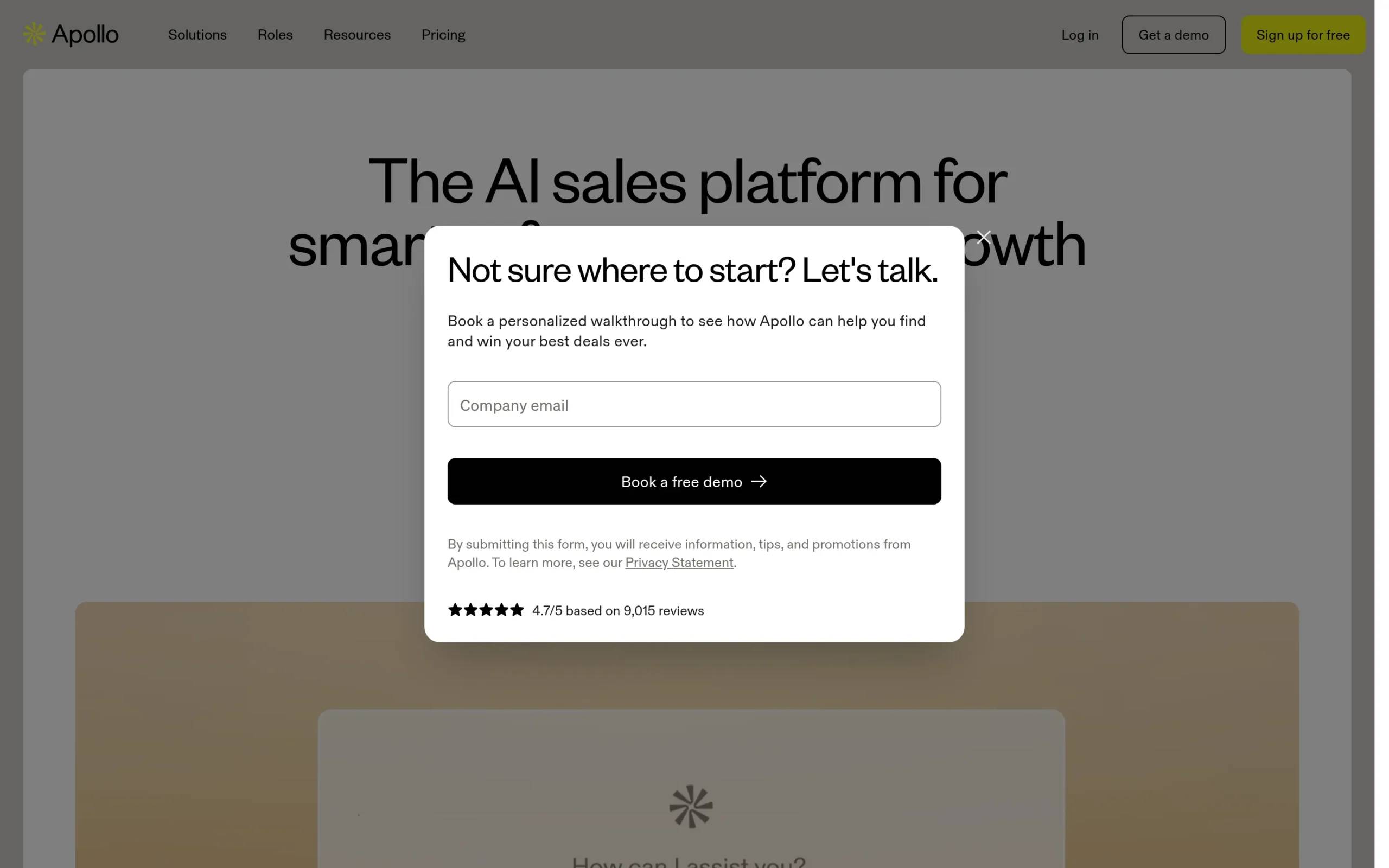
The database quality varies by region — strongest in North America, less reliable in EMEA. Apollo’s sequencer handles email well but lacks native LinkedIn outreach and multi-channel waterfall enrichment. Teams using Apollo for outreach often end up adding a LinkedIn automation tool on top, which reintroduces the stack complexity they were trying to avoid.
Best for: SMB teams in North America running email-first outbound at volume.
Cognism
Cognism is the GDPR-compliant choice for EMEA-focused teams. The database is phone-verified through their Diamond Data program, which means more accurate mobile numbers and fewer bounces on calls and emails.
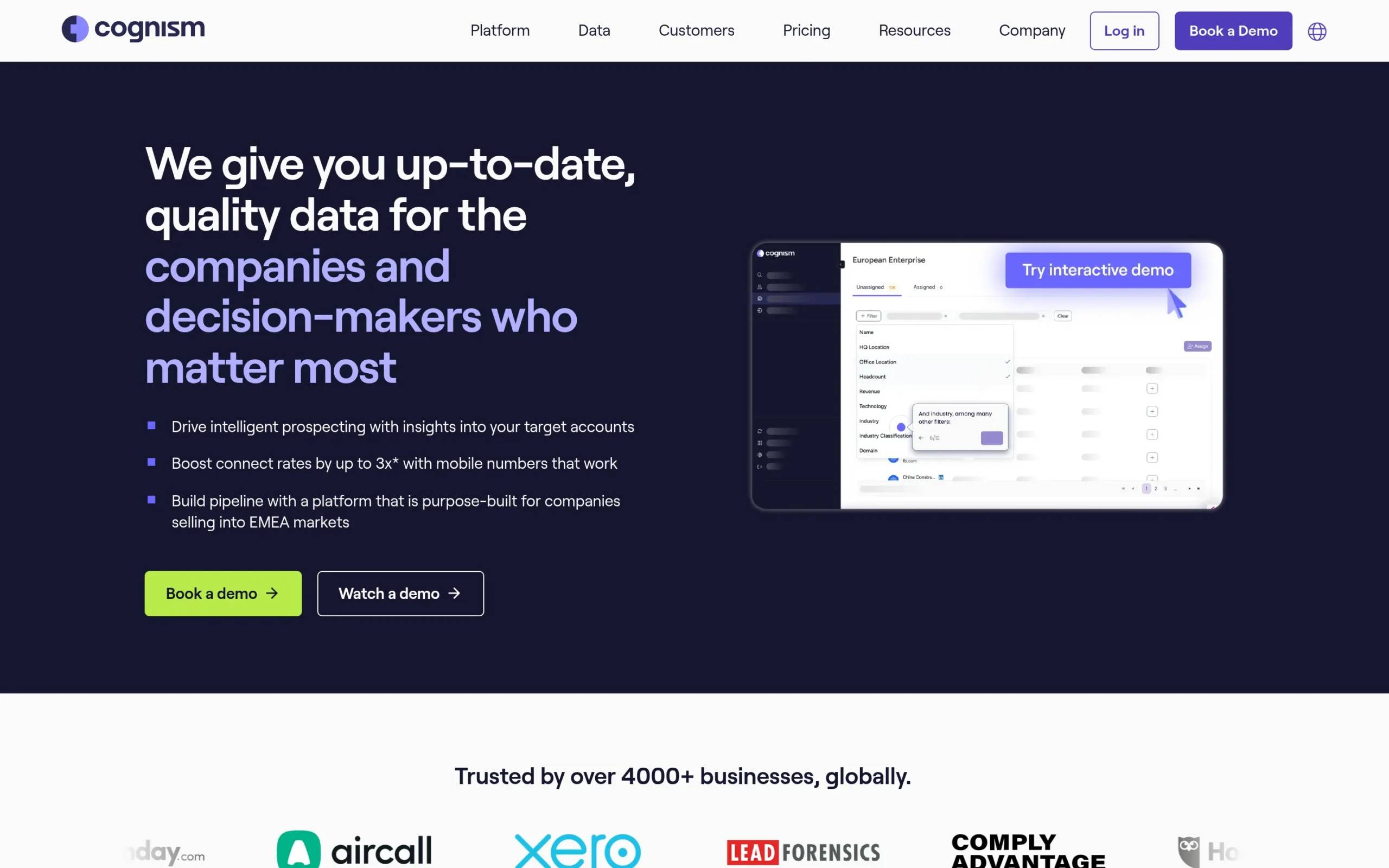
Cognism does not have a native sequencer. It is a data tool — you pull verified contacts, export them or push via integration to your outreach platform, and run sequences from there. That two-tool requirement adds overhead, but for EMEA teams where compliance and data accuracy matter most, Cognism is the standard.
Best for: EMEA sales teams that prioritize data compliance and phone-verified contacts.
Clay
Clay is not a traditional data provider. It is an AI enrichment engine that connects to 50+ data sources — Apollo, Cognism, LinkedIn, Clearbit, Hunter, and more — and lets you build custom waterfall logic to enrich any contact list.
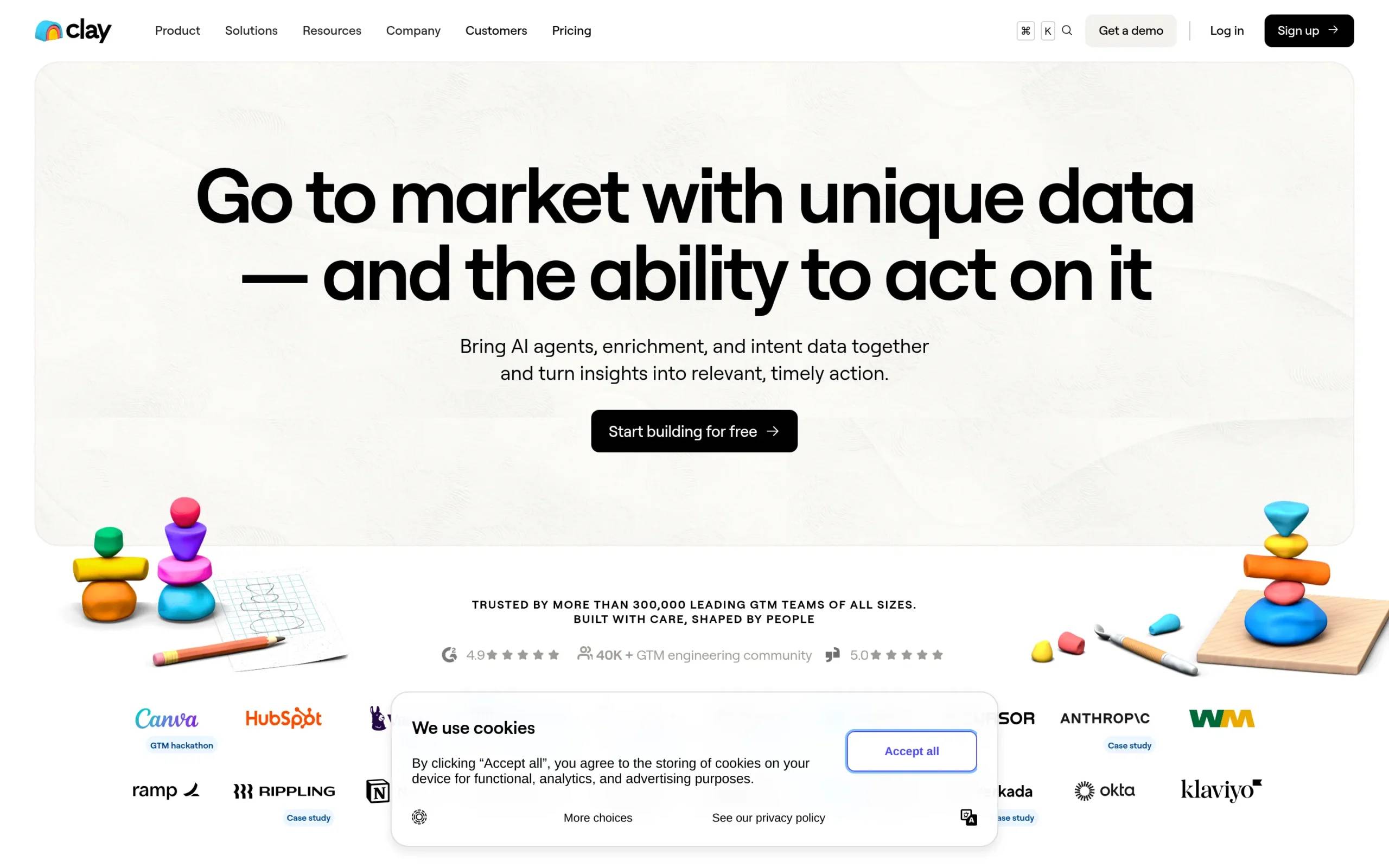
The power of Clay is in the flexibility. You can set rules like: try Apollo first, if no email found try Hunter, if still no email scrape LinkedIn. That waterfall approach generates higher enrichment coverage than any single provider. Clay also supports AI-generated personalization fields, which some teams use to inject custom research into email copy at scale.
Best for: data-ops-forward teams, RevOps functions, and teams with complex enrichment workflows.
La Growth Machine
La Growth Machine is the outreach layer that collapses two stack layers into one. It handles native multichannel sequences across LinkedIn, Email, and Twitter — with waterfall enrichment built in, AI-powered sequence generation, and direct CRM sync out of the box.
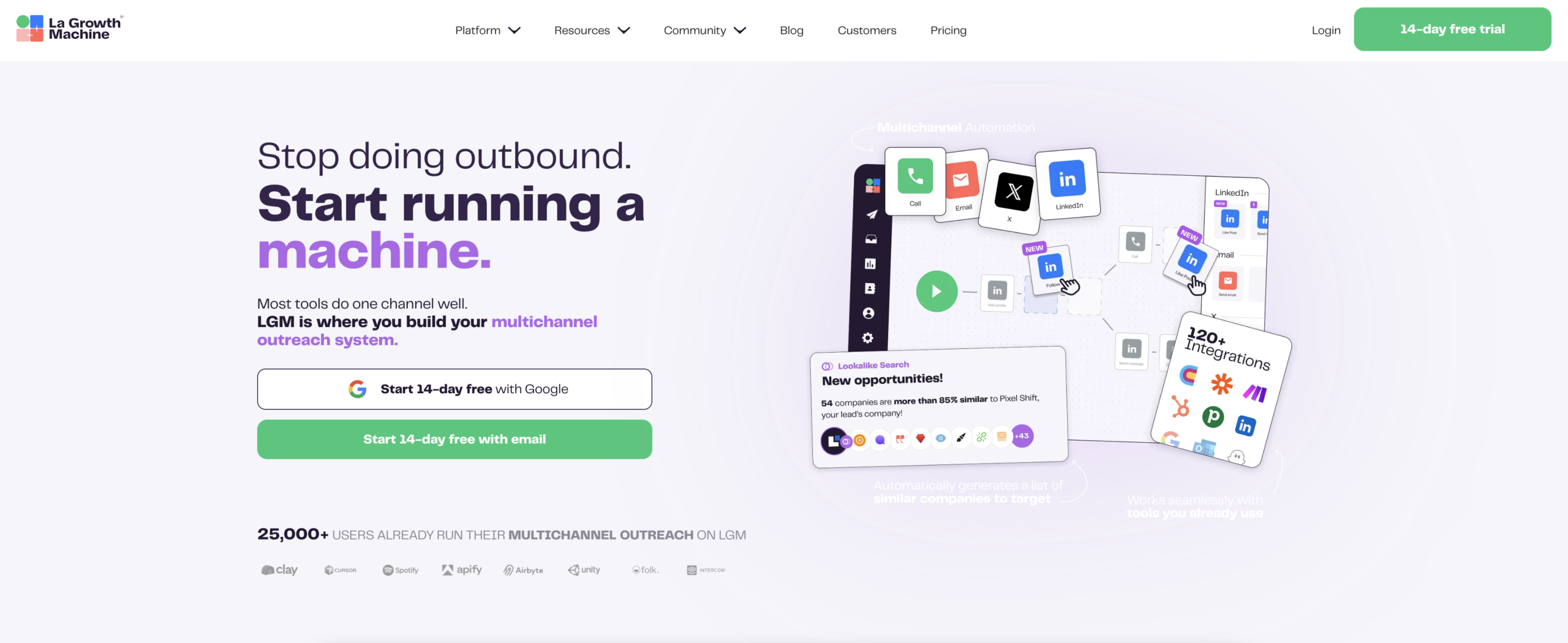
Most outreach tools require you to enrich contacts before importing them. La Growth Machine does the enrichment during the campaign. If an email is missing, LGM’s waterfall logic tries multiple providers in sequence to find it — without you needing a separate Clay or Apollo subscription for that job. The LinkedIn integration is native (not via a Chrome extension that breaks on every update), which means more stable sequences and lower LinkedIn account risk.
For mid-market B2B teams running multi-touch outbound, La Growth Machine replaces both the enrichment layer and the outreach layer. The CRM sync pushes activity data — replies, clicks, LinkedIn connections — directly into HubSpot, Salesforce, or Pipedrive without a Zapier workflow.
Pricing: Basic at €60/month per identity, Pro at €120/month per identity, Ultimate at €180/month per identity.
Best for: B2B sales teams running multichannel outbound who want to collapse enrichment and outreach into one tool.
Salesloft
Salesloft is an enterprise sales engagement platform built around conversation intelligence. Its Rhythm feature prioritizes rep actions based on buyer signals, and the Forecast module gives revenue leaders a structured view of pipeline health.
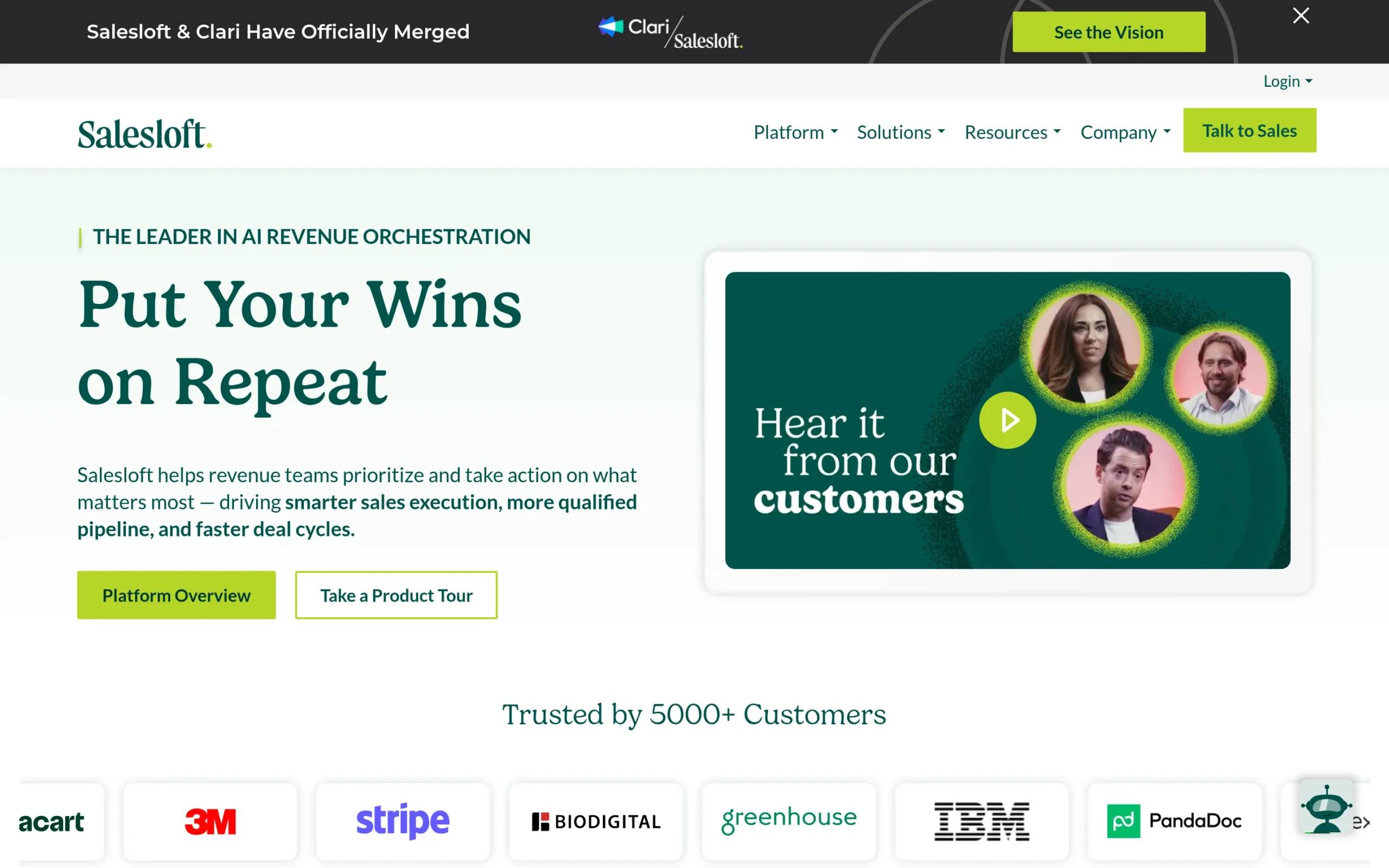
Salesloft is a fit for large sales orgs with dedicated sales ops and a complex motion — inside sales teams running high call volume, enterprise AEs managing multi-threaded deals. For smaller teams, the pricing and complexity are usually overkill.
Best for: enterprise sales teams with dedicated RevOps running high-volume, call-heavy sequences.
Outreach
Outreach is the other major enterprise sales engagement platform. Its Kaia AI call assistant summarizes calls and surfaces action items in real time, and its deal insights layer flags at-risk opportunities based on engagement patterns.
Like Salesloft, Outreach is built for enterprise. The platform has deep integrations with Salesforce and strong reporting, but the setup complexity and cost put it out of range for most SMB or mid-market teams.
Best for: enterprise sales orgs already running Salesforce who want AI-powered deal forecasting and call intelligence.
HubSpot Sales Hub
HubSpot Sales Hub is the CRM-native automation choice for mid-market teams. Sequences, deal pipelines, meeting scheduling, and reporting all live in the same platform, which removes the integration work that comes with pairing a standalone CRM with a separate outreach tool.
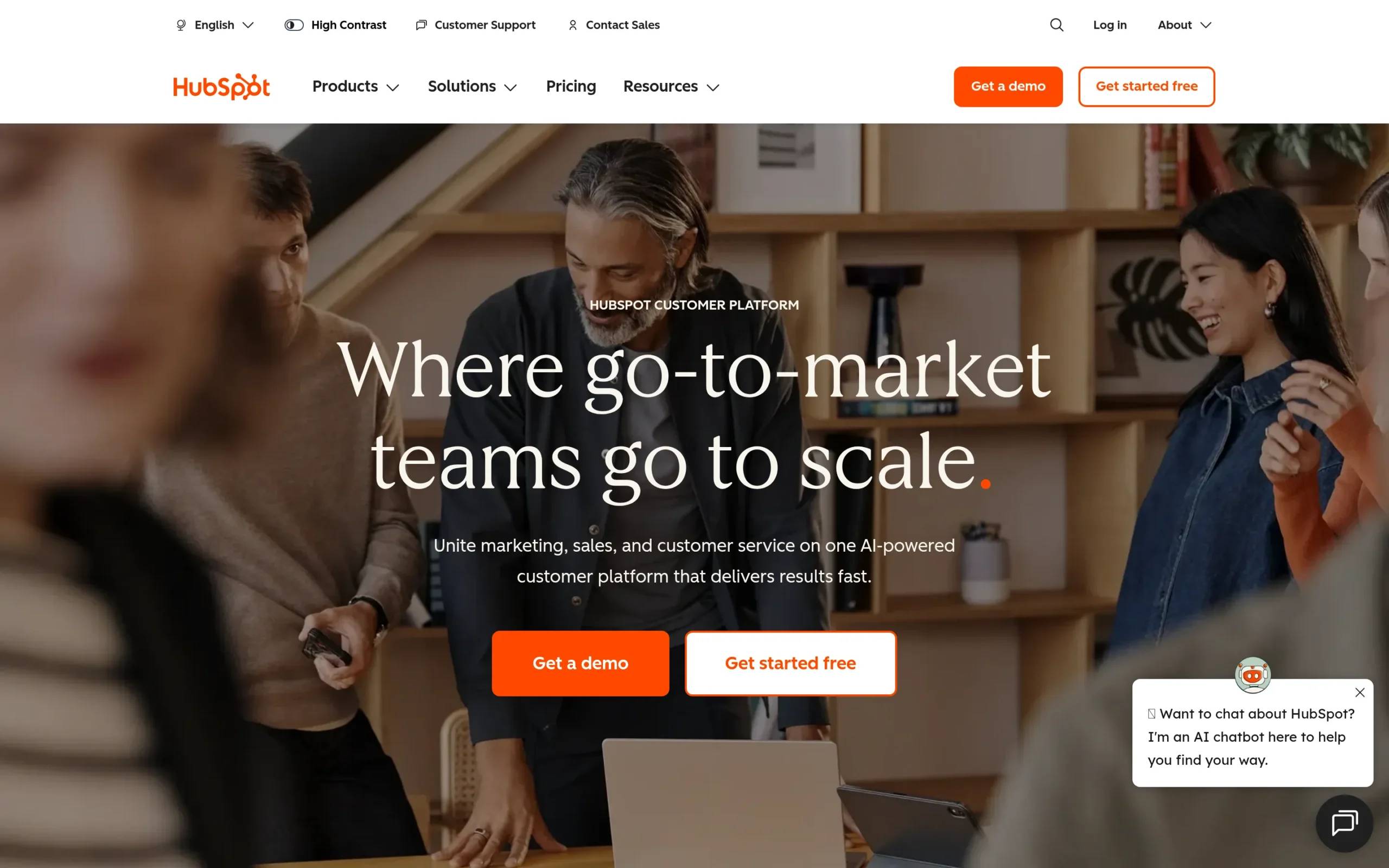
HubSpot’s strength is in its marketing-to-sales alignment. If your team runs inbound alongside outbound, having both motions in a single CRM makes attribution cleaner. The tradeoff is that HubSpot’s outreach features are less powerful than dedicated tools — if you run heavy outbound, you will still want a dedicated sequencer like La Growth Machine in front of it.
Best for: mid-market B2B teams running both inbound and outbound, who want unified marketing and sales reporting.
Salesforce
Salesforce remains the default CRM for enterprise B2B organizations. Its depth of customization — custom objects, complex workflow automation, deep reporting, and a marketplace of 3,000+ integrations — is unmatched.
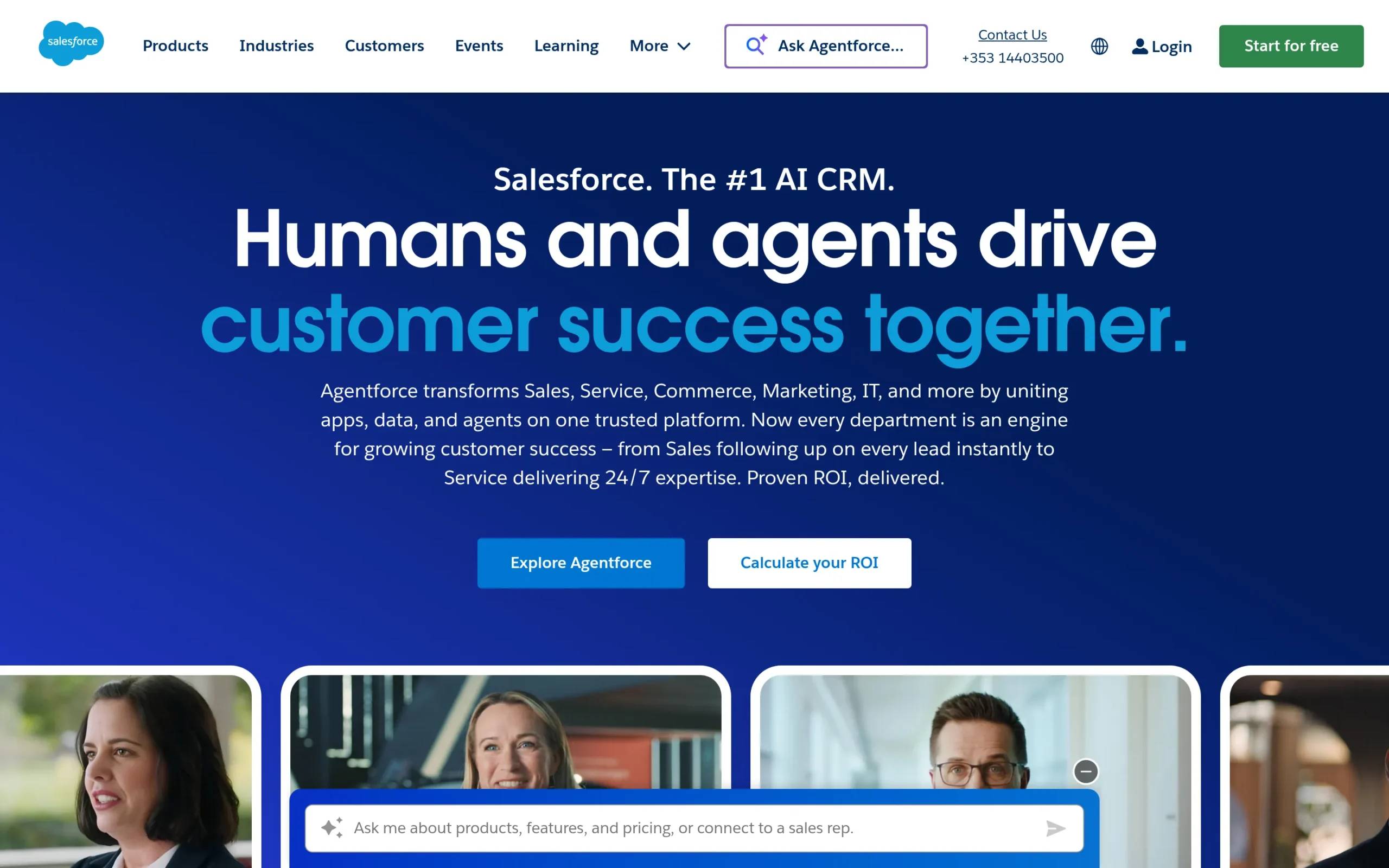
The tradeoff is implementation and admin overhead. Most organizations running Salesforce have at least one dedicated Salesforce admin, sometimes a full RevOps team. For teams under 50 reps without a dedicated ops resource, Salesforce is usually too heavy.
Best for: enterprise sales orgs with dedicated RevOps, complex deal cycles, and high customization requirements.
Pipedrive
Pipedrive is the lightweight CRM built for SMB sales teams who want pipeline visibility without the overhead of HubSpot or Salesforce. Setup takes hours, not weeks, and the visual pipeline interface is intuitive enough that reps actually use it.
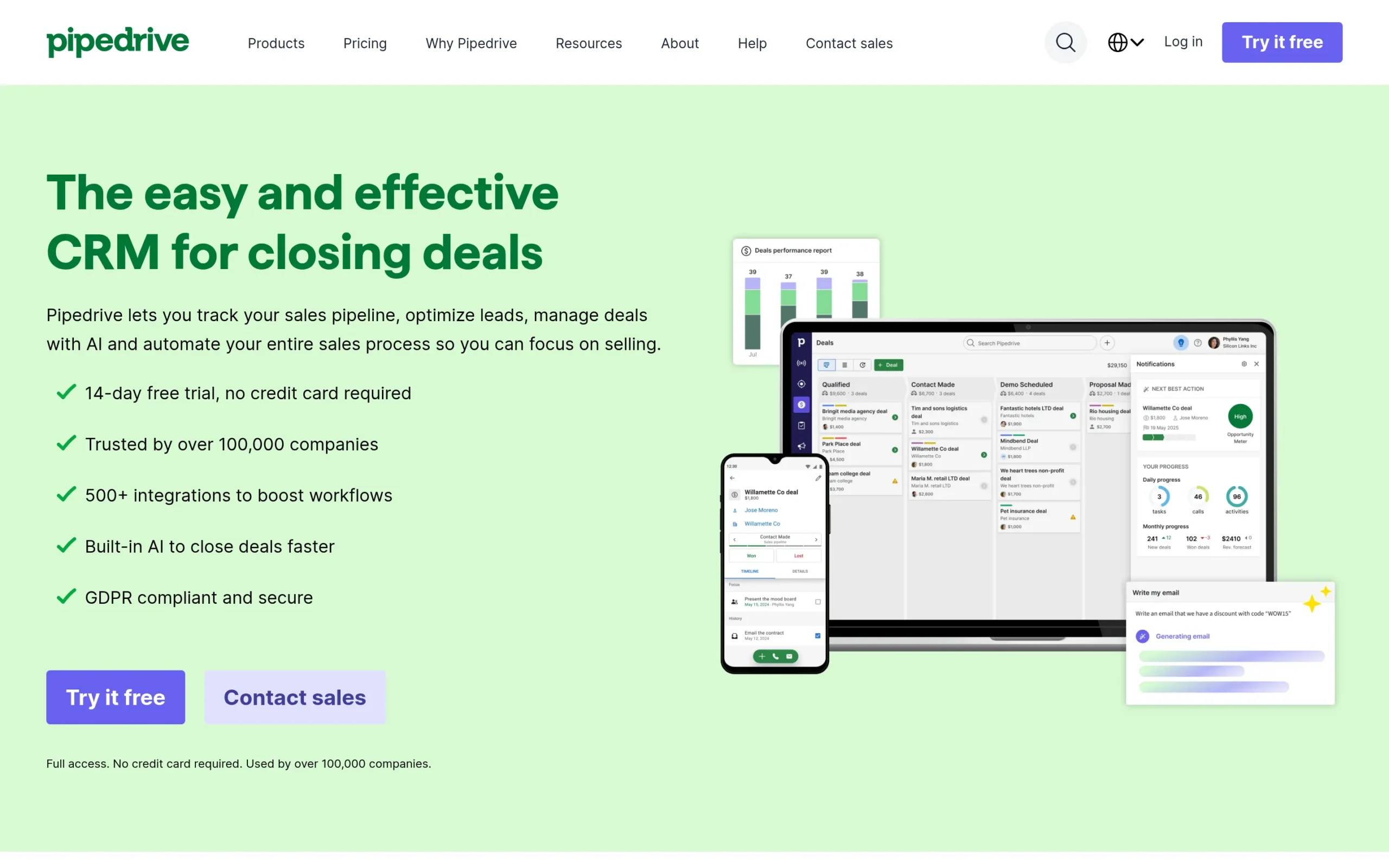
Pipedrive does not try to replace your outreach tool or your data layer. It is a focused CRM with solid API coverage and enough native automation to handle routine deal updates and task creation. La Growth Machine integrates natively with Pipedrive, pushing enrichment and activity data directly into deals.
Best for: SMB and early-stage B2B teams who want a fast, usable CRM without enterprise complexity.
The Lean 3-Tool Stack vs The Full Stack
Most teams do not need eight tools. Here is what a realistic stack looks like at two different scales.
The lean 3-tool stack:
| Layer | Tool | Monthly Cost |
|---|---|---|
| Data | Apollo.io (database) | $49/month |
| Outreach + Enrichment | La Growth Machine Pro | €120/month/identity |
| CRM | Pipedrive Essential | $14/month |
Total cost for one rep: roughly $183/month. La Growth Machine’s built-in waterfall enrichment eliminates the need for a separate Clay or Cognism subscription. Pipedrive handles pipeline without the overhead of HubSpot’s CRM.
The full enterprise stack:
| Layer | Tool | Estimated Cost |
|---|---|---|
| Data | Cognism + Clay | $500+/month |
| Outreach | Outreach or Salesloft | $100+/user/month |
| CRM | Salesforce | $165+/user/month |
| Dialer | Aircall or similar | $40+/user/month |
Total cost per rep: $800+ per month before seats and overages. This stack makes sense for large enterprise sales orgs with dedicated RevOps, but most teams in the 5-50 rep range are over-engineering their stack.
The TCO difference is significant. A 10-person SDR team on the lean stack spends under $2,000/month. The same team on a full enterprise stack can hit $8,000-12,000/month — without a proportional increase in pipeline generated.
How to Build Your Stack Around La Growth Machine
La Growth Machine works best as the outreach and enrichment core of your stack. The logic is straightforward: instead of buying a separate enrichment tool and a separate outreach tool, LGM handles both jobs — which cuts two vendor relationships, two renewal cycles, and two data sync integrations.
The recommended setup:
Start with a data source. If you are in North America, Apollo’s database gives you enough coverage at low cost. If you are in EMEA or need phone-verified data, Cognism is the more reliable choice. Export your target list and import it into La Growth Machine.
LGM takes that list and runs waterfall enrichment automatically during campaign launch. Missing emails get found, LinkedIn profiles get matched, Twitter handles get added where available. You do not need a separate Clay workflow for this.
Build your sequences in LGM using the multichannel workflow builder. A typical B2B sequence in LGM combines a LinkedIn connection request, two to three LinkedIn messages, and two to three emails over 10-14 days. LGM’s AI can generate the sequence copy based on your target persona and value proposition.
Connect LGM to your CRM at setup. The integration pushes every activity — LinkedIn reply, email open, meeting booked — into your CRM as a deal activity. Your pipeline stays current without manual data entry.
For teams scaling past 15-20 SDRs, add Salesforce or HubSpot as the CRM layer with more advanced reporting and territory management. The lean stack below that threshold: Apollo or Cognism for data, LGM for outreach and enrichment, Pipedrive or HubSpot for pipeline.
FAQ
What is a sales stack? A sales stack is the set of software tools a B2B sales team uses to find prospects, reach out to them, and manage deals through to close. A typical stack includes a data provider, an outreach or sequencing tool, and a CRM.
How many tools should a sales stack have? Most teams operate best with three to five core tools. More than that and you start paying for redundant features, managing too many data integrations, and losing time to tool-switching. The lean setup — data layer, outreach plus enrichment layer, CRM — covers the full pipeline workflow.
What makes La Growth Machine different from other sequencing tools? La Growth Machine is the only outreach tool that combines native LinkedIn, Email, and Twitter sequences with built-in waterfall enrichment. Most sequencers require you to import a fully enriched list. LGM enriches on the fly, which removes the need for a separate enrichment tool like Clay or Apollo for that use case.
Is Apollo good enough to replace both data and outreach tools? Apollo covers both use cases at the entry level. It works well for email-first outbound in North America at SMB scale. For teams that need native LinkedIn outreach, EMEA data quality, or phone-verified contacts, Apollo usually needs to be supplemented with another tool.
What is the best CRM for a small B2B sales team? Pipedrive is the easiest to set up and maintain for teams under 15 reps. HubSpot Sales Hub is the better choice if you also run inbound and want marketing-to-sales attribution in one platform. Salesforce makes sense once you have a dedicated RevOps function and need deep customization.
Conclusion
The best sales stacks in 2026 are not the biggest ones. They are the ones where every tool does two or three jobs, data flows cleanly between layers, and reps spend their time on conversations rather than admin.
The lean three-layer setup — a data source, La Growth Machine for outreach and enrichment, and a CRM — covers the full pipeline workflow for most B2B teams at a fraction of the cost of a stitched-together enterprise stack.
If you want to see how La Growth Machine collapses your outreach and enrichment layers into one workflow, start a 14-day free trial and build your first multichannel sequence in under 30 minutes.