
TL;DR
The best tools for SDRs in 2026 cover the full workflow: prospecting, data enrichment, multichannel sequencing, and CRM sync. Choosing the right stack is the difference between a pipeline that runs itself and one that requires constant manual work.
La Growth Machine is the top pick – it automates the complete SDR workflow across LinkedIn, email, Twitter, and voice messages, with built-in waterfall enrichment and native CRM sync. One tool replaces what used to take three or four separate platforms.
For prospecting databases, Apollo.io gives you 275M+ contacts with email sequences built in. LinkedIn Sales Navigator is essential for LinkedIn-first SDRs. Cognism leads on phone-verified data for cold calling. Kaspr surfaces emails and numbers directly on LinkedIn profiles.
For sales engagement and CRM, Salesloft handles enterprise cadence management. HubSpot Sales Hub combines CRM and outreach for smaller teams. Clay builds hyper-personalized lists using AI enrichment from 75+ sources.
SDRs spend most of their day doing the same things: finding the right contacts, enriching their data, writing and sending sequences, following up across channels, and logging everything in the CRM. That loop repeats dozens of times a week. The tools you use to run that loop determine how many meetings you book — and how fast.
The difference between a high-performing SDR and an average one is rarely effort. It is leverage. The right stack lets you run personalized multichannel outreach at scale while keeping your CRM clean and your pipeline moving. The wrong stack means copy-pasting between tabs, manually updating records, and losing deals to slower follow-up.
This guide covers the 8 best tools for SDRs in 2026 — from full automation platforms to specialized prospecting databases — so you can build a stack that generates pipeline, books meetings, and contributes to revenue without doubling your workload.
| Tool | Category | Best SDR Use Case | Channels | Price |
|---|---|---|---|---|
| La Growth Machine | Multichannel automation | Full SDR workflow: find, enrich, sequence, sync CRM | LinkedIn, Email, Twitter, Voice | From €60/month |
| Apollo.io | Prospecting + sequences | Building lists and running email outreach | Email, Phone | From $49/month |
| LinkedIn Sales Navigator | LinkedIn prospecting | LinkedIn-first SDRs, InMail, intent signals | From $99/month | |
| Cognism | Data provider | High-quality phone data for cold calling | Phone, Email | Custom pricing |
| Salesloft | Sales engagement | Cadence management, call + email + LinkedIn tasks | Email, Phone, LinkedIn | Custom pricing |
| HubSpot Sales Hub | CRM + outreach | Combined CRM and email sequences | From $15/month | |
| Clay | AI enrichment | Hyper-personalized prospect lists | From $149/month | |
| Kaspr | LinkedIn contact finder | Instant emails and phone numbers on LinkedIn | LinkedIn, Email, Phone | From €30/month |
1. La Growth Machine
La Growth Machine is the most complete SDR automation platform available in 2026. It covers the full workflow that previously required three or four separate tools: finding prospects, enriching contact data, building multichannel sequences, handling conditional logic, and syncing everything to your CRM automatically.
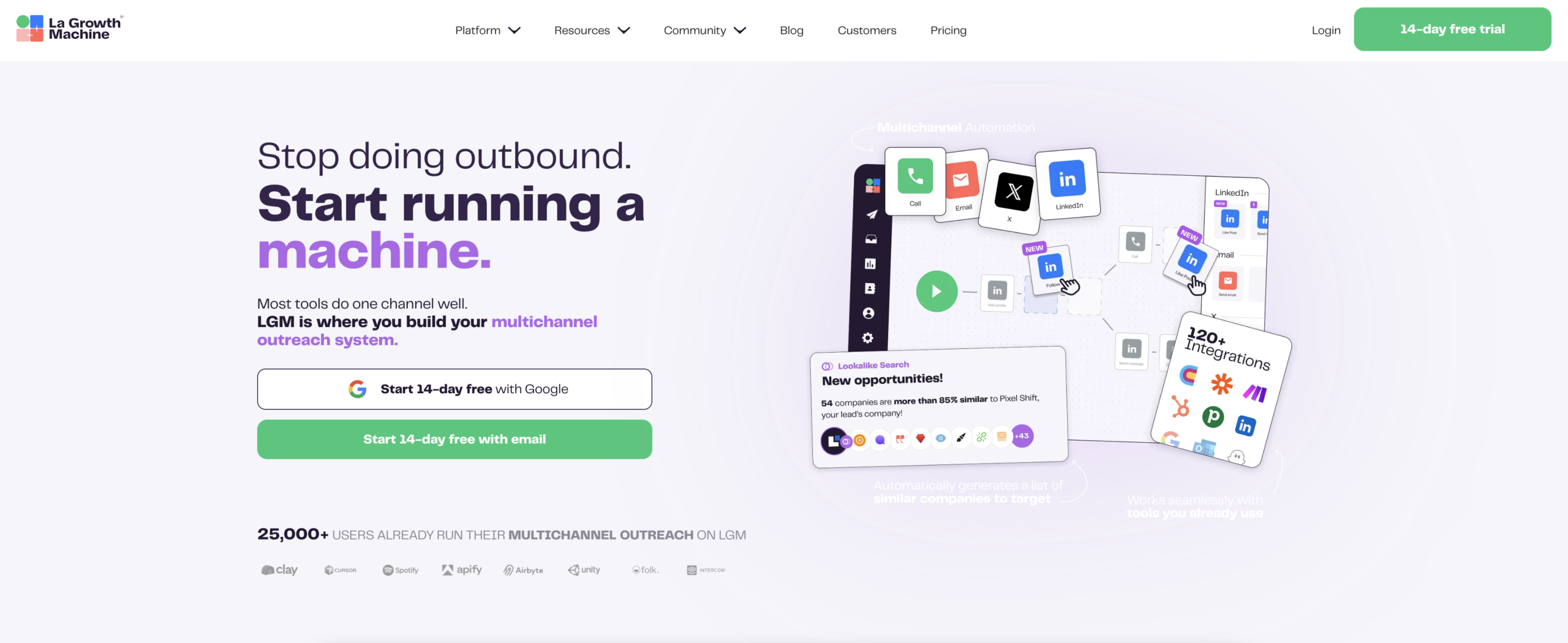
Where most tools handle one or two parts of the SDR process, La Growth Machine handles all of them. You can import a LinkedIn search, enrich the contacts through waterfall enrichment (pulling from multiple data sources to maximize coverage), build a sequence that runs across LinkedIn, email, Twitter, and voice messages — with conditional branches depending on whether a prospect replies or visits your profile — and have every interaction logged to your CRM without any manual work.
The multichannel sequencing is where La Growth Machine stands out. SDRs can set up sequences that automatically switch channels based on prospect behavior. If a prospect accepts a LinkedIn connection request, the sequence follows up on LinkedIn. If they do not respond to email, it tries a different channel. This kind of logic used to require custom automation workflows. In La Growth Machine, it is built into the sequence editor.
For SDRs who need to hit pipeline targets without adding headcount, the combination of waterfall enrichment, multichannel automation, and native CRM sync is hard to match. One tool replaces what used to be a stack of three or four separate subscriptions.
Pricing: Basic €60/month, Pro €120/month, Ultimate €180/month per identity. Start a 14-day free trial.
2. Apollo.io
Apollo.io is a prospecting database and sales engagement platform with over 275 million contacts. SDRs use it to build targeted lists using filters like job title, company size, industry, technology stack, and funding stage — then launch email sequences directly from the platform.
Apollo’s AI scoring helps SDRs prioritize which prospects to contact first based on intent signals and fit. The built-in email sequencer handles automated follow-ups, A/B testing, and reply detection. For SDRs whose outreach is primarily email-driven, Apollo gives you the data and the sending infrastructure in one place.
The platform also integrates with Salesforce, HubSpot, and other CRMs, though data quality can vary by geography compared to providers focused exclusively on data accuracy. Apollo works best for teams that need high volume and are willing to validate data as part of their workflow.
3. LinkedIn Sales Navigator
LinkedIn Sales Navigator is the standard tool for SDRs who build pipeline through LinkedIn. Advanced search filters let you find decision-makers by role, seniority, company size, geography, and dozens of other criteria. The platform also surfaces buyer intent signals — when a prospect has been active on LinkedIn or their company has been growing — so you can prioritize outreach at the right moment.

Sales Navigator includes InMail credits for reaching prospects you are not connected with, saved search alerts so you are notified when new leads match your criteria, and account maps for understanding the buying committee at a target company.
For SDRs in B2B sales, Sales Navigator is a non-negotiable part of the stack. LinkedIn is where buyers are active, and Sales Navigator gives you the data and tools to find and engage them at scale. It pairs naturally with La Growth Machine, which can automate the outreach once you have identified the right contacts.
4. Cognism
Cognism is a GDPR-compliant data provider focused on accuracy, particularly for phone-verified numbers. SDRs who run cold calling as a primary channel use Cognism to ensure they have numbers that actually reach people — not outdated or unverified data.
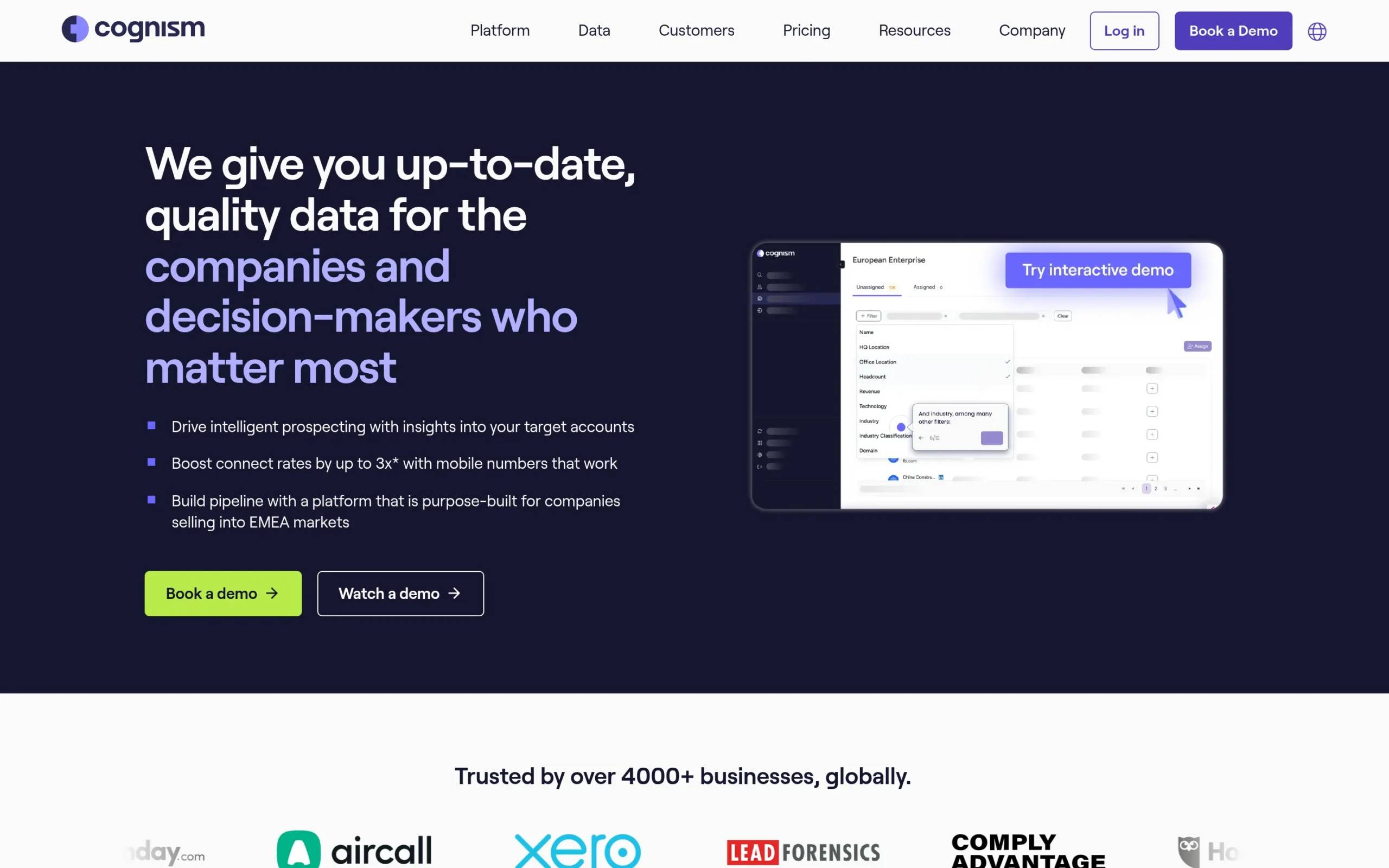
Beyond phone data, Cognism provides intent signals through integrations with Bombora and G2, helping SDRs identify which accounts are actively researching solutions in your category. The platform also covers email and company data, making it a solid choice for teams that need a single provider for all prospect data.
Cognism’s GDPR compliance is a meaningful differentiator for European SDRs, where data privacy regulations are stricter. The pricing is custom, which means it scales to team size and usage, but it is typically a mid-to-enterprise-tier investment.
5. Salesloft
Salesloft is a sales engagement platform built for enterprise teams. SDRs use it to manage cadences that combine email, phone calls, and LinkedIn tasks. The platform tracks every interaction, surfaces which steps are driving replies, and provides conversation intelligence for call coaching.
Salesloft’s cadence management is particularly strong for teams with defined outreach plays — you can build a standardized sequence, assign it to multiple reps, and track performance across the whole team. Managers get visibility into which reps are on pace and where deals are stalling.
The platform is enterprise-focused, which means it comes with robust reporting and admin controls but also a price point and implementation timeline that can be overkill for smaller teams or individual SDRs. It integrates with Salesforce and other major CRMs.
6. HubSpot Sales Hub
HubSpot Sales Hub combines a CRM with email sequences, deal pipeline management, and meeting scheduling. For SDRs at early-stage companies or small teams that need one tool to cover both outreach and CRM, it is a practical starting point.
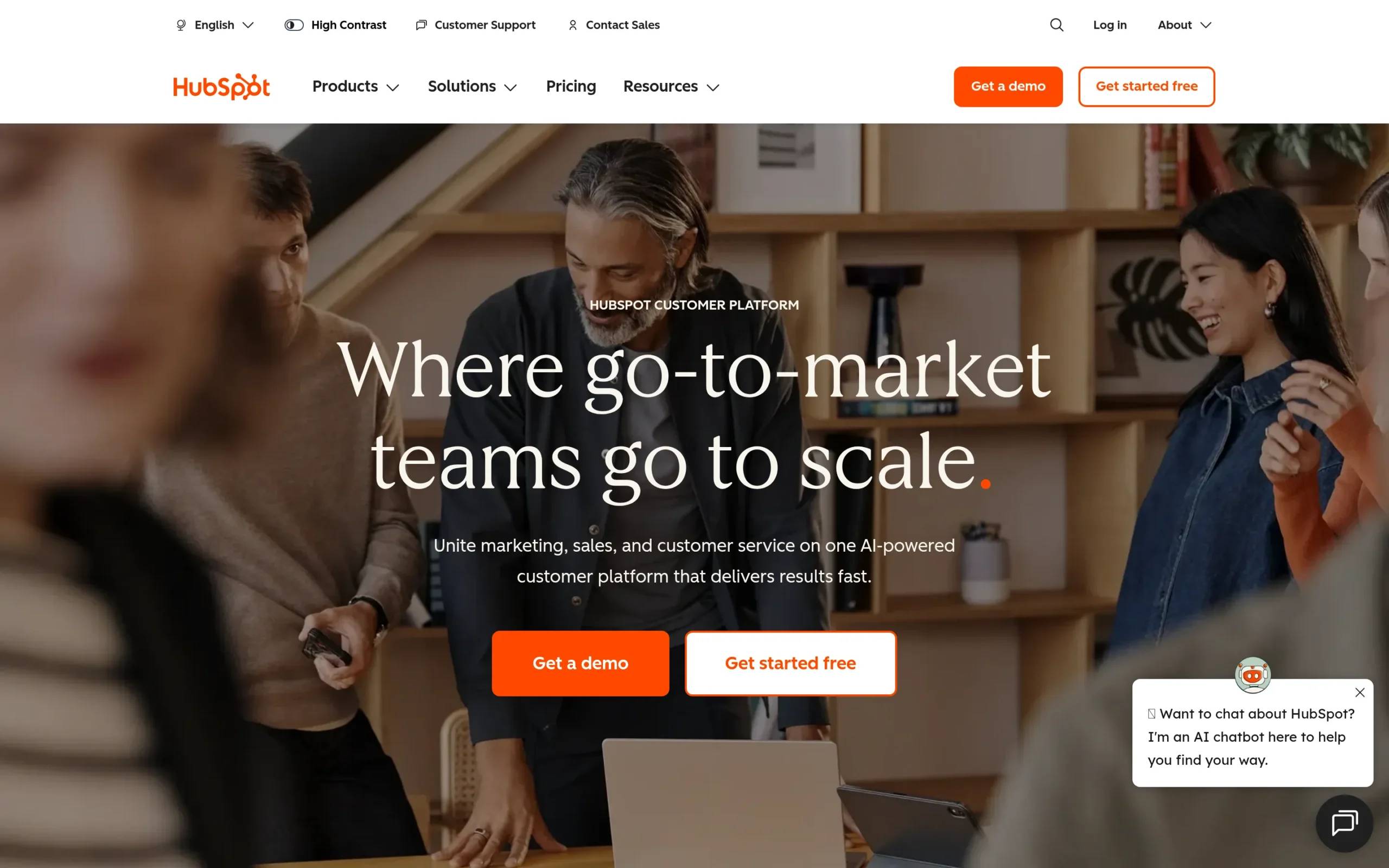
The email sequences in HubSpot handle automated follow-ups based on opens and clicks, with templates you can reuse across campaigns. The built-in CRM tracks every interaction and updates deal stages automatically, which removes most of the manual logging that eats into SDR time.
HubSpot is best for teams that are not yet ready to invest in a dedicated sales engagement platform. The free and starter tiers are useful for getting started, and the tool integrates well with marketing workflows if your team uses HubSpot for broader go-to-market operations.
7. Clay
Clay is an AI-powered enrichment platform for building hyper-personalized prospect lists. Instead of pulling contacts from a single database, Clay aggregates data from over 75 sources and lets you use Claygent — its autonomous AI research agent — to find specific information about a prospect, their company, or their recent activity.
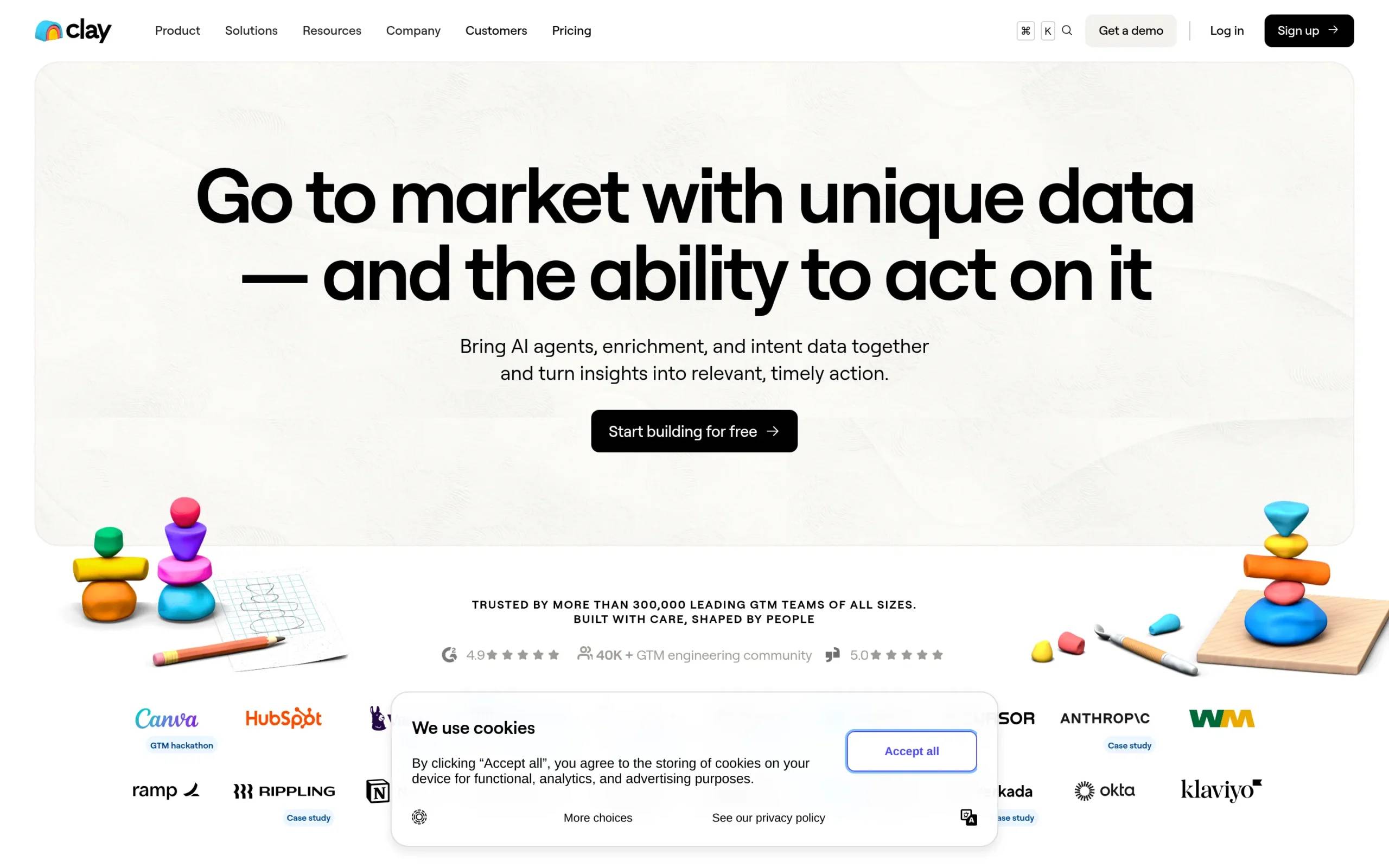
SDRs use Clay to build lists where every contact has rich context: recent job changes, company funding rounds, technology signals, recent news. That context goes directly into the email copy, making outreach feel research-led rather than mass-blast. Clay is the right tool for SDRs doing targeted outreach to a defined account list where personalization is the differentiator.
The platform does not include its own sending infrastructure. It is a data and enrichment layer that feeds into other tools — typically paired with an email sequencer or with La Growth Machine for multichannel delivery.
8. Kaspr
Kaspr is a LinkedIn-native contact finder that surfaces emails and phone numbers directly on LinkedIn profiles. SDRs use the Chrome extension to pull contact data as they are browsing prospects on LinkedIn or Sales Navigator, without switching to a separate platform.
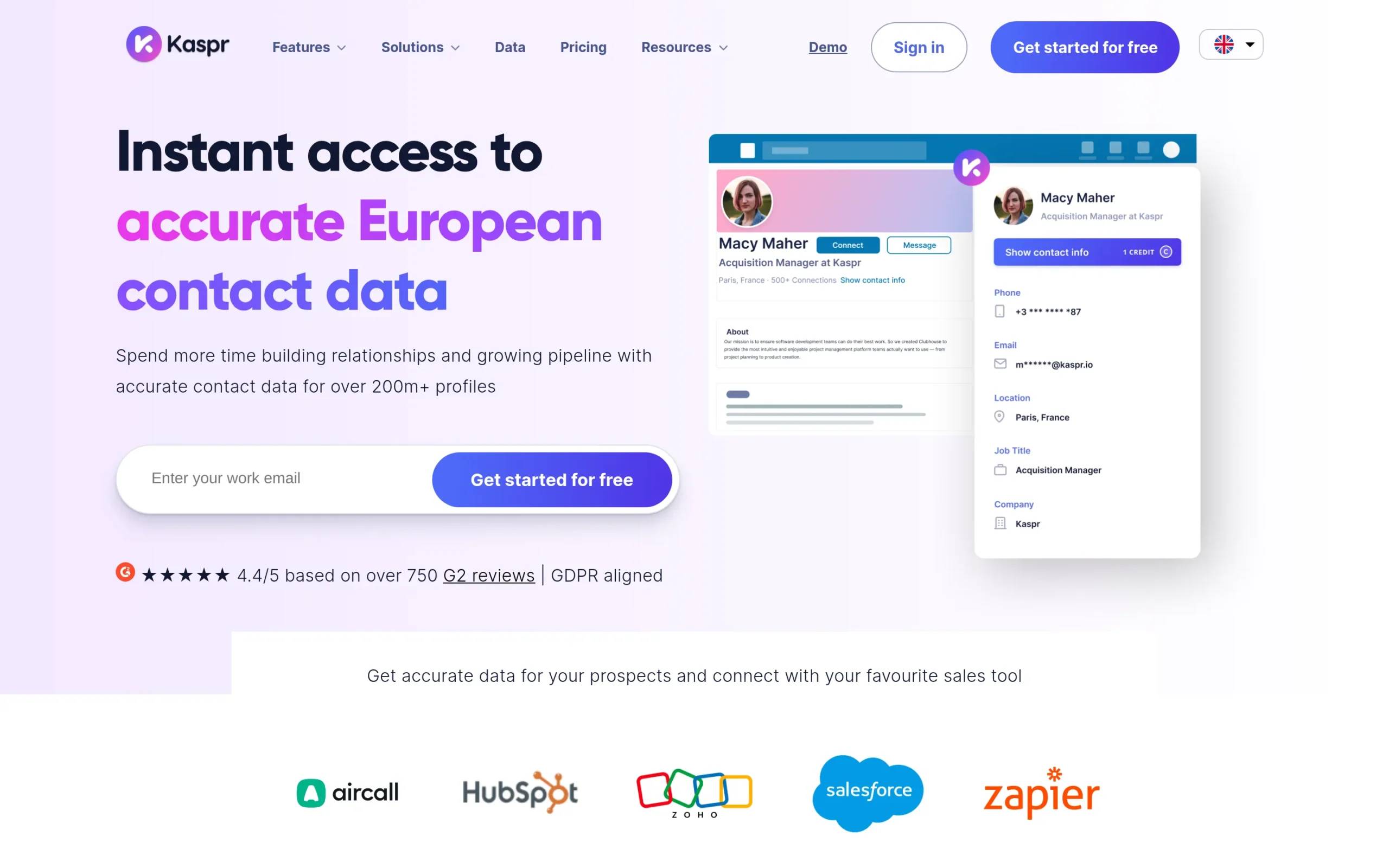
Kaspr integrates with HubSpot, Salesforce, and other CRMs for one-click export. For SDRs who spend most of their prospecting time on LinkedIn and want to move quickly from research to outreach, Kaspr removes the friction of switching between data providers and contact managers.
Pricing starts at €30/month, making it one of the more accessible contact finders. It works well as a complement to Sales Navigator for teams that need quick access to contact data without committing to a larger data platform.
What SDRs Actually Need From Their Tools
The best tools for SDRs solve real problems in the daily workflow. Here is what matters.
Speed of prospecting. The faster you can go from identifying a prospect to sending the first touch, the more pipeline you generate. Tools like Kaspr and Apollo reduce that time by putting contact data one click away.
Automation depth. Manual follow-up is the biggest time sink in SDR work. The best tools automate sequences, follow-ups, and channel switching — so the system keeps working even when you are focused on other deals.
Multichannel coverage. Buyers respond on different channels. An SDR limited to email is leaving responses on the table. Tools like La Growth Machine automate outreach across LinkedIn, email, Twitter, and voice messages from a single sequence.
CRM sync. If your tool does not write back to the CRM, you are logging manually. That is not just slow — it creates gaps in your pipeline data and makes it harder for managers to coach and forecast accurately.
Reporting. SDRs need to know what is working. Which sequences are driving replies? Which channels are converting? Good reporting means you can iterate on what works instead of guessing.
How to Build the Ideal SDR Tech Stack
Most SDRs do not need eight tools. They need a well-integrated few.
Minimum viable stack: La Growth Machine plus a CRM. La Growth Machine handles prospecting, enrichment, multichannel sequencing, and CRM sync. Add HubSpot or Salesforce for deal management and you have everything you need to generate pipeline from day one.
Full stack for scaling teams:
- La Growth Machine for multichannel automation and enrichment
- LinkedIn Sales Navigator for prospecting and intent signals
- Cognism or Kaspr for phone and email data
- Salesforce or HubSpot for CRM and pipeline management
- Clay for accounts that require deep personalization
The key is integration. Each tool should feed the next without manual data transfer. La Growth Machine syncs natively with most major CRMs and pulls from enrichment sources automatically, which is why it sits at the center of most high-performing SDR stacks.
Avoid stacking tools that duplicate functions. If La Growth Machine handles enrichment, you do not need a separate enrichment tool for most contacts. If your CRM has built-in sequences, you do not need a separate email sender for basic follow-ups.
FAQ
What tools do SDRs use?
Most SDRs use a combination of a prospecting database (Apollo, Cognism, or LinkedIn Sales Navigator), a sales engagement or automation platform (La Growth Machine, Salesloft), and a CRM (HubSpot, Salesforce). The specific mix depends on whether outreach is primarily email-driven, LinkedIn-driven, or multichannel.
What is the best outreach tool for SDRs?
La Growth Machine is the best outreach tool for SDRs who want to run multichannel sequences across LinkedIn, email, Twitter, and voice messages from a single platform. It automates the full outreach workflow — from enrichment to follow-up to CRM sync — without requiring separate tools for each channel.
How many tools does an SDR need?
Most SDRs need two to four tools: a data source for finding prospects, an outreach or automation platform for running sequences, and a CRM for tracking pipeline. Some teams add a dedicated enrichment tool for hyper-personalized campaigns. More than four tools usually means there is overlap, which increases cost and complexity without improving results.
Can AI replace SDR work?
AI can automate the repetitive parts of SDR work — data enrichment, contact finding, follow-up sequences, CRM logging. What it cannot replace is judgment: knowing which accounts to prioritize, how to handle an objection in a conversation, or when to escalate to an AE. The best SDRs in 2026 use AI tools to increase output, not to remove themselves from the process.
What CRM should SDRs use?
HubSpot is the best CRM for small and mid-sized teams because it is easy to set up and integrates with most sales tools. Salesforce is the standard for enterprise teams that need advanced reporting, custom workflows, and deep integrations. Both integrate directly with La Growth Machine.
Build Your SDR Stack Around What Drives Pipeline
The tools on this list cover every part of the SDR workflow. But the goal is not to use all of them — it is to use the right combination for your motion and your market.
If you need a single starting point, La Growth Machine is the tool that covers the most ground. Find prospects, enrich data, run multichannel sequences, handle conditional logic, and sync everything to your CRM automatically. It replaces three or four separate tools and gives SDRs the automation depth to run a full outreach operation without manual work eating up their day.
Start your 14-day free trial of La Growth Machine and see how many meetings you can book in two weeks.