
TL;DR
La Growth Machine – Waterfall enrichment finds emails and phones from LinkedIn profiles across multiple providers, built into the outreach workflow. Best for enrichment + outreach in one place.
Apollo.io – 275M+ contact database with firmographics, technographics, and intent signals. Best for high-volume prospecting with built-in scoring.
Cognism – Phone-verified numbers, premium GDPR-compliant data, strong EU coverage. Best for European enterprise teams with compliance requirements.
Lusha – Fast contact finder via Chrome extension, direct dials and emails from LinkedIn. Best for individual AEs who want a lightweight tool.
LinkedIn Sales Navigator – Native LinkedIn intelligence, advanced filters, buyer intent signals, account maps. Best for account-based prospecting and org-level insights.
Sales intelligence is the layer of data that makes outbound work. It includes real-time information on your prospects and target accounts: contact details, firmographics, technographics, buying intent signals, and job change alerts. Without it, you are cold-calling into the dark, sending emails to generic addresses, and relying on gut feel to prioritize your pipeline.
The B2B buying environment has compressed. Decision-makers switch jobs faster, companies restructure quarterly, and inboxes are noisier than ever. Teams that book meetings consistently have one thing in common: they use accurate, up-to-date sales intelligence to reach the right person at the right moment with a relevant message. This guide covers the eight tools that actually move the needle.
TL;DR
TLDR_PLACEHOLDER
1. La Growth Machine
La Growth Machine is the top pick for B2B teams that want enrichment and outreach in one place. Most sales intelligence tools stop at finding data. LGM goes further: it applies waterfall enrichment directly to LinkedIn profiles, cascading through multiple data providers to find verified emails and phone numbers, then feeds those contacts straight into a multichannel sequence without any CSV export or Zapier bridge.
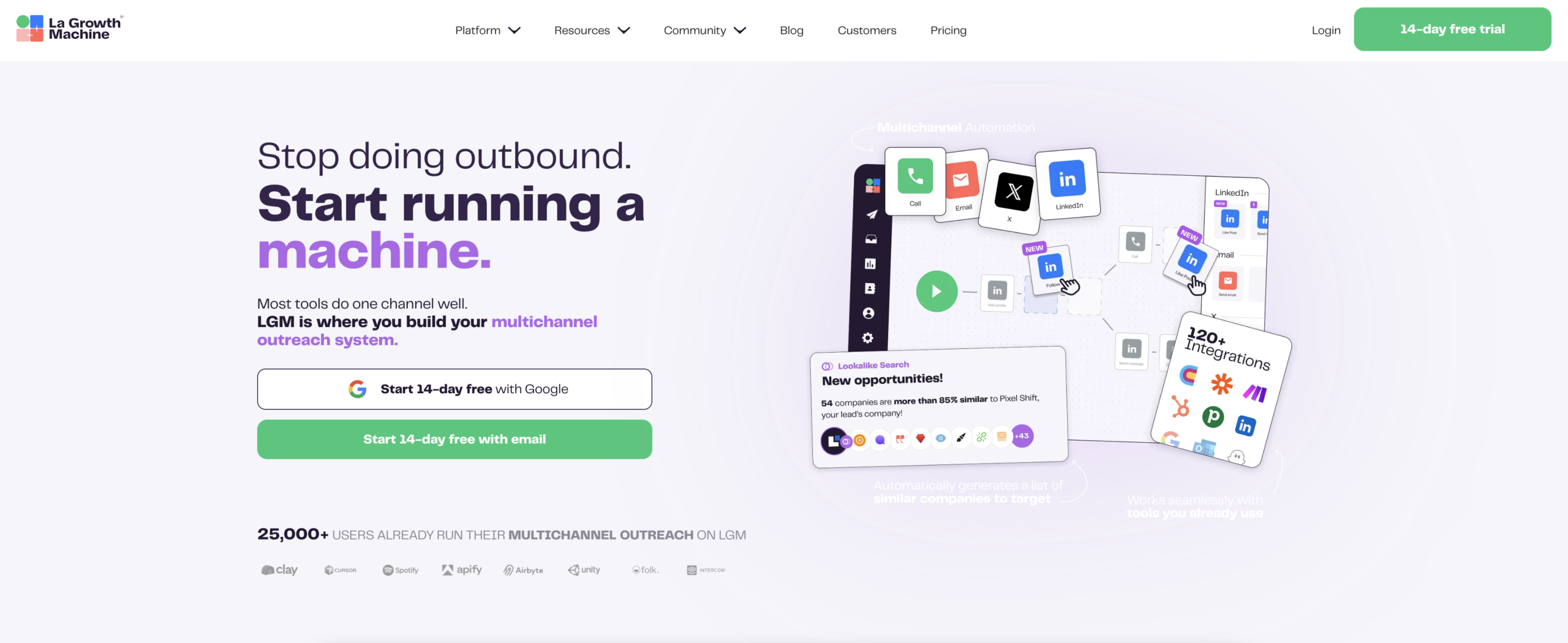
The workflow looks like this: you import a LinkedIn search or a list of URLs, LGM enriches every contact in the background, and your sequence starts automatically once enrichment succeeds. You define fallback logic (email first, then phone, then LinkedIn message) inside the same campaign builder. Sales reps spend their time on responses, not on manual data chasing.
Waterfall enrichment is the standout feature. Instead of relying on one provider and accepting a 30-40% hit rate, LGM queries multiple sources in sequence and stops once it finds a verified result. Teams using this approach typically see contact coverage jump from around 40% to over 70% on a given list.
Pricing: Basic €60/month, Pro €120/month, Ultimate €180/month per identity. 14-day free trial available.
Best for: SDR teams that want to cut the gap between prospecting and sequencing.
2. Apollo.io
Apollo.io built one of the largest B2B contact databases available, with over 275 million contacts and 73 million companies. The platform combines that database with firmographic filters, technographic data (what tools a company runs), and intent signals that flag accounts actively researching solutions in your category.
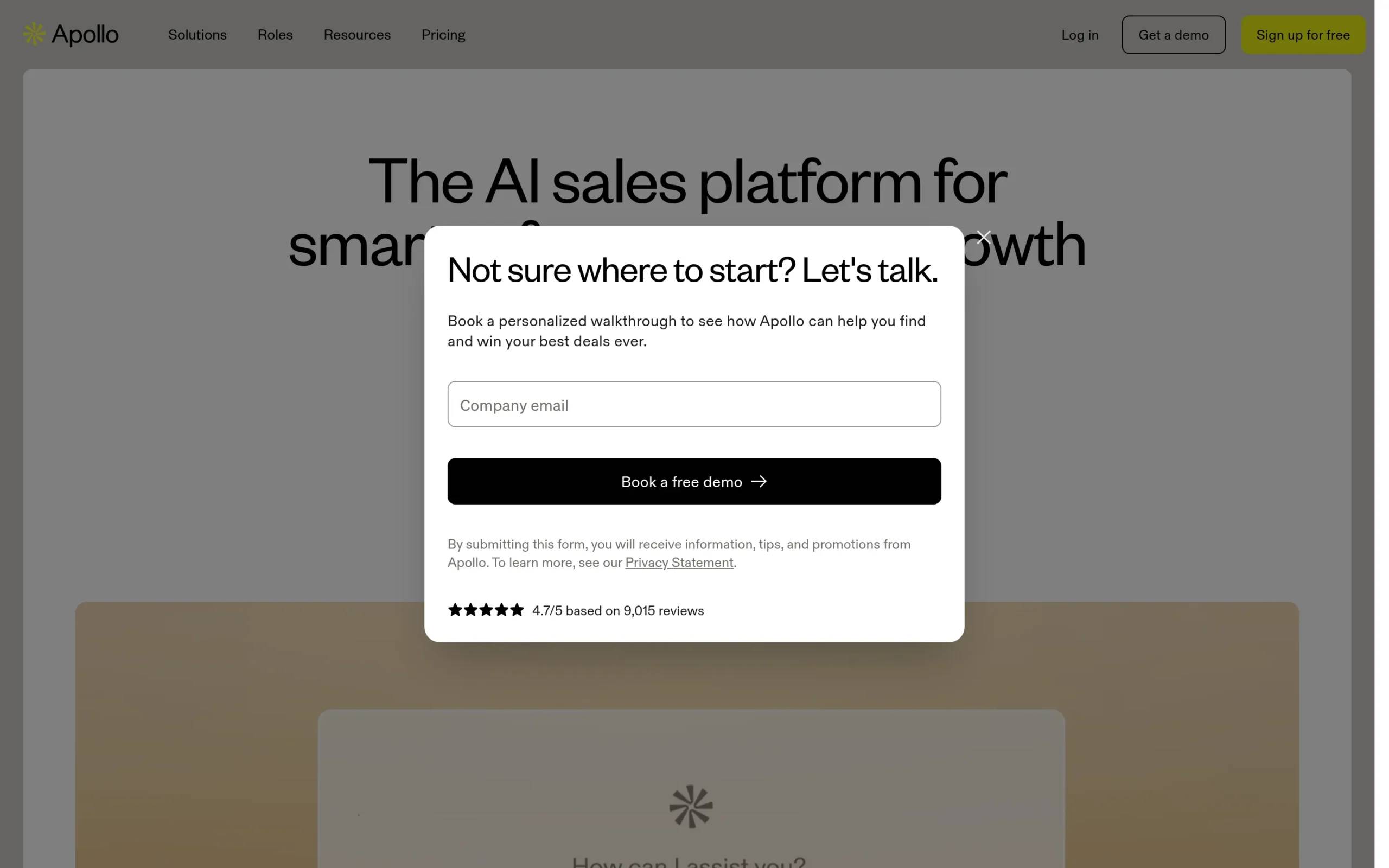
Apollo’s AI scoring engine ranks contacts by fit and engagement likelihood, which helps prioritize outreach when you’re working a large list. The built-in sequence builder handles email and phone touchpoints. It integrates with Salesforce, HubSpot, and most major CRMs.
Where Apollo wins: breadth of data and affordability for the volume. Where it can fall short: data accuracy on direct dials in some European markets, and deliverability can dip if you’re not careful with sending limits.
Best for: Teams that need a large, searchable database with built-in intent filtering and are primarily focused on North American markets.
3. Cognism
Cognism is the go-to sales intelligence platform for teams that operate in regulated markets or need to be certain their outreach is GDPR-compliant. The company invests heavily in data verification, particularly for direct dial phone numbers, which are manually checked through their Diamond Data program.
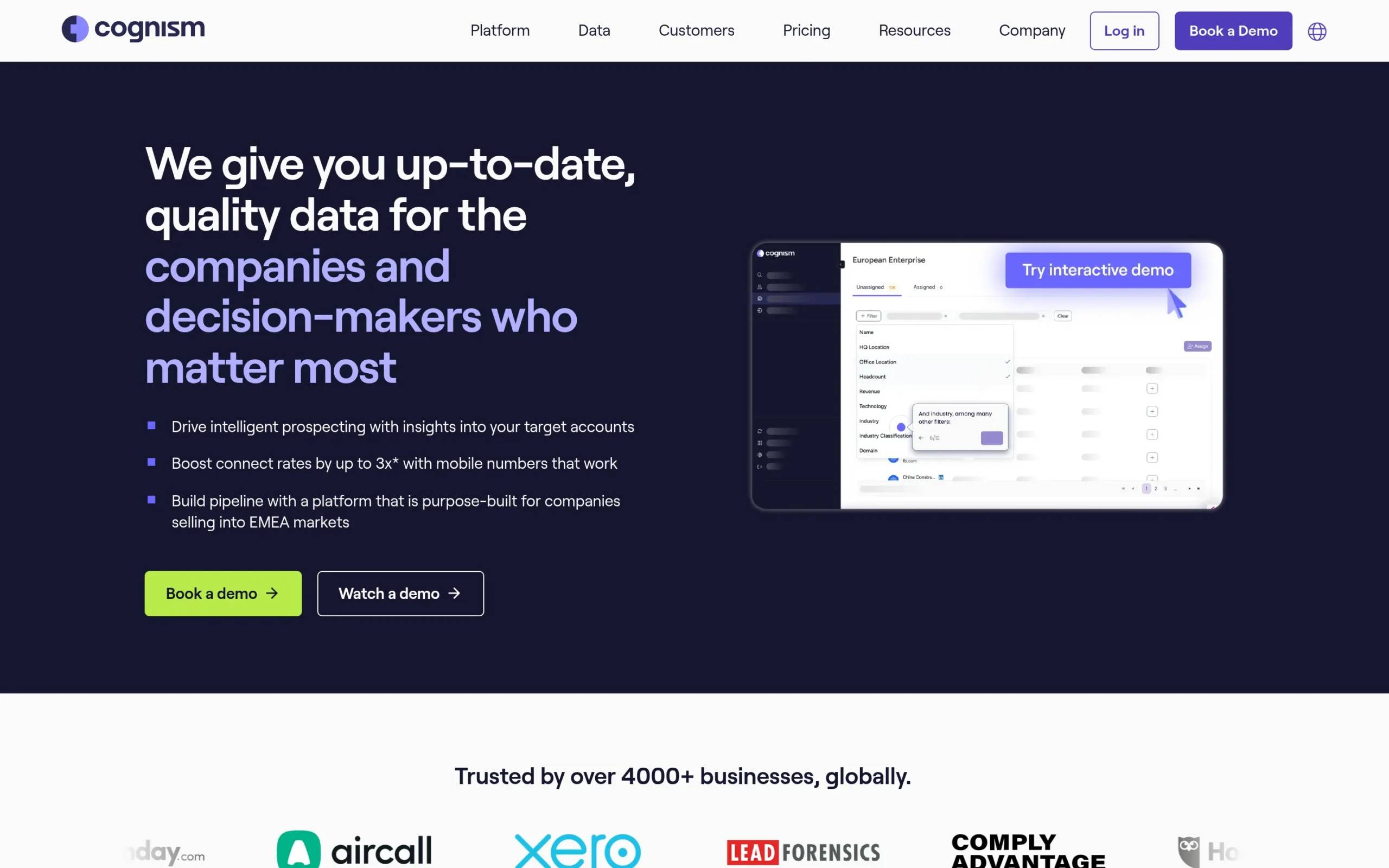
Cognism’s European coverage is genuinely stronger than most US-built tools. It pairs contact and company data with intent signals from Bombora, giving you a layer of behavioral context on top of the firmographic filters. The platform connects to Salesforce, HubSpot, Outreach, and SalesLoft.
The tradeoff is price: Cognism sits at the premium end of the market. For teams where a single bad call to a GDPR-restricted number carries compliance risk, that premium is often worth it.
Best for: Enterprise SDR teams in Europe and international markets where data compliance is non-negotiable.
4. Lusha
Lusha focuses on contact intelligence and makes it fast to find direct dials and verified emails, particularly through its Chrome extension. Install the extension, open a LinkedIn profile or company website, and Lusha surfaces contact data in a sidebar without leaving the page.
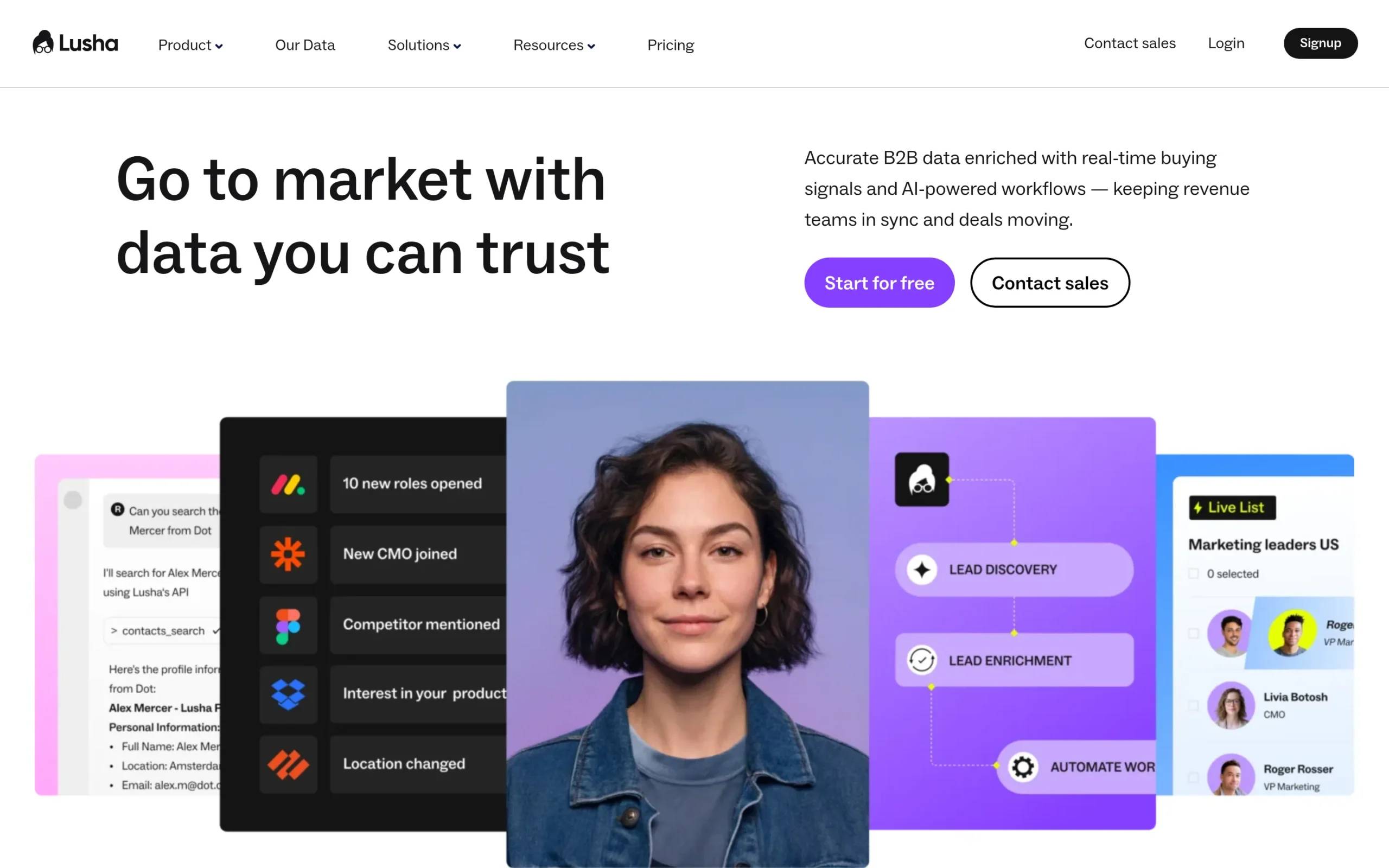
The platform is straightforward: search by company size, industry, job title, or geography, pull the contacts you want, and export to your CRM. It integrates directly with LinkedIn and Salesforce, and the UI is clean enough that reps adopt it quickly without a training ramp.
Lusha’s credit-based model (you spend credits to reveal each contact) keeps usage predictable for managers. The main limitation is that the database is smaller than Apollo’s, so coverage on niche industries or smaller markets can be inconsistent.
Best for: Individual AEs and small SDR teams that want a lightweight, fast contact finder without a full platform subscription.
5. LinkedIn Sales Navigator
LinkedIn Sales Navigator gives you native intelligence inside the world’s largest professional network. Advanced search filters let you slice by seniority, function, geography, headcount growth, recent leadership changes, and technology used. Account maps show buying committee relationships across a target organization.

Buyer intent signals flag accounts where employees are actively engaging with your company’s content or researching relevant topics. Job change alerts notify you when a key contact changes roles, which is one of the highest-signal buying triggers in B2B.
The limitation everyone runs into: Sales Navigator shows you the right people, but it does not give you their email addresses or direct dials. You need a second tool for contact data. Combining it with LGM’s enrichment layer or a tool like Lusha closes that gap efficiently.
Best for: Account-based prospecting where LinkedIn relationship data and org-level insights matter as much as raw contact details.
6. LeadIQ
LeadIQ is built for teams that live in LinkedIn and want to capture contact data from profiles in real time without manual copy-paste. The Chrome extension syncs directly to Salesforce, deduplicates against your existing CRM records, and routes new contacts to the right sequence in Outreach or SalesLoft.
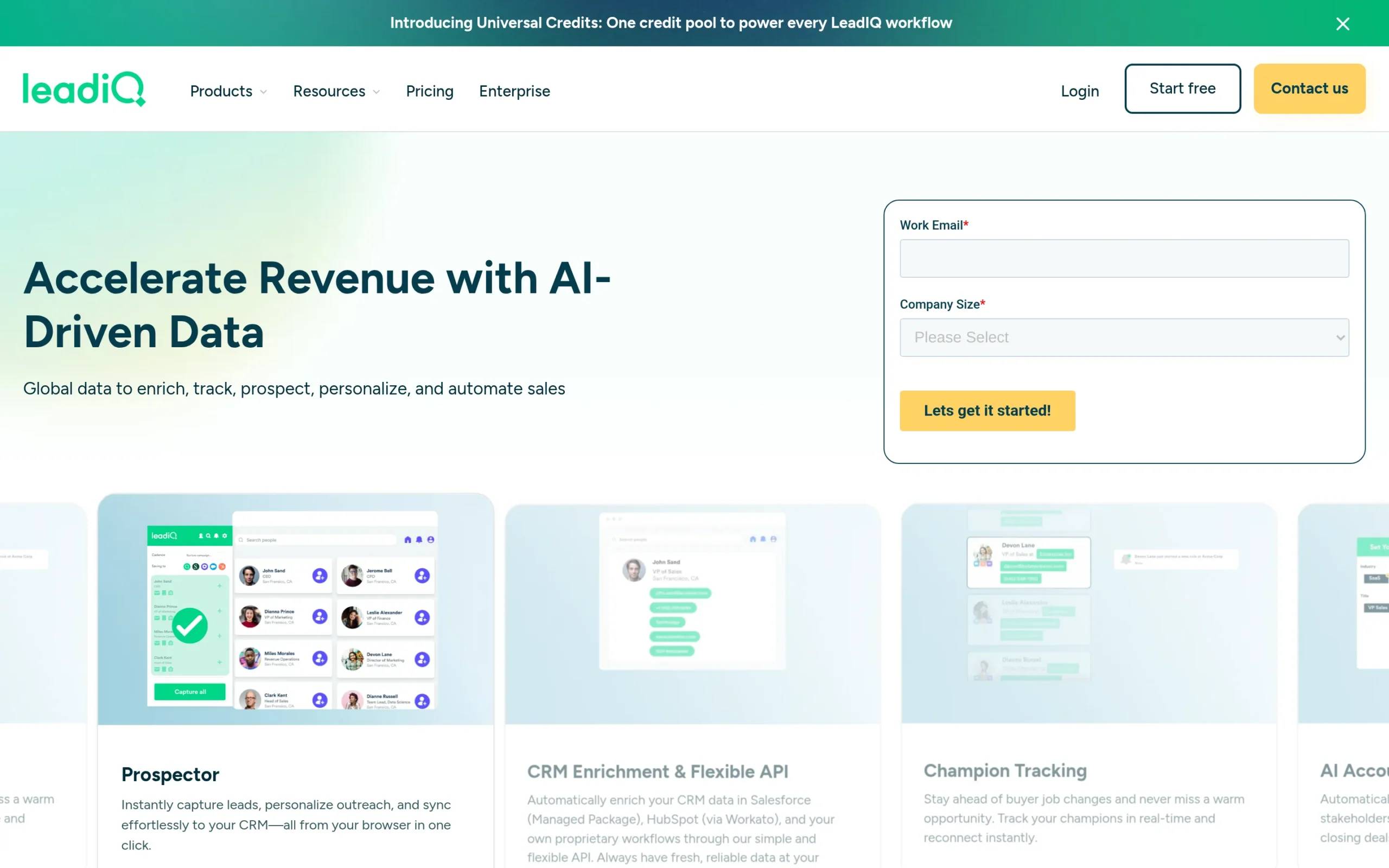
The team prospecting features let multiple reps work a target account list simultaneously, with shared tracking so you do not contact the same person twice from different reps. Scribe, LeadIQ’s AI writing tool, generates personalized first lines based on the prospect’s LinkedIn activity.
LeadIQ works best as a point solution inside an existing workflow stack. It does not replace a full database tool, but it handles the last-mile capture and CRM hygiene that usually falls through the cracks.
Best for: Sales teams already using Salesforce and LinkedIn who want seamless capture and deduplication without switching tools.
7. Kaspr
Kaspr is a LinkedIn-native contact finder that prioritizes GDPR compliance and phone number coverage for European markets. Like Lusha, it operates primarily via Chrome extension, surfacing emails and mobile numbers directly on LinkedIn profiles and search pages.
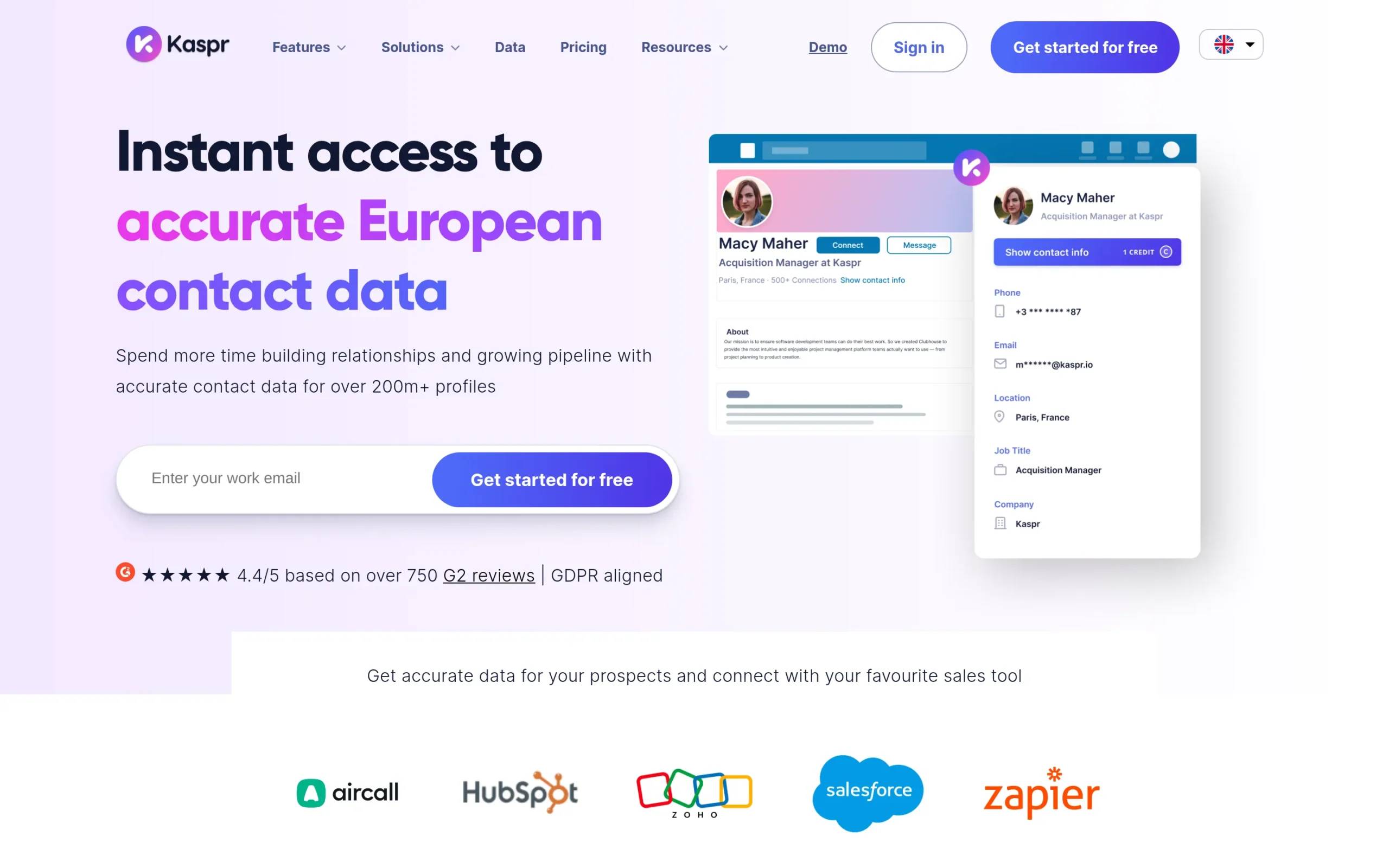
Kaspr connects to HubSpot, Salesforce, Pipedrive, and Lemlist through native integrations, and it allows team members to share contact credits across a workspace. Enrichment quality in France, Germany, and the UK is notably strong, which makes it a solid choice for French-speaking markets specifically.
Pricing is competitive for smaller teams, with a free tier that includes a limited number of monthly phone credits. The tool is narrower than a full platform like Apollo, but for LinkedIn-first prospecting in Europe, it punches above its weight.
Best for: European SDR teams and individual reps doing LinkedIn-first prospecting in France, Germany, and the UK.
8. Clearbit
Clearbit takes a different angle from the other tools in this list: rather than powering outbound prospecting, it enriches inbound signals. Connect Clearbit to your website and it identifies anonymous visitors, appends firmographic and technographic data to form submissions, and routes high-fit leads directly to the right rep or sequence.
Clearbit is deeply integrated with HubSpot and works well inside a HubSpot-native revenue stack. The enrichment API is what most teams actually use: pass a company domain or email address, get back 100+ firmographic and technographic data points in milliseconds.
It also powers intent-based advertising through Clearbit Advertising, letting you target anonymous website visitors on LinkedIn and Facebook once you know their company profile.
Best for: Marketing and RevOps teams running HubSpot who want to enrich inbound leads and identify high-intent website visitors automatically.
How to Use Sales Intelligence in Your Outreach Workflow
Sales intelligence is not a one-step solution. It works best when it is layered into a three-stage workflow.
Data layer. This is where you identify and enrich your targets. Use a tool like Apollo or LinkedIn Sales Navigator to build your list based on firmographic and behavioral filters. Then run waterfall enrichment (LGM, Cognism, or Lusha) to fill in the contact details. The output of this stage is a list of verified contacts with emails, phone numbers, and enough context to write a relevant first touch.
Outreach layer. Feed enriched contacts into your sequencing tool. Multichannel works better than email alone: LinkedIn message, email, and phone call in a coordinated sequence outperforms any single channel. LGM handles all three channels in one workflow. Personalize based on the intelligence you collected: job title, tech stack, recent funding, company growth signals.
CRM layer. Every response, no matter the outcome, feeds data back into Salesforce or HubSpot. Track which data sources produced the highest reply rates, which sequences generated the most pipeline, and where prospects drop off. Over time, this feedback loop improves your targeting criteria and your messaging.
The teams that generate consistent pipeline treat sales intelligence as an ongoing process, not a one-time data pull. They enrich continuously, refresh stale contacts, and update sequences based on what the data tells them.
FAQ
What is sales intelligence?
Sales intelligence is data about prospects and companies that helps sales teams identify, prioritize, and reach the right buyers. It includes contact information (emails, direct dials), firmographic data (company size, industry, revenue), technographic data (what software a company uses), intent signals (behavioral indicators that a company is in a buying cycle), and job change alerts.
What is the difference between sales intelligence and a CRM?
A CRM stores the history of your interactions with prospects and customers. Sales intelligence tools provide the data you need before and during those interactions. The two are complementary: sales intelligence feeds your CRM with accurate, enriched contact records, while your CRM tracks what happens next.
Do I need a sales intelligence tool if I already use LinkedIn Sales Navigator?
Sales Navigator gives you search and relationship intelligence inside LinkedIn, but it does not provide email addresses or direct phone numbers. Most teams pair it with a contact enrichment tool (LGM, Lusha, Kaspr) to get the full contact details they need to reach prospects outside LinkedIn.
What is waterfall enrichment?
Waterfall enrichment is a method of finding contact data by querying multiple data providers in sequence. Instead of relying on one provider (which might have 40-50% coverage on a given list), the waterfall moves from provider to provider until it finds a verified result. La Growth Machine uses this approach to significantly improve contact coverage rates.
Is sales intelligence data GDPR-compliant?
It depends on the tool and how you use the data. Cognism and Kaspr invest heavily in GDPR compliance, particularly for European markets. All tools have terms of service that specify permitted use cases. You should verify that the tool you use is compliant for your target geography and that your outreach processes follow applicable regulations.
How much does sales intelligence software cost?
Pricing varies widely. La Growth Machine starts at €60/month per identity. Apollo and Lusha offer free tiers with limited credits. Cognism and LinkedIn Sales Navigator sit at the higher end, typically requiring custom quotes or annual contracts. For most B2B teams, the ROI calculation is simple: one meeting booked from better data covers months of subscription cost.
Conclusion
The best sales intelligence tools give your team the raw material for effective outbound: accurate contact data, firmographic context, and behavioral signals that surface the right accounts at the right time. The right stack depends on your market, your team size, and how you run your outreach.
If you want the shortest path from a LinkedIn search to a booked meeting, La Growth Machine combines waterfall enrichment and multichannel sequencing in one tool, so your reps spend time on conversations instead of data work.
Start a 14-day free trial and see how much pipeline your current contact data is leaving on the table.