
TL;DR
La Growth Machine – Multichannel outreach platform – Best for B2B outreach at scale – AI-powered – From €60/month/identity
HubSpot Sales Hub – CRM and pipeline – Best for CRM-native sales teams – AI assistant – Freemium, paid from $90/month
Salesforce – Enterprise CRM – Best for large, complex sales orgs – Einstein AI – From $25/user/month
Apollo.io – Prospecting database and sequencing – Best for database-driven outreach – AI scoring – Free tier, paid from $59/month
Clay – AI enrichment and research – Best for data ops and personalization at scale – Claygent AI – From $149/month
The B2B sales tool landscape has changed more in the past 18 months than in the previous decade. AI is no longer a feature — it is the foundation. Every serious sales platform has rebuilt its core around intelligence: lead scoring, sequence generation, conversation analysis, forecasting. At the same time, the era of sprawling, disconnected stacks is ending. Teams are consolidating around fewer tools that do more and integrate deeper.
Multichannel outreach is now the baseline. Reaching a prospect only by email is not a strategy in 2026 — it is a limitation. The teams booking the most meetings run coordinated plays across LinkedIn, email, and voice. They enrich contacts automatically, route them into the right sequence, and track every touchpoint back to revenue.
What makes a sales tool worth using today? Three things: it has to generate pipeline (not just activity), it has to connect to the rest of your stack without friction, and it has to give you signal — who is interested, what moved them, what to do next.
This list covers the nine tools B2B sales teams rely on in 2026, with a clear recommendation at the top.
TL;DR
La Growth Machine – Multichannel outreach platform – Best for B2B outreach at scale – AI-powered – From €60/month/identity
HubSpot Sales Hub – CRM and pipeline – Best for CRM-native sales teams – AI assistant – Freemium, paid from $90/month
Salesforce – Enterprise CRM – Best for large, complex sales orgs – Einstein AI – From $25/user/month
Apollo.io – Prospecting database and sequencing – Best for database-driven outreach – AI scoring – Free tier, paid from $59/month
Clay – AI enrichment and research – Best for data ops and personalization at scale – Claygent AI – From $149/month
Cognism – GDPR-compliant B2B data – Best for compliant European prospecting – Intent signals – Custom pricing
Salesloft – AI sales engagement – Best for enterprise sales teams – Conversation intelligence – Custom pricing
LinkedIn Sales Navigator – LinkedIn search and InMail – Best for LinkedIn-first prospecting – Buyer intent signals – From $99/month
Gong – Conversation intelligence – Best for call analysis and deal risk – AI deal signals – Custom pricing
1. La Growth Machine
La Growth Machine is the most complete outreach platform for B2B sales teams in 2026. It runs coordinated campaigns across LinkedIn, email, and Twitter from a single workflow, connecting every action into a coherent sequence rather than a series of isolated touches. That is the core difference: not just multichannel reach, but multichannel orchestration.
The platform’s waterfall enrichment finds contact data from multiple sources in sequence, so your sequences do not stall on missing emails. Voice Messages AI lets you send personalized LinkedIn voice messages at scale, a channel most teams are not yet using and one that consistently drives higher engagement than text alone. Native CRM sync means every interaction, reply, and stage change flows back to HubSpot, Salesforce, or Pipedrive without manual exports.
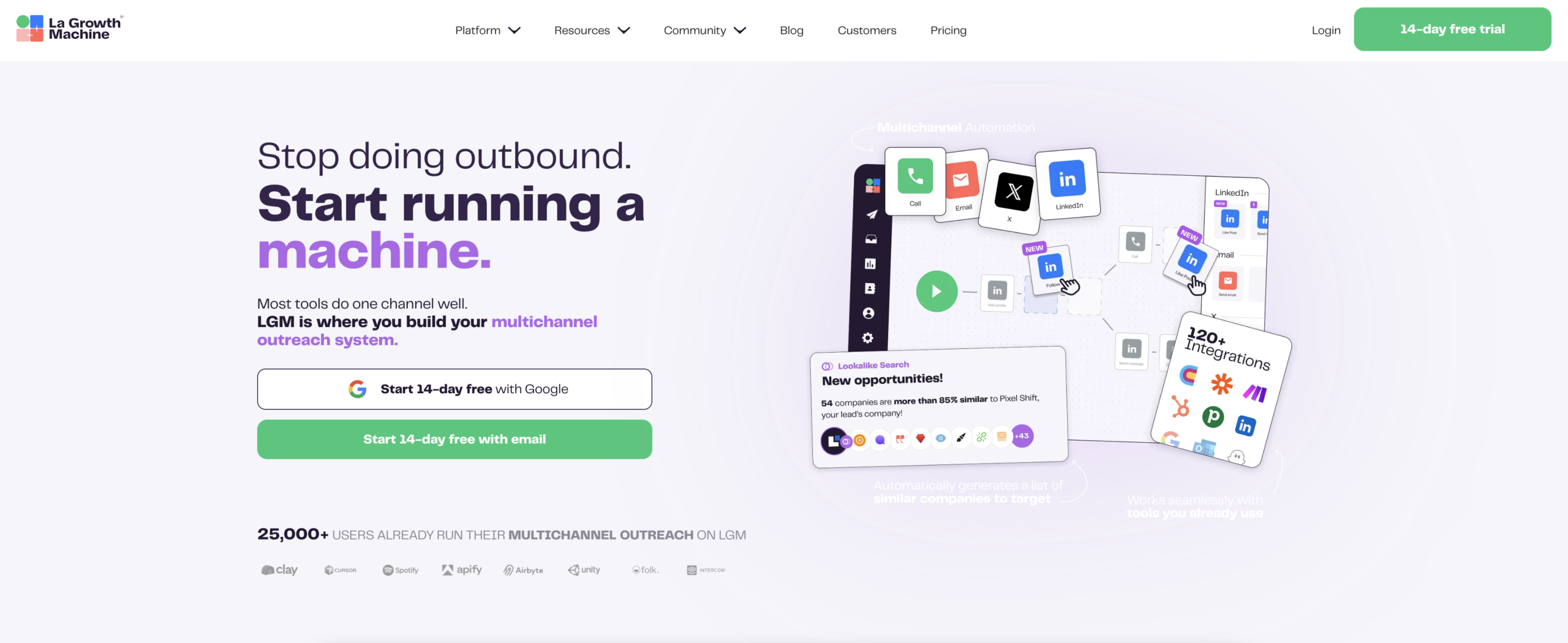
AI-powered sequences adapt based on prospect behavior. When someone opens but does not reply, the platform adjusts the follow-up timing and channel. When a prospect engages on LinkedIn, the email sequence accelerates. The result is outreach that reads like a human wrote it and follows up like a human would, but runs across hundreds of contacts simultaneously.
Pricing is per identity: Basic at €60/month, Pro at €120/month, Ultimate at €180/month. For teams running structured outreach across multiple reps, this is the tool that turns pipeline generation from a manual effort into a repeatable process.
Best for: B2B teams that want multichannel outreach, AI sequencing, and CRM-connected pipeline generation in one platform.
Pricing: Basic €60/month, Pro €120/month, Ultimate €180/month per identity.
2. HubSpot Sales Hub
HubSpot Sales Hub remains the go-to for teams that want CRM-native sales execution. Pipeline management, email sequences, deal tracking, and forecasting all live inside the same system your marketing and customer success teams already use.
The AI assistant inside Sales Hub handles email drafting, call summaries, and next-step suggestions. It reads the context of a deal — stage, last activity, open tasks — and surfaces what the rep should do next. That kind of embedded intelligence removes the cognitive load of managing a complex pipeline across dozens of active deals.
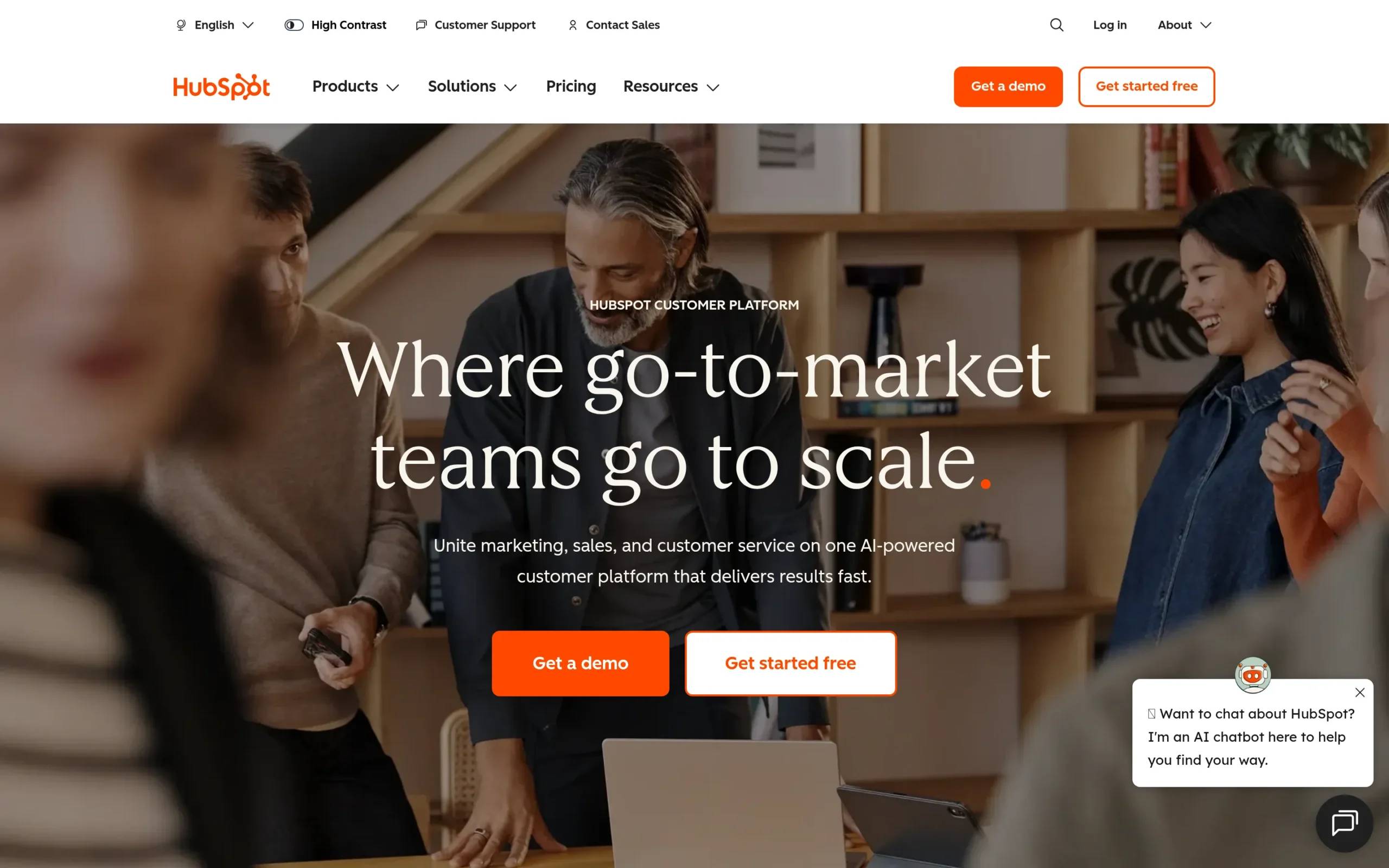
HubSpot’s strength is its ecosystem. Connecting to La Growth Machine, Apollo, or Cognism takes minutes, not weeks. Data flows in both directions. For teams that are already inside HubSpot and want to extend their sales motion with outreach tools, Sales Hub is the natural anchor point.
Best for: Teams that want a CRM-first approach with built-in email sequencing and AI assistance.
Pricing: Freemium available; paid plans from $90/month/seat.
3. Salesforce
Salesforce is the enterprise standard for a reason. The customization depth is unmatched: custom objects, complex territory structures, approval workflows, multi-currency support, and integration with every enterprise system your company runs.
Einstein AI brings forecasting intelligence into the platform. It analyzes deal history, rep behavior, and pipeline velocity to surface accurate revenue forecasts and flag deals at risk before they slip. For enterprise sales teams managing large, complex deals with long cycles, that signal is worth real money.
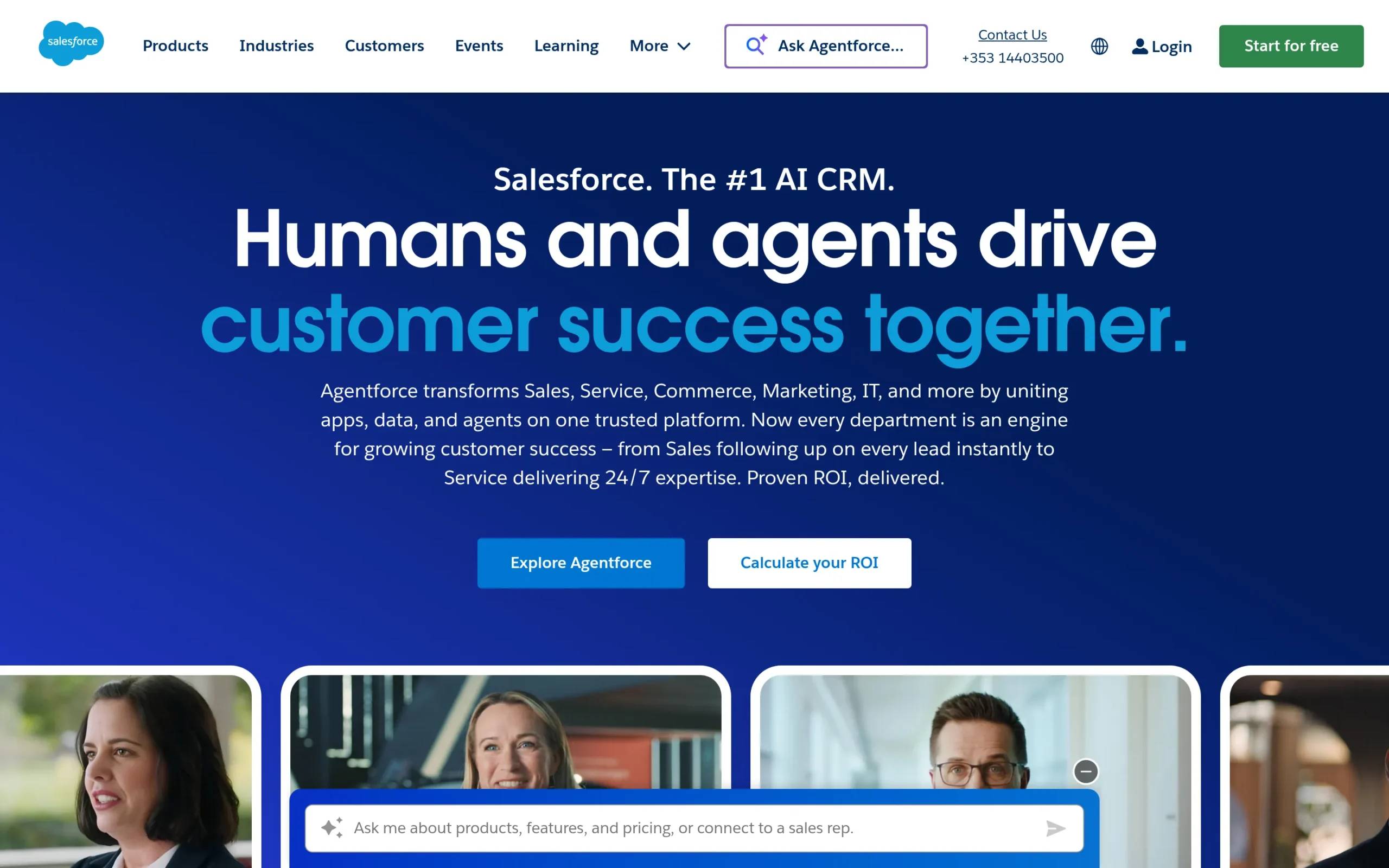
The tradeoff is complexity. Salesforce implementations take time, budget, and dedicated admin resources. But for organizations that need to scale a structured sales process across large teams and territories, nothing matches its ceiling.
Best for: Enterprise sales organizations that need deep customization, complex workflows, and AI-driven forecasting.
Pricing: Essentials from $25/user/month; Sales Cloud from $80/user/month.
4. Apollo.io
Apollo.io combines a database of 275 million contacts with built-in email sequencing and AI-powered lead scoring. For teams that need to find contacts and reach them in the same platform, Apollo removes a step from the workflow.
The AI scoring surfaces which contacts in your database are most likely to convert based on firmographic fit, technographic signals, and engagement history. Sequences run automatically, with A/B testing built in. The platform also includes a dialer for phone outreach.
Apollo works best as a prospecting layer that feeds into a more sophisticated outreach platform. Its data coverage is broad, and the built-in sequencing handles straightforward email campaigns well. Teams running more complex multichannel plays will pair it with La Growth Machine for the orchestration layer.
Best for: Teams that need a combined prospecting database and email sequencing tool.
Pricing: Free tier available; paid plans from $59/month.
5. Clay
Clay is the most powerful data enrichment tool available in 2026. It connects to over 50 data sources and uses Claygent, its AI research agent, to find information that no single database holds: recent funding rounds, job changes, company news, technology stacks, and custom research prompts.
The practical use case is building highly personalized outreach lists. Instead of sending the same message to every contact in a segment, Clay lets you enrich each contact with specific context and write personalization that references what that person actually cares about. That level of relevance drives reply rates in ways that volume alone never will.
Clay integrates directly with La Growth Machine for teams that want to pipe enriched contacts into structured multichannel sequences. Build your list in Clay, run your outreach in La Growth Machine, sync everything back to your CRM.
Best for: Sales ops and growth engineers who need custom enrichment and AI-powered research at scale.
Pricing: From $149/month; usage-based credits above the base tier.
6. Cognism
Cognism is the strongest choice for European teams that need GDPR-compliant B2B data with verified phone numbers. Where many data providers offer mobile numbers that are out of date or impossible to verify, Cognism’s Diamond Data provides phone-verified direct dials at scale.
Intent signals surface which companies in your target market are actively researching your category. Combine that signal with Cognism’s contact data and you can run outbound campaigns to accounts that are already in-market, rather than cold-calling a static list.
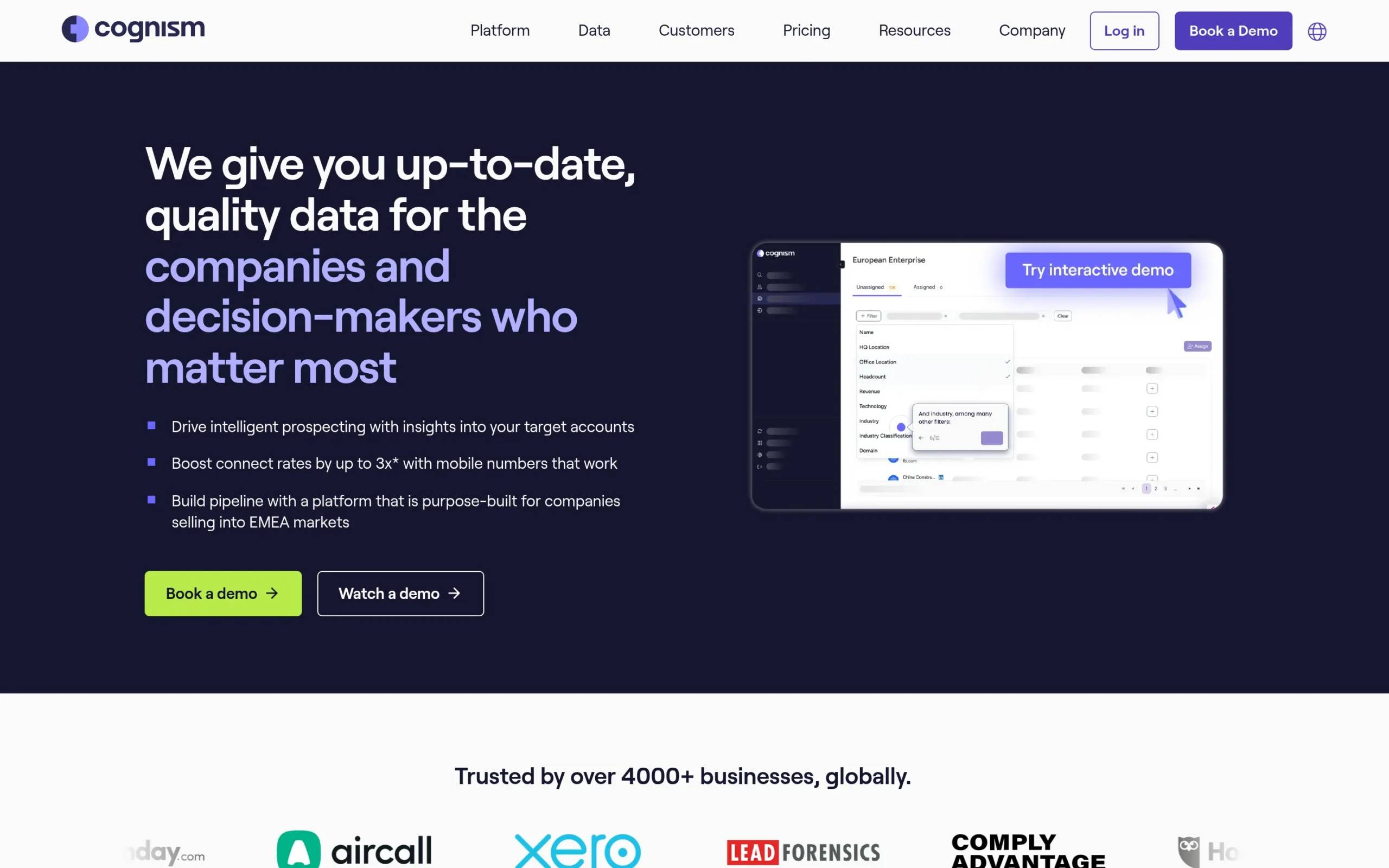
Cognism also layers in technographic and firmographic filters, so you can build precise segments before exporting to your outreach tool. For B2B teams that run significant phone outreach and need data they can trust across GDPR markets, it is the most defensible choice.
Best for: Teams that need compliant European B2B data with phone-verified numbers and intent signals.
Pricing: Custom; based on seat count and data volume.
7. Salesloft
Salesloft is built for enterprise sales teams that need to manage the full sales engagement lifecycle, from first outreach to closed deal. Conversation intelligence records, transcribes, and analyzes calls to surface coaching signals and deal risks. Pipeline forecasting uses deal activity data to predict which opportunities will close.
The Rhythm feature prioritizes a rep’s daily actions based on buyer signals, so reps spend time on the opportunities most likely to convert rather than working through a static task list. That signal-driven workflow is the modern alternative to the manual prioritization that slows down large sales teams.
Salesloft sits in the middle of the enterprise sales stack, connecting prospecting tools, CRM, and conversation data into a single operational layer for sales leadership and reps alike.
Best for: Enterprise sales teams that need conversation intelligence, signal-based prioritization, and pipeline forecasting.
Pricing: Custom enterprise pricing.
8. LinkedIn Sales Navigator
LinkedIn Sales Navigator gives your sales team access to LinkedIn’s full database of professional profiles with advanced search, InMail credits, and buyer intent signals unavailable in the free experience.
The TeamLink feature surfaces warm connections between your company and target accounts. Buyer intent signals flag when decision-makers at your target accounts are actively engaging with LinkedIn content related to your category. Those signals let you time outreach when prospects are already thinking about the problem you solve.

Sales Navigator integrates natively with La Growth Machine, so you can build a Sales Navigator list and launch a coordinated LinkedIn and email sequence directly. For B2B teams where LinkedIn is a primary outreach channel, the combination is one of the highest-performing setups available.
Best for: B2B teams running LinkedIn-first outreach who need advanced search and buyer intent data.
Pricing: Core from $99/month; Advanced from $149/month.
9. Gong
Gong captures and analyzes every sales conversation: calls, emails, and web conferences. Its AI models identify the patterns that separate winning deals from losing ones, and surface those patterns as actionable coaching for reps and managers.
Deal risk signals tell you which opportunities are at risk before they show up in a bad forecast. If a champion goes dark, if a deal stalls after a certain stage, or if a competitor gets mentioned on a call, Gong surfaces the signal immediately. That early warning gives managers time to intervene rather than discovering the loss after the quarter ends.
Best for: Sales teams that want deep conversation intelligence, rep coaching, and deal risk analysis.
Pricing: Custom enterprise pricing.
How to Build Your 2026 Sales Stack
The best-performing B2B sales stacks in 2026 follow a three-layer model. Each layer has a job. The tools work best when you are clear about which job each one is doing.
Layer 1: Data. This is where you build and enrich your contact lists. Apollo or Cognism handle database-level prospecting. Clay handles custom enrichment for accounts that need deeper research. LinkedIn Sales Navigator gives you access to intent signals and warm paths into target accounts. The goal at this layer is entering your outreach tool with contacts that are the right fit, at the right time, with enough context to write relevant messages.
Layer 2: Outreach. This is where pipeline gets built. La Growth Machine runs your multichannel sequences: LinkedIn connection requests, follow-up messages, email cadences, and voice messages, coordinated into a single workflow. Every touchpoint is tracked. Replies flow into the Unified Inbox. The CRM sync fires automatically. Salesloft plays a similar role for large enterprise teams with more complex workflow requirements.
Layer 3: CRM and intelligence. HubSpot or Salesforce anchor the revenue layer. Every contact, deal, and conversation lives here. Gong feeds in conversation intelligence and deal risk signals. Managers get visibility across the pipeline. Forecasts become reliable because they are based on activity data, not rep intuition.
The connection between these layers matters as much as the tools themselves. Data flows from Layer 1 into Layer 2. Actions and outcomes flow from Layer 2 into Layer 3. When those integrations are tight, the stack generates pipeline at scale and makes it measurable.
Start with the outreach layer. Get your multichannel sequences running and your CRM sync working. Then invest in the data layer to improve targeting. Then add intelligence tools as your deal volume grows.
FAQ
What is the best sales tool for B2B outreach in 2026?
La Growth Machine is the top pick for B2B teams that need structured multichannel outreach. It combines LinkedIn, email, and Twitter sequences with AI sequencing, waterfall enrichment, and native CRM sync. For teams where pipeline generation is the primary goal, it is the most complete solution available.
Do I need both Apollo and a separate outreach tool?
Apollo handles database prospecting and basic email sequencing well. But if you are running multichannel outreach across LinkedIn and email, coordinating sequences with branching logic, and syncing everything to a CRM, a dedicated outreach platform like La Growth Machine gives you significantly more control and performance.
Is LinkedIn Sales Navigator worth the cost?
Yes, for most B2B sales teams. The buyer intent signals alone justify the cost if your team is doing meaningful LinkedIn outreach. Pair it with La Growth Machine to turn Sales Navigator lists into structured multichannel sequences and the return on investment becomes straightforward to measure.
What sales tools work best together?
The combination that consistently performs: Clay for enrichment, La Growth Machine for outreach execution, and HubSpot or Salesforce for CRM. Add LinkedIn Sales Navigator if LinkedIn is a primary channel. Add Gong if call volume is high and you need conversation intelligence at scale.
How do I stay GDPR-compliant with B2B outreach tools?
Use a data provider like Cognism that verifies compliance at the data layer, and a platform like La Growth Machine that keeps LinkedIn activity within safe daily limits to protect your account and domain reputation. Document your legitimate interest basis for processing contact data and include clear opt-out paths in every sequence.
What is the difference between a sales engagement platform and a CRM?
A CRM stores your contacts, deals, and history. A sales engagement platform executes your outreach: it sends messages, tracks responses, and runs sequences. They serve different jobs. The best stacks use both, tightly integrated so data flows between them without manual work.
Conclusion
The sales tools that drive pipeline in 2026 share three characteristics: they are built around AI, they connect to the rest of your stack, and they track what matters — meetings booked, pipeline generated, revenue contributed.
La Growth Machine stands out because it handles the hardest part: coordinating multichannel outreach at scale while keeping every action connected to a measurable outcome. The waterfall enrichment, Voice Messages AI, and native CRM sync are not features you bolt on. They are part of how the platform was designed to work.
If you want to see what structured multichannel outreach looks like in practice, try La Growth Machine free for 14 days. No credit card required.