
TL;DR
The modern outbound stack runs on four layers: ICP and list building (Sales Navigator, Apollo, Cognism), enrichment (Clay, LGM waterfall), multichannel outreach execution (La Growth Machine), and CRM reporting (HubSpot, Salesforce, Pipedrive) – each layer must integrate cleanly with the others to generate pipeline at scale.
La Growth Machine is the outreach core that replaces three tools at once – LinkedIn automation, email sequencer, and enrichment tool – running native multichannel sequences with conditional logic and logging every touchpoint to your CRM automatically, starting at €60/month per identity.
Stack costs by team size: solo SDR or founder runs LGM + HubSpot free + LinkedIn Sales Navigator for ~€120/month – small teams (3-5 SDRs) add Apollo and Clay for ~€600/month – scaled teams (10+ SDRs) upgrade to Cognism + Salesforce + Salesloft + Make for ~€2,500/month.
Cut tools that create data silos: standalone email sequencers duplicate LGM’s native capability, isolated LinkedIn automation tools without CRM sync fragment your outreach record, and redundant enrichment subscriptions (Kaspr + Lusha + Apollo simultaneously) add cost without coverage gains.
Modern outbound sales in 2026 runs on a fundamentally different engine than it did three years ago. The defining shift is not faster email sending or more LinkedIn connection requests — it is AI-enriched prospecting, multichannel sequences with conditional logic, and CRM-native workflows that log every touch automatically. SDRs now build pipelines by combining verified contact data from multiple sources, triggering personalized sequences across LinkedIn, email, and voice channels simultaneously, and letting behavioral signals determine what happens next in the workflow.
The old stack — a standalone email tool, manual LinkedIn outreach, and a spreadsheet to track replies — cannot survive this level of complexity. It fragments your data across tools that do not talk to each other, forces reps to manually update CRM after every touch, and makes any kind of personalization at scale operationally impossible. Teams running the old stack burn 40% of selling time on administrative tasks that modern tools handle automatically. Pipeline visibility suffers, reply rates drop, and the best SDRs leave for companies with better tooling.
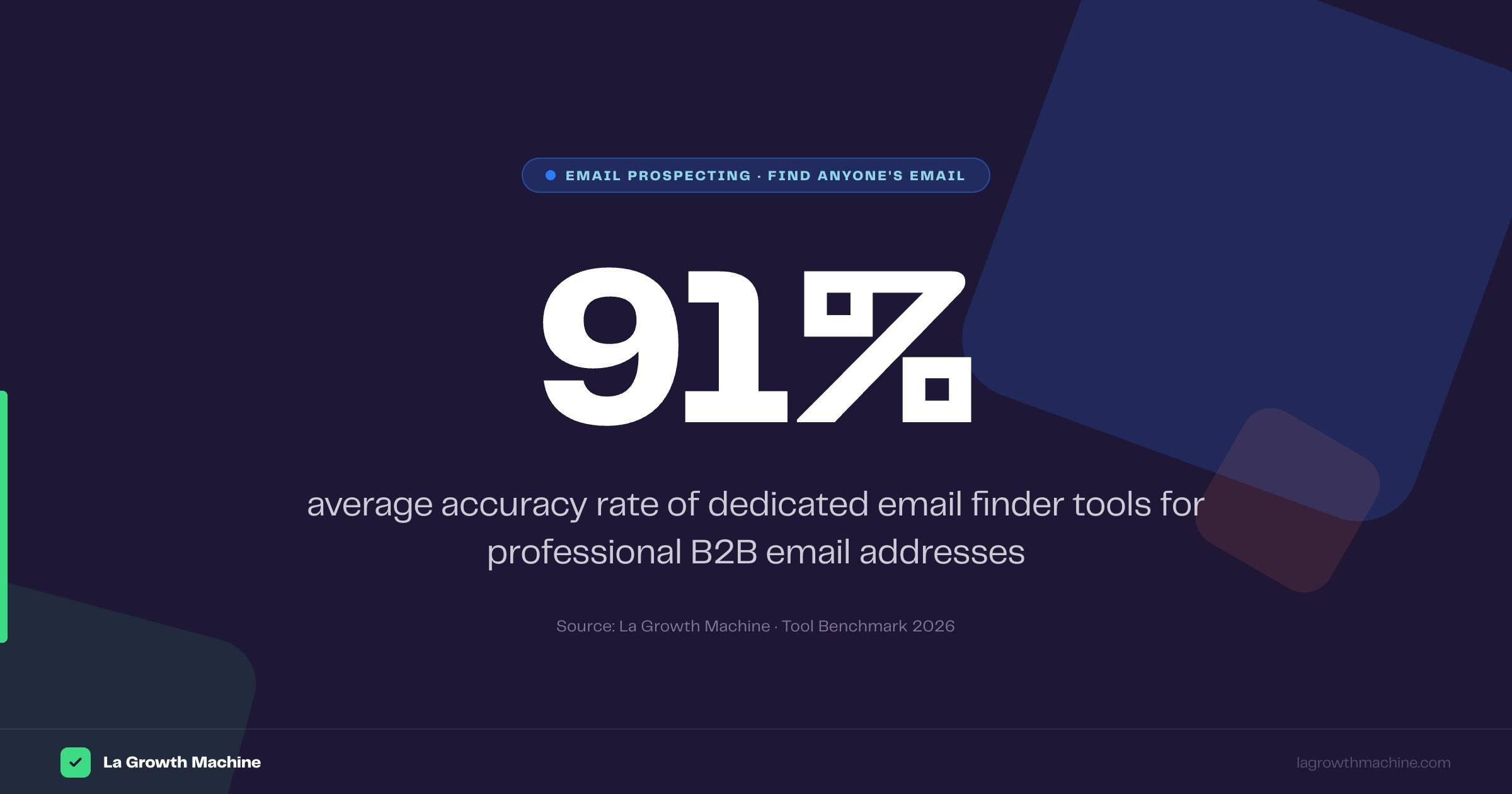
The winning outbound stack in 2026 is built in four layers: ICP and list building, data enrichment, multichannel outreach execution, and CRM reporting. Each layer has a clear job to do, and the tools in each layer need to integrate cleanly with the others. When these four layers are connected, a sales team can build a verified prospect list, enrich it with email and phone, run a multichannel sequence that adapts based on responses, and have every interaction logged in the CRM without manual entry. That is the stack this guide walks through.
Stack Overview
| Layer | Job to be Done | Top Tools | Est. Monthly Cost |
|---|---|---|---|
| ICP and List Building | Define and source target accounts and contacts | LinkedIn Sales Navigator, Apollo, Cognism | €80–€150/seat |
| Enrichment | Find verified emails and phones from LinkedIn data | Clay, LGM Waterfall Enrichment, Kaspr, Lusha | €50–€200 |
| Outreach Execution | Run multichannel sequences with conditional logic | La Growth Machine, Salesloft, Outreach | €60–€150/identity |
| CRM and Reporting | Log all touchpoints, track pipeline, report on revenue | HubSpot, Salesforce, Pipedrive | €0–€100/seat |
The 4 Layers of a Modern Outbound Stack
Layer 1: ICP and List Building
The first job in outbound is knowing exactly who you are targeting and finding them at scale. This layer combines ICP definition with list sourcing — you need a clear picture of the accounts and personas most likely to convert before you spend a dollar on enrichment or outreach.
LinkedIn Sales Navigator remains the baseline tool for B2B prospecting. Its advanced search filters — company headcount, department size, technology used, hiring signals, and recent job changes — let you build lists that match your ICP with a precision that no database alone can replicate. Boolean search on LinkedIn generates live lists that update as new people match your criteria, which matters when you are targeting a segment with high turnover.
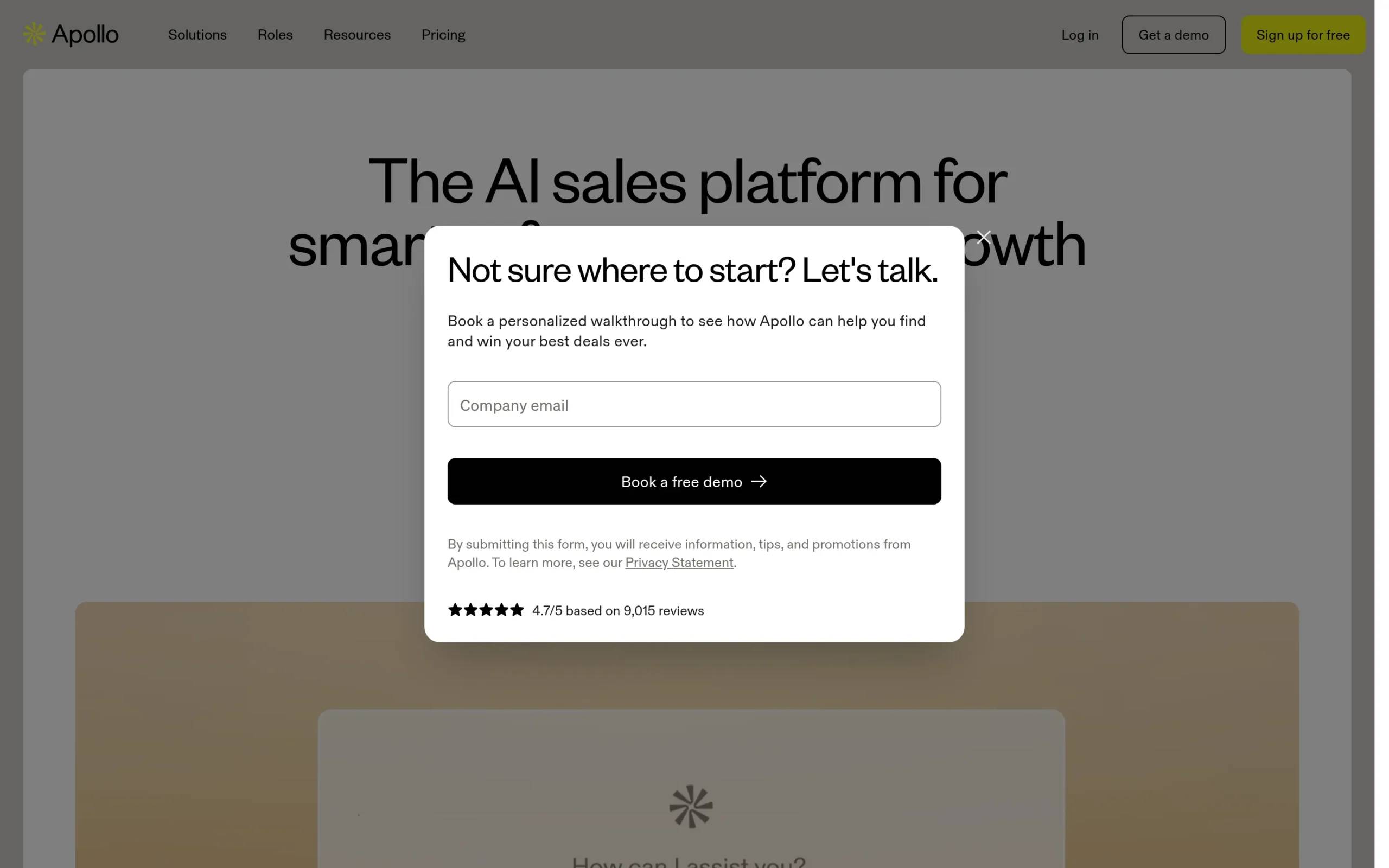
Apollo combines a 275M-contact database with built-in sequencing. For teams that want a single tool to handle prospecting and basic outreach, Apollo is a cost-effective starting point. Its data quality is strong on US tech companies and adequate on European mid-market. Where it falls short is phone-verified EU data, which requires a dedicated enrichment tool.
Cognism fills that gap. It specializes in phone-verified B2B contact data with strong GDPR compliance, making it the default choice for outbound teams targeting European markets. Cognism’s Diamond Data feature provides mobile numbers verified by a human call, which drives significantly higher connect rates than data-matched phones. The trade-off is cost — Cognism is priced for teams, not solo SDRs.
Layer 2: Enrichment
Raw prospect lists are not actionable until you have verified contact data attached to each record. The enrichment layer takes LinkedIn profiles, company domains, or partial contact records and returns deliverable emails, mobile phones, and contextual signals you can use to personalize outreach.
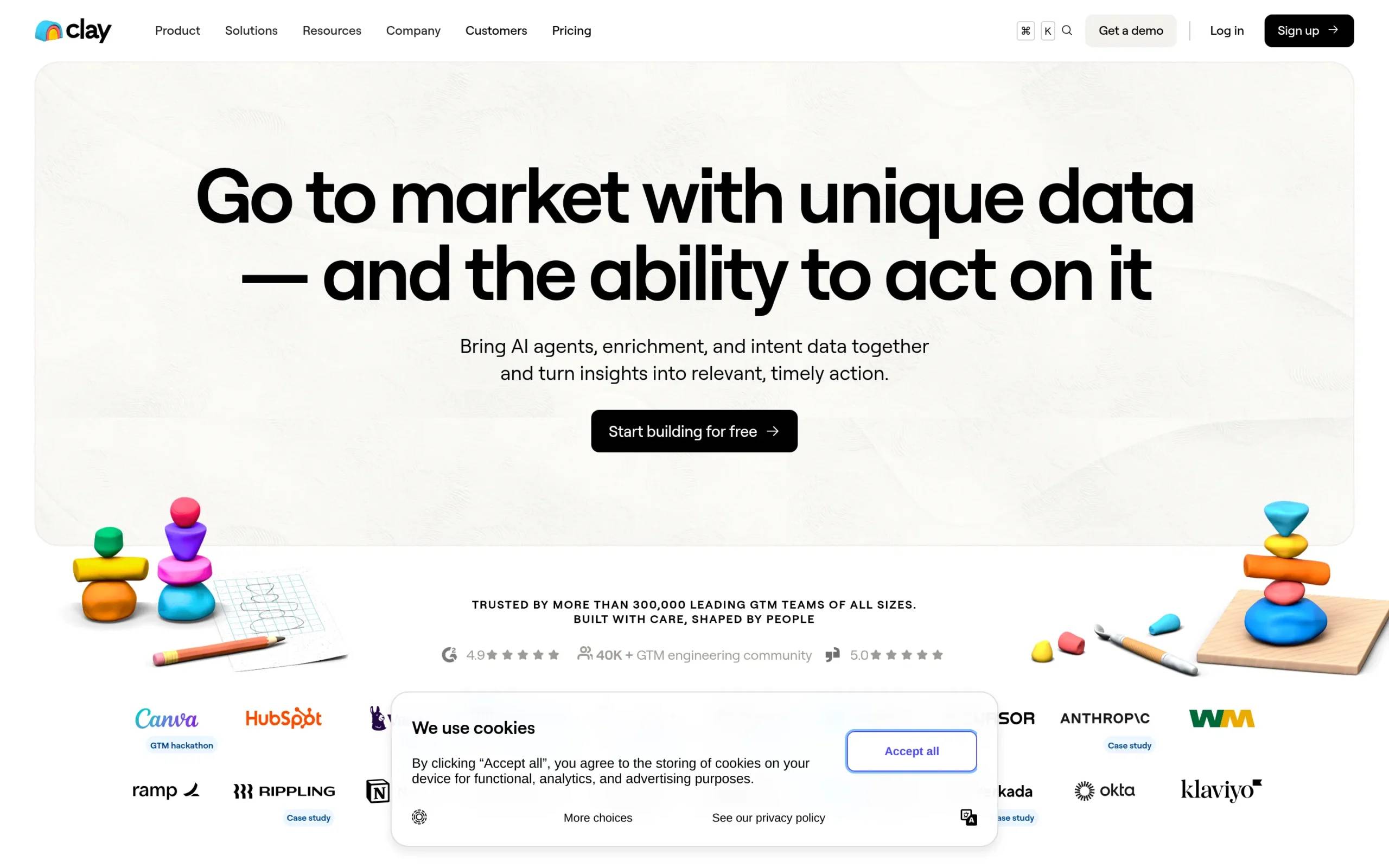
Clay has become the central enrichment infrastructure for high-performing outbound teams. It functions as a waterfall enrichment engine — it queries multiple data providers in sequence and stops when it finds a verified result, minimizing cost and maximizing coverage. Clay pulls from over 75 data sources including Hunter, Clearbit, Apollo, and Snov.io. What makes it powerful is the combination of enrichment with AI-generated variables: you can pull a prospect’s LinkedIn activity, recent company news, or job posting data and use that to generate a personalized first line at scale.
La Growth Machine includes native waterfall enrichment built into the outreach workflow. When you import a LinkedIn URL into LGM, it automatically searches for a verified professional email and phone across multiple providers before launching the sequence. This removes the need for a separate enrichment tool at the solo or small-team level, where Clay’s setup complexity may not be justified.
Kaspr and Lusha operate as point enrichment tools — Chrome extensions that surface contact data directly on LinkedIn profiles. They are useful for SDRs who prospect manually and need phone and email on individual records without building a full enrichment pipeline. Both have API access for batch enrichment at scale.
Layer 3: Outreach Execution
The outreach layer is where pipeline gets built. This is also where most outbound stacks break down — teams run email sequences in one tool, LinkedIn outreach manually or in a separate tool, and never connect the two. Prospects receive disjointed touchpoints, sequences cannot adapt based on behavior, and no single system knows the full history of a relationship.
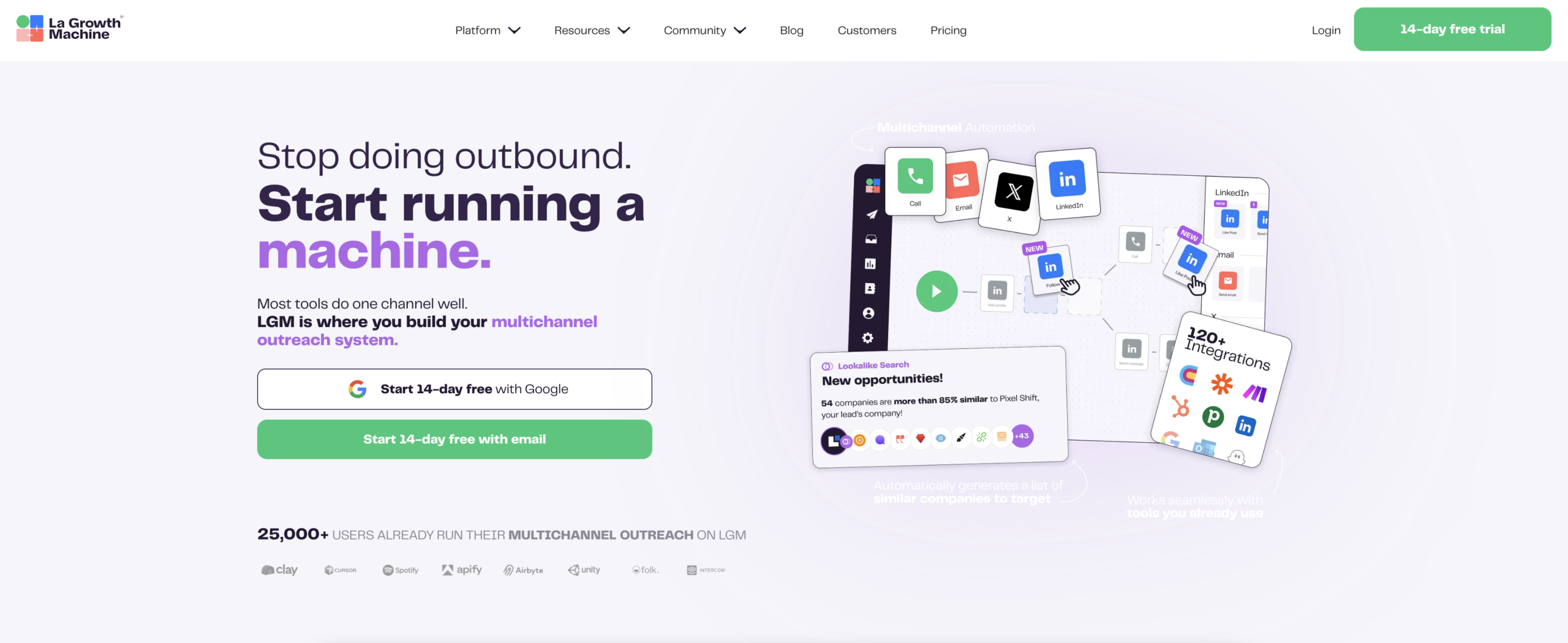
La Growth Machine solves this structurally. It is the only outreach tool that runs LinkedIn, email, Twitter, and voice messages in a single native multichannel workflow, with conditional logic built into the sequence engine. A sequence in LGM can branch based on whether a prospect opened an email, accepted a LinkedIn connection, or replied to a message — and each branch can take a different path automatically. Every touchpoint logs to your CRM without manual entry.
Salesloft and Outreach are the enterprise alternatives. Both platforms include call coaching, conversation intelligence, and deep Salesforce integration. They are built for sales organizations with 20+ reps, dedicated RevOps functions, and enterprise compliance requirements. At this scale, the call coaching and manager visibility features justify the investment. Below that threshold, the complexity and cost are rarely warranted.
Layer 4: CRM and Reporting
The CRM layer closes the loop. It is not just where deals are tracked — it is the system of record for all prospect interactions, and the source of the reporting that tells leadership where pipeline is coming from and which sequences are generating revenue.
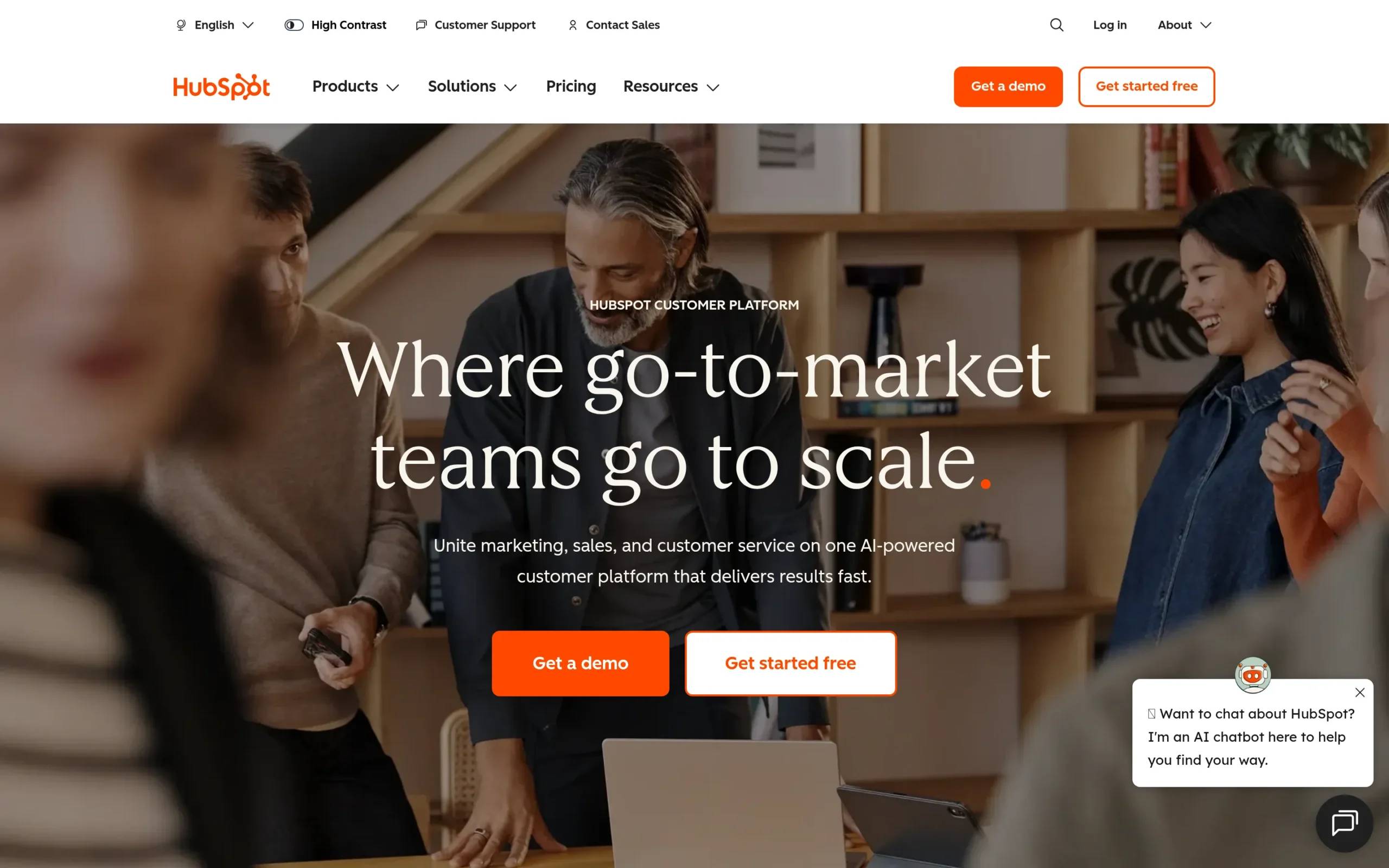
HubSpot is the default choice for teams up to around 50 reps. Its free CRM tier is genuinely useful, and the Sales Hub adds deal pipelines, sequences, and reporting at reasonable cost. LGM syncs bidirectionally with HubSpot — contacts, sequence activity, replies, and stage changes all flow automatically. For teams that want to avoid the complexity of Salesforce but need more than a spreadsheet, HubSpot is the right call.
Salesforce becomes the right answer when you need custom objects, complex forecasting, multi-team attribution, or integration with a broader enterprise tech stack. LGM connects natively with Salesforce, pushing every outreach touchpoint into the activity timeline and respecting contact ownership rules. The setup requires a RevOps resource, but once configured it provides the deepest reporting visibility of any CRM in this stack.
Pipedrive sits between HubSpot and Salesforce on the complexity curve. It has a clean pipeline UI, solid activity tracking, and native LGM integration. It is the best choice for small teams that find HubSpot’s Marketing Hub upsell noise distracting and want a CRM that focuses purely on sales pipeline management.
The Outbound Stack by Team Size
Stack design is not one-size-fits-all. The right combination of tools depends on team size, average deal size, and whether your outbound motion is primarily inbound-led or fully outbound.
Solo SDR or founder (target: ~€120/month)
The solo outbound operator needs to move fast without managing multiple vendor relationships. The minimal viable stack is La Growth Machine (Basic at €60/month per identity) plus HubSpot free CRM plus LinkedIn Sales Navigator (€80/month). LGM handles enrichment automatically within the workflow, eliminating the need for a separate enrichment tool. This stack runs multichannel sequences, logs all activity to CRM, and costs less than a single enterprise tool seat elsewhere.
Small team of 3 to 5 SDRs (target: ~€600/month)
At this size, the team needs shared prospecting infrastructure and richer data. Add Apollo to the solo stack for database prospecting and basic sequencing visibility across the team. Layer in Clay for high-touch accounts where personalization drives response rates. HubSpot Sales Hub (paid) provides team pipeline visibility and shared sequences. Total estimate: LGM Pro per seat plus Apollo and Clay comes in around €600/month depending on usage.
Scaled team of 10 or more SDRs (target: ~€2500/month)
Larger teams need enterprise-grade data, call coaching, and automation between tools. Replace Apollo with Cognism for phone-verified EU data. Upgrade CRM to Salesforce for custom forecasting and multi-team attribution. Add Salesloft for call coaching and conversation intelligence. Bring in Make (formerly Integromat) to handle custom automation flows between tools — routing enriched contacts from Clay into the correct LGM audience, updating Salesforce fields based on sequence outcomes, and alerting managers on high-priority replies via Slack.
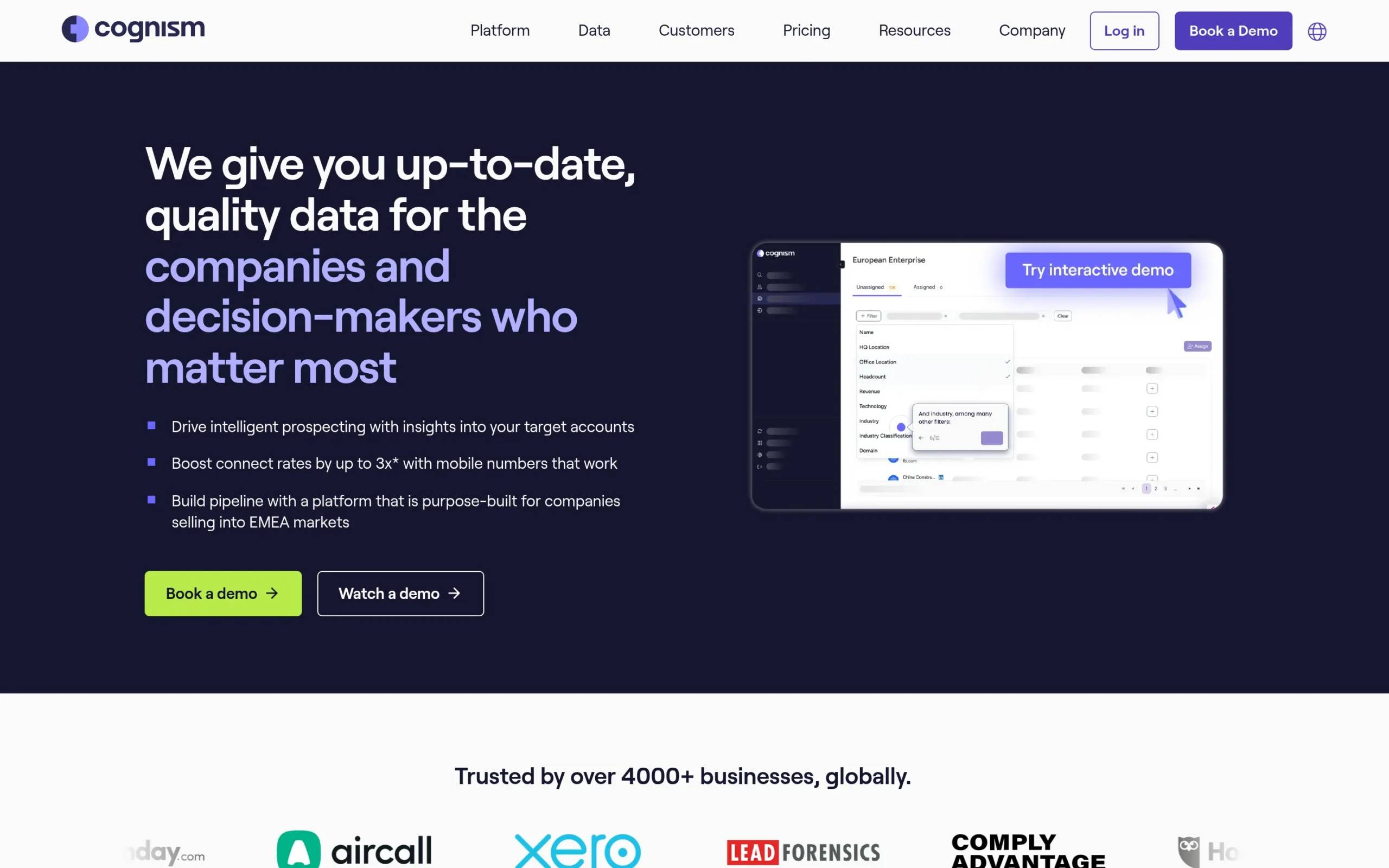
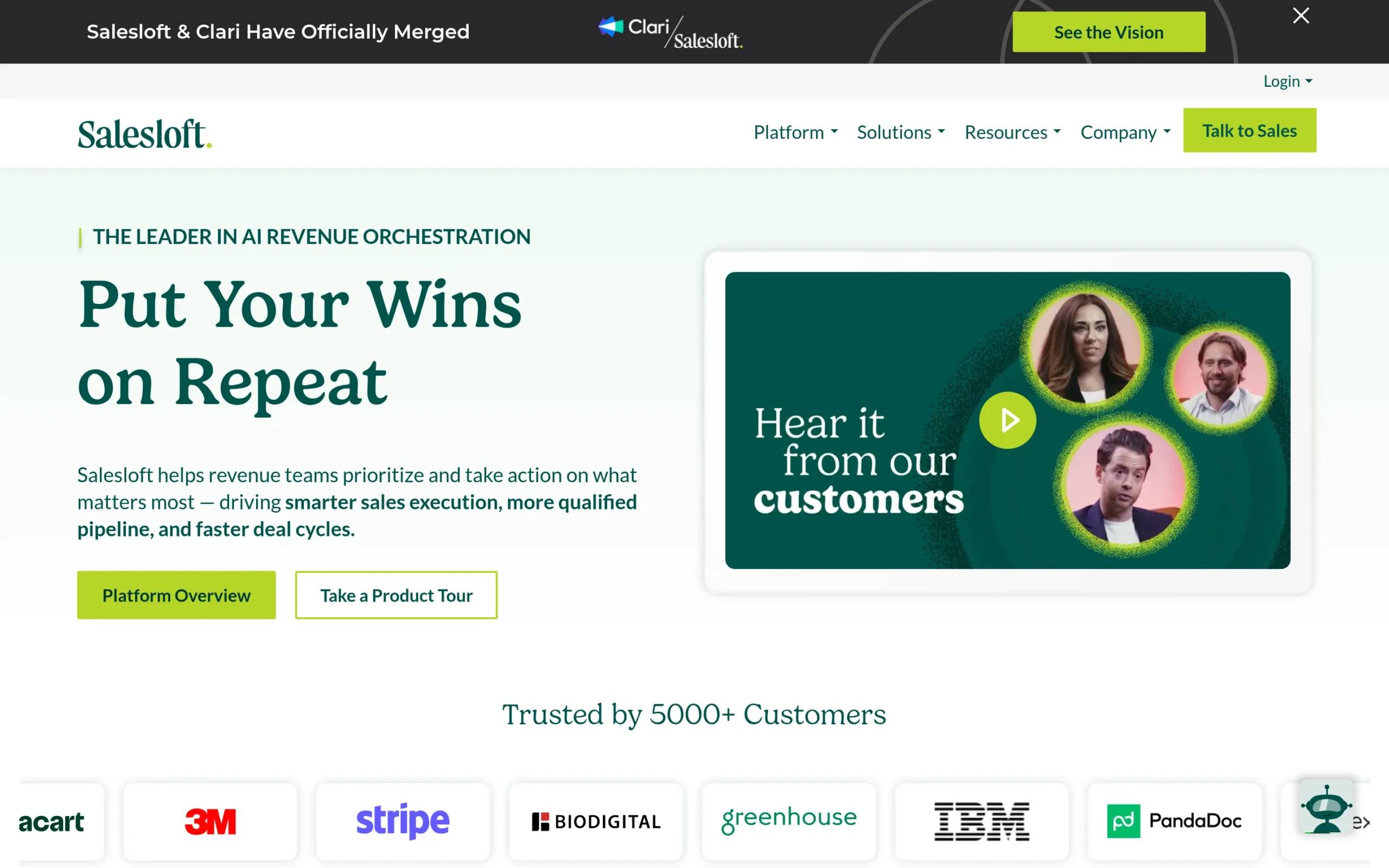
Cognism is the data layer for phone-heavy EU outbound. Salesloft adds call coaching and conversation intelligence for enterprise-scale teams.
Why La Growth Machine Is the Core of the Modern Outbound Stack
Every layer of the outbound stack needs an execution layer — the tool that actually sends messages, manages replies, and logs activity. That tool is La Growth Machine, and it is not interchangeable with the alternatives.
LGM replaces three tools simultaneously: the LinkedIn automation tool, the email sequencer, and the enrichment tool. Instead of paying for three separate subscriptions, managing three dashboards, and manually exporting data between them, everything runs from a single workflow builder. A sequence starts with a LinkedIn connection request, follows up with a personalized email three days later, sends a LinkedIn message if there is no reply, and branches to a voice message for high-priority accounts — all configured in one place, all logged automatically.
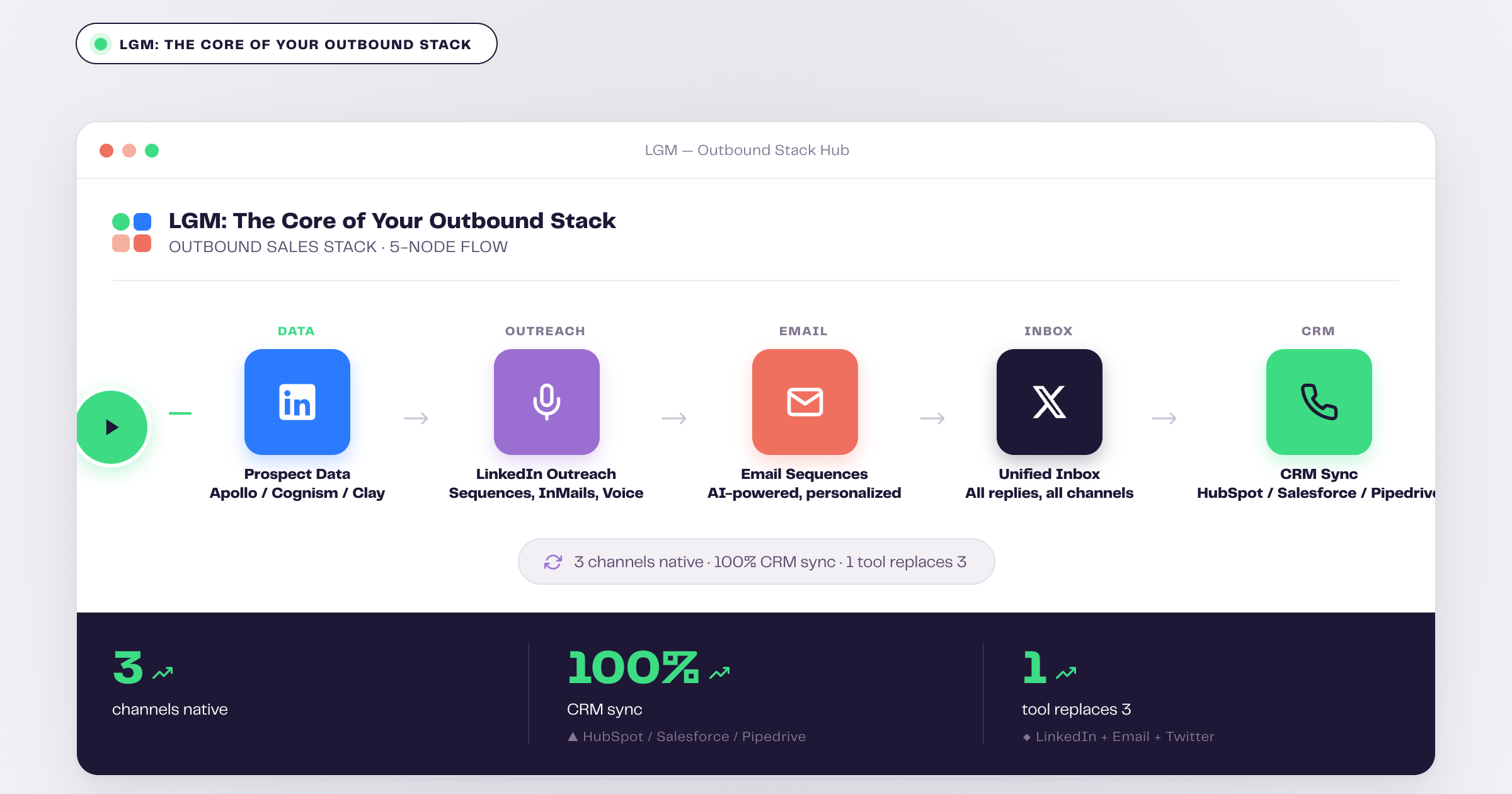
The waterfall enrichment inside LGM is particularly valuable for solo operators and small teams. Import a LinkedIn URL and LGM searches across multiple providers to find a verified professional email and phone number before the sequence launches. This eliminates the Clay setup cost for teams where high-touch personalization at massive scale is not yet required.
Conditional logic is where LGM separates itself from basic sequencing tools. Sequences are not linear — they are flowcharts. If a prospect opens an email but does not reply, the sequence can wait two more days and follow up on LinkedIn instead of sending another email. If they accept a connection request, the sequence can skip the cold connection message and jump directly to the value proposition. These behavioral branches are configured visually in LGM’s workflow builder without any code.
CRM sync is bidirectional and automatic. Every touchpoint — connection request sent, email opened, reply received, meeting booked — flows into HubSpot, Salesforce, or Pipedrive without manual entry. Contact properties update in real time. Deal stage changes in the CRM can trigger or pause LGM sequences automatically. The result is a CRM that reflects actual outreach activity rather than the cherry-picked updates reps remember to log.
LGM pricing: Basic at €60/month per identity, Pro at €120/month per identity, Ultimate at €180/month per identity. All plans include multichannel sequences and CRM sync. Pro and Ultimate add AI features, advanced analytics, and priority support.
Tools Worth Adding at Each Stage
Clay belongs in the stack as soon as personalization at scale becomes a priority. The trigger is usually when reply rates plateau despite healthy send volume — it means prospects are not finding your outreach relevant enough. Clay lets you pull job posting data, funding announcements, LinkedIn activity, and tech stack signals and use them to generate personalized first lines that reference something specific about each prospect. At 50+ outbound contacts per day, this is the single highest-ROI addition to the stack.
Cognism enters the stack when you need phone-verified EU contact data. The trigger is expanding into European markets where email open rates are lower and phone outreach drives disproportionate conversion. Cognism’s Diamond Data guarantees a higher mobile phone connect rate than any data-matched alternative.
Salesloft or Outreach belong in the stack when you need enterprise call coaching and conversation intelligence. The trigger is building a sales team large enough to justify coaching infrastructure — typically 10 or more quota-carrying reps where manager bandwidth for 1:1 call reviews is a bottleneck. At that scale, AI-powered call analysis and structured coaching workflows generate measurable improvements in conversion rates.
Make or Zapier connect the stack together when your workflows outgrow native integrations. The trigger is when you find yourself manually copying data between tools more than twice a week. Make handles complex multi-step flows better than Zapier for outbound use cases — routing enriched contacts into audience segments, triggering sequence enrollment based on CRM events, and pushing Slack alerts for high-priority replies.
What to Cut From Your Outbound Stack
Redundant enrichment tools. Most teams are paying for Kaspr, Lusha, and Apollo simultaneously when one would suffice. Audit your enrichment coverage and consolidate. If you are using LGM, its built-in waterfall enrichment may cover the majority of your use cases without any additional tool.
Email tools running alongside LGM. LGM includes email sequencing natively. Teams that run LGM plus a separate email sequencer are duplicating capability, splitting their data across two systems, and paying twice for the same function. Consolidate all sequences into LGM and deprecate the standalone email tool.
LinkedIn automation tools that operate in isolation. Browser-based LinkedIn automation tools that do not connect to your CRM or email sequencer create a fragmented outreach record and introduce compliance risk. If it is not integrated into your workflow and logging activity to your CRM, it does not belong in the stack.
Tools without CRM sync. Any outreach tool that does not log activity to your CRM automatically requires manual data entry, which means the CRM data is always incomplete. Incomplete CRM data makes pipeline forecasting unreliable and removes visibility for managers. The qualification test for any outreach tool is simple: does it log every touchpoint to HubSpot, Salesforce, or Pipedrive automatically? If not, cut it or replace it.
Spreadsheet-based tracking layers. A common anti-pattern is teams running a real CRM plus a parallel spreadsheet that someone maintains manually. The spreadsheet always becomes the source of truth because it is faster to update than the CRM — which means the CRM never gets updated. The fix is not a better spreadsheet. It is better CRM automation, which LGM provides natively.
Frequently Asked Questions
What is the minimum viable outbound tech stack in 2026?
For a solo SDR or founder, the minimum viable stack is La Growth Machine (Basic at €60/month) plus HubSpot free CRM plus LinkedIn Sales Navigator. This gives you multichannel outreach, built-in enrichment, and automatic CRM logging for approximately €140/month. You can book qualified meetings from day one without any additional tools.
Do I need Clay if I am using La Growth Machine?
Not necessarily. LGM’s native waterfall enrichment handles email and phone discovery for most use cases. Clay becomes worthwhile when you need AI-generated personalization variables at scale — pulling funding data, job postings, or LinkedIn activity to generate unique first lines for each prospect. If your reply rates are healthy and you are not outreach more than 50 contacts per day, LGM’s built-in enrichment is sufficient.
How does La Growth Machine compare to Salesloft and Outreach?
LGM is purpose-built for multichannel outbound: LinkedIn plus email plus Twitter plus voice messages in one native workflow. Salesloft and Outreach are built for enterprise sales teams that need call coaching, conversation intelligence, and complex CRM governance. LGM wins on multichannel execution and simplicity. Salesloft and Outreach win on call coaching and enterprise compliance features. For most outbound teams under 20 reps, LGM is the stronger choice.
What CRM integrates best with this outbound stack?
HubSpot is the best-integrated CRM for teams running LGM, Apollo, and Clay. All three tools have native HubSpot connectors. LGM syncs bidirectionally with HubSpot, logging every touchpoint automatically and respecting contact lifecycle stages. Salesforce is the right answer for enterprise teams that need custom objects and complex forecasting, and LGM supports that integration as well.
How do I know when to upgrade my outbound stack?
The signals are: reply rates declining despite healthy send volume (add Clay for personalization), expanding into EU markets with phone-heavy outreach (add Cognism), scaling to 10 or more reps with coaching bottlenecks (add Salesloft or Outreach), and building custom automation flows between tools (add Make). Each addition should be justified by a specific problem, not by a desire to have more tools.
Is it safe to use LinkedIn automation tools for outbound?
LinkedIn restricts automated connection requests and messages. Tools that use browser injection or simulate clicks at high volume carry account suspension risk. La Growth Machine operates within LinkedIn’s safe usage limits, using cloud-based infrastructure and respecting daily action quotas. The key is staying within LinkedIn’s limits, spacing actions naturally, and connecting outreach to genuine personalization so your acceptance rates signal quality engagement to LinkedIn’s algorithm.
Conclusion
The modern outbound stack is not about using more tools — it is about connecting the right four layers: ICP and list building, enrichment, multichannel outreach execution, and CRM reporting. When those layers are integrated and automated, outbound becomes predictable. You know your pipeline coverage, your sequence performance, and your revenue contribution at every point in the quarter.
La Growth Machine is the execution core that makes this stack work. It replaces three tools, runs multichannel sequences with conditional logic, enriches contacts automatically, and logs everything to your CRM. Whether you are a solo founder booking your first 10 meetings or a scaled SDR team running hundreds of sequences simultaneously, LGM is the layer you build the rest of the stack around.
Start your 14-day free trial of La Growth Machine and build your first multichannel sequence today. No credit card required.