
TL;DR
– A sales tech stack works best when built around 3 clear layers: data and enrichment, outreach and engagement, and CRM and reporting.
– The Lean Startup Stack (La Growth Machine + HubSpot Free + Kaspr) gives 1-3 person teams a full outbound operation for around 150 EUR/month.
– The Scale-Up Stack (LGM + Apollo + HubSpot Sales Hub + Clay + Zapier) is built for 5-15 person teams running structured multichannel outbound at 600-800 EUR/month.
– The Agency Stack leverages LGM multi-identity model to run isolated outbound campaigns for multiple clients simultaneously without data bleed.
The difference between a sales team that generates pipeline consistently and one that chases its tail often comes down to one thing: the tools they use and how those tools connect. A well-designed sales tech stack turns your reps into a repeatable revenue machine. A poorly assembled one turns them into full-time admins managing data across five disconnected tabs. The right stack is not the most expensive one — it is the one that fits how your team actually sells.
Most B2B sales teams fall into the same trap: they buy more tools than they need, hoping each new platform will solve a problem the last one created. The result is a stack that generates noise, not meetings. The teams that win on pipeline do the opposite — they build lean, intentional workflows where each tool has a clear job. Data flows into outreach. Outreach flows into CRM. Reporting reflects reality. That is the 3-layer model that separates high-performing teams from everyone else.
The 3-layer model works like this: Layer 1 is data and enrichment, where you find and verify contacts. Layer 2 is outreach and engagement, where you run multichannel sequences at scale. Layer 3 is CRM and reporting, where you track pipeline and forecast revenue. Every tool in your stack should map to one of these three layers. If it does not, you probably do not need it.
Stack Overview: 4 Real Sales Tech Stack Examples
| Stack Type | Tools | Team Size | Monthly Cost |
|---|---|---|---|
| Lean Startup | La Growth Machine + HubSpot Free + Kaspr | 1-3 people | ~€150/month |
| Scale-Up | La Growth Machine + Apollo + HubSpot Sales Hub + Clay + Zapier | 5-15 people | ~€800/month |
| Enterprise | La Growth Machine + Cognism + Salesforce + Salesloft + Clay + Make | 15+ people | ~€2,500/month |
| Agency | La Growth Machine + Apollo + Pipedrive + Zapier | Multi-client | ~€600/month |
The 3 Layers Every Sales Tech Stack Needs
Layer 1 — Data and Enrichment
Every sales motion starts with a contact. Layer 1 is about finding the right people, getting verified contact data, and making sure your CRM is not full of bounced emails and outdated job titles. Tools in this layer include contact databases like Apollo, Cognism, Kaspr, and Lusha, as well as enrichment platforms like Clay that pull from multiple sources to build richer lead profiles.
The job of Layer 1 is not just volume — it is accuracy. A list of 500 verified, well-enriched leads will outperform a list of 5,000 raw exports every time. Invest in data quality at this stage and everything downstream gets easier.
Layer 2 — Outreach and Engagement
This is where pipeline gets built. Layer 2 covers the tools that run your sequences, manage multichannel touchpoints, and track engagement across email, LinkedIn, and voice. La Growth Machine sits at the center of this layer for most teams in this guide — it handles LinkedIn outreach, email sequences, and voice messages from a single workflow, using real identities to avoid deliverability issues.
Other tools in this category include Salesloft and Outreach for enterprise-grade sequence management. The key principle for Layer 2 is that your outreach tool should integrate cleanly with both your data layer and your CRM so that contact status flows in both directions without manual exports.
Layer 3 — CRM and Reporting
Layer 3 is where activity becomes pipeline. Your CRM tracks deal stages, conversation history, and close rates. It is also where leadership gets visibility into forecast accuracy and revenue contribution by rep. HubSpot, Salesforce, and Pipedrive are the three most common choices at different team sizes, each with different tradeoffs on flexibility, setup time, and cost.
A good Layer 3 setup means deals created automatically when a prospect replies, stages updated as sequences progress, and reports that reflect real pipeline rather than activity theater.
Sales Tech Stack Example 1 — The Lean Startup Stack
Team size: 1-3 people Monthly cost: ~€150/month Best for: Founders doing outbound, early-stage SDRs, solo salespeople
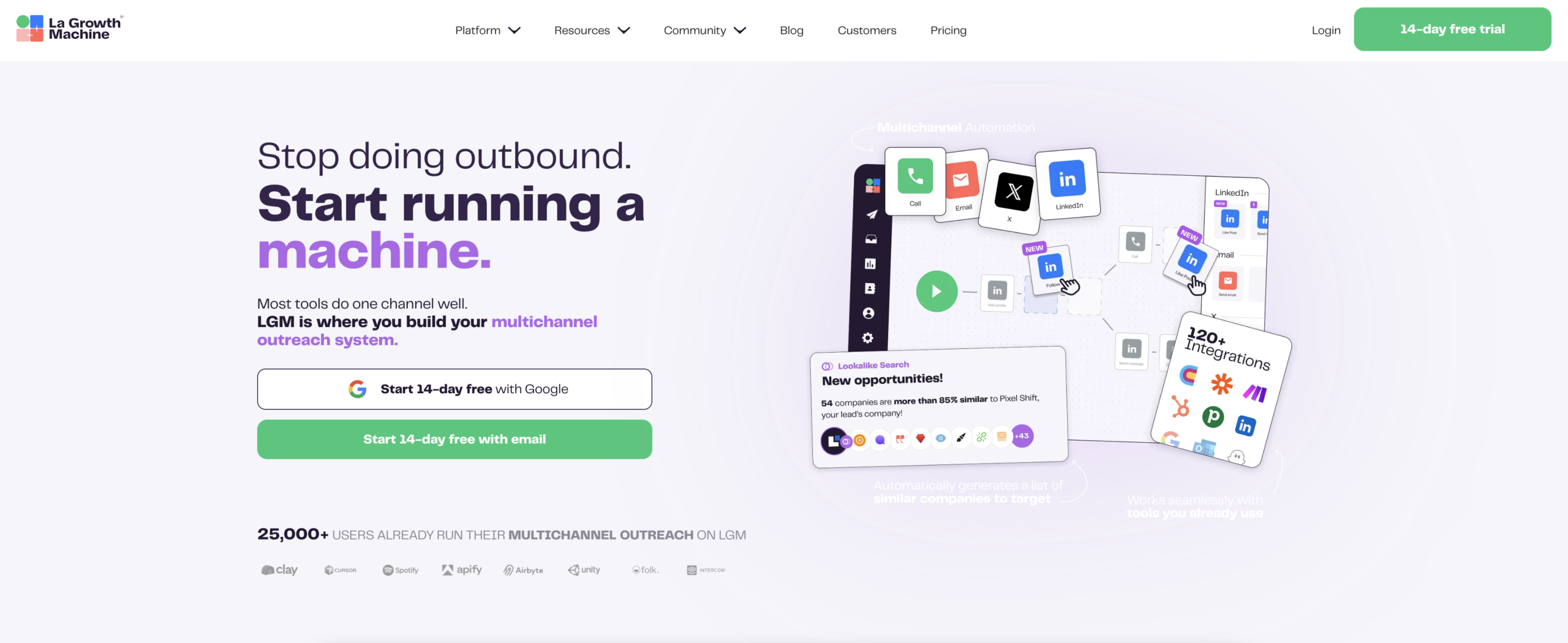
When you are a small team, you cannot afford bloated tools or long onboarding cycles. The lean startup stack gives you everything you need to go from prospect list to booked meeting with three tools that cost less than a SaaS lunch tab.
Tools:
- La Growth Machine — LGM Pro at €120/month per identity handles multichannel outreach: LinkedIn, email, and voice messages in a single sequence
- HubSpot Free CRM — free tier is genuinely powerful for a team this size, covering contacts, deals, and basic reporting
- Kaspr — Chrome extension for pulling phone numbers and emails directly from LinkedIn profiles, starting around €30/month
Workflow walkthrough:
You use Kaspr to find contact data while browsing LinkedIn or Sales Navigator. You import those contacts into LGM and build a multichannel sequence: a LinkedIn connection request, a message, a follow-up email, and a voice message if no reply after five days. When a prospect replies, LGM syncs the contact and conversation back to HubSpot where you create a deal and track follow-ups. The entire loop from prospect to pipeline runs in under an hour of setup.
Monthly cost breakdown:
- LGM Pro: €120/month
- HubSpot Free CRM: €0
- Kaspr Starter: ~€30/month
- Total: ~€150/month
At this price point, you are running a professional multichannel outreach operation with a clean CRM. Most teams at this stage see their first booked meetings within 72 hours of launching their first sequence.
Sales Tech Stack Example 2 — The Scale-Up Stack
Team size: 5-15 people Monthly cost: ~€800/month Best for: Growing sales teams with dedicated SDRs and AEs, revenue targets above €500k ARR
At this stage, volume matters. You need more leads, better enrichment, and workflows that do not require manual handoffs between tools. The scale-up stack adds Apollo for data, Clay for enrichment, and Zapier for automation — turning your stack into a connected machine.
Tools:
- La Growth Machine — LGM Pro at €120/month per identity, 2-3 identities for your SDR team
- Apollo — contact database with built-in prospecting and basic sequences, starting around €49/month per user
- HubSpot Sales Hub — Starter at €45/month per seat adds deal automation, sequences, and team reporting
- Clay — enrichment platform that pulls data from 50+ sources to build lead profiles, starting around €149/month
- Zapier — automation layer connecting your tools, starting at €20/month
Workflow walkthrough:
Your SDR pulls a prospect list from Apollo using company and role filters. That list goes into Clay, which enriches each contact with firmographic data, recent news, and verified contact details. Enriched contacts flow into LGM via CSV import or Zapier trigger, where they enter the appropriate multichannel sequence based on segment. When a prospect books a meeting or replies positively, Zapier creates a deal in HubSpot and assigns it to the right AE. The AE sees full context — every touchpoint, every message — without asking the SDR what happened.
Monthly cost breakdown:
- LGM Pro x2 identities: €240/month
- Apollo Professional: ~€99/month
- HubSpot Sales Hub Starter x3 seats: ~€135/month
- Clay Starter: ~€149/month
- Zapier Starter: ~€20/month
- Total: ~€643/month (scales with headcount)
At this stage, teams typically book 40-80 qualified meetings per month per SDR running LGM sequences, with a clear pipeline trail from first touch to closed won in HubSpot.
Sales Tech Stack Example 3 — The Enterprise Stack
Team size: 15+ people Monthly cost: ~€2,500/month Best for: Enterprise sales organizations, complex buying cycles, multi-territory teams
Enterprise teams need enterprise-grade tooling: accurate data at scale, a CRM that can model complex sales processes, and outreach automation that respects compliance requirements. This stack is built for teams where a single deal justifies the monthly tooling cost several times over.
Tools:
- La Growth Machine — LGM Ultimate at €180/month per identity for the full feature set including advanced targeting and analytics
- Cognism — GDPR-compliant B2B data with phone-verified mobile numbers, enterprise pricing typically €1,000-€1,500/month
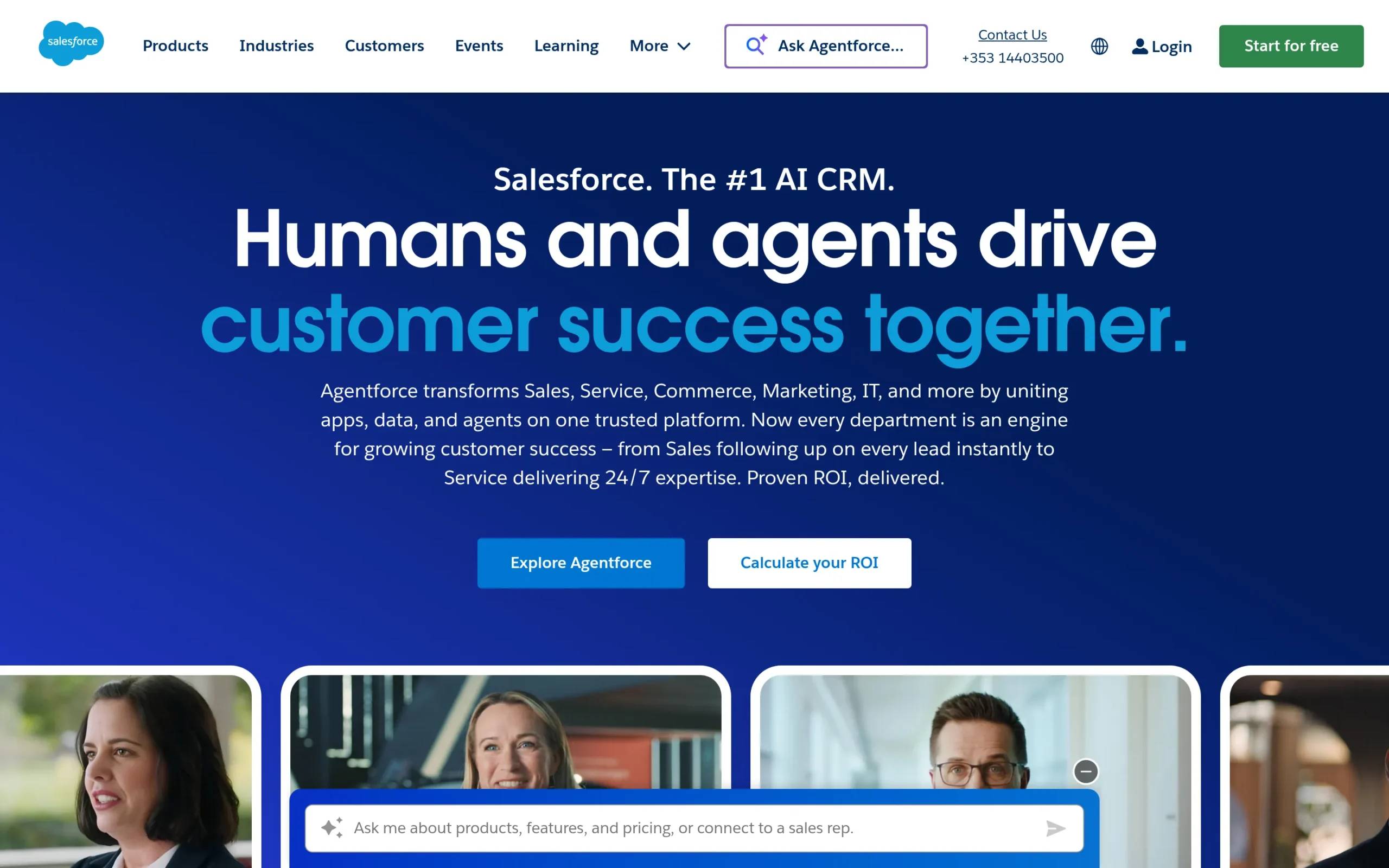
- Salesforce — Sales Cloud Professional at ~€75/user/month, the standard for enterprise pipeline management
- Salesloft — enterprise sequence and engagement platform, ~€100/user/month
- Clay — advanced enrichment and signal-based prospecting
- Make — visual automation platform for complex workflows between tools
Workflow walkthrough:
Your RevOps team defines ICP criteria in Cognism, which generates a daily feed of new target accounts and contacts meeting your firmographic filters. Contacts are enriched in Clay with intent signals, recent funding news, and hiring data. High-priority contacts are routed into LGM for LinkedIn-first outreach by the relevant territory rep. Parallel email sequences run through Salesloft for accounts in the same segment. All activity syncs to Salesforce via Make automations, where managers see territory pipeline, forecast by stage, and sequence performance broken down by rep. Compliance is handled at the Cognism layer — consent records stay attached to every contact.
Monthly cost breakdown:
- LGM Ultimate x5 identities: €900/month
- Cognism: ~€1,200/month
- Salesforce x10 seats: ~€750/month
- Salesloft x5 seats: ~€500/month
- Clay Pro: ~€299/month
- Make Business: ~€29/month
- Total: ~€3,678/month (representative 10-15 person team)
At this scale, the ROI conversation is about booked meetings per identity and pipeline contribution per dollar of tooling spend — metrics that LGM’s analytics dashboard surfaces natively.
Sales Tech Stack Example 4 — The Agency Stack
Team size: 1-5 people, managing multiple clients Monthly cost: ~€600/month Best for: Lead gen agencies, sales-as-a-service providers, consultants running outbound for clients
Agencies have a unique challenge: they need to run outbound for multiple clients simultaneously, from different identities, without mixing up data or signals. The agency stack is built around LGM’s multi-identity model, which makes this operationally clean.
Tools:
- La Growth Machine — multiple LGM identities (one per client), Pro at €120/month per identity — client billing covers the cost
- Apollo — shared prospecting database across clients, Professional plan
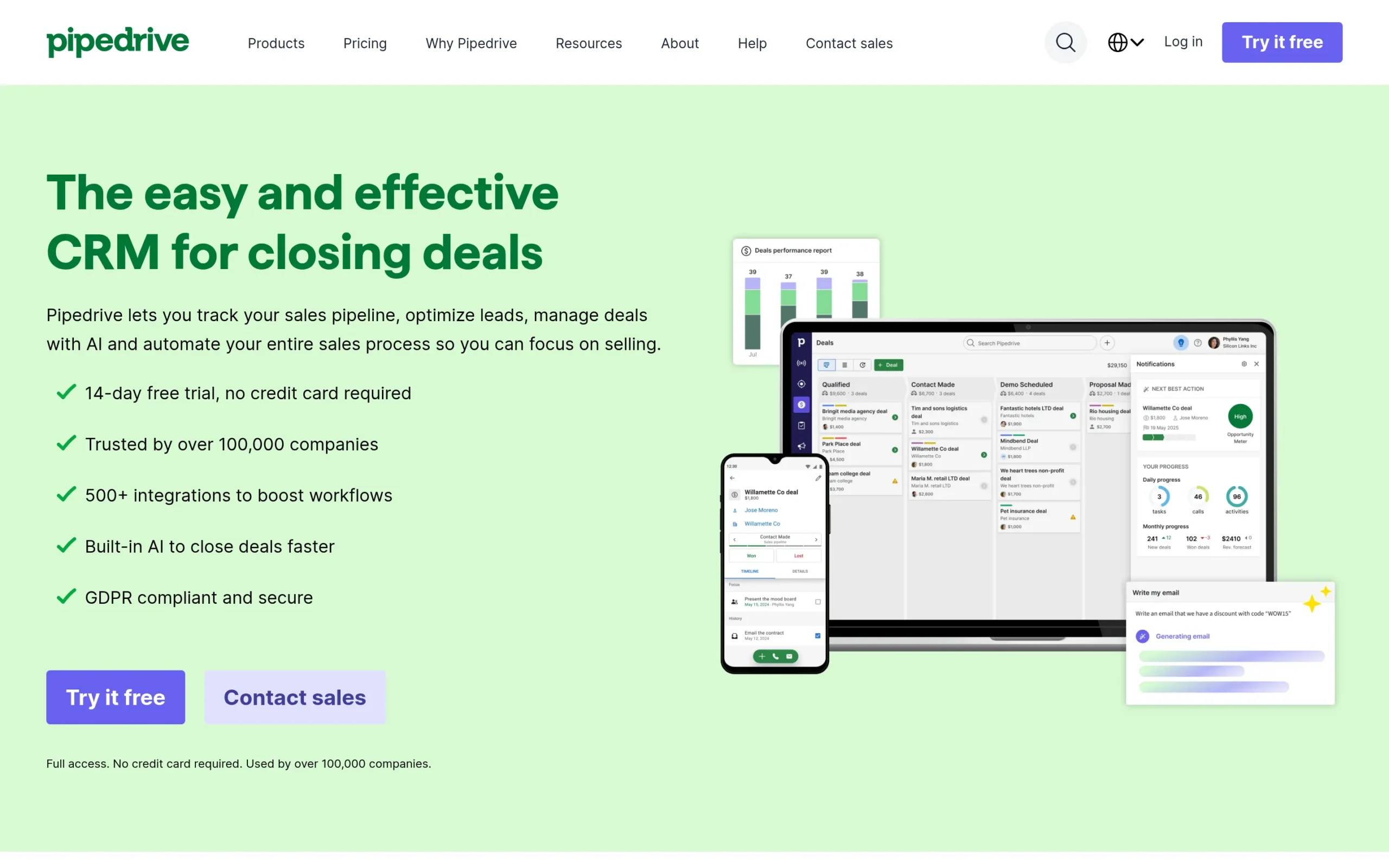
- Pipedrive — one Pipedrive workspace per client, or a single multi-pipeline setup, starting at ~€15/user/month
- Zapier — automation glue connecting Apollo exports, LGM triggers, and Pipedrive deal creation
Why LGM’s identity model works for agencies:
Each LGM identity is tied to a specific LinkedIn account and email domain. When you manage outbound for three clients, you run three separate identities in LGM — Client A’s SDR account, Client B’s founder account, Client C’s VP of Sales account. Sequences, contacts, and analytics are completely isolated. You can report to each client on their own pipeline without any data bleeding across accounts. This is fundamentally different from shared-seat tools where client data lives in the same pool.
The agency stack also gives you a clean white-label workflow: Apollo for prospect sourcing, LGM for outreach under the client’s identity, Pipedrive for tracking client deals, and Zapier for automating the handoff from reply to deal creation.
Monthly cost breakdown:
- LGM Pro x3 client identities: €360/month
- Apollo Professional (shared): ~€99/month
- Pipedrive Essential x3 clients: ~€45/month
- Zapier Starter: ~€20/month
- Total: ~€524/month (3 active clients — scales linearly with new clients)
Tools Worth Knowing by Category
Data and Enrichment
Apollo — One of the most accessible B2B databases, with 275M+ contacts and strong filtering by role, industry, headcount, and technology stack. Built-in sequence capabilities make it a versatile Layer 1 and Layer 2 tool for smaller teams.
Cognism — Premium European B2B data with GDPR compliance built in. Phone-verified mobile numbers and strong coverage in EMEA make it the go-to for enterprise teams selling into regulated markets.
Clay — Enrichment automation platform that aggregates data from 50+ sources. Used for waterfall enrichment (try Source A, fall back to Source B), AI-powered personalization research, and signal-based prospecting. Increasingly popular as a core part of modern outbound stacks.
Kaspr — Chrome extension for real-time contact data from LinkedIn. Strong for individual contributors doing manual prospecting alongside automated sequences.
Lusha — Direct dial and email data with strong North American coverage. Good alternative or complement to Kaspr for teams where phone prospecting is part of the mix.
Outreach and Engagement
La Growth Machine — Multichannel outreach platform purpose-built for B2B teams. Combines LinkedIn outreach, email sequences, and voice messages under one identity-based model. Strong fit for teams that want to personalize at scale without sacrificing deliverability. Featured in all four stack examples above.
Salesloft — Enterprise sales engagement platform with deep Salesforce integration, robust analytics, and conversation intelligence. Best fit for teams of 20+ with dedicated RevOps.
Outreach — Direct Salesloft competitor with strong sequence automation and deal inspection features. Common in North American enterprise sales teams.
CRM
HubSpot — Best starting CRM for most teams under 50 people. Free tier is genuinely useful, paid tiers add automation, reporting, and AI features. Strong integration ecosystem.
Salesforce — The enterprise standard. Infinitely customizable, requires dedicated admin resources to run well. Justified at 15+ person sales teams with complex pipeline models.
Pipedrive — Sales-first CRM with a clean pipeline view and fast onboarding. Best fit for agencies and smaller teams that want deal management without CRM overhead.
Automation
Zapier — Most widely used automation platform. Point-and-click workflow builder connects 6,000+ apps. Right choice for teams that need basic automation without technical resources.
Make — More powerful than Zapier for complex, multi-step workflows. Visual builder, better at handling large data volumes and conditional logic. Standard for enterprise RevOps teams.
FAQ
What tools are in a typical sales tech stack?
A typical B2B sales tech stack in 2026 includes a contact data source (Apollo, Cognism, or Kaspr), a multichannel outreach platform (La Growth Machine, Salesloft, or Outreach), a CRM (HubSpot, Salesforce, or Pipedrive), and an automation layer (Zapier or Make). The exact combination depends on team size and sales motion, but those four categories cover the core needs for most teams.
How much should a sales tech stack cost?
For a 1-3 person team, a functional sales tech stack costs €100-€200/month. A 5-15 person team should budget €500-€1,500/month depending on data volume and enrichment needs. Enterprise teams with 15+ reps typically spend €2,000-€5,000/month on tooling. In each case, the right benchmark is cost per booked meeting, not total spend.
What is the minimum viable sales stack?
The minimum viable sales stack is three tools: a contact data source (even a free Apollo plan), a multichannel outreach platform (LGM Basic at €60/month per identity), and a free CRM (HubSpot free). You can build and run this stack for under €100/month and generate qualified meetings from day one.
How do I choose between HubSpot and Salesforce?
Choose HubSpot if your team has fewer than 20 salespeople, you want fast onboarding, or you do not have a dedicated RevOps or Salesforce admin. Choose Salesforce if you have complex deal structures, multiple teams needing custom pipeline views, or enterprise reporting requirements. Salesforce has more power but requires significantly more setup and ongoing maintenance. Most teams under €2M ARR are better served by HubSpot.
What is the best outreach tool for a B2B sales team?
La Growth Machine is the best outreach tool for most B2B sales teams in 2026. It combines LinkedIn, email, and voice in a single multichannel sequence, uses real identities to protect deliverability, and gives you per-identity analytics that make it easy to scale what works. For enterprise teams already deep in Salesforce, Salesloft or Outreach may fit better because of their native CRM integration depth — but for teams that want to run outbound without hiring a dedicated ops person, LGM is the strongest option.
Build the Stack That Builds Pipeline
The best sales tech stack is the one your team actually uses. Start with the 3-layer model — data, outreach, CRM — and add tools only when a clear bottleneck appears. Every stack in this guide puts La Growth Machine at the outreach layer because it is the most flexible, identity-safe multichannel platform available for B2B teams at any size.
If you are ready to add a proper outreach layer to your stack, start a 14-day free trial of La Growth Machine and see how quickly you can get your first sequences live.