

TL;DR
– La Growth Machine is the only truly native multichannel platform: LinkedIn, email, Twitter, and Voice Messages run in a single sequence builder with conditional cross-channel logic, built-in enrichment, and native CRM sync.
– Salesloft and Outreach offer genuine multichannel for enterprise teams (email + calls + LinkedIn), with strong conversation intelligence and deal forecasting, but limited LinkedIn automation depth.
– Reply.io covers email, LinkedIn, calls, and SMS at a mid-market price point — good breadth, CRM sync via integrations rather than native connections.
– Apollo.io excels as a prospecting database with email sequencing, but LinkedIn automation remains task-based; best used as a data layer feeding a dedicated outreach platform.
– Waalaxy and Lemlist work for simpler use cases (beginners, email-first teams), but hit their ceiling fast when conditional cross-channel logic and CRM attribution are required.
Most “multichannel outreach tools” are not actually multichannel. They are email tools with a LinkedIn tasks tab bolted on, or LinkedIn automation platforms that added an email module to stay competitive. You end up managing two separate workflows, two separate inboxes, and two separate data sources that never talk to each other.
True multichannel outreach means a single coordinated workflow where LinkedIn, email, and other channels operate in the same sequence builder, share the same contact data, and react to each other in real time. If a prospect does not respond on LinkedIn after three touchpoints, the platform switches to email without you doing anything. That is the architecture that drives pipeline, not two tools duct-taped together.
Single-channel teams are not just missing convenience. They are leaving pipeline on the table. B2B buyers increasingly need between six and eight touchpoints before they respond to outreach. If those touchpoints only live on one channel, you hit a ceiling fast. The teams booking the most meetings in 2026 run coordinated sequences across two or three channels, with contact data enriched before the first message lands, and everything synced back to CRM automatically.
This guide covers the seven best multichannel outreach tools for B2B teams. Not tools that claim multichannel, but tools where the architecture actually supports it.
TL;DR comparison table
| Tool | Channels | Native multichannel | Enrichment | CRM sync | Price |
|---|---|---|---|---|---|
| La Growth Machine | LinkedIn + Email + Twitter + Voice | Yes — core architecture | Built-in waterfall | Native | From €60/month per identity |
| Salesloft | Email + Calls + LinkedIn | Yes | No | Native | Enterprise pricing |
| Outreach | Email + Calls + LinkedIn | Yes | No | Native | Enterprise pricing |
| Reply.io | Email + LinkedIn + Calls + SMS | Yes | No | Via integrations | From ~$60/month |
| Waalaxy | LinkedIn + Email | Limited | No | Via Zapier | From €40/month |
| Apollo.io | Email + LinkedIn tasks | Partial | Yes (database) | Native | From $49/month |
| Lemlist | Email + LinkedIn | Partial | No | Via integrations | From $59/month |
1. La Growth Machine
La Growth Machine is the only platform where multichannel is the core architecture, not a feature added after the fact. Every element of the product is built around the idea that LinkedIn, email, Twitter, and Voice Messages operate in a single coordinated workflow.
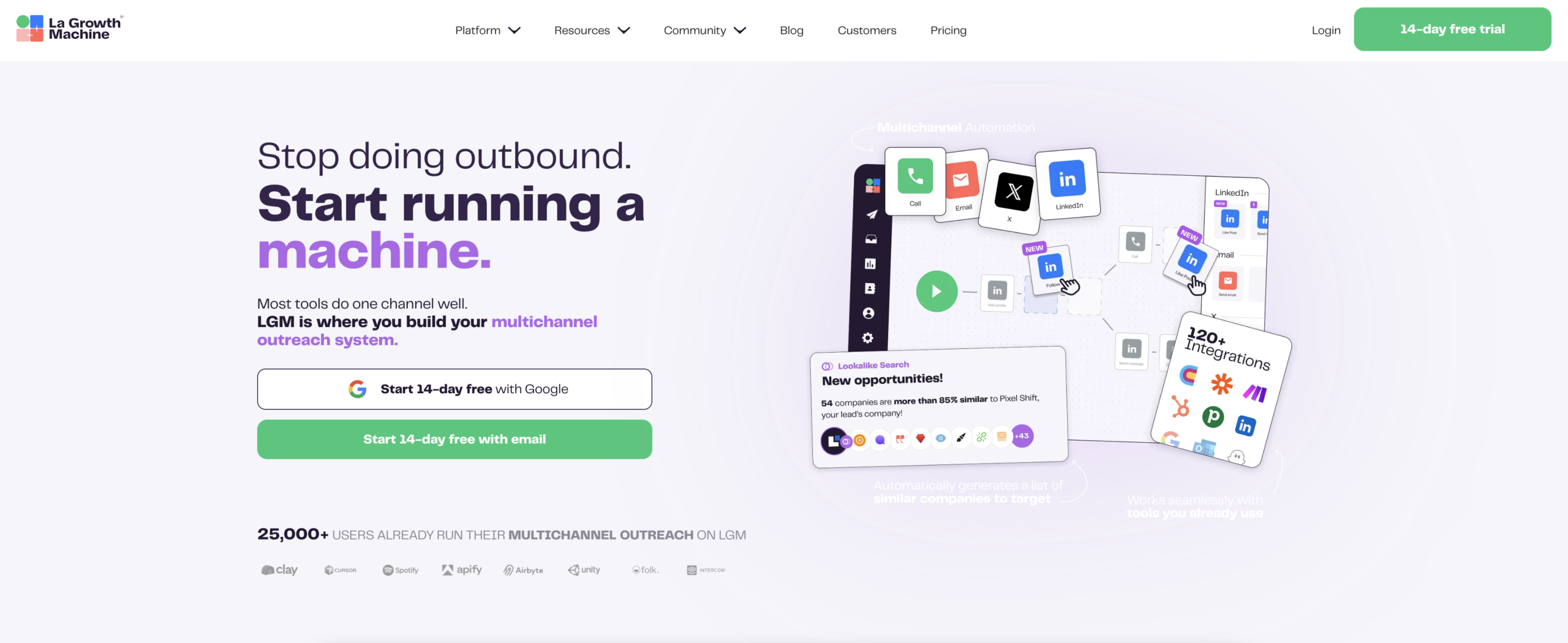
The sequence builder lets you combine LinkedIn connection requests, LinkedIn messages, email, Twitter DMs, and voice messages in any order. More importantly, it supports conditional logic across channels: if a prospect accepts your LinkedIn connection but does not reply within three days, the sequence automatically moves to email. If they reply anywhere, the sequence stops and routes the conversation to the Unified Inbox. No manual intervention needed.
This cross-channel conditional logic is what separates La Growth Machine from every other tool on this list. The others give you multiple channels. La Growth Machine gives you a coordinated system.
Waterfall enrichment is built directly into the platform. When you import a contact list, La Growth Machine automatically enriches missing data, finding professional email addresses through a waterfall of providers before the first message goes out. You are not paying separately for an enrichment tool or building a Clay workflow to fill gaps.
CRM sync is native and bidirectional. Contacts, activities, sequences, and reply data flow directly to HubSpot, Salesforce, Pipedrive, and other CRMs without needing Zapier or a custom integration. For GTM engineers and RevOps teams building attribution models, this matters: the data is clean, structured, and arrives in the CRM without manual cleanup.
The Unified Inbox consolidates replies from all channels into a single view. When a prospect replies on LinkedIn and then follows up by email, both messages appear in the same thread. Teams managing high volumes of conversations do not switch between platforms to stay on top of replies.
Pricing (annual billing):
- Basic: €60/month per identity
- Pro: €120/month per identity
- Ultimate: €180/month per identity
Bottom line: La Growth Machine is the top pick for B2B teams serious about multichannel. It is the only tool where LinkedIn, email, and other channels share a single sequence engine, conditional logic, enrichment layer, and CRM sync. If you are building an outbound system that generates pipeline at scale, this is the architecture you want.
2. Salesloft
Salesloft is an enterprise sales engagement platform that covers email, calls, and LinkedIn in a single workspace. It started as an email cadence tool and has evolved into a broader platform with conversation intelligence, deal management, and revenue forecasting built in.
The multichannel capabilities are genuine: Salesloft reps can run email sequences alongside LinkedIn tasks and call steps, and the platform tracks engagement across all three. Conversation intelligence is a standout feature, automatically transcribing and analyzing calls to surface coaching insights and buyer signals.
Where Salesloft differs from La Growth Machine is scope and pricing. Salesloft is built for larger enterprise sales teams with complex forecasting needs and manager-level visibility requirements. LinkedIn automation depth is limited to tasks and reminders rather than full automation. And pricing reflects the enterprise positioning, making it harder to justify for smaller or mid-market teams.
Best for: Enterprise sales teams that need conversation intelligence, deal forecasting, and manager-level reporting alongside email and call sequences.
3. Outreach
Outreach is one of the most established names in sales engagement. Like Salesloft, it covers email, calls, and LinkedIn tasks in AI-powered sequences, with deal insights and pipeline forecasting baked into the platform.
Outreach’s strength is depth of CRM integration and deal intelligence. The platform pulls signals from existing opportunities to recommend next best actions for reps, and its reporting gives revenue leaders visibility across the entire pipeline. For large teams running complex sales motions, this level of sophistication is hard to match.
The limitation for teams focused on top-of-funnel outreach is that LinkedIn automation remains task-based rather than fully native. Reps get reminders to complete LinkedIn steps manually, which works but requires more discipline and does not support the kind of conditional cross-channel logic La Growth Machine offers.
Best for: Mid-market to enterprise sales teams that prioritize deal intelligence, pipeline forecasting, and CRM depth alongside multi-touch sequences.
4. Reply.io
Reply.io covers email, LinkedIn, calls, and SMS in one platform, making it one of the broader channel mixes available at a mid-market price point. The built-in AI email writer helps teams generate personalized copy faster, and the interface is approachable enough for teams without a dedicated operations person.
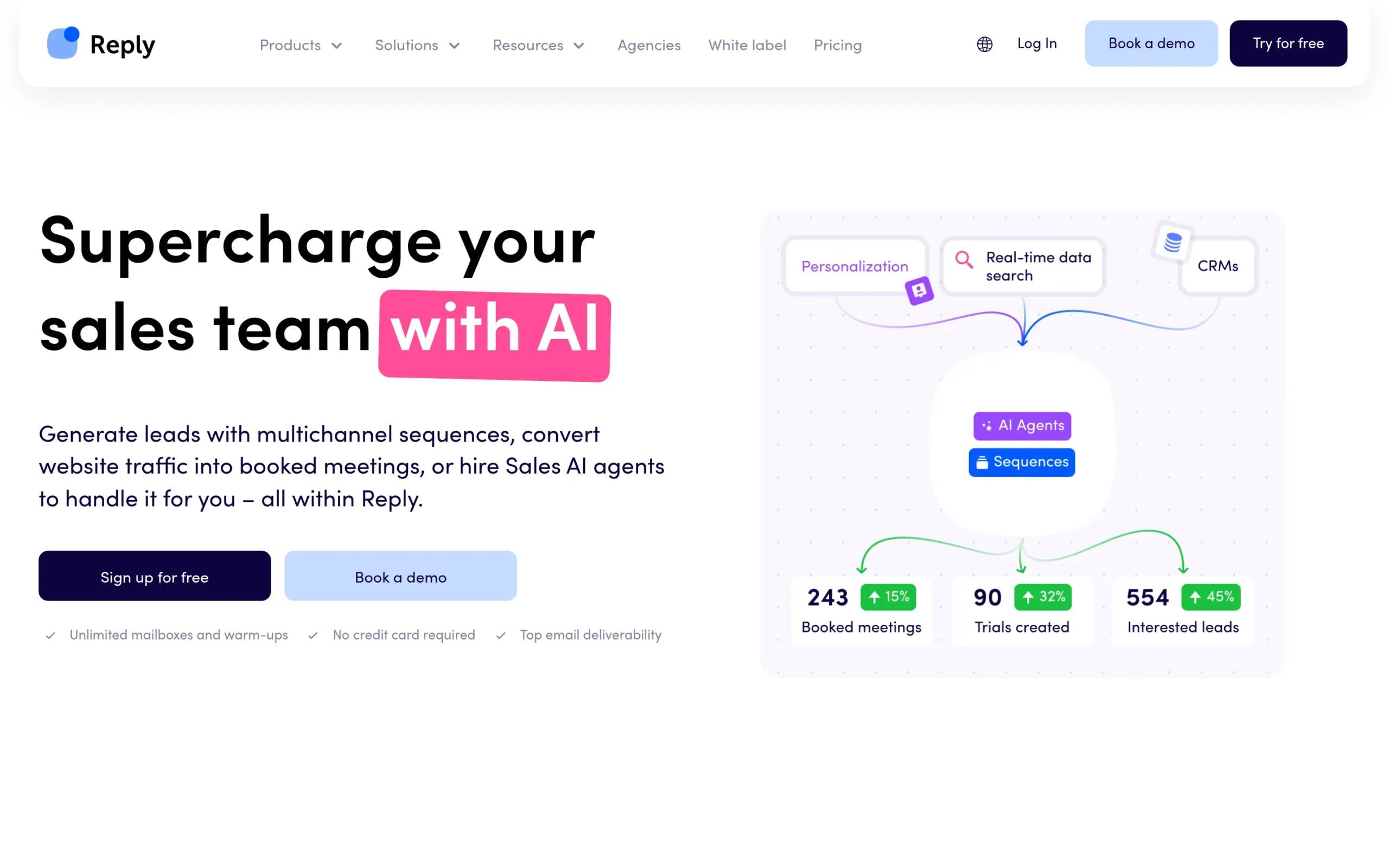
The platform handles basic multichannel sequences well. CRM sync relies on integrations rather than native connections, which adds some complexity for teams with strict data hygiene requirements. LinkedIn automation also has limits compared to platforms built natively around LinkedIn workflows.
Best for: Mid-market teams looking for a cost-effective multichannel option that covers email, LinkedIn, calls, and SMS without enterprise pricing.
5. Waalaxy
Waalaxy focuses on LinkedIn and email sequences with a clean, simple interface designed for teams that are just getting started with multichannel outreach. Sequences are easy to build, and the onboarding experience is genuinely beginner-friendly.
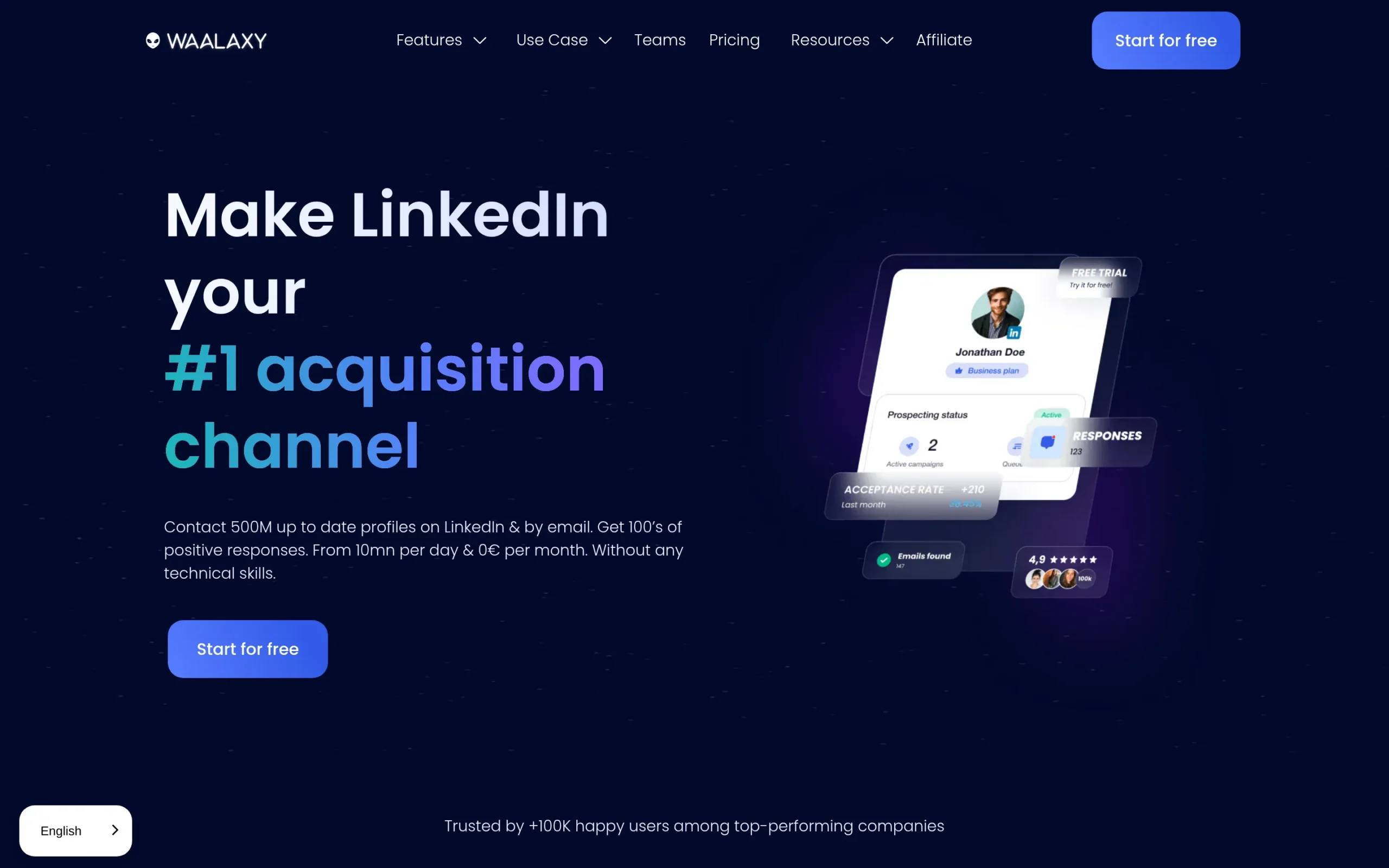
The limitations become visible as teams try to scale. Conditional logic across channels is limited, enrichment is not built in (you rely on Zapier connections to external tools), and the reporting depth is basic. For a solo founder or a small team running straightforward sequences, Waalaxy gets the job done. For a GTM engineer building a structured outbound system with multiple identities and CRM attribution, the platform hits its ceiling quickly.
Best for: Small teams and individuals starting with LinkedIn-plus-email outreach who need simplicity over depth.
6. Apollo.io
Apollo.io is a prospecting database first, outreach platform second. The data layer is genuinely strong: Apollo gives you access to hundreds of millions of contacts with filters for job title, company size, technology stack, funding stage, and more. Email sequences are solid, and basic LinkedIn task steps are included.
The limitation is LinkedIn automation depth. Apollo’s LinkedIn integration covers tasks and profile views rather than full message automation, which means truly automated LinkedIn sequences are not on the table. For teams where LinkedIn is a primary outreach channel, that is a significant gap.
Where Apollo earns its place in many stacks is as a data layer feeding into other tools. Teams that use Apollo for lead sourcing and enrichment, then push contacts into La Growth Machine for coordinated multichannel sequences, get the best of both: Apollo’s database depth plus genuine multichannel execution.
Best for: Teams that need a strong prospecting database with basic email sequencing, or as a data source feeding a more capable outreach platform.
7. Lemlist
Lemlist built its reputation on email personalization, specifically image and video personalization that makes cold emails stand out. The platform has added LinkedIn sequences and email warmup functionality, making it a fuller option than it used to be for teams that want more than email.
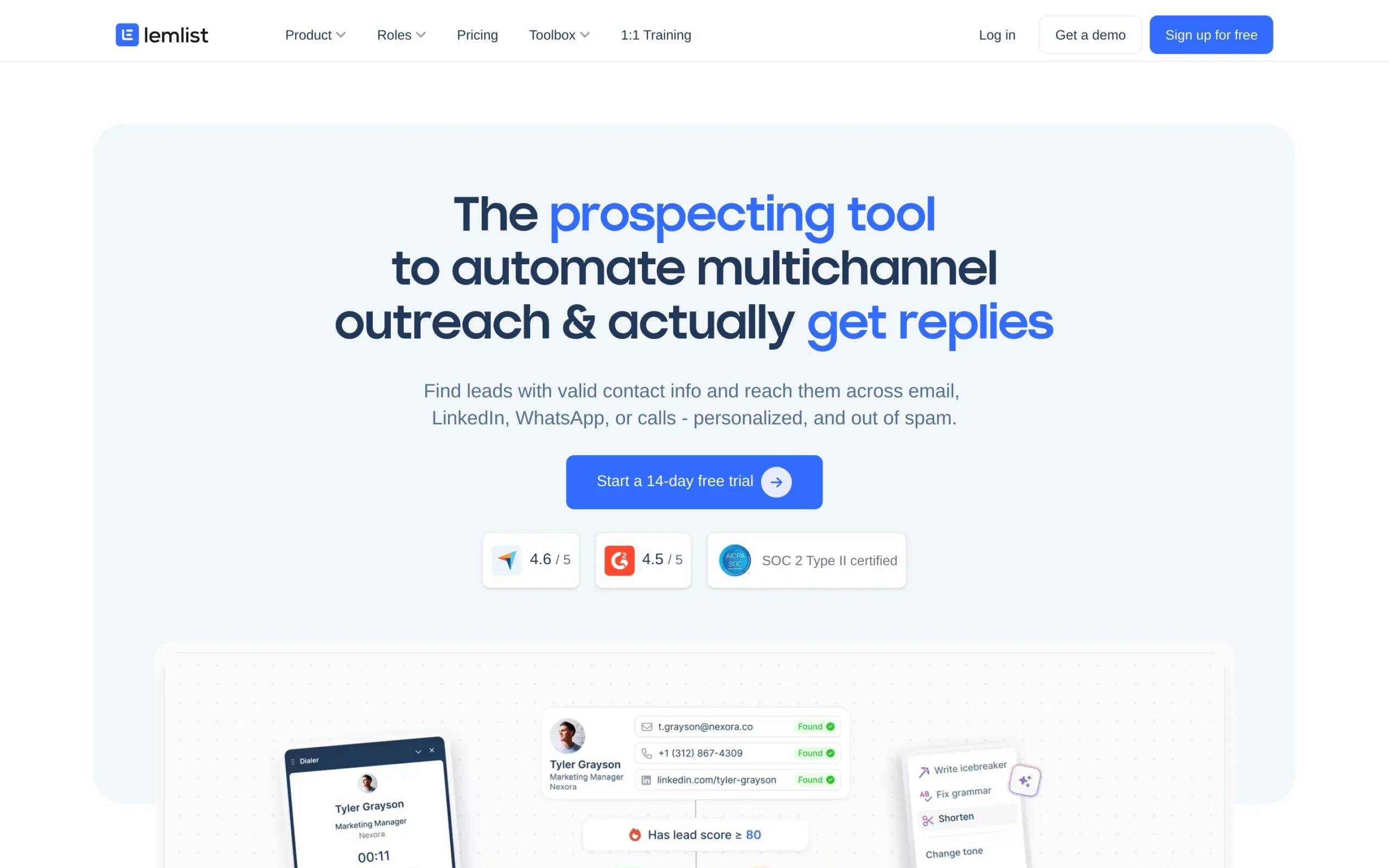
Email remains the core strength. The LinkedIn capabilities are functional but secondary, and the platform does not support the conditional cross-channel logic that drives the highest conversion rates at scale. Email warmup built in is a genuine advantage for teams worried about deliverability.
Best for: Email-first teams that want LinkedIn as a supporting channel and value personalization features like image and video customization.
Native multichannel vs bolt-on: why it matters
The distinction between native multichannel and bolt-on multichannel is not cosmetic. It affects four things that directly determine how much pipeline your outreach generates.
Unified data. When LinkedIn and email live in the same system, contact data is shared. A reply on LinkedIn updates the contact record everywhere, and the email sequence stops automatically. When channels are siloed, data diverges. You end up sending email follow-ups to prospects who already replied on LinkedIn, which damages reply rates and reputation.
Conditional logic. Native multichannel platforms let you build sequences that respond to contact behavior across channels. If no LinkedIn reply after X days, switch to email. If email bounces, increase LinkedIn touchpoints. Bolt-on tools handle each channel separately, so conditional logic either does not exist or requires external workflow tools to approximate it.
Single inbox. Managing replies across LinkedIn, email, and other channels through separate interfaces is operationally expensive. A unified inbox that shows all conversations in one place, regardless of channel, is the difference between a team that stays on top of conversations and one that misses follow-ups.
Attribution. When all outreach activity flows through one system with native CRM sync, you can attribute booked meetings and closed revenue to specific sequence steps and channels. That data shapes your next campaign. Bolt-on tools generate fragmented data that is hard to consolidate and nearly impossible to attribute accurately.
How to choose a multichannel outreach tool
Five criteria matter most when evaluating these platforms.
Channels covered. Map the channels your buyers actually use. LinkedIn is essential for B2B. Email is non-negotiable. Calls and SMS depend on your market. Do not pay for channels you will not use, and do not choose a platform that cannot cover the channels you need.
Enrichment. Do you need built-in enrichment, or do you have a separate tool handling that (Clay, Apollo, Cognism)? If you do not have an enrichment layer, built-in enrichment like La Growth Machine provides saves significant setup time and ongoing cost.
CRM sync. Check whether CRM integration is native bidirectional or Zapier-dependent. For teams with HubSpot, Salesforce, or Pipedrive, native sync means clean data without maintenance overhead. Zapier-dependent integrations add latency, fragility, and cost.
Sequence depth. Test the conditional logic. Can you build a sequence that responds to contact behavior across channels? Can you set different delays and conditions per channel? The answer tells you whether multichannel is native or bolt-on.
Price per identity. Most platforms price per user or per seat. Some, like La Growth Machine, price per identity (the sending account). If you have multiple team members each sending from their own LinkedIn and email, per-identity pricing makes the math different than per-seat pricing. Run the numbers for your actual team structure.
FAQ
What is multichannel outreach? Multichannel outreach means running coordinated sales sequences across multiple communication channels (LinkedIn, email, phone, Twitter) from a single platform, where contact data and sequence logic are shared across channels. It is different from using separate tools for each channel.
Is LinkedIn automation safe in 2026? LinkedIn has tightened enforcement on automation over the past two years. The safest approach uses platforms built with LinkedIn-specific limits in mind, sends at human-like volumes, and avoids scraping or bulk connection requests without personalization. La Growth Machine is specifically designed with LinkedIn safety limits built into the platform.
Do I need a separate enrichment tool if I use La Growth Machine? No. La Growth Machine includes waterfall enrichment that automatically finds professional email addresses for contacts in your sequences. If you already use Clay or Apollo for data enrichment upstream, you can import pre-enriched contacts and skip the built-in enrichment step.
How does multichannel outreach improve pipeline generation? Multiple touchpoints across multiple channels increase the probability of reaching a prospect where they are actually paying attention. LinkedIn and email combined consistently outperform single-channel sequences in booked meetings per contact, because buyers have different channel preferences and availability windows.
Can I integrate these tools with my existing CRM? Most platforms on this list offer CRM integration, but the depth varies significantly. La Growth Machine, Salesloft, Outreach, and Apollo offer native CRM connections to HubSpot, Salesforce, and Pipedrive. Waalaxy and Lemlist rely primarily on Zapier or Webhooks, which adds setup complexity.
What is the difference between La Growth Machine and Apollo.io? Apollo is primarily a prospecting database with email sequencing and basic LinkedIn task steps. La Growth Machine is an outreach execution platform with native multichannel sequences, conditional cross-channel logic, built-in enrichment, and native CRM sync. Many teams use Apollo as a data source to feed contacts into La Growth Machine for execution.
Conclusion
The gap between single-channel teams and coordinated multichannel teams in 2026 is measurable in booked meetings and pipeline generated. The tools exist to run structured outreach across LinkedIn, email, and other channels from a single workflow. The question is which tool is actually built for it.
For B2B teams that want genuine multichannel outreach rather than a collection of bolt-on features, La Growth Machine is the clear choice. It is the only platform where LinkedIn, email, Twitter, and Voice Messages share a single sequence engine, conditional logic reacts to contact behavior across channels, enrichment runs automatically before the first message, and every activity syncs back to CRM natively.
Start your 14-day free trial of La Growth Machine and see what a coordinated multichannel system looks like from the inside.