

TL;DR
– La Growth Machine is the top pick for B2B outbound in 2026: waterfall enrichment, multichannel sequences across LinkedIn, email, and Twitter, and native CRM sync in one platform.
– Apollo.io and Clay are the strongest data layer tools for list building and AI-powered enrichment, best used upstream of your outreach platform.
– Cognism is the right choice for GDPR-compliant B2B data in European markets, with phone-verified numbers and intent signals from Bombora.
– LinkedIn Sales Navigator, Lusha, and HubSpot Marketing Hub each cover a specific part of the stack: LinkedIn search, quick contact lookup, and inbound lead capture.
– Salesforce and Zapier complete the CRM and automation layers, connecting data and outreach activity into a clean, attributable pipeline view.
Lead generation in 2026 covers a lot more ground than it did five years ago. It is not just about finding a list of names and sending cold emails. A modern B2B lead gen motion spans four distinct layers: finding the right prospects, enriching their contact data, reaching them across multiple channels, and converting that interest into booked meetings and pipeline.
The problem is that most teams try to stitch this together with five or six disconnected tools. One tool for prospecting, another for enrichment, a third for outreach, a fourth for CRM sync. The result is fragmented data, duplicated effort, and no clean attribution from activity to revenue.
The modern B2B lead gen stack is leaner. It connects a strong data layer to a structured outreach platform, with a CRM sitting at the center to capture pipeline and prove ROI. The tools in this list are the ones that actually make that stack work in 2026, whether you are a two-person Growth team or a 20-rep sales org.
TL;DR Comparison Table
| Tool | Category | Best For | Channels | Price |
|---|---|---|---|---|
| La Growth Machine | Outreach + enrichment | Multichannel outbound | LinkedIn, Email, Twitter | From €60/month per identity |
| Apollo.io | B2B database + sequencing | List building + email sequences | Email, phone | From $49/month |
| Clay | AI enrichment | Data enrichment + personalization | N/A (data layer) | From $149/month |
| Cognism | B2B data | GDPR-compliant EU data | Email, phone | Custom pricing |
| Lusha | Contact finder | Individual prospectors | Email, phone | From $29/month |
| LinkedIn Sales Navigator | LinkedIn data | LinkedIn-first teams | From $99/month | |
| HubSpot Marketing Hub | Inbound | Landing pages, forms, lead scoring | Web, email | From $45/month |
| Zapier | Automation | Lead routing between tools | N/A (connector) | From $19/month |
| Salesforce | CRM | Enterprise pipeline management | N/A (CRM) | From $25/month |
1. La Growth Machine
La Growth Machine is the top pick for B2B outbound in 2026 because it collapses two layers of the lead gen stack into one: enrichment and outreach. Instead of exporting a list from Apollo, cleaning it in a spreadsheet, importing it into an outreach tool, and then manually syncing replies back to your CRM, you handle the full outbound workflow from one platform.
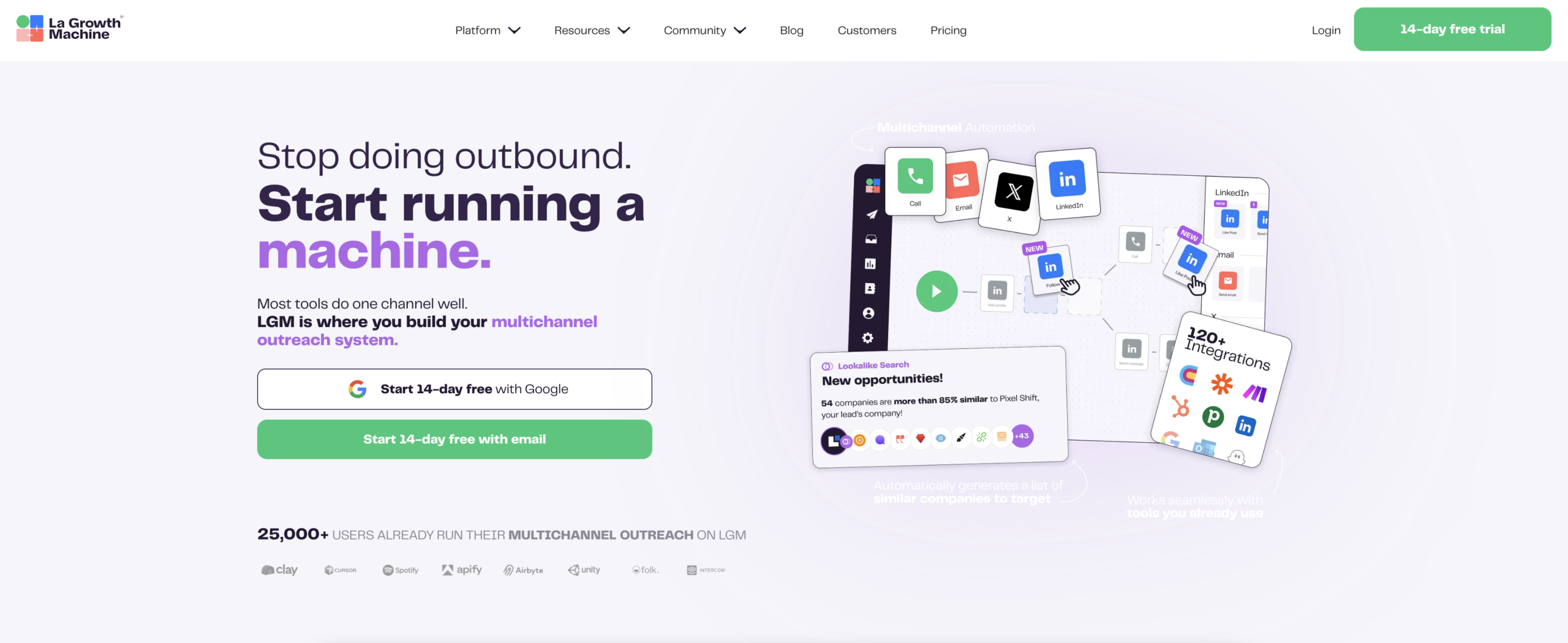
The waterfall enrichment engine automatically tries multiple data sources to find verified emails and phone numbers for each prospect. If the first source comes back empty, it cascades to the next until it finds a valid contact. That means higher deliverability and fewer bounces without any manual work on your end.
On the outreach side, La Growth Machine runs structured multichannel sequences across LinkedIn, email, and Twitter. You can write AI-powered sequences that adapt based on prospect behavior, use Voice Messages AI for LinkedIn, and trigger actions based on whether someone accepted a connection request, replied to a message, or clicked a link. Every action is tracked, and every reply lands in a Unified Inbox where reps manage conversations in context.
The CRM sync is native. Connect HubSpot, Salesforce, Pipedrive, or Zoho and all activity flows back automatically: sent messages, replies, meeting booked, stage updates. No Zapier zap required, no manual export. That clean data loop is what lets RevOps teams actually prove what outreach contributed to pipeline.
Pricing (annual billing):
- Basic: €60/month per identity
- Pro: €120/month per identity
- Ultimate: €180/month per identity
Best for: B2B teams that want enrichment and structured multichannel outreach in one tool, with native CRM sync and clean revenue attribution.
2. Apollo.io
Apollo.io is the go-to database for building outbound lists. Its B2B contact database covers 275 million+ contacts, and the filtering engine lets you slice by industry, job title, company size, funding stage, technology stack, and dozens of other criteria.
Beyond list building, Apollo includes a native sequencing engine for email outreach, AI-powered lead scoring, and intent signals that flag which accounts are actively researching solutions like yours. The intent data layer is particularly useful for timing outreach to accounts already in buying mode.
Apollo works best as the data and prospecting layer of your stack. Build your lists in Apollo, then route those contacts into La Growth Machine for multichannel outreach, keeping the richer engagement data and CRM sync in one place.
Best for: Teams that need a large, accurate B2B contact database with built-in email sequencing and intent data.
3. Clay
Clay is the most powerful data enrichment tool available in 2026. It connects to 50+ data sources simultaneously, running waterfall enrichment across providers like Apollo, Hunter, Clearbit, and LinkedIn to build the most complete prospect profile possible.
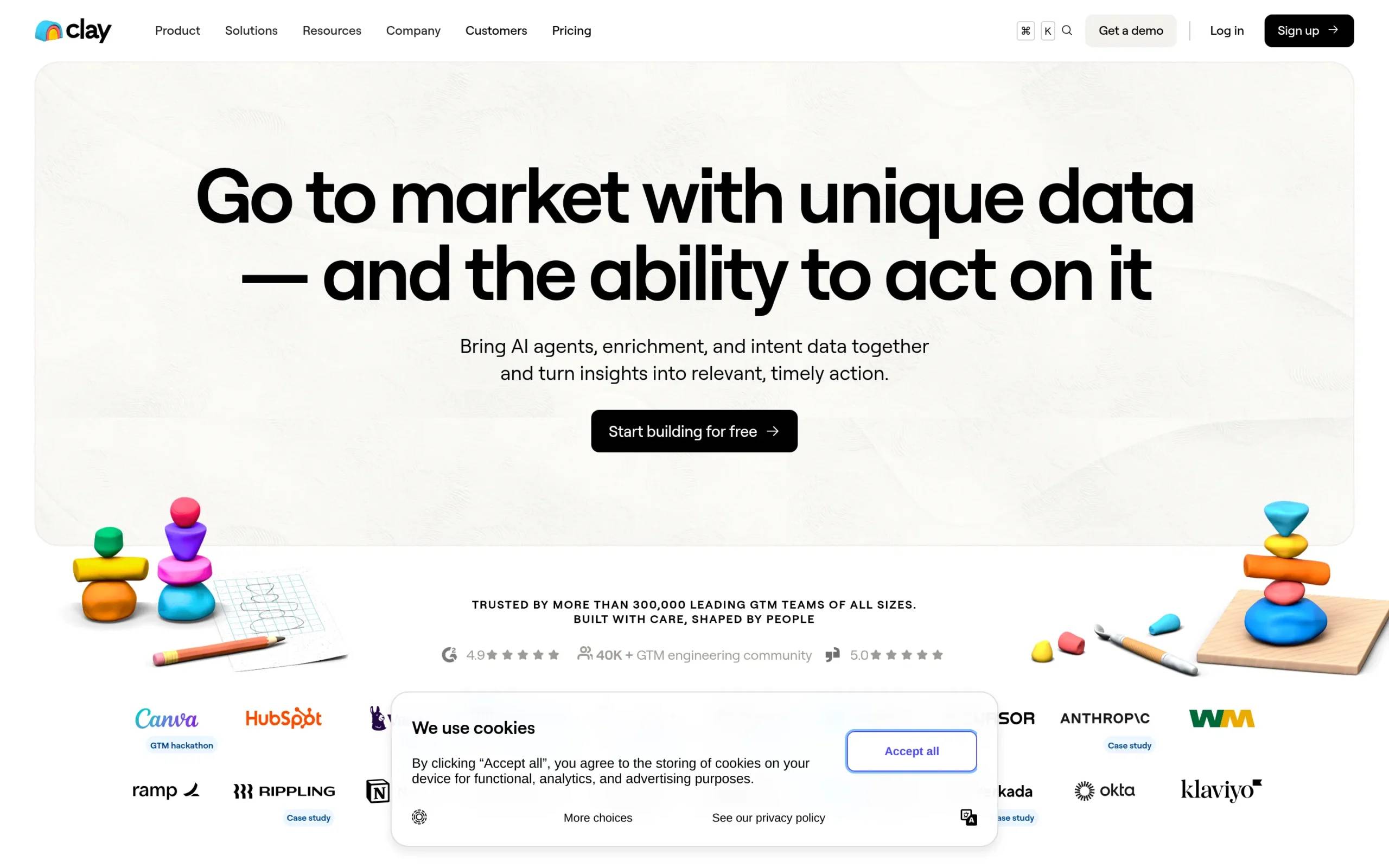
The Claygent feature is what separates Clay from basic enrichment tools. It deploys AI agents to research prospects autonomously, visiting company websites, LinkedIn profiles, and news sources to pull context that standard data providers do not carry. That context feeds into highly personalized outreach copy.
Clay is a data layer tool, not an outreach tool. You build and enrich your tables in Clay, then pipe the output into La Growth Machine or another outreach platform. Teams that need surgical personalization at scale, or that want to automate complex enrichment workflows, rely on Clay heavily.
Best for: RevOps and Growth engineers who want the most complete prospect data with AI-powered research and hyper-personalized messaging inputs.
4. Cognism
Cognism is the strongest choice for teams selling into European markets. Its database is built with GDPR compliance at the core, including phone-verified mobile numbers (Diamond Data) and verified business emails with documented consent layers.
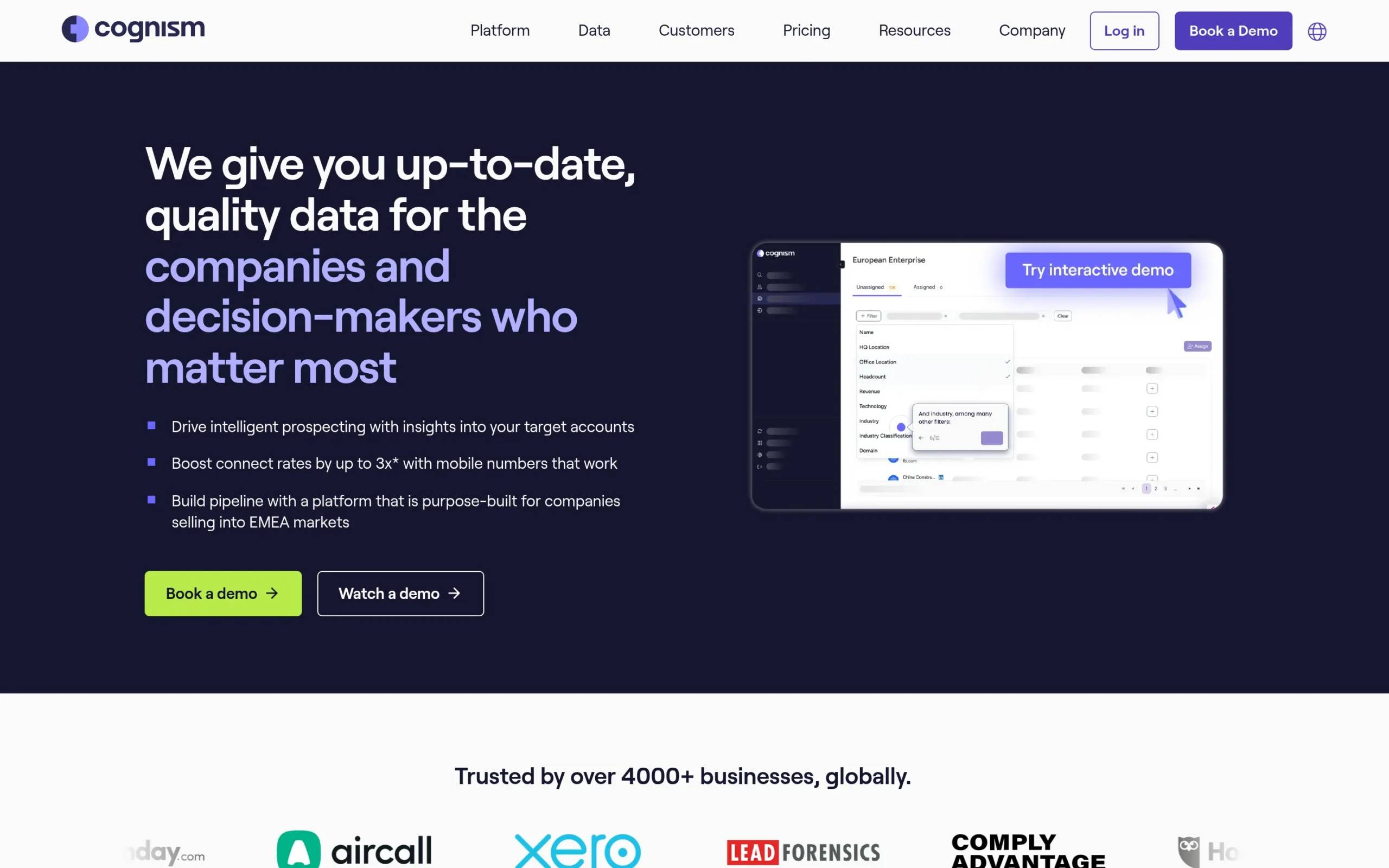
Where Apollo and Clay win on volume and flexibility, Cognism wins on data quality and compliance for regulated markets. The phone-verified numbers are genuinely useful for SDRs doing cold calling alongside email sequences. Cognism also integrates intent data from Bombora, which helps flag accounts showing active buying signals.
For teams in finance, SaaS, or business services with legal and compliance requirements around prospect data, Cognism is the right call. Pair it with La Growth Machine for outreach and you have a compliant, high-quality outbound motion.
Best for: B2B teams targeting European markets that need GDPR-compliant data and phone-verified contact details.
5. Lusha
Lusha is a contact finder built for speed. The Chrome extension sits inside LinkedIn and surfaces verified emails and direct dial numbers without leaving the prospect’s profile. No complex setup, no enrichment workflow, just instant contact data when you need it.
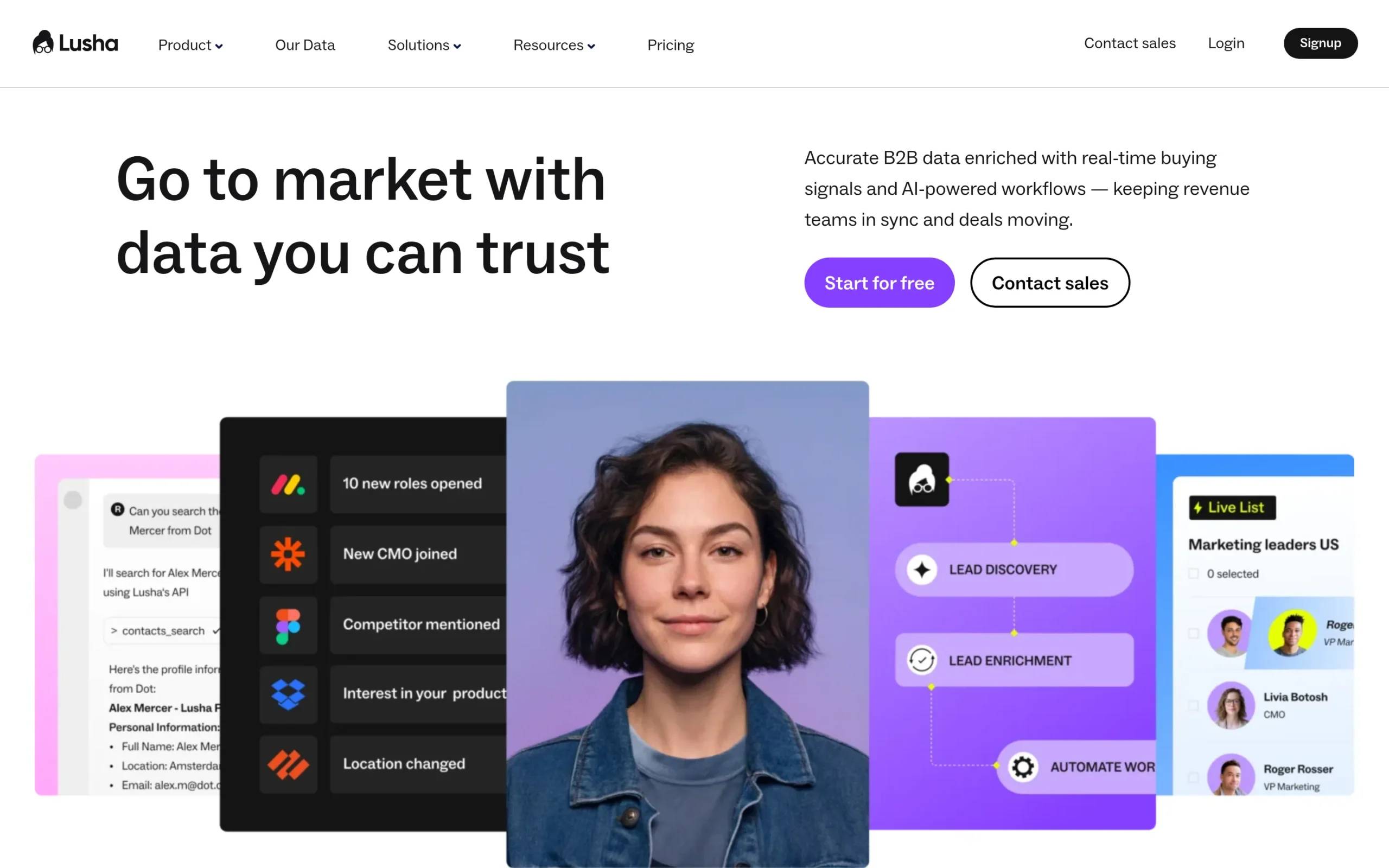
Lusha works well for individual Sales reps who do a lot of manual prospecting, researching LinkedIn profiles one by one and building small, highly-targeted lists. It is not designed for bulk enrichment at scale, but for focused prospecting it removes a significant amount of friction.
Lusha also integrates with Salesforce and HubSpot, so contact data can sync directly to your CRM without a copy-paste step. For small teams or individual contributors who need quick, accurate contact data, it covers the basics well.
Best for: Individual Sales reps doing targeted LinkedIn prospecting who need fast access to verified emails and direct dials.
6. LinkedIn Sales Navigator
LinkedIn Sales Navigator is not a prospecting database in the Apollo sense. It is a LinkedIn-native search layer that gives you access to real-time LinkedIn data: account changes, job moves, shared connections, recent posts, and advanced company filters that the standard LinkedIn search cannot match.

Sales Navigator is essential for any team running LinkedIn outreach at scale. The InMail credits let you reach prospects outside your network, and the intent signals (who is following your company, who has been active recently) help prioritize outreach timing.
The real value comes when you connect Sales Navigator to La Growth Machine. La Growth Machine can import Sales Navigator searches directly, pulling those filtered LinkedIn leads into outreach sequences without any manual export step. That connection turns Sales Navigator from a search tool into a live feed for your outreach pipeline.
Best for: LinkedIn-first outbound teams that need advanced search, real-time account data, and InMail access at scale.
7. HubSpot Marketing Hub
HubSpot Marketing Hub is the standard platform for inbound lead generation. Landing pages, forms, pop-ups, CTAs, email nurture sequences, lead scoring, and a built-in CRM all live in one place.
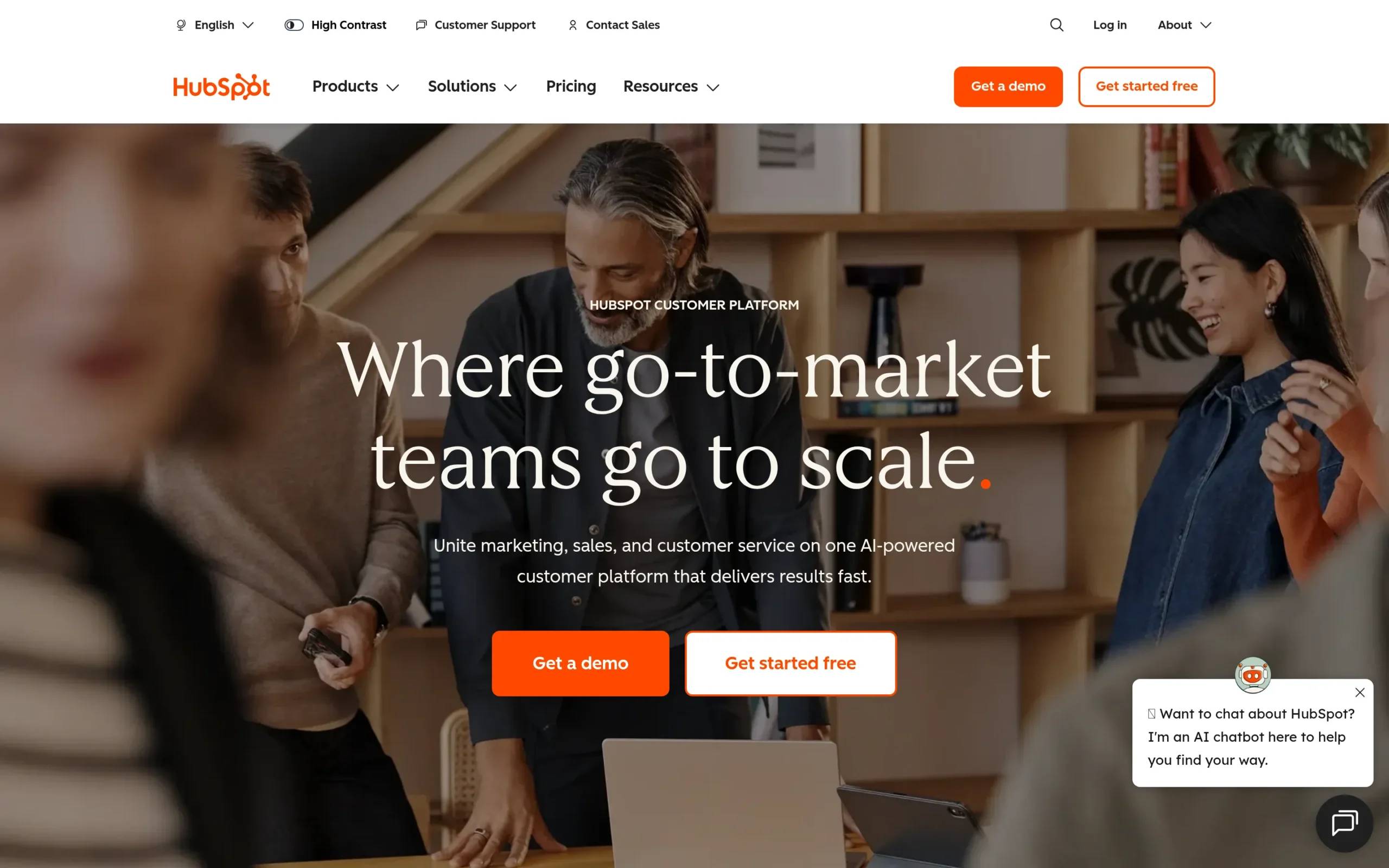
HubSpot works well as the inbound layer that complements an outbound motion. Prospects that come in through organic content or paid campaigns land in HubSpot, get scored based on behavior and fit, and either enter a nurture sequence or route directly to a rep. The lead scoring engine uses both demographic data (company size, industry) and behavioral signals (pages visited, emails opened, forms submitted).
For teams running both inbound and outbound, HubSpot is the natural CRM home. La Growth Machine connects natively to HubSpot, so outbound conversations and inbound form fills both flow into the same deal pipeline for unified attribution.
Best for: Teams running inbound content marketing that need landing pages, lead scoring, and a CRM in one platform.
8. Zapier
Zapier is the plumbing layer of most B2B lead gen stacks. It connects the tools that do not have native integrations, automating lead routing from paid ads, web forms, and content downloads into your CRM and outreach sequences.
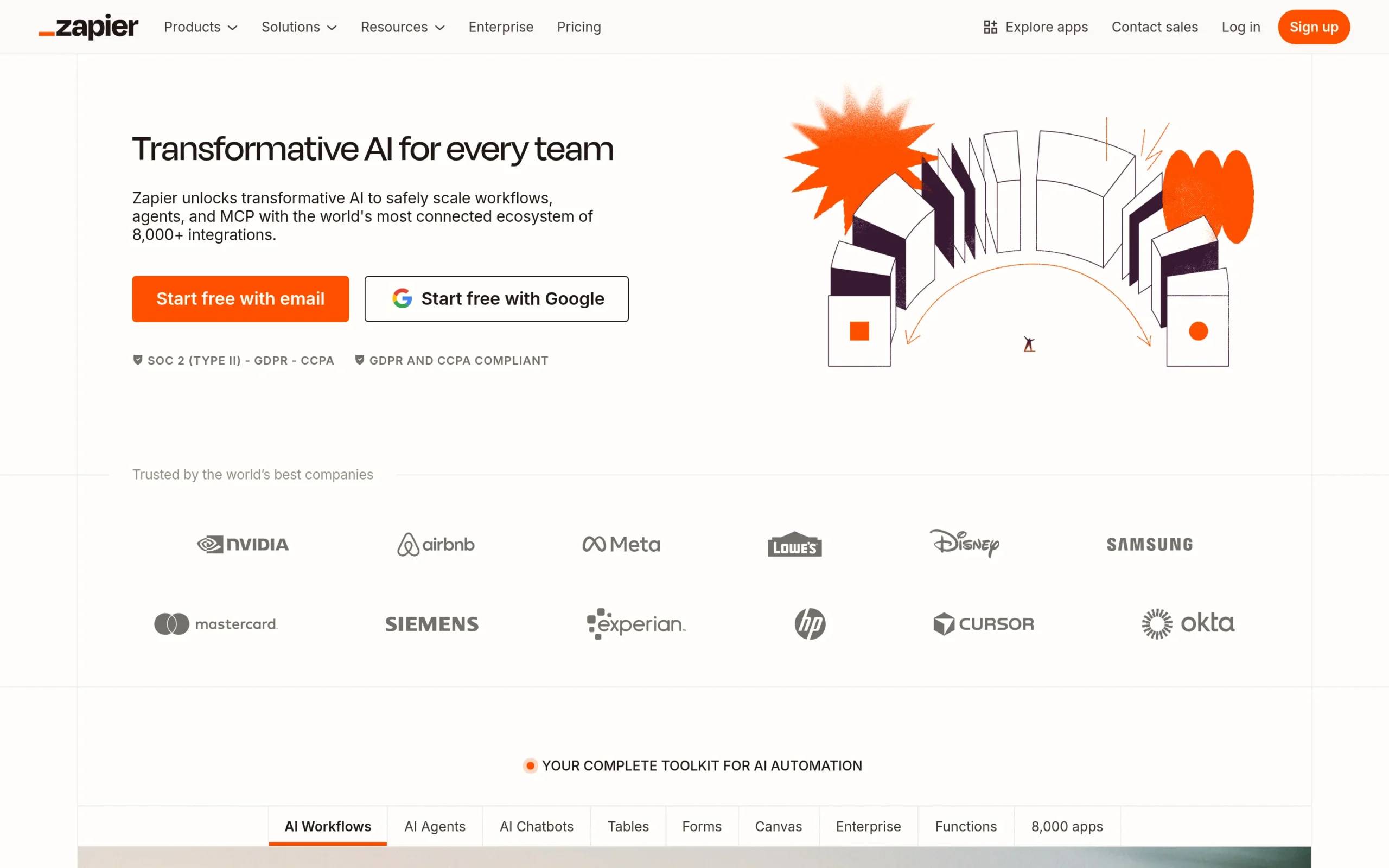
Common use cases include: routing new LinkedIn ad form fills into HubSpot as leads, triggering a La Growth Machine sequence when a lead reaches a specific score in HubSpot, or syncing new Salesforce contacts into a lead enrichment workflow in Clay.
Zapier is not a lead gen tool on its own. But in a stack where several tools do not connect natively, it prevents leads from falling through the gaps between platforms. For teams that have not yet invested in a fully integrated stack, Zapier keeps data flowing.
Best for: Teams that need to connect non-native integrations and automate lead routing between their data, outreach, and CRM tools.
9. Salesforce
Salesforce is the enterprise CRM standard for lead management at scale. It handles lead capture, scoring, routing, and pipeline tracking across large sales teams, with deep customization for complex deal flows.
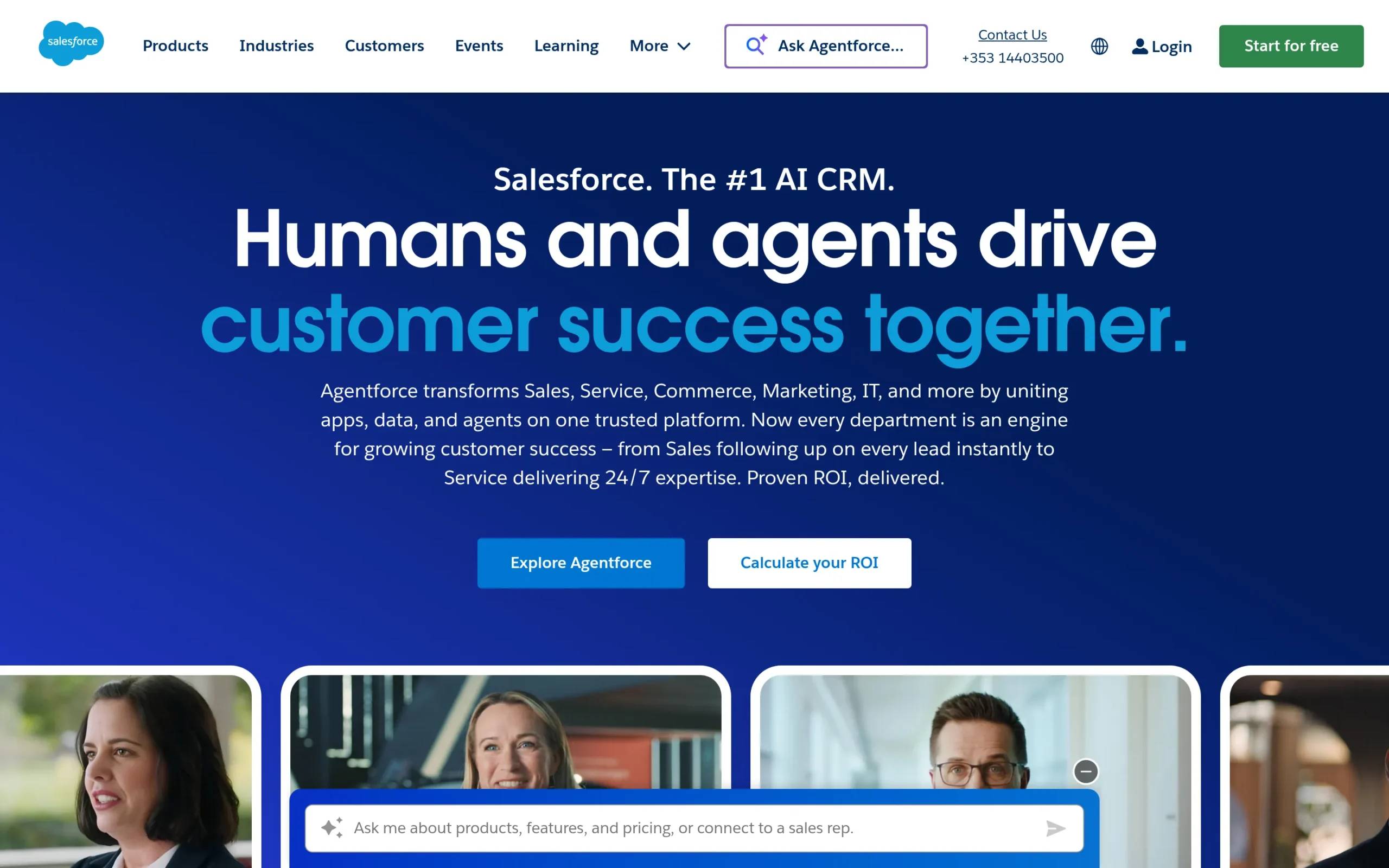
For lead gen specifically, Salesforce serves as the system of record where all prospect data and activity ultimately lands. Lead scoring models, territory routing rules, and automated assignment workflows keep large SDR teams organized and ensure no lead sits untouched.
La Growth Machine connects natively to Salesforce, bidirectional sync included. Outreach activity logs to the contact record, replies update the lead status, and booked meetings create opportunities. For enterprise teams running structured outbound at scale, that integration turns outreach activity into clean CRM data without manual input from reps.
Best for: Enterprise sales teams that need a robust, customizable CRM for lead management, scoring, routing, and pipeline tracking.
The 3-Layer Lead Generation Stack
Every effective B2B lead gen operation runs on three connected layers. Understanding which tools belong at each layer helps you build a stack that does not leak leads or create data silos.
Layer 1: Data layer
This is where you find and enrich your prospects. Tools like Apollo.io, Clay, Cognism, Lusha, and LinkedIn Sales Navigator all live here. The job of this layer is to produce a clean, verified, well-researched list of prospects that meet your ICP. La Growth Machine’s built-in waterfall enrichment also operates at this layer, running automatically when you import a list.
Layer 2: Outreach layer
This is where you execute structured multichannel campaigns across LinkedIn, email, and other channels. La Growth Machine sits here and is the recommended outreach platform for B2B teams that want to run coordinated sequences with AI personalization, reply management, and CRM sync built in. The outreach layer is where pipeline actually gets generated: connection requests accepted, emails replied to, meetings booked.
Layer 3: CRM layer
This is where leads become deals and outreach activity becomes attributable revenue. HubSpot, Salesforce, and Pipedrive all live here. The CRM layer is the system of record. Everything from the data layer and outreach layer flows in, giving RevOps and leadership clean visibility into what is working and where deals are coming from.
The goal is tight connections between all three layers. La Growth Machine is designed to bridge the gap between the data layer and the CRM layer, which is why teams using it alongside Apollo or Clay and a CRM like HubSpot or Salesforce run cleaner, more attributable outbound programs than those stitching things together with CSV exports and Zapier.
FAQ
What is a lead generation tool?
A lead generation tool helps B2B teams identify, qualify, and reach potential customers. The category is broad: it includes data providers that give you verified contact information (Apollo, Cognism, Lusha), outreach platforms that help you run structured campaigns (La Growth Machine), CRMs that track leads through your pipeline (Salesforce, HubSpot), and automation tools that connect them together (Zapier). Most teams use tools from several categories in combination.
What is the best B2B lead gen tool in 2026?
It depends on what layer of the process you are optimizing. For outbound outreach and enrichment in one platform, La Growth Machine is the top choice. For building large prospect lists, Apollo.io leads. For EU-compliant contact data with phone verification, Cognism is the best option. For AI-powered enrichment and personalization, Clay stands out. The honest answer is that no single tool covers the full process well, which is why the three-layer stack model works better than hunting for one solution.
How much does lead generation software cost?
Pricing varies significantly by category and team size. Outreach platforms like La Growth Machine start at €60/month per identity on an annual plan. Data providers like Apollo start around $49/month for individual users. Enterprise tools like Salesforce and Cognism use custom pricing based on seats and usage. For a complete stack covering data, outreach, and CRM, most growing B2B teams spend between $500 and $2,000 per month depending on team size and the tools they choose.
What is the difference between inbound and outbound lead gen?
Inbound lead generation attracts prospects through content, SEO, ads, and other channels that bring people to you. Tools like HubSpot Marketing Hub are built for this motion: landing pages, forms, lead scoring, and nurture sequences. Outbound lead generation means you initiate contact with qualified prospects, through cold emails, LinkedIn outreach, or phone calls. Tools like La Growth Machine, Apollo, and Sales Navigator are built for outbound. Most B2B teams in 2026 run both motions in parallel, with different tools and different metrics for each.
Can one tool handle the entire lead gen process?
Not effectively. Tools that claim to do everything from prospecting to CRM usually do each thing at a shallow level. La Growth Machine comes closest for the outreach side of the process, handling enrichment, multichannel outreach, reply management, and CRM sync in one platform. But you still need a strong data source like Apollo, Clay, or Cognism feeding it quality prospects, and a CRM like HubSpot or Salesforce as the system of record for pipeline. The best stacks use specialized tools at each layer connected through native integrations.
Conclusion
The best B2B lead gen stack in 2026 is not the one with the most tools. It is the one where data flows cleanly from prospecting to outreach to CRM without friction, manual exports, or gaps in attribution.
La Growth Machine sits at the center of the outbound motion. It handles waterfall enrichment, structured multichannel sequences across LinkedIn, email, and Twitter, AI-powered messaging, and native CRM sync. For teams that want to run outbound that actually shows up as pipeline in their CRM, it is the strongest platform available.
Want to see how it works for your team? Start your 14-day free trial of La Growth Machine and run your first multichannel campaign within the hour.