

Best Lead Generation Software in 2026
We tested 13 tools across 10 criteria so you don't have to.
Here's what actually works for B2B outbound in 2026.




no card required
their outbound on LGM
(sur 2478 avis)


La Growth Machine is the strongest choice for B2B teams running multichannel outbound — combining LinkedIn, email, and phone in coordinated sequences without requiring multiple tools. For pure data access and prospecting, Apollo offers the best free tier and the largest contact database. Small teams and solopreneurs should start with Hunter for email finding or Mailchimp for nurturing inbound leads. Regardless of platform, prioritize data quality over volume, combine outbound prospecting with inbound intent signals, and optimize continuously based on deliverability and reply rate metrics.
Finding the right prospects is hard. Reaching them is harder. And doing both at scale without burning out your sales team? Nearly impossible without the right tools.
B2B lead generation software helps you find prospects, verify contact data, automate outreach across multiple channels, and track what drives responses. These platforms transform manual prospecting into scalable, data-driven systems that improve lead quality while reducing costs.
This guide breaks down the 13 best lead generation tools on the market right now, what makes each one different, and which teams they're built for — whether you're running cold email campaigns, prospecting on LinkedIn, or building a multichannel strategy.
Tool Comparison at a Glance
Not sure which tool fits your stack?
What Is Lead Generation Software?
Lead generation software are digital platforms that help B2B sales and marketing teams identify potential customers, find their verified contact information, and engage them through structured outreach campaigns. These tools automate prospecting, data enrichment, multichannel sequences, lead scoring, and CRM sync — transforming manual research into scalable pipeline generation.
Lead gen software vs. CRM:
Lead gen tools focus on finding and engaging new prospects at the top of the funnel. CRM systems (HubSpot, Salesforce) manage relationships after they enter your pipeline. Think of lead gen as filling your funnel — CRM as managing what's inside it.
Key Features to Look For
Not all lead generation platforms offer the same capabilities. When evaluating tools for your B2B stack, prioritize these.
Best Lead Generation Software, Reviewed
Full breakdown of each tool — what it's great for, where it falls short, and who should use it.

La Growth Machine is the only multichannel outreach platform where LinkedIn safety was built in from day one — not added as an afterthought. Since 2017, it has been running LinkedIn campaigns with built-in rate limiting, human-like behavior simulation, and Real Chat Mode to minimize account risk.
The sequence builder supports LinkedIn connection requests, messages, voice notes, email, Twitter, and calls in a single branching workflow. Conditional logic means your outreach adapts automatically — if a prospect opens your email but doesn't reply, a different branch fires than if they ignored it entirely.
Waterfall email enrichment across 9+ providers maximizes contact coverage. The Pro plan includes inbox rotation across up to 5 sending addresses per identity, with OOO detection built in. Native integrations with HubSpot, Salesforce, Pipedrive, and Attio mean every outreach touch writes back to your CRM automatically.
per identity
per identity
per identity

Derrick is a data enrichment tool that works directly inside Google Sheets using spreadsheet formulas. Instead of uploading lists to web platforms, you enrich data in your existing spreadsheets using simple formulas like =derrick_email(A2) to find professional emails or =derrick_enrich(A2) to append company data, job titles, and social profiles.
The tool appeals to teams who prefer working in spreadsheets and want to avoid learning new interfaces. No file uploads, no external platform — enrichment logic stays transparent and repeatable in the sheet where your prospect lists already live.

Apollo.io is one of the most complete sales intelligence platforms available — combining a 275M+ contact database with email sequencing, AI lead scoring, website visitor identification, and deal execution in a single platform. The free-forever tier with monthly export credits makes it the most accessible starting point in the market.
Where Apollo falls short is LinkedIn: it treats it as a secondary channel without the safety architecture or feature depth that purpose-built platforms like LGM provide. For RevOps teams building a scalable outbound stack, Apollo is the strongest data layer available — especially when paired with a dedicated outreach execution tool for LinkedIn.

Lemlist was built around personalization from day one — dynamic variables, AI-generated icebreakers, personalized images and landing pages customized per prospect. Its visual branching sequence builder with conditional logic is a genuine competitive moat for teams who live and die by email personalization rates.
Lemwarm, Lemlist's built-in email deliverability warm-up tool, is included free on all plans — a meaningful differentiator. The platform supports LinkedIn and email in coordinated sequences, though LinkedIn safety controls are less robust than LGM's purpose-built architecture.

Leadfeeder (now part of Dealfront) identifies companies visiting your website even when they don't fill out forms. By analyzing IP addresses and behavioral data, it shows which companies are researching your solution, what pages they viewed, and how many times they returned — revealing buying intent before prospects reach out.
It is a best-in-class intent signal tool rather than an outreach platform. The ideal workflow: use Leadfeeder to surface warm accounts, then route them into LGM or Apollo sequences for targeted outreach.

Amplemarket is an AI-powered sales engagement platform combining prospecting, multichannel outreach execution, and an AI assistant called "Duo" that helps reps prioritize actions and personalize outreach. Duo analyzes buyer signals, suggests next actions, and drafts personalized emails based on prospect research.
The platform positions itself as a full all-in-one solution replacing multiple point tools, powered by AI. Intent data identifies accounts showing buying signals, while Duo ensures reps focus on the highest-value opportunities. Better suited to mid-market and enterprise than growth-stage startups.

Hunter is an email finding and verification tool that helps you discover professional email addresses and validate their deliverability. Domain Search finds all publicly available emails associated with a company domain, while Email Finder locates specific individuals' addresses from their name and company.
Hunter's Chrome extension makes prospecting frictionless while browsing LinkedIn or company websites — one click finds available emails and their verification status. The platform also includes a basic Campaigns feature for cold email sending, though it is limited compared to dedicated outreach execution platforms.

Mailchimp is an email marketing platform that helps businesses build and nurture email lists through newsletters, drip campaigns, and triggered workflows. It is a marketing tool, not a B2B outreach platform. Included here because many teams confuse email marketing with outbound prospecting — they serve fundamentally different purposes and using the wrong tool for each will damage your domain reputation.
Mailchimp's drag-and-drop builder, audience segmentation, and free plan make it the default choice for small businesses starting with inbound lead nurturing. Do not use it for cold outreach to contacts who have not opted in.

UpLead is a B2B prospecting database built around a pay-per-credit model rather than a traditional subscription. You search 155M+ contacts with advanced filters, preview profiles before downloading, and only pay when you export verified contact data. Real-time email verification happens at the moment of download — not from a stale database — backed by a 95% accuracy guarantee with credit refunds for bounced emails.
Works well as a clean data source feeding into LGM or Lemlist sequences for teams who want to control costs without sacrificing data quality.

Clearbit is a data enrichment platform built for developers and marketing operations teams. Rather than a manual interface, Clearbit provides APIs that automatically enrich leads as they enter your systems in real time. When a prospect fills out a form with just their email, Clearbit instantly appends their job title, company size, industry, technologies used, and social profiles — powering personalization and lead routing without manual data entry.
Now part of HubSpot following its 2023 acquisition, Clearbit's roadmap and pricing have shifted. It remains one of the strongest API-first enrichment options for inbound lead flows, but the acquisition has introduced uncertainty around standalone positioning for non-HubSpot customers.

FullEnrich is a waterfall enrichment platform that queries 15+ premium data providers simultaneously — Apollo, Lusha, Dropcontact, ContactOut, and others — returning the best available contact data. If one database doesn't have an email or phone number, FullEnrich tries the next provider automatically.
This approach delivers 40–60% higher enrichment find rates compared to using a single source. You pay only for successful enrichments, not failed lookups. A strong complement to LGM or Clay for teams who need to maximize contact coverage on existing prospect lists.

LeadFuze is an automated lead list building platform powered by "Fuzebot" — an AI that continuously finds new prospects matching your ICP criteria. Instead of manual searches, you define your target profile once (VP of Sales at SaaS companies with 50–200 employees in the US) and Fuzebot builds the list automatically with verified contact data, adding fresh leads daily.
Data quality is inconsistent compared to Apollo or UpLead, and the platform has no built-in outreach execution. Best suited to teams with clearly defined ICPs who want automated list building without dedicating SDR time to manual prospecting research.

Calendly is not strictly a lead generation tool — it's a meeting scheduling platform included here because it sits at the end of most outbound sequences. Share your Calendly link with prospects and they book available times directly on your calendar, with confirmation emails, reminders, and calendar invites firing automatically.
Embedding a Calendly link in your LGM or Lemlist sequences is a standard conversion step to reduce friction from "interested" to "booked." Sales teams also embed it in email signatures, website CTAs, and cold outreach to capture meeting intent the moment a prospect shows interest.
How to Choose Your Lead Generation Software
Five criteria that should drive your decision — regardless of which tool you're evaluating.
If LinkedIn is your primary channel, you need a platform with LinkedIn safety at its core (LGM, not Apollo). If it's cold email volume, deliverability tooling matters most (Lemlist, Reply.io).
Apollo and Derrick are data-first. LGM and Lemlist are execution-first. Most mature stacks use a data tool feeding into an execution tool — don't conflate the two roles.
LGM charges per identity. Apollo has a free tier. Amplemarket requires enterprise commitments. Your team size dramatically affects total cost of ownership — model it before committing.
If Salesforce is your system of record, Apollo or Outreach have the deepest native integrations. LGM and Lemlist integrate well with HubSpot and Pipedrive but are lighter on enterprise CRM workflows.
Apollo and LGM have free trials and self-serve onboarding. Amplemarket and Outreach require sales cycles and professional services. If you need outreach running this week, enterprise platforms aren't your answer.
How to Build Your Lead Gen Stack
Lead generation isn't one tool — it's three layers working together. Here's how to wire them up.
/week per sales
full pipeline visibility
(€180/identity)
manager dashboards
La Growth Machine connects natively to 100+ tools in your stack.
Clay, n8n, HubSpot, Salesforce, Attio, Zapier, Make, and more — with full API and webhook support.
LGM vs. the Competition
Scored head-to-head across 60 criteria. Find the comparison that matches your shortlist.
Frequently Asked Questions
The questions B2B teams ask most before choosing a lead generation tool.
Lead generation software are platforms that help sales and marketing teams identify potential customers, find their contact information, and engage them through structured outreach campaigns. These tools combine prospecting databases, data enrichment, email and LinkedIn execution, and CRM integration to transform manual prospecting into scalable, data-driven systems. Core functions include finding verified B2B contacts, running multichannel outreach sequences, scoring and qualifying leads, and tracking engagement to optimize conversion rates.
Lead generation software focuses on finding and engaging new prospects at the top of your funnel — prospecting, enrichment, and initial outreach. CRM software (Salesforce, HubSpot) manages relationships after they enter your pipeline — tracking deal stages, communication history, and customer relationships. Think of lead gen as filling your pipeline with new opportunities, CRM as managing what happens once they're inside. The most effective B2B sales operations integrate both: lead generation tools feed qualified prospects into the CRM automatically.
Pricing varies dramatically based on features, database size, and team size. Entry-level tools like Hunter or FullEnrich start at $29–$49/month for individuals and small teams. Mid-market platforms like La Growth Machine (€60/month per identity), Lemlist ($32/month), or UpLead ($74/month) range from $30–$150/month per user. Enterprise solutions like Clearbit or Amplemarket use custom pricing that typically starts in the hundreds per month. Many tools charge separately for enrichment credits beyond the base subscription. Free plans exist for Hunter (25 searches/month), Apollo (50 credits/month), Mailchimp (500 contacts), and Calendly (basic scheduling).
It depends on your motion and budget. All-in-one platforms like La Growth Machine or Apollo provide prospecting, enrichment, and outreach in one system — simpler but with tradeoffs. Point solutions (Derrick for enrichment + LGM for execution + Calendly for booking) offer more specialization but require managing multiple tools and keeping data in sync. Most B2B teams benefit from at least three layers: a data/enrichment tool, an outreach execution platform, and a CRM. Evaluate whether an all-in-one or a specialized stack creates better ROI for your team size and workflow.
Yes — several platforms automate LinkedIn prospecting while managing account safety. La Growth Machine has been automating LinkedIn campaigns since 2017 with built-in rate limiting, human-like timing simulation, and social warming (visiting profiles and engaging with content before connecting) to minimize restriction risk. Platforms that treat LinkedIn as an afterthought — with no dedicated safety architecture — are the ones that get accounts flagged. LinkedIn automation typically requires a LinkedIn Premium or Sales Navigator subscription for full functionality.
They serve different primary roles. Apollo wins on data — 275M+ contacts, the strongest combined database and outreach platform at an accessible price. LGM wins on LinkedIn execution — built from the ground up for LinkedIn-first multichannel outreach with safety controls, AI voice messages, and Real Chat Mode that Apollo doesn't match. Many high-performing teams use both: Apollo for prospecting and list-building, LGM for multichannel engagement. The right choice depends on whether your bottleneck is data quality or outreach execution.
Use a platform where LinkedIn safety is a core architectural priority — not an add-on. LGM has been safely running LinkedIn campaigns since 2017 with built-in daily limits, randomized action timing, and a social warming period before any sequence fires. Beyond tool choice: stay well under LinkedIn's daily action thresholds, warm new accounts gradually, and avoid connecting with accounts that have low acceptance rates. Aggressive volume on a fresh LinkedIn account is the fastest way to a restriction.
The Bottom Line
Lead generation software transforms prospecting from manual, time-consuming research into automated, scalable systems that improve data quality, increase conversion rates, and free reps to focus on high-value conversations. The right platform depends on your sales motion, team size, budget, and whether you need multichannel capabilities or can focus on a single channel.
For B2B teams running multichannel outbound — combining LinkedIn, email, and Twitter — La Growth Machine offers the most complete solution without requiring multiple point tools. Teams that need a prospecting database with a free entry point should start with Apollo. Small businesses building inbound nurture should start with Hunter for email finding or Mailchimp for newsletters and drip campaigns.
Regardless of which platform you choose: prioritize data quality over quantity, combine outbound prospecting with inbound intent signals, and optimize continuously based on deliverability and reply rates. The best lead generation software fits your existing workflow, integrates with your stack, and demonstrably improves cost per qualified lead.
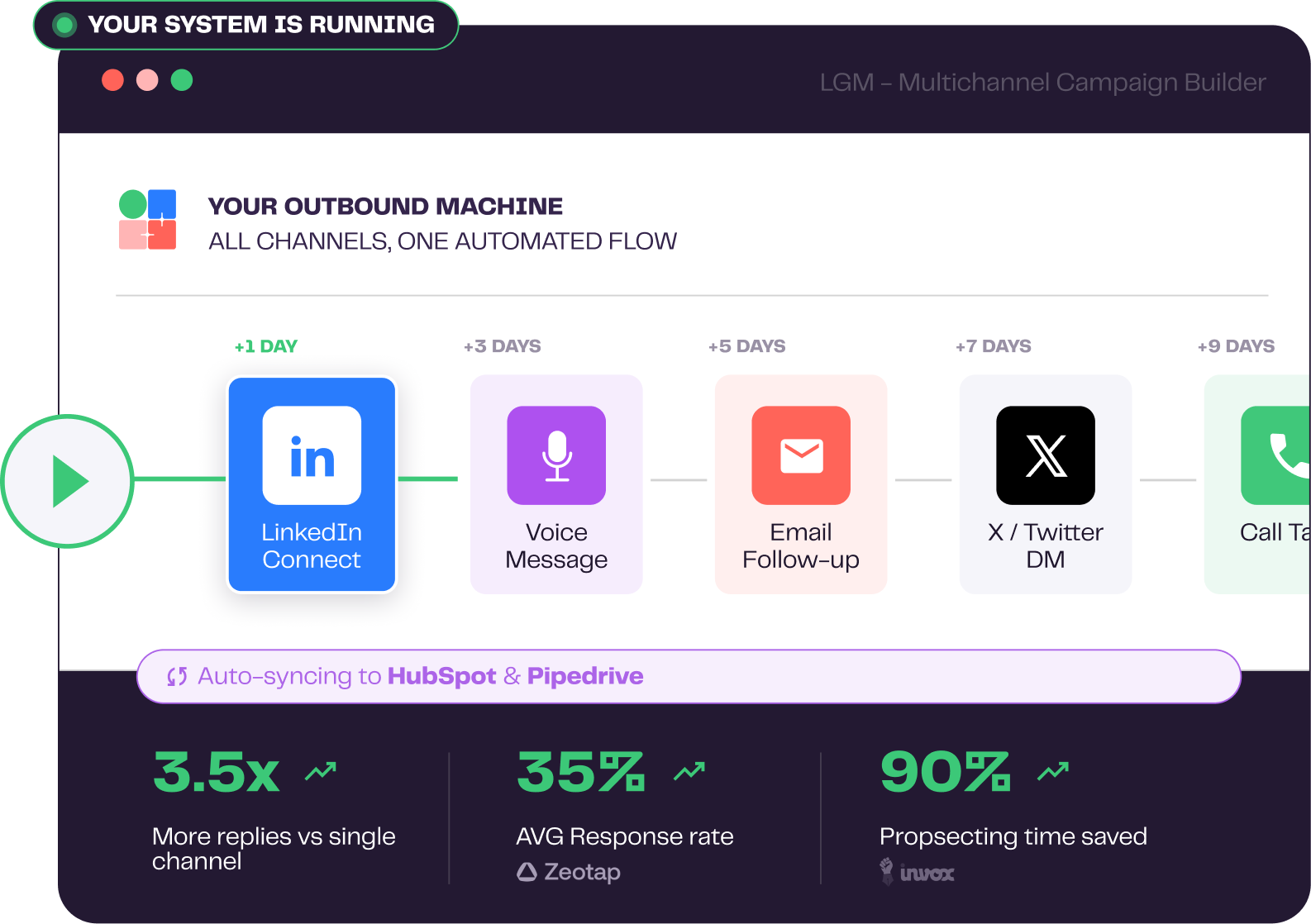
Get your first reply in 48 hours!
Join 10,000+ GTM teams running LinkedIn-first multichannel sequences with La Growth Machine.