

TL;DR
– Apollo.io offers 275M+ verified contacts with built-in email sequencing and a power dialer, but phone data is weak in EMEA and LinkedIn remains a manual step.
– Salesloft is the enterprise benchmark for email and call sequences with AI coaching, but LinkedIn automation requires manual execution, creating outreach gaps at scale.
– La Growth Machine handles LinkedIn, email, and voice outreach in a single automated workflow, syncing every touch to your CRM automatically, starting at €60/month per identity.
– For SDR teams running multichannel outreach at scale, LGM eliminates the need for a separate LinkedIn automation tool and a standalone SEP. For pure enterprise email volume with 50+ reps, pair Salesloft with LGM to cover both channels.
Building a winning SDR tech stack is less about collecting tools and more about assembling a system where each layer feeds the next. The wrong combination leads to duplicate data, siloed outreach, and SDRs spending half their day on admin work that should be automated. The right stack turns cold prospects into booked meetings with far less friction, and scales without adding headcount.
Despite heavy investment in tools, 58% of enterprise sales leaders say their SDR teams are still not productive enough. The culprit is rarely a missing tool. It is usually the gaps between tools: data enrichment that does not feed the sequencer, LinkedIn outreach that runs in isolation from email, CRM fields that only update when a rep remembers to do it manually.
This guide breaks down every layer of a modern SDR tech stack, from data sourcing to CRM sync, compares the top tools in each category, and shows exactly how La Growth Machine closes those gaps in a single multichannel workflow.
TL;DR: SDR Tech Stack at a Glance
| Layer | Best Tool | Key Strength | Starting Price |
|---|---|---|---|
| Data / Prospecting | Apollo.io | 275M+ contacts, built-in sequencer | Free / $49/mo |
| LinkedIn Prospecting | LinkedIn Sales Navigator | 50+ search filters, InMail credits | $99/mo |
| CRM | HubSpot CRM | Best free option for teams under 50 reps | Free / $20/mo |
| Sales Engagement (SEP) | Salesloft | Enterprise sequencing and analytics | Custom |
| Multichannel Outreach | La Growth Machine | LinkedIn + Email + Voice in one workflow | €60/mo |
| Enrichment | Kaspr | Phone numbers and direct dials, EMEA-strong | $49/mo |
| Automation | Zapier | Connects your entire stack | $19/mo |
The trend in 2026 is consolidation. Teams are moving away from 8-tool stacks toward platforms that cover 3 to 4 layers at once. The math is simple: Apollo alone can replace your data provider, email sequencer, and basic dialer at a fraction of what fragmented solutions cost. La Growth Machine goes further by layering LinkedIn automation and voice tasks on top of email, giving SDRs one dashboard for their entire outreach operation.
Layer 1: Data and Prospecting
Your stack lives or dies on data quality. A verified email address and direct-dial phone number are worth more than any sequence optimization technique. Sending 1,000 emails to a 70% invalid list is not outreach. It is deliverability damage.
Apollo.io
Apollo is the default starting point for most SDR teams in 2026. Its database of over 275 million contacts comes bundled with email sequencing, a power dialer, and basic CRM sync, all in one platform. At $49 per user per month on the Basic plan, it delivers 80% of what a fragmented stack costs four times more to assemble.
The limitation: Apollo’s phone data is weakest in Europe. If your team focuses on EMEA prospects, pair it with Kaspr or Cognism for verified mobile numbers and direct dials. For pure contact database quality at global scale, ZoomInfo remains the enterprise benchmark, though its pricing puts it out of reach for teams under $5M ARR.
Kaspr
Kaspr specializes in phone enrichment, particularly mobile numbers and direct dials across EMEA. It integrates natively with LinkedIn via a browser extension, so SDRs can enrich a profile with one click while browsing Sales Navigator. Pricing starts at $49 per user per month, with higher tiers unlocking bulk enrichment and team-wide credit pools.
Layer 2: CRM
The CRM is the single source of truth for your SDR team. Every other tool in your stack should sync to it bidirectionally, and every SDR action should be logged there automatically, without manual entry.
HubSpot CRM
HubSpot’s free CRM tier is genuinely capable. For teams under 50 reps, it covers contact management, deal pipeline, activity logging, and basic email templates at no seat fee. The paid Sales Hub starts at $20 per user per month and adds sequences, meeting booking, calling, and conversation intelligence.
The trade-off: HubSpot’s reporting becomes expensive at scale. Deep pipeline analytics and custom attribution require the Professional tier at $100 per user per month. For teams that need enterprise-grade forecasting, Salesforce is the more appropriate choice.
Salesforce
Salesforce is the enterprise standard. It is infinitely configurable, integrates with every major sales tool through AppExchange, and handles complex territory management, revenue forecasting, and multi-object reporting. The cost is real: the minimum paid tier starts at $25 per user per month, and you will likely need a dedicated admin to manage it. For teams under 30 SDRs, HubSpot or Pipedrive is almost always the better choice.
Layer 3: Sales Engagement Platforms
A Sales Engagement Platform (SEP) is the execution layer. It is where SDRs run email sequences, log calls, manage daily task queues, and track engagement metrics. Most enterprise SEPs focus on email and calls. LinkedIn remains a manual step in most of them, which is where multichannel outreach tools pick up the gap.
Salesloft
Salesloft is the benchmark for enterprise sales engagement. Its Cadences feature (Salesloft’s term for sequences) supports multi-step email and call workflows with AI-powered send-time optimization and real-time conversation analytics. For teams of 50 or more SDRs, it provides the governance, reporting, and coaching tooling that simpler tools lack.
Pricing is custom and negotiated by seat count. The challenge: LinkedIn automation is gated behind manual steps. Salesloft can remind an SDR to send a LinkedIn message on day three, but it cannot send that message for them. For teams running LinkedIn-heavy outreach at scale, that manual step becomes a bottleneck.
Outreach
Outreach is Salesloft’s closest competitor. Its sequence analytics and machine-learning-powered send-time optimization are top-tier. It also supports A/B testing at the sequence level, letting teams run controlled experiments on subject lines, call scripts, and outreach timing. Like Salesloft, LinkedIn actions require manual execution, which makes La Growth Machine a natural complement for teams that want true multichannel automation.
Layer 4: La Growth Machine, the Multichannel Outreach Layer
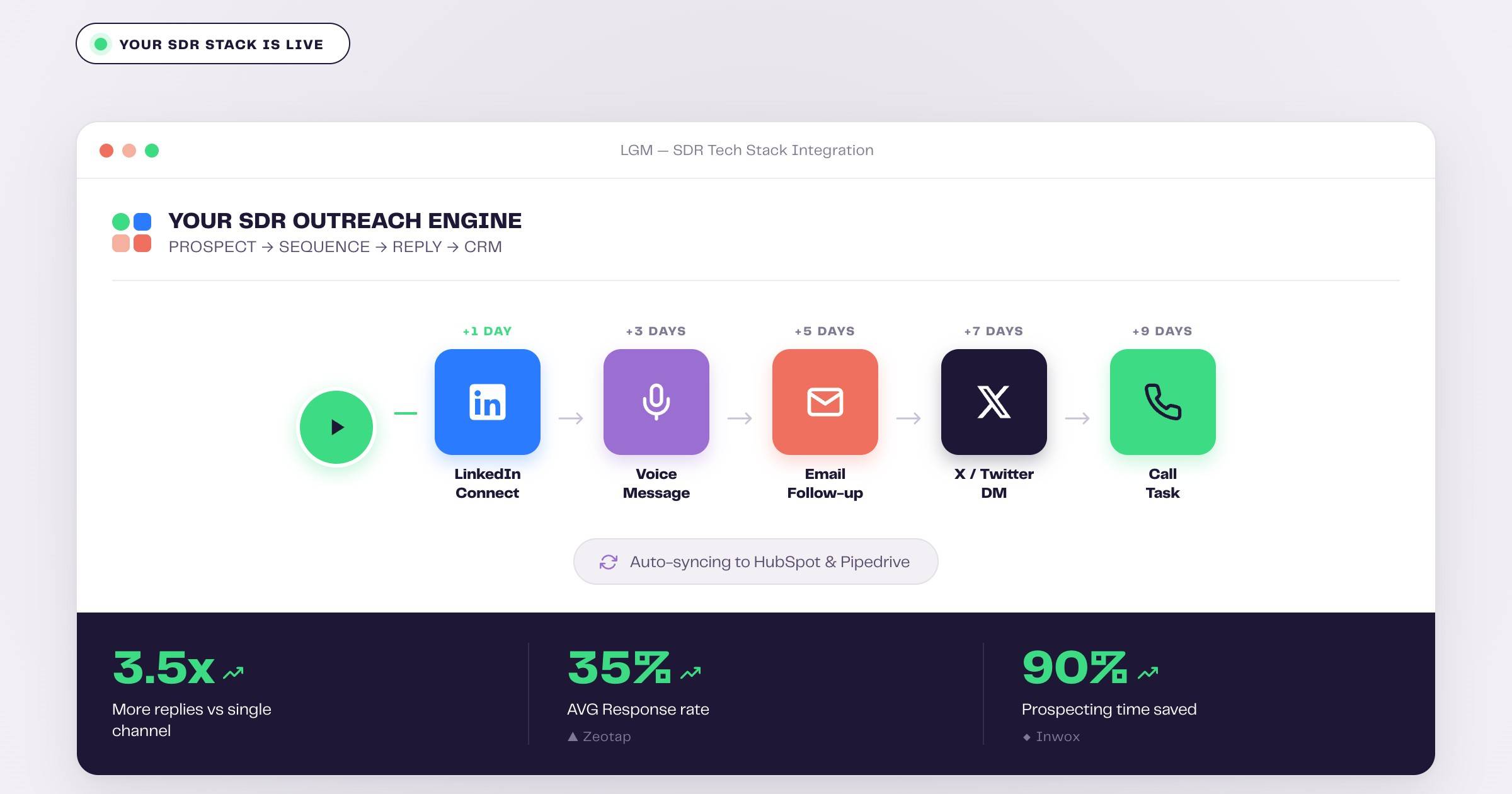
Most sales engagement platforms handle email and calls. La Growth Machine handles the complete SDR workflow: LinkedIn connection requests, voice messages, email follow-ups, and Twitter DMs, all automated in a single visual sequence builder that runs on your behalf 24/7.
La Growth Machine connects natively to your CRM (HubSpot, Salesforce, Pipedrive) and syncs every touch, reply, and status update automatically. When a prospect replies on LinkedIn, LGM pauses the email thread and logs the entire conversation to your CRM, without any manual intervention. When a contact bounces on email, LGM routes them back through LinkedIn. The system adapts to responses in real time.
The platform is built around the concept of “identities”: each SDR operates their own LinkedIn and email identity inside LGM, with warm-up included to protect deliverability. Pricing is per identity: Basic at €60 per month, Pro at €120 per month, and Ultimate at €180 per month. The Pro plan unlocks advanced conditional branching, A/B testing, and the full multichannel sequence builder including voice messages and Twitter DMs.
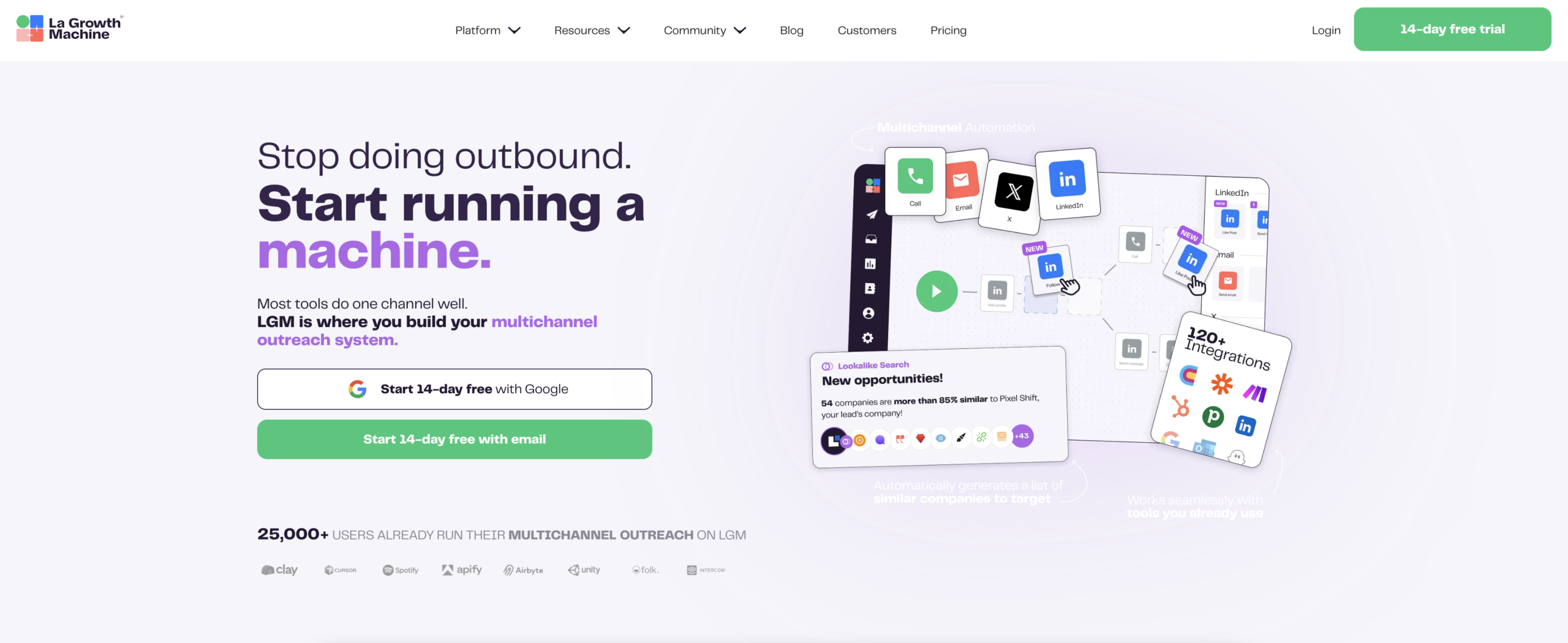
For SDR teams evaluating multichannel outreach tools, the key differentiator is LinkedIn automation depth. La Growth Machine automates profile visits, connection requests, message sequences, and voice notes, all from the same campaign interface. No separate LinkedIn automation tool, no stitching together three different platforms. See full pricing and plan details.
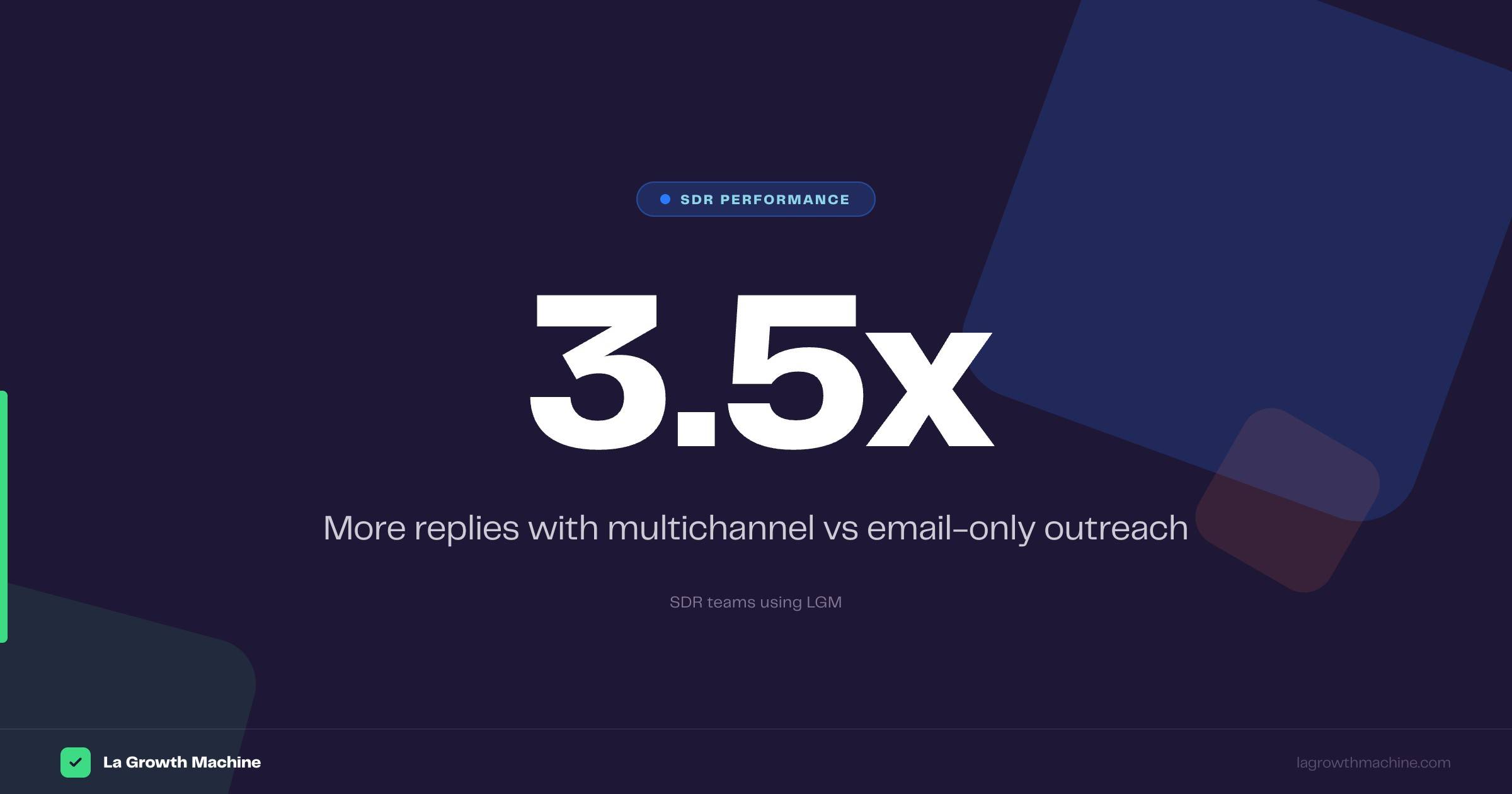
The performance impact is measurable. SDR teams using LGM report up to 3.5x more replies compared to email-only outreach. The delta comes from two structural advantages: LinkedIn’s inbox is significantly less saturated than email in 2026, and voice messages trigger mobile notifications that text-based outreach cannot replicate. Explore all LGM features.
Start a 14-day free trial to see how your existing SDR stack connects through LGM, no credit card required.
Layer 5: Automation and Integration
No SDR stack runs cleanly without a glue layer. Automation tools route leads, trigger enrichment workflows, and keep CRM data current without relying on manual SDR updates.
Zapier
Zapier connects over 6,000 apps and handles the edge cases that native integrations miss. Common SDR use cases include routing new form fills from HubSpot directly into an LGM audience, triggering Slack notifications when a prospect books a demo, pushing enriched contact data from Kaspr into Salesforce, and deduplicating contacts before they enter a sequence. Paid plans start at $19 per month.
For teams with more complex data flows, Make (formerly Integromat) offers more granular control over multi-step automations and conditional logic, at comparable pricing.
How to Build Your SDR Tech Stack Step by Step
Building a stack without a deliberate sequence creates expensive overlap and integration debt. Follow this order to avoid both.
Step 1: Lock in your CRM first. Every other tool will write data to it. Choose HubSpot for teams under 50 reps with straightforward pipeline management needs. Choose Salesforce if you need enterprise-grade territory management, multi-object reporting, or a large existing AppExchange ecosystem.
Step 2: Add your data layer. Apollo covers the majority of use cases and is the most cost-effective entry point. Add LinkedIn Sales Navigator for account research on priority accounts. Add Kaspr or Cognism if your SDRs are calling into EMEA and need verified mobile numbers.
Step 3: Set up your outreach layer. For email-only outreach at enterprise scale, Salesloft or Outreach. For multichannel outreach (LinkedIn automation plus email plus voice) without managing separate tools, La Growth Machine is the single-platform answer. It eliminates the need for a standalone LinkedIn automation tool and a separate email sequencer for most teams.
Step 4: Add automation last. Zapier or native integrations to close the loops between tools. Automate lead routing, CRM field updates, and Slack alerts before investing in a dedicated dialer or conversation intelligence platform.
Step 5: Audit for overlap every quarter. The most common waste in SDR stacks is paying for two tools doing the same job. If LGM is handling your email and LinkedIn sequencing inside multichannel campaigns, a standalone SEP becomes redundant overhead.
Frequently Asked Questions
What is a typical SDR tech stack in 2026?
A modern SDR stack has five core layers: CRM (HubSpot or Salesforce), data provider (Apollo or LinkedIn Sales Navigator), outreach platform (La Growth Machine or Salesloft), enrichment (Kaspr or Cognism), and automation (Zapier). The 2026 shift is toward consolidation: teams are targeting 3 to 4 tools rather than managing 8 or more separate platforms.
How much does an SDR tech stack cost per rep?
A lean but effective stack runs between $150 and $400 per SDR per month. At the high end, enterprise stacks with Salesforce, ZoomInfo, and Salesloft can reach $1,500 to $2,000 per rep per month before dialer and conversation intelligence costs.
What is the best free SDR tool?
HubSpot CRM and Apollo’s free tier together form a functional zero-cost starting point. Apollo’s free plan includes 50 export credits per month, email sequencing, and basic dialer access, enough to validate outreach sequences before committing to paid plans.
Do SDRs need LinkedIn Sales Navigator?
For B2B outbound targeting mid-market and enterprise accounts, yes. Sales Navigator’s advanced search filters and InMail credits are not replicated in any other tool. If budget is limited, combine the free LinkedIn profile with La Growth Machine, which automates connection requests and message sequences within LinkedIn’s own interface.
How does La Growth Machine fit into an SDR stack?
LGM replaces your SEP and LinkedIn automation tool in one platform. It connects directly to your CRM, runs multichannel sequences (LinkedIn plus email plus voice), and logs every touch automatically. SDRs manage all outreach from a single campaign dashboard rather than switching between three separate tools.
Conclusion
The best SDR tech stack in 2026 is the one your team uses consistently, not the most feature-rich one on paper. Start with a CRM, a verified data source, and a multichannel outreach platform. Add layers only when you can measure the specific gap they fill.
La Growth Machine is designed to sit at the center of that stack, not as an add-on. One platform handles LinkedIn automation, email sequences, and voice outreach, synced to your CRM automatically. Start your 14-day free trial and run your first multichannel campaign within the hour.